Get all your news in one place.
100’s of premium titles.
One app.
Start reading
Reuters
Reuters
Environment
Tim Kelly and Kwiyeon Ha

Rescuers slog through mud as Japan typhoon death toll rises to 66

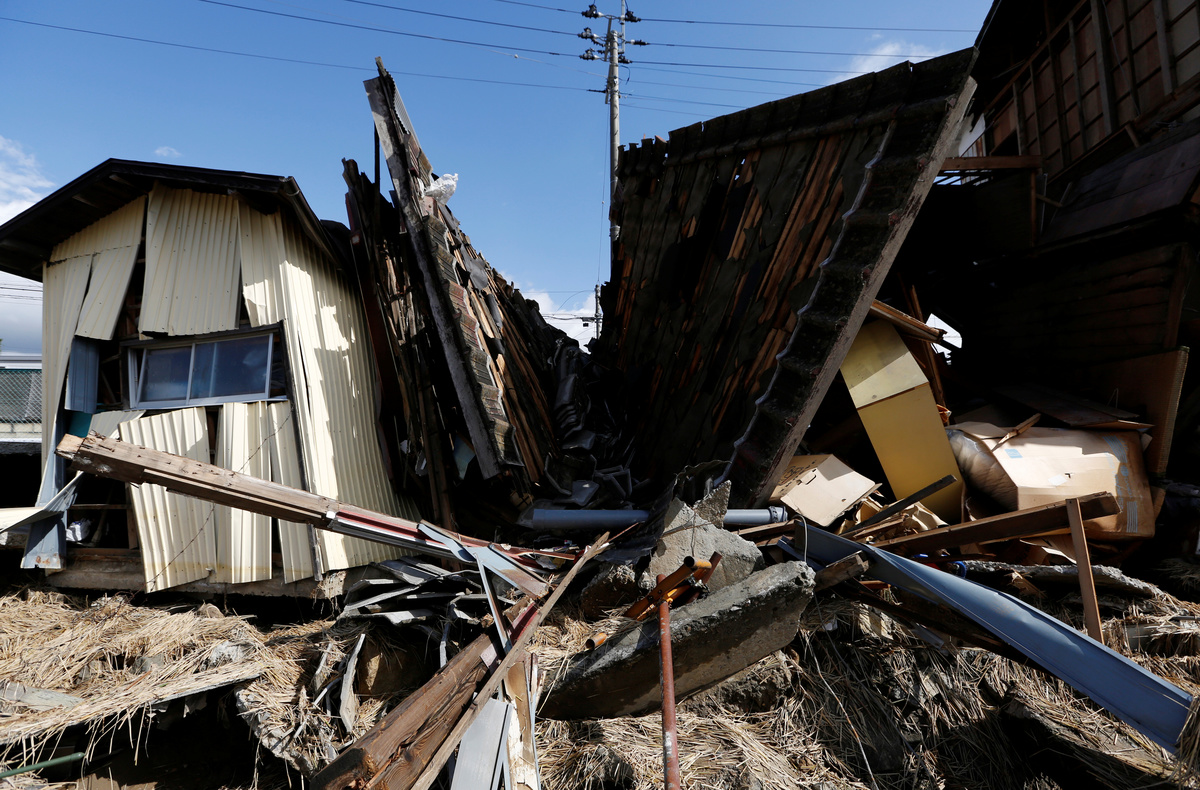
Destroyed houses are seen, in the aftermath of Typhoon Hagibis, in Koriyama, Fukushima prefecture, Japan October 15, 2019. REUTERS/Soe Zeya Tun

KORIYAMA, Japan (Reuters) - The death toll in the worst typhoon to hit Japan for decades climbed to 66 on Tuesday as rescuers slogged through mud and debris in an increasingly grim search for the missing, and as thousands of homes remained without power or water.

Fifteen people remain missing nearly three days after Typhoon Hagibis smashed into central and eastern Japan, national broadcaster NHK said. More than 200 people were injured in the storm, whose name means "speed" in the Tagalog language.
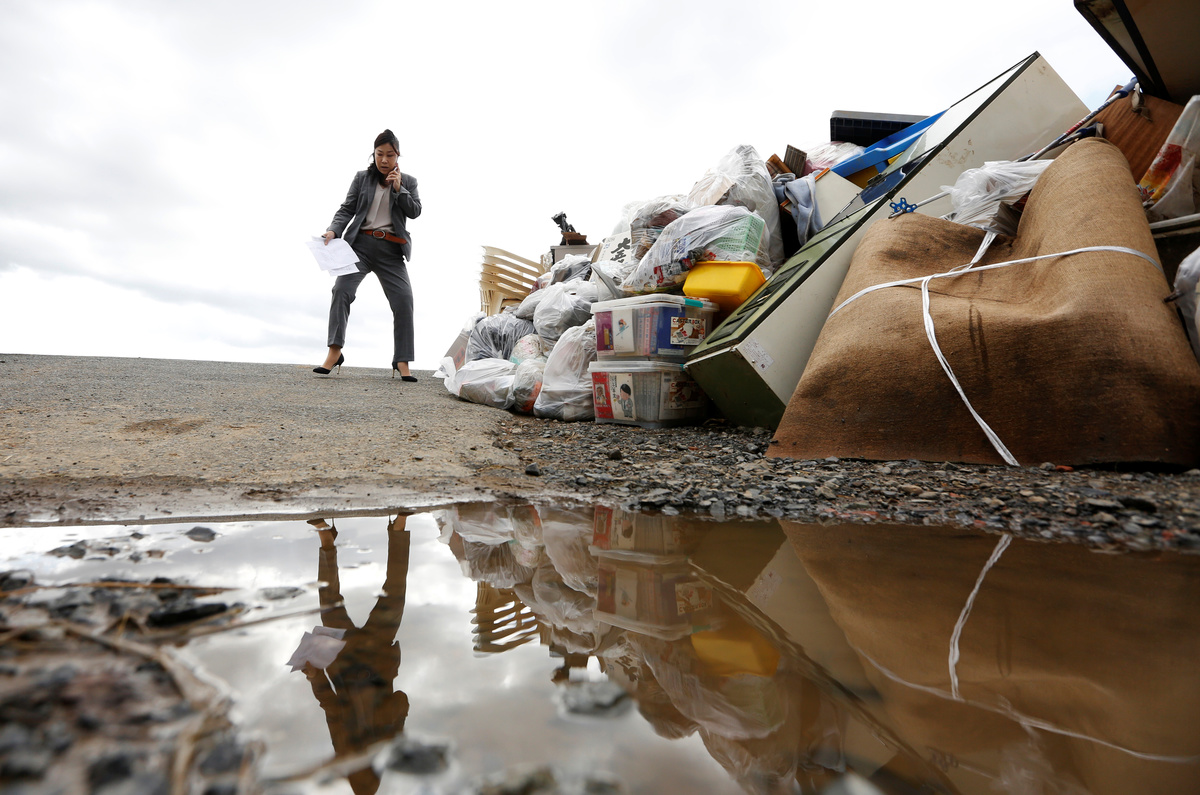
A woman talks on a mobile phone near packed items, in the aftermath of Typhoon Hagibis, in Koriyama, Fukushima prefecture, Japan October 15, 2019. REUTERS/Soe Zeya Tun

(Click https://tmsnrt.rs/31c0feP to see an interactive graphic plotting the path of Typhoon Hagibis)

The highest toll was in Fukushima prefecture north of Tokyo, where levees burst in at least 14 places along the Abukuma River, which meanders through a number of cities in the largely agricultural prefecture. At least 25 people died in Fukushima, including a mother and child who were caught in flood waters, NHK said. Another child of the woman remains missing.

Residents in Koriyama, one of Fukushima's larger cities, said they were taken by surprise by the flooding. Police were searching house-to-house to make sure nobody had been left behind or was in need of help.
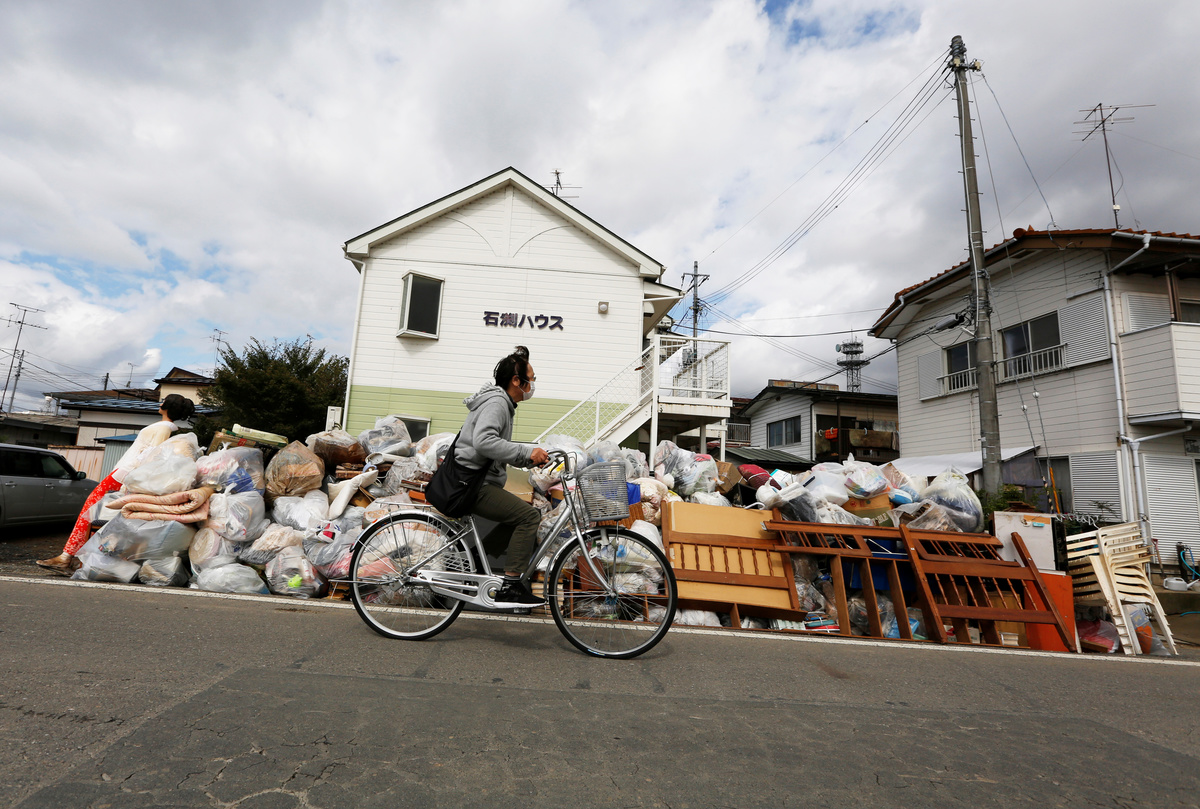
A man bikes past houses, in the aftermath of Typhoon Hagibis, in Koriyama, Fukushima prefecture, Japan October 15, 2019. REUTERS/Soe Zeya Tun

"The river has never flooded like this before, and some houses have been completely swept away. I think it might be time to redraw hazard maps or reconsider evacuation plans," said Masaharu Ishizawa, a 26-year-old high school teacher who was cleaning up at his family home in Koriyama.

He said there are a lot of elderly in his area and many of them were taken in by relatives.

"We have never seen damage like this before, and maybe global warming and environmental change has something to do with it."
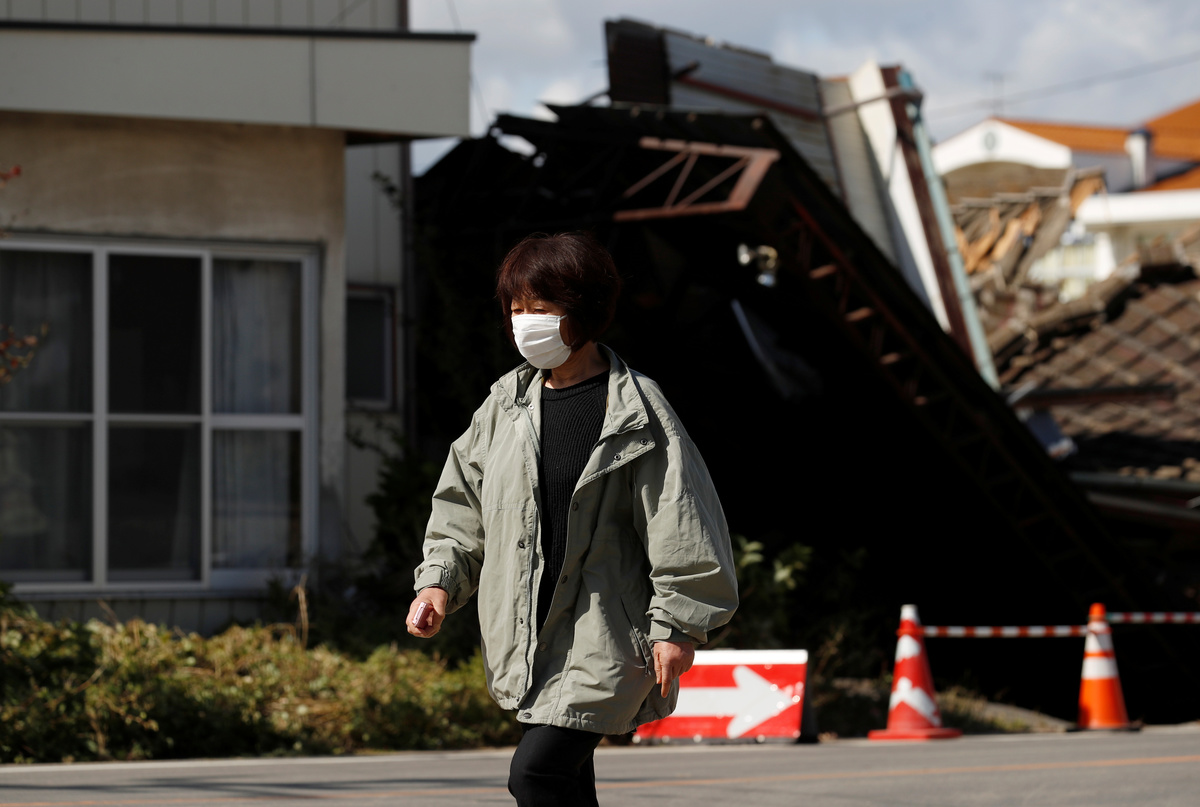
A woman walks near flooded houses, in the aftermath of Typhoon Hagibis, in Koriyama, Fukushima prefecture, Japan October 15, 2019. REUTERS/Soe Zeya Tun

Part of his family's back garden had been washed away, breaking water pipes and electricity lines. The family was using water carried from a local community centre to clean up. Two doors down, an old house had collapsed after the flood washed its foundations away.

About 133,000 households were without water while 22,000 lacked electricity, well down on the hundreds of thousands initially left without power but a cause for concern in northern areas where temperatures are falling.

An aerial view shows the characters for "water and food" written on muddy ground at a flooded area caused by Typhoon Hagibis in Marumori Town, Miyagi prefecture, Japan, October 15, 2019, in this photo taken by Kyodo Mandatory credit Kyodo/via REUTERS

HARD TO ESCAPE

Survivors described how water rose rapidly to chest height in about an hour and mainly at night, making it hard to escape to higher ground. Many of the dead in Fukushima were elderly, NHK said.

"I checked the flood hazard map but it didn't have my area as being at risk," said Yoshinagi Higuchi, 68, who lives about 100 metres from one levee and waited out the flood on the second floor of his house as the ground floor filled with water.
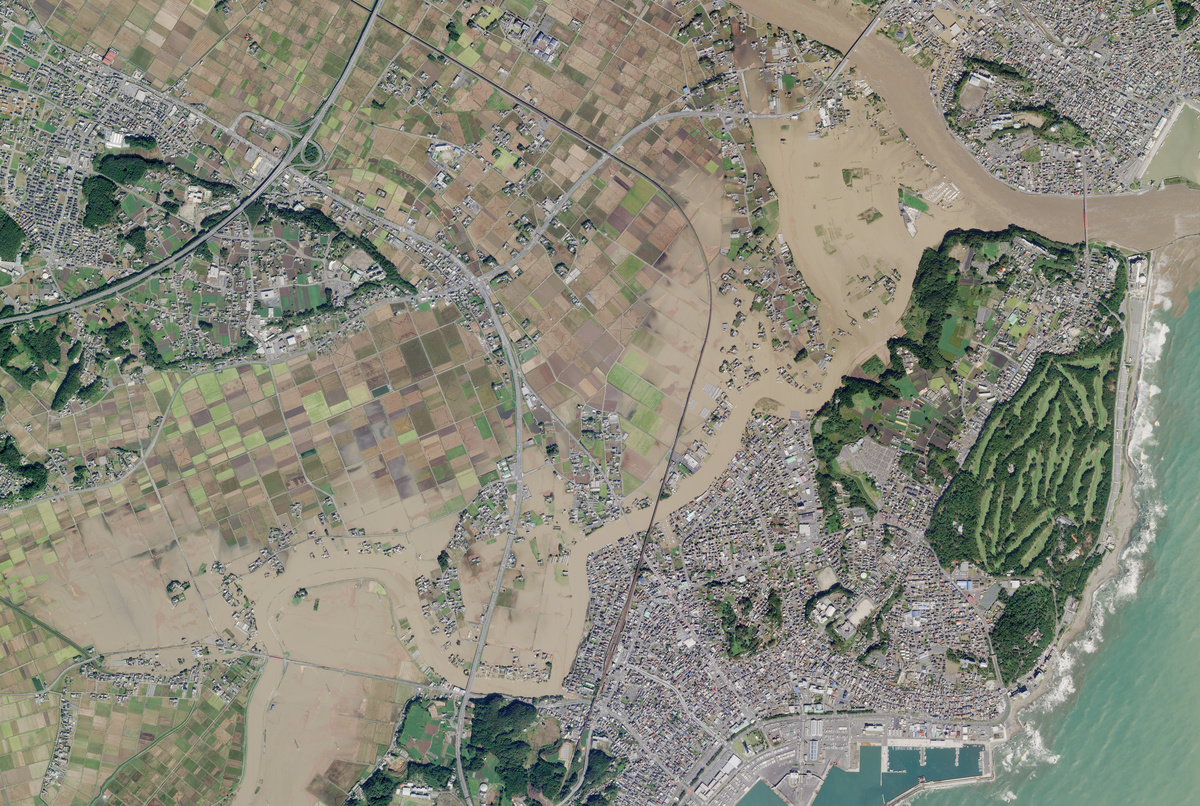
FILE PHOTO: A satellite image shows the Naka River in the aftermath of Typhoon Hagibis in Japan October 13, 2019. Picture taken October 13, 2019. Planet Labs Inc./Handout via REUTERS

"I heard there was a flood once before the war, but we just weren't expecting the water to come over the levee despite all the warnings."

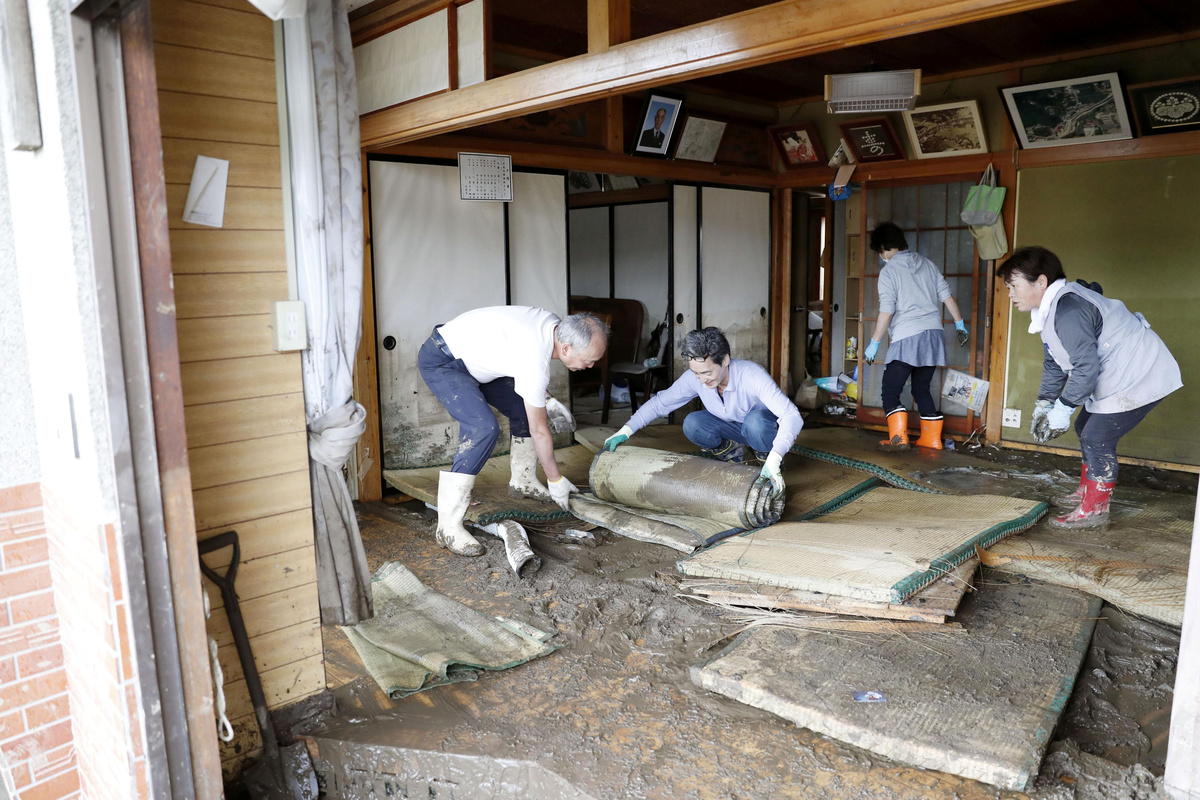
Residents were warned by the public address systems that are a feature of Japanese cities and some evacuated to a local elementary school, he added as he and neighbours piled sodden tatami straw mats and other damaged furniture on the street.

"Nobody from city hall has come to check on us yet," Higuchi said.
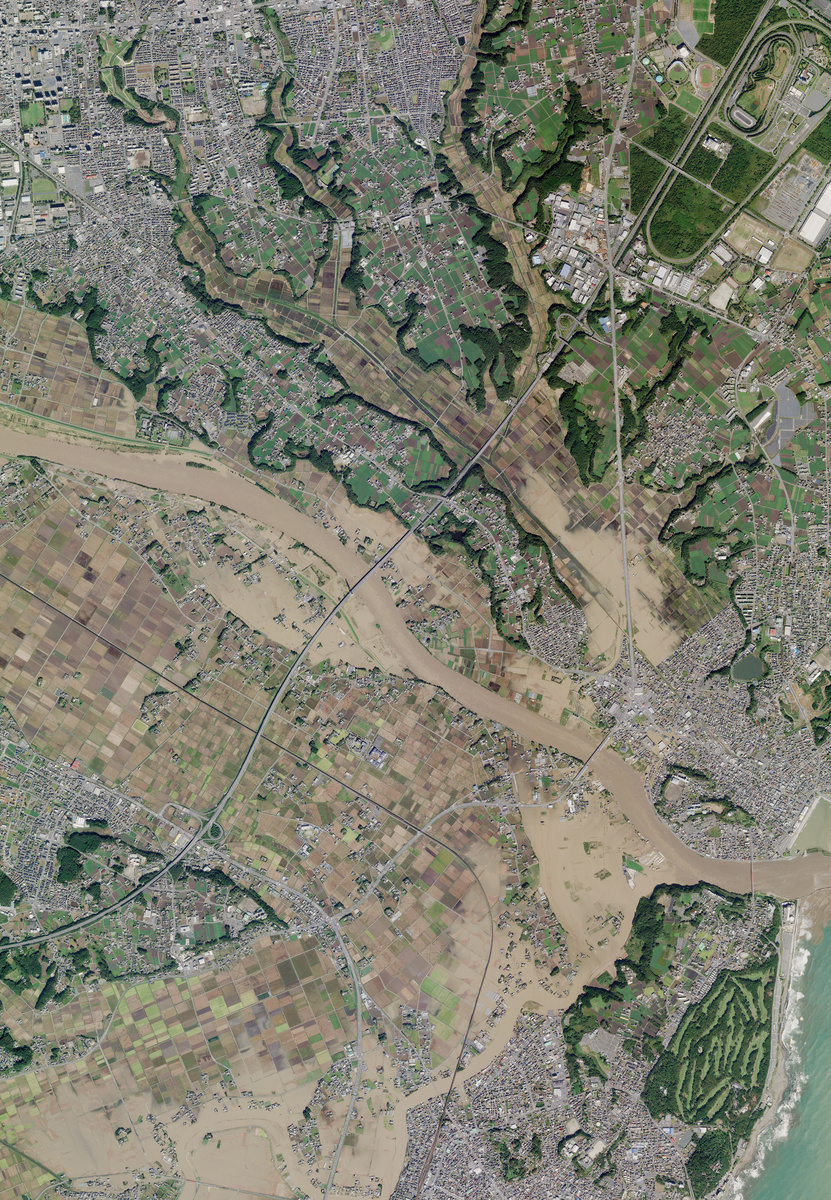
FILE PHOTO: A satellite image shows the Naka River in the aftermath of Typhoon Hagibis in Japan October 13, 2019. Picture taken October 13, 2019. Planet Labs Inc./Handout via REUTERS

Fukushima is home to the Fukushima Daiichi nuclear power plant that was crippled by a 2011 earthquake and tsunami. Officials for Tokyo Electric Power Co <9501.T>, which owns the plant, have said there was no leakage of contaminated water.

MANUFACTURERS TAKE STOCK
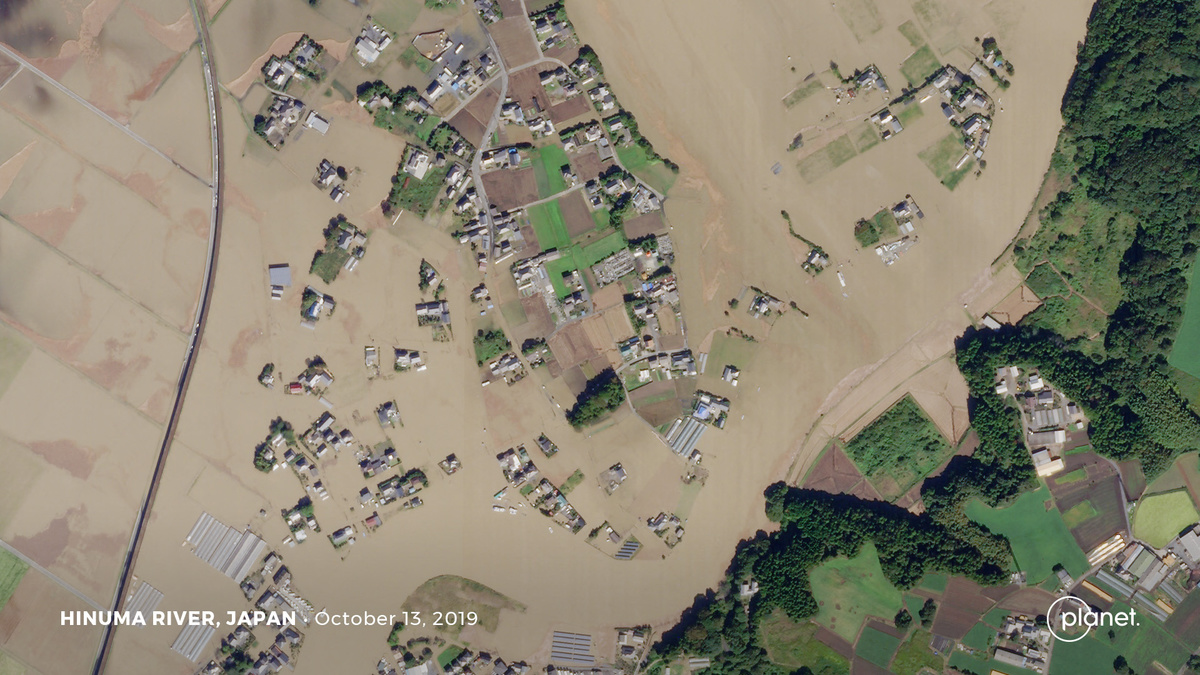
A satellite image shows the flooded Hinuma River in the aftermath of Typhoon Hagibis in Japan October 13, 2019. Image created October 13, 2019. Planet Labs Inc./Handout via REUTERS

Around the nation, manufacturers took stock. Electronics maker Panasonic Corp <6752.T> said flooding had damaged its plant in a large industrial park in Koriyama.

Automakers Nissan <7201.T>, Honda <7267.T> and Subaru <7270.T> said there was no major damage to their factories, while Toyota <7203.T> said all its plants were operating normally.

Prime Minister Shinzo Abe warned that the economic impact could be prolonged.

A satellite image shows the flooded Aki River in the aftermath of Typhoon Hagibis in Japan October 13, 2019. Image created October 13, 2019. Planet Labs Inc./Handout via REUTERS

"The national government will continue to do everything possible so that the victims of this disaster can return to their normal lives as soon as possible," Abe told a parliamentary committee.

Finance Minister Taro Aso said there was 500 billion yen ($4.6 billion) in reserves for disaster recovery and more money would be considered if needed.

Thousands of police, fire officials and military personnel continued to search for people who may have been cut off by floodwaters and landslides, with hope diminishing that the missing would be found alive.

A rescue worker wades in water in the aftermath of Typhoon Hagibis, which caused severe floods, near the Chikuma River in Nagano Prefecture, Japan, October 14, 2019. REUTERS/Kim Kyung-Hoon

Though the threat of rain is expected to diminish on Tuesday, temperatures are likely to drop in many areas later this week, in some cases to unseasonably low levels, NHK said.

Four of Japan's major refiners said there was no impact on their refinery operations from the storm.

($1 = 108.3300 yen)
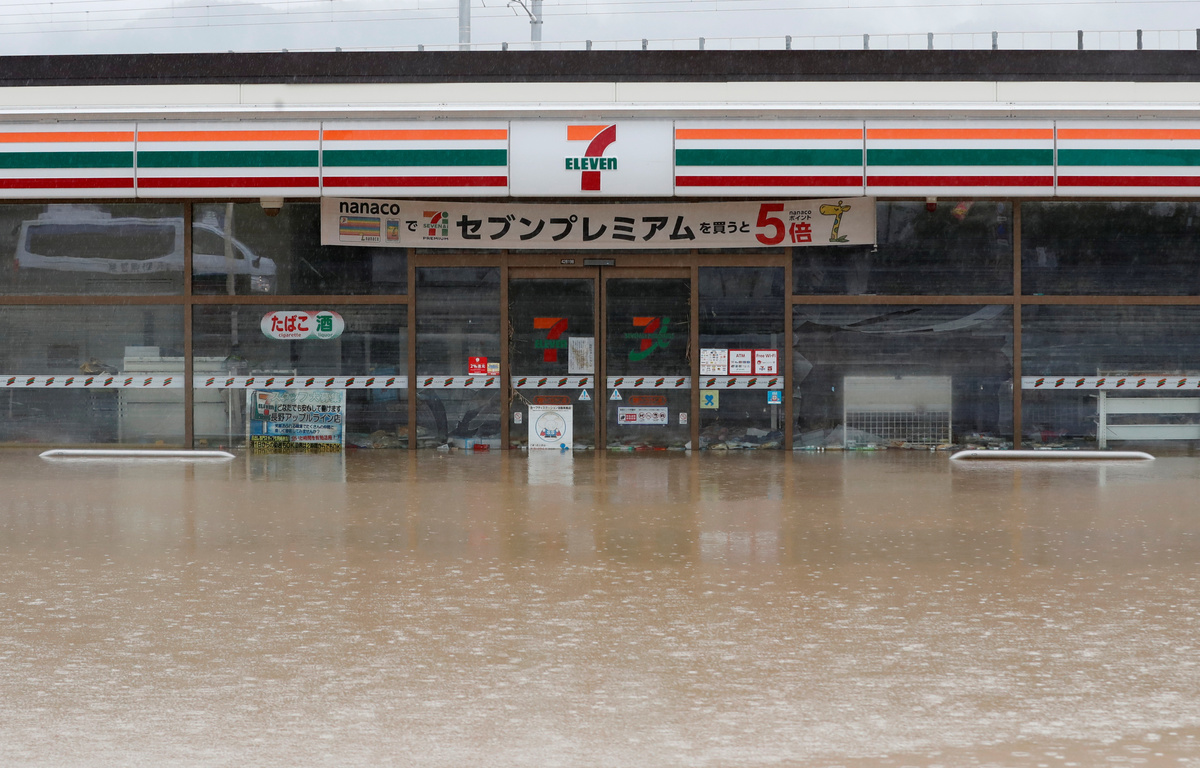
A flooded shop is seen in the aftermath of Typhoon Hagibis, which caused severe floods, near the Chikuma River in Nagano Prefecture, Japan, October 14, 2019. REUTERS/Kim Kyung-Hoon

(Additional reporting by Makiko Yamazaki, Daniel Leussink, Kaori Kaneko and Elaine Lies, writing by Elaine Lies; Editing by Stephen Coates and Raju Gopalakrishnan)
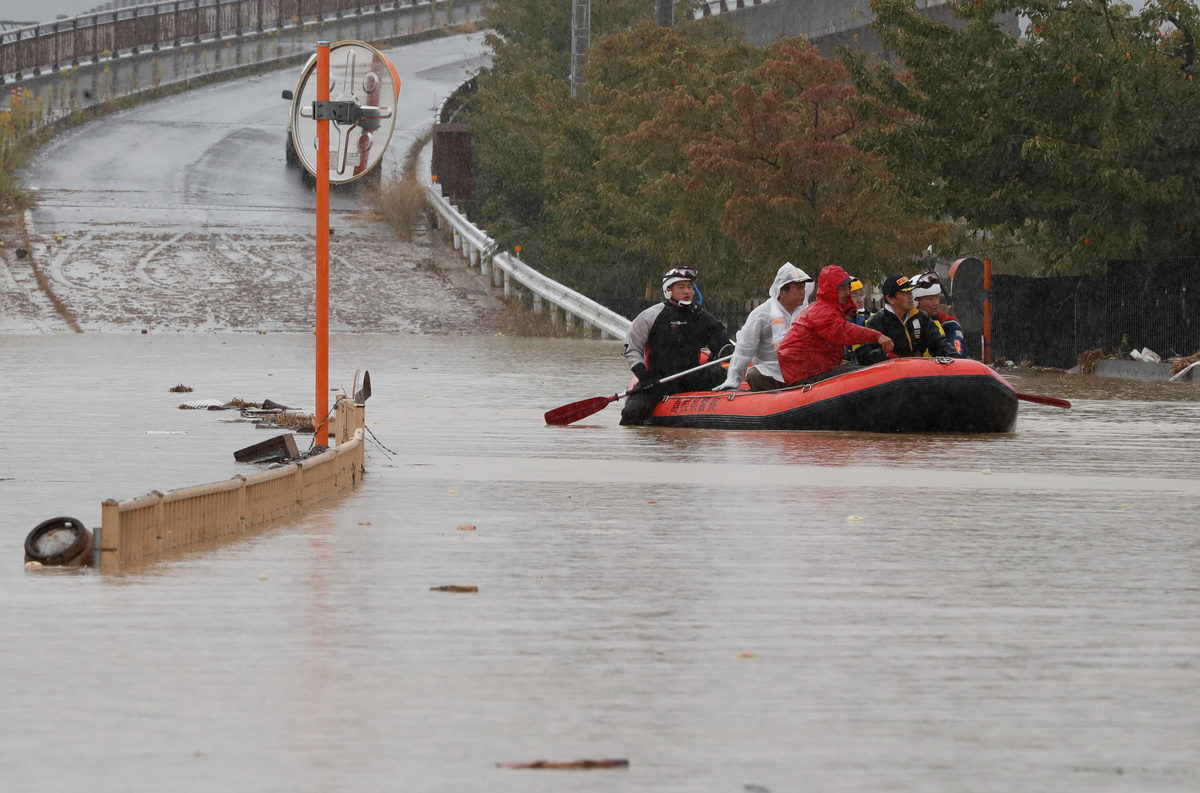
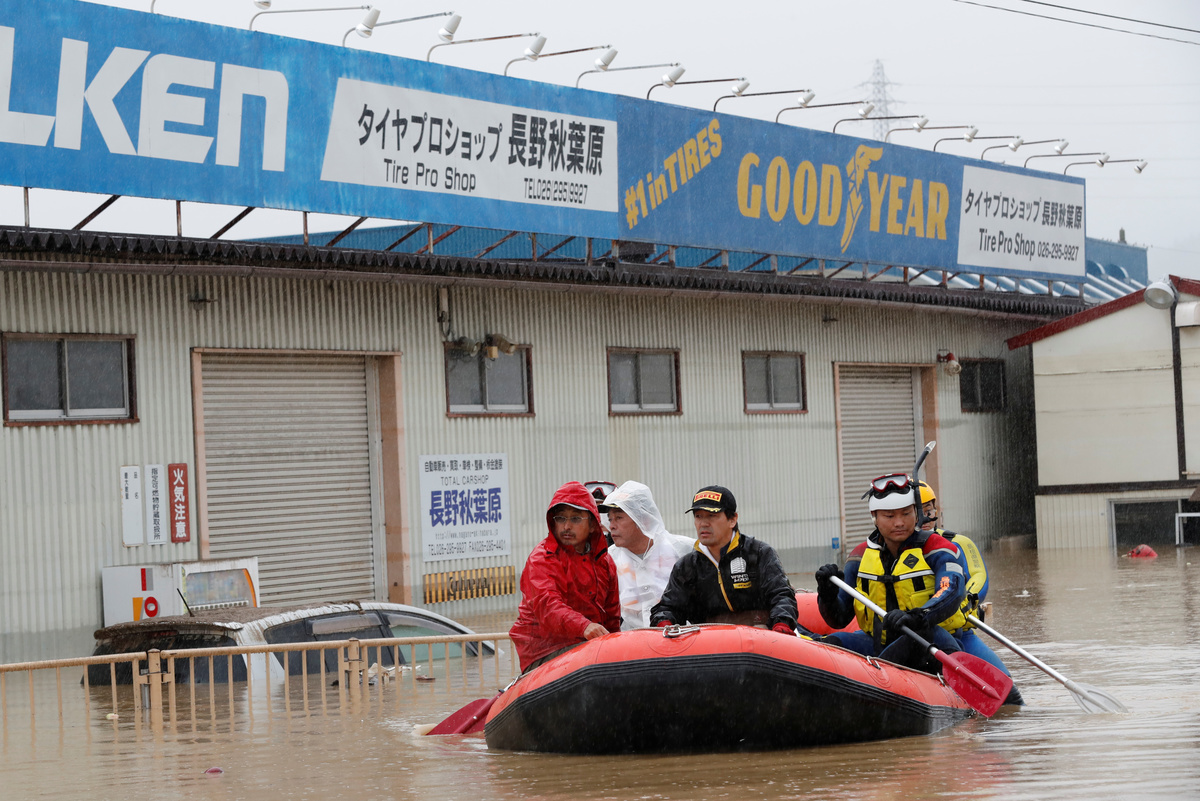
Rescue workers transport a resident in the aftermath of Typhoon Hagibis, which caused severe floods, near the Chikuma River in Nagano Prefecture, Japan, October 14, 2019. REUTERS/Kim Kyung-Hoon
A man rests in an evacuation centre, in the aftermath of Typhoon Hagibis which caused severe floods, in Nagano Prefecture, Japan, October 14, 2019. REUTERS/Kim Kyung-Hoon
A satellite image shows the Aki River in the aftermath of Typhoon Hagibis in Japan October 13, 2019. Picture taken October 13, 2019. Planet Labs Inc./Handout via REUTERS ATTENTION EDITORS - THIS IMAGE HAS BEEN SUPPLIED BY A THIRD PARTY. NO RESALES. NO ARCHIVES. THIS PICTURE WAS PROCESSED BY REUTERS TO ENHANCE QUALITY.
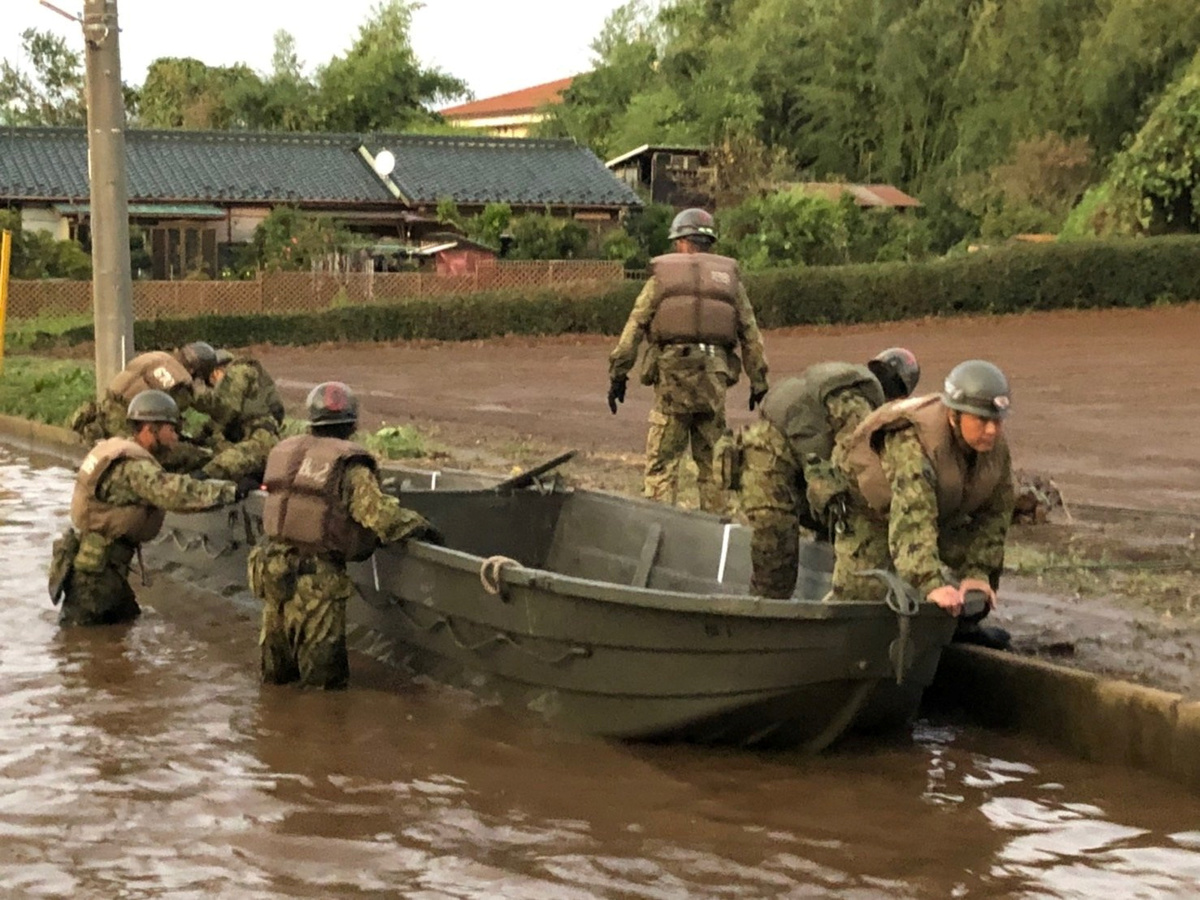
Rescue workers wade near a boat during evacuation operations after a typhoon swept through Kawagoe, Saitama prefecture, Japan, October 13, 2019 in this photo obtained from social media. JGSDF/via REUTERS
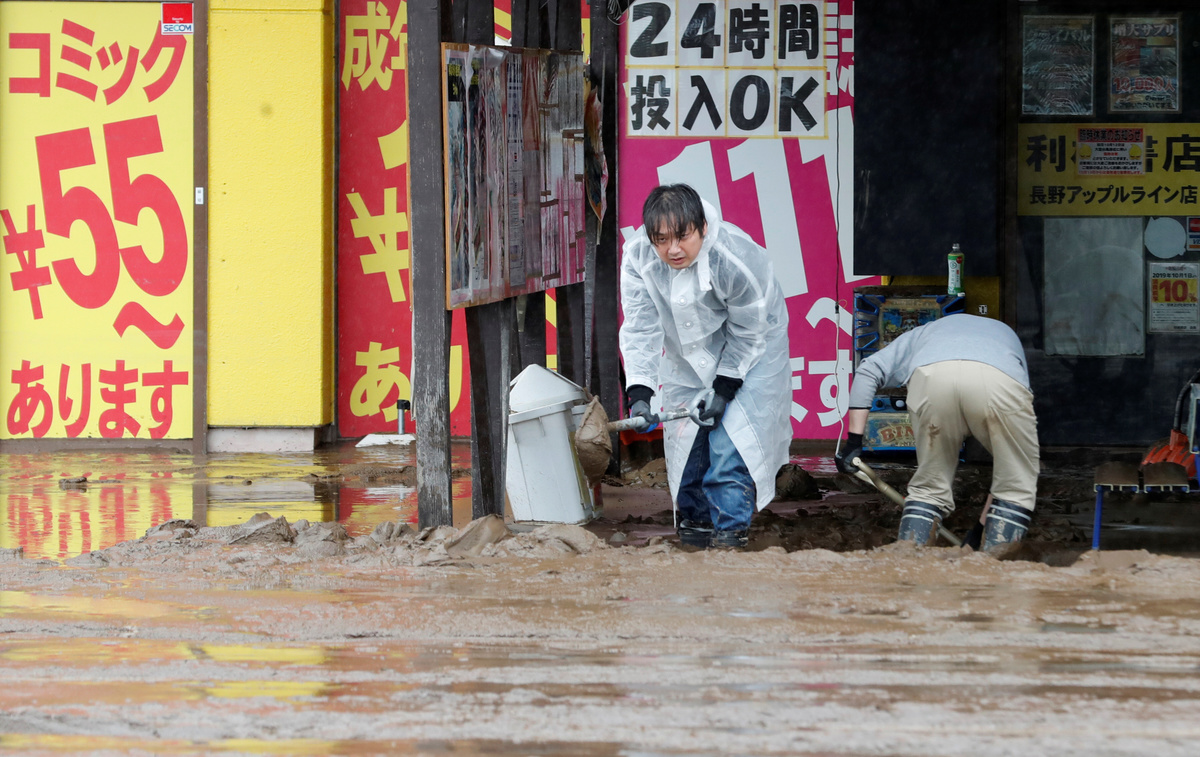
A man cleans up a shop in the aftermath of Typhoon Hagibis, which caused severe floods, near the Chikuma River in Nagano Prefecture, Japan, October 14, 2019. REUTERS/Kim Kyung-Hoon
A child walks around in an evacuation centre, in the aftermath of Typhoon Hagibis which caused severe floods, in Nagano Prefecture, Japan, October 14, 2019. REUTERS/Kim Kyung-Hoon
Local residents try to clean inside a house at an area flooded by Typhoon Hagibis in the town of Marumori, Miyagi prefecture, Japan, October 14, 2019, in this photo taken by Kyodo Mandatory credit Kyodo/via REUTERS
A woman cries in relief after being rescued from an area flooded by Typhoon Hagibis in Marumori, Miyagi prefecture, Japan, October 14, 2019, in this photo taken by Kyodo. Mandatory credit Kyodo/via REUTERS
Men clean up a shop in the aftermath of Typhoon Hagibis, which caused severe floods, near the Chikuma River in Nagano Prefecture, Japan, October 14, 2019. REUTERS/Kim Kyung-Hoon
A man rests in an evacuation centre, in the aftermath of Typhoon Hagibis which caused severe floods, in Nagano Prefecture, Japan, October 14, 2019. REUTERS/Kim Kyung-Hoon
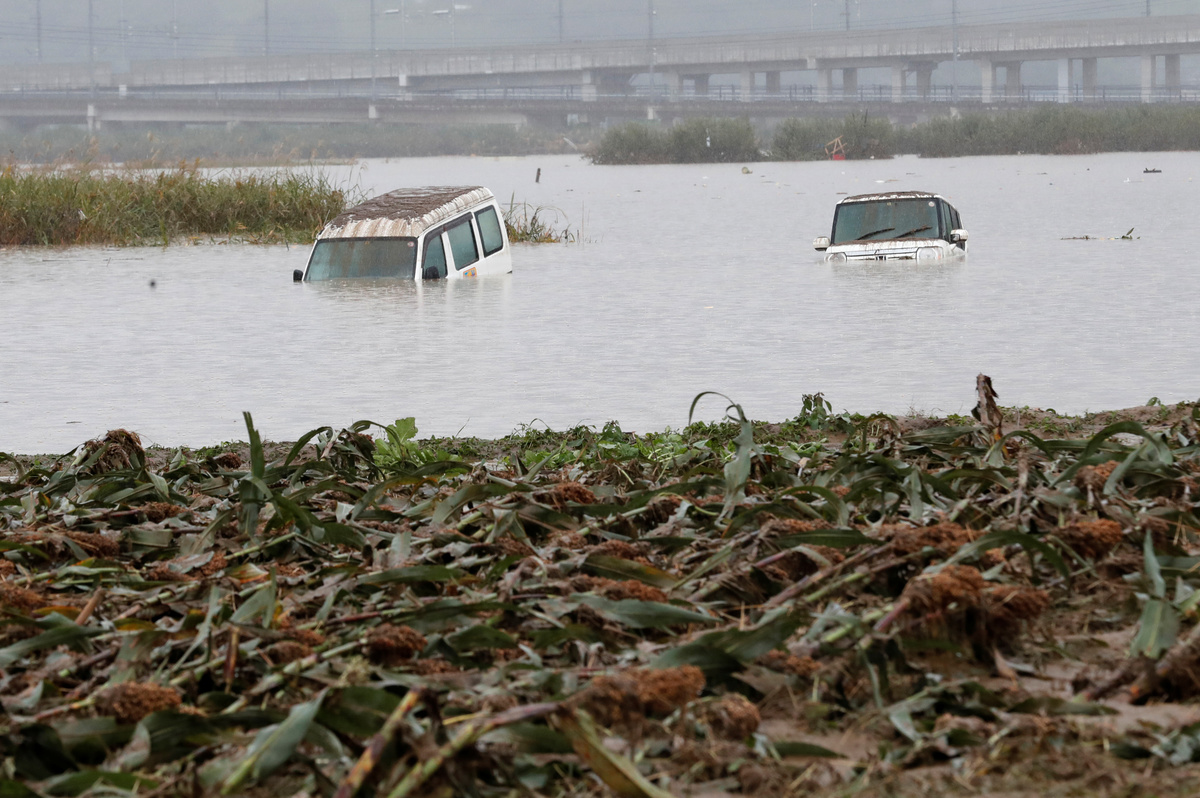
Partially submerged cars are seen in the aftermath of Typhoon Hagibis, which caused severe floods, near the Chikuma River in Nagano Prefecture, Japan, October 14, 2019. REUTERS/Kim Kyung-Hoon
A partially submerged car is seen in the aftermath of Typhoon Hagibis, which caused severe floods, near the Chikuma River in Nagano Prefecture, Japan, October 14, 2019. REUTERS/Kim Kyung-Hoon
Rescue workers transport a resident in the aftermath of Typhoon Hagibis, which caused severe floods, near the Chikuma River in Nagano Prefecture, Japan, October 14, 2019. REUTERS/Kim Kyung-Hoon
Sign up to read this article
Read news from 100’s of titles, curated specifically for you.
Already a member? Sign in here
Related Stories
Top stories on inkl right now
One subscription that gives you access to news from hundreds of sites
Already a member? Sign in here
Our Picks
Fourteen days free
Download the app
One app. One membership.
100+ trusted global sources.