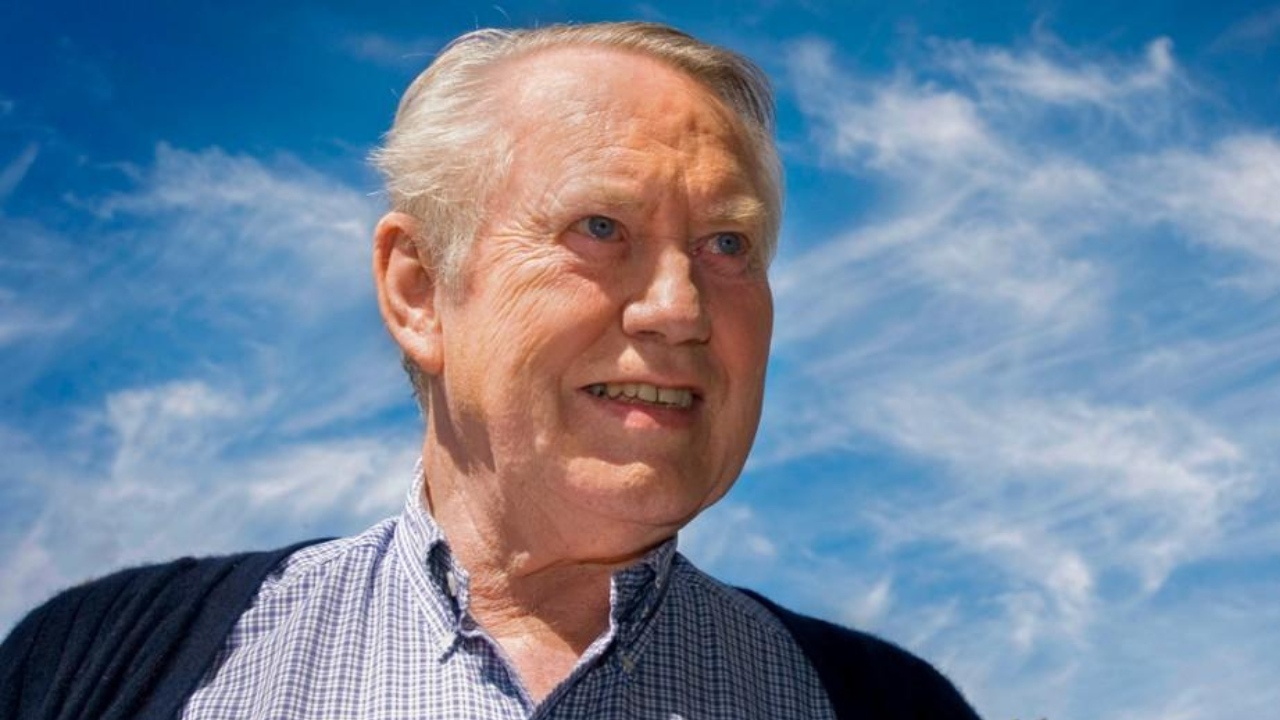
For most of his life, Chuck Feeney looked nothing like a billionaire. He flew economy class, wore inexpensive clothes, carried papers in plastic bags, and lived in rented apartments instead of sprawling mansions. Strangers passing him in airports would never have guessed that he was one of the richest men in the world. Yet behind that modest lifestyle was a secret mission that would eventually make Feeney one of the most influential philanthropists in modern history. Over several decades, the co-founder of Duty Free Shoppers quietly gave away nearly his entire $8 billion fortune, determined to fulfil what he called his dream of ‘dying broke’.
How Chuck Feeney made his $8 billion fortune
Born in 1931 in Elizabeth, New Jersey, during the Great Depression, Feeney grew up in a working-class Irish-American family. After serving in the US Air Force, he attended Cornell University through the GI Bill. In 1960, alongside business partner Robert Miller, he co-founded Duty Free Shoppers, a company that transformed airport retail by selling luxury goods tax-free to international travellers. As air travel expanded worldwide in the following decades, the company became enormously profitable and turned Feeney into a billionaire.
Unlike many wealthy businessmen of his era, however, Feeney became increasingly uncomfortable with extreme wealth and luxury. In 1982, he established The Atlantic Philanthropies, the charitable foundation through which he would eventually distribute almost all of his fortune. Just two years later, he secretly transferred his ownership stake in Duty Free Shoppers to the foundation. At the time, even many of his closest associates reportedly did not realise he had already given away most of his wealth.
For years, Feeney operated almost entirely in secrecy. Many institutions receiving donations were asked not to publicly identify him as the donor. His unusual anonymity earned him the nickname ‘James Bond of philanthropy’, popularised by Forbes. While many billionaires attached their names to skyscrapers, museums, and universities, Feeney largely avoided public recognition. Thousands of projects funded by his donations carried no visible sign of his involvement. Some reports suggest that even people working alongside Feeney for years had little idea about the true scale of the fortune he had already donated away in private.
The philosophy of ‘giving while living’
Feeney believed strongly in a philosophy he called ‘Giving While Living’. Rather than creating a massive fortune to be distributed after death, he argued that wealthy people should use their money to solve problems while they were still alive to witness the impact. His approach later influenced some of the world’s most famous philanthropists, including Bill Gates and Warren Buffett. Gates once described Feeney as the “ultimate model” for philanthropy because of his commitment to actively giving away his wealth during his lifetime.
Where the $8 billion went
Through Atlantic Philanthropies, Feeney donated billions to universities, hospitals, scientific research programmes, public health initiatives, and humanitarian causes around the world. Cornell University received nearly $1 billion from him over the years. He also funded educational institutions in Ireland and Vietnam, supported medical research and healthcare projects, and backed peace and reconciliation efforts in Northern Ireland. In South Africa, his foundation helped finance public health and AIDS-related programmes. Despite the enormous scale of these contributions, Feeney continued living modestly and avoided the lavish lifestyle usually associated with billionaires.
Stories about his frugality became almost legendary. He reportedly wore a cheap watch, did not own a private jet, and preferred practical living over luxury. Even after becoming one of the world’s richest men, he continued to see money mainly as a tool for improving society rather than for personal comfort or status.
In 2020, Atlantic Philanthropies officially completed its mission after distributing nearly all of Feeney’s fortune. By then, only a relatively small amount remained for his and his wife’s retirement. When Feeney died in San Francisco in 2023 at the age of 92, he left behind a legacy unlike that of almost any other billionaire. While many wealthy figures are remembered for how much they accumulated, Chuck Feeney became famous for how much he gave away, quietly, anonymously, and almost completely.