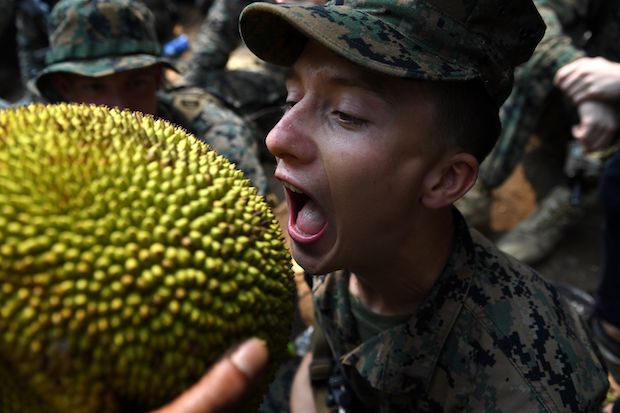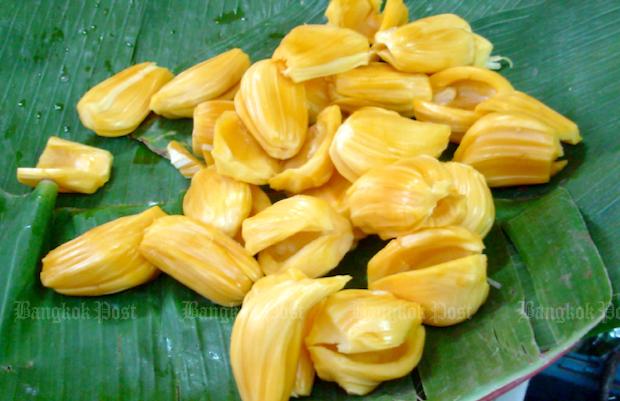
Jackfruit. A near-miraculous, versatile source of nourishment, or “gross-looking lump of fibre – fat, spiky and green”?
Well, that depends on whether you are reacting to its increasing use as a meat substitute by vegans in Britain, or defending it as an integral part of your country’s culture, it would seem.
The British newspaper The Guardian recently published an article by columnist Zoe Williams who eviscerated the national fruit of Bangladesh and Sri Lanka as a “spectacularly ugly, smelly … pest-plant” which people consume “only if they had nothing better to eat”.
Her comments caused an uproar online, with keyboard warriors from across Asia rallying to defend their favourite tropical foodstuff.
“Jackfruit is a vegan sensation – could I make it taste delicious at home? The Indian fruit used to be left to rot on the tree, but has become a fashionable meat substitute. Does its taste match its popularity?” Ms Williams wrote.
“This is one of the most offensive bits of food writing I have read in a while, and trust, there is a lot of competition on this front,” Vindhya Buthpitiya, a researcher at University College London, wrote on Twitter.
The article in The Guardian came just weeks after London-based chocolatier Paul Young caused outrage online for comparing the lingering taste of another Asian favourite – durian – to the enduring damage done by domestic abuse.
He described it as “the world’s worst-tasting fruit”, apparently overlooking the fact that it is highly prized across the region for its complex flavour, and classed like fine wine according to its characteristics, quality and origin.
Jackfruit stewed in coconut milk, or gudeg, is a popular traditional Javanese dish, and the fruit figures prominently in many South and Southeast Asian cuisines. Writers and eaters across the globe have fought back in its defence.
“This is what food writers of colour are up against. If I wanted to write about Keralan jackfruit dumplings steamed in fresh bay leaves, most editors would reject it – ‘too niche’. Yet this breathtakingly lazy, ignorant, and embarrassing nonsense gets published,” London-based food writer Sejal Sukhadwala wrote on Twitter in reference to the article by Ms Williams.
Commenters responded with offers to pay Ms Sukhadwala to publish her recipe.
“Food should be the easiest thing to write about with respect, especially now that journalists have the bounty of the internet literally at their fingertips,” said writer Pooja Pillai, also on Twitter. “The Guardian writer encountered jackfruit as a vegan trend taking over the Western world and I can only pity her, I guess, because she remains unaware of the silky sweetness of ripe jackfruit.”
Garima Arora, chef of the Michelin-starred Bangkok restaurant Gaa – recently named one of the best in Asia – uses jackfruit in her dishes to play on diners’ nostalgia as a reference point in the meal.
“The jackfruit in Thailand is always eaten ripe, and in India it’s always eaten unripe,” she said. “My mum actually always used to describe it as chicken, and the fruit is so high in umami, you don’t miss the meat. Within the same course, you have two separate ideas of what the same food should be, and it surprises you.”
Meanwhile, in a post titled “With Jackfruit We Stand” on media platform The Better India, Lekshmi Priya S wrote, “Hating a fruit without really knowing its virtues or versatility, or the culture it has intrinsically woven itself into only seems to indicate one has yet a lot to learn.”