
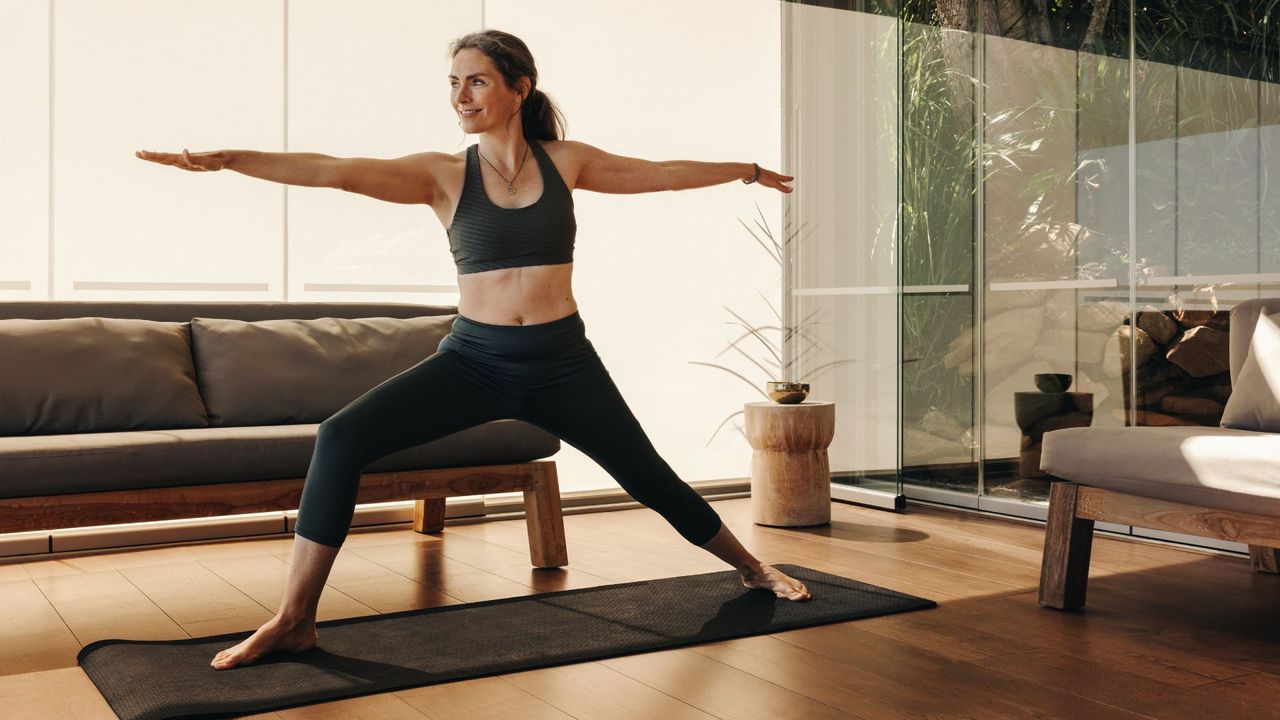
Whether you want to relieve discomfort while sitting at your desk or make sure you can get on the floor to play with your grandchildren in the years to come, keeping your hips supple is vital. Take it from me - I've been teaching yoga for 17 years, and tight hips are one of the most common reasons students come to my classes.
Modern-day yoga workouts offer simple but effective movements that can help you to unlock “tight” hips. While students come in expecting the pigeon stretch, this movement is really just the tip of the iceberg.
Your hips are at the centre of almost every movement you make throughout the day, so when they feel stiff, you might experience difficulty, discomfort or even pain performing basic tasks. Though tight hips aren't necessarily a problem to be solved, if they're causing you discomfort, improving your hip mobility can help.
Yoga moves to loosen tight hips
1. Window wipers
This may seem like a simple start, but the simplest movements are often the most effective for unwinding tension in your hips and lower back before you move on to more advanced mobility exercises.
Here's how to do window wipers:
- Lie down on your mat with your knees bent and bring your feet to mat-width. Release your arms overhead.
- As you exhale, release your knees to the right.
- Inhale to bring your knees back to centre, then exhale, drop your knees to the left.
- Continue moving with your breath for 3 - 5 rounds on each side.
2. Bridgeon
This pose is a marriage between the bridge and pigeon poses, and it covers a lot of bases. It strengthens your glutes and stretches your hip flexors while also reintroducing your hips to external rotation.
Here's how to do it:
- Start on your back with your knees bent, hands down next to your hips. Cross your right ankle over your left knee.
- Press your left heel down and lift your hips. Squeeze your left glutes to make a small pulsing action, while also pressing your right outer knee down.
- Hold for 5 - 10 breaths, then release and switch sides.
3. Hip circles
Your hip is a synovial joint, which means it produces fluid for lubrication – but movement helps to optimise this process. Hip circles are a simple way to move your hips in all directions to keep them juicy.
Here's how to do it:
- Come to your hands and knees, padding your knees with a blanket if you need to.
- Draw your right knee in towards your chest, then keeping it bent, take it out to the right, lift it behind you, and draw it in again to complete the circle.
- Try to keep your arms straight and concentrate the movement on your hip joint.
- Repeat 3 - 5 times, then switch sides.
4. Funky bird dog
The bird dog has become a favourite in home Pilates workouts in recent years - and for good reason. My take on it puts your hip joint through a wide range of motion to both stretch and strengthen your outer hips and hip flexors.
Here's how to do it:
- Come onto your hands and knees and extend your right leg straight back, keeping your heel in line with your hip.
- Turn your toes out to the right, rotating your hip in the socket, then exhale and bend your knee in towards your right armpit, keeping your knee as high as you can.
- Inhale, straighten your leg behind you again and turn your toes to face down.
- Exhale and cross your right leg over to the left, touching your toes down on the floor. Look over your left shoulder to increase the stretch along your right side.
- Repeat 3 - 5 times, then change sides.
5. Low lunge pulsation
This takes a common yoga posture – low lunge – and makes it really work for your hip flexors, which can feel tight if you sit a lot. It involves first contracting your hip flexors to activate them, then lengthening them to promote both strength and mobility.
Here's how to do it:
- Bring your right foot forward into a lunge, then climb your hands up onto your knee. If you’re able, slide your left knee back a bit so your left thigh is at an angle.
- Inhale and shift your hips back, rounding your spine and drawing your pubic bone up toward your navel.
- Exhale and sink your hips forward a little, pressing your hands gently into your knee to keep your chest lifting, and squeeze your left glutes.
- Repeat 3 - 5 times, then come back to hands and knees to switch sides.
6. Figure 4 pulse
Everyone loves pigeon for stretching the outer hips, but this is my favourite way to approach it, not least because you can do it anywhere – including at the airport or mid-flight if you want to break up all that sitting-down time. If you have trouble with balance, do it close to a wall.
Here's how to do it:
- From standing, cross your right ankle just above your left knee and bring your hands together at your chest (one hand will do if you’re holding the wall for balance).
- Take an inhale to steady yourself, then exhale and bend your standing knee, sitting your hips back.
- Press your thumbs into your sternum and lift your sternum into your thumbs.
- Take 5 to 10 breaths here, rising a few inches on your inhales and sitting a little deeper on your exhales, all the while keeping your chest lifting towards your thumbs, then change sides.
What’s the best way to improve hip mobility?
I suggest following the routine above two to three times a week and giving it several weeks to make a difference. You can do it on its own or after a workout, and at any time of day. If you experience sharp pain in your hips, stop and consult a physiotherapist, but remember that a little discomfort is probably normal if you’ve been neglecting your hips for a while.
Focus on your breathing while doing these postures, and move slowly. This can signal to your nervous system that you’re in a safe place. It will then be more likely to stop telling your muscles to clench.
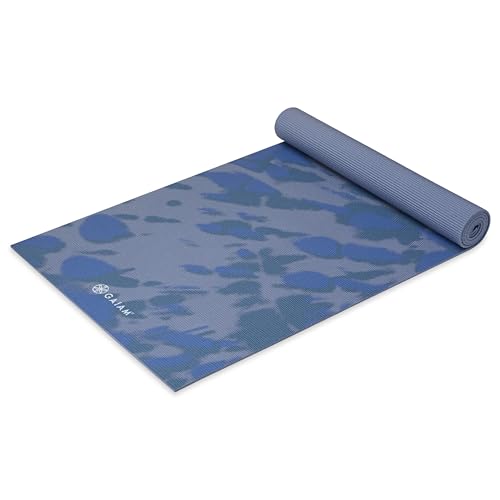
I rely on a thick yoga mat during my sessions to keep my knees comfortable. This 6mm mat is the top choice at woman&home, delivering cushion underfoot and joint support. It's also made from a durable, wipe-clean material, and it comes in fun colours.
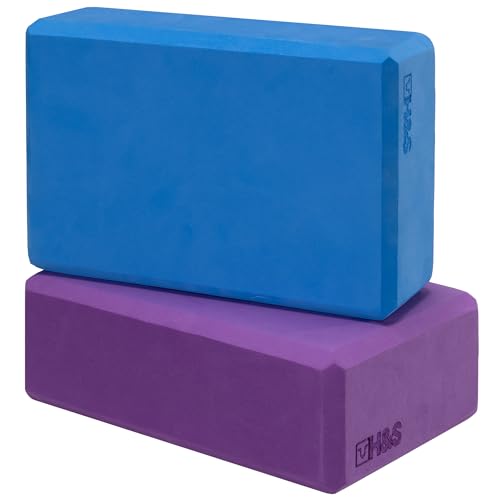
Yoga blocks aren't a requirement, but they're really helpful for support, no matter how long you've been practising yoga. Think of them as a tool to make your arms longer in certain poses. These blocks are lightweight, non-slip and made from non-toxic foam.
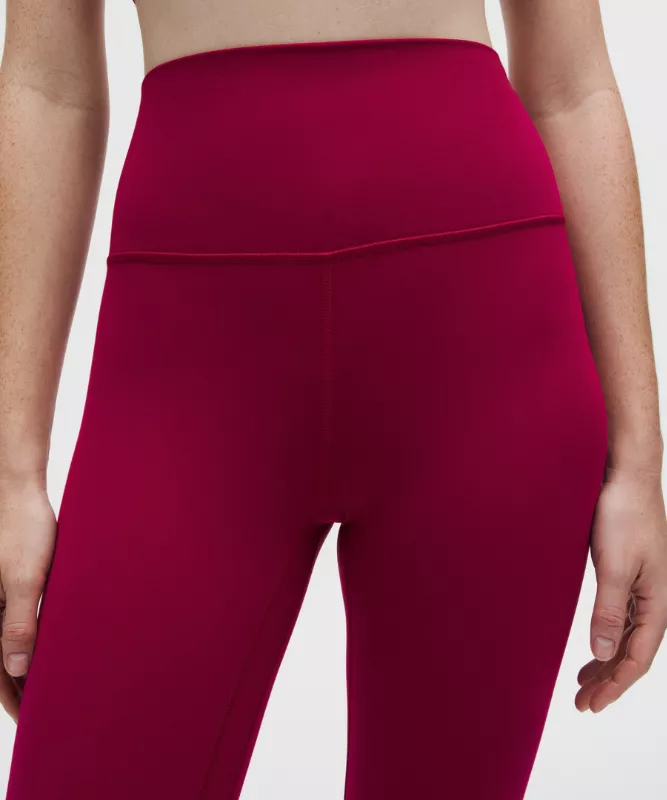
A new pair of yoga pants won't make your hips any more mobile, but they'll help you feel good while you're doing it. Stretchy leggings are key for these moments, and the Align leggings are among my best workout leggings. They are comfortable, look great and come in a rainbow of different hues to match your mood.
Modern-day yoga is known for incorporating lots of stretching. But often, passive stretching alone isn’t enough to improve mobility - especially if your nervous system braces against it. Through my years of teaching and training, I’ve found that a multi-pronged approach of active and passive stretches, and strengthening and balance exercises, is most effective. That’s why I think yoga in particular can be so helpful for freeing your hips.
Instead of just banking on one pigeon pose or frog stretch, which stretch one part of your hips, this approach helps you think of your hips as having four sides that need attention: your hip flexors (front), glutes (back), adductors (inner) and abductors (outer). My remedy for limited hip mobility involves a series of reclining, kneeling and standing postures that target all four sides.