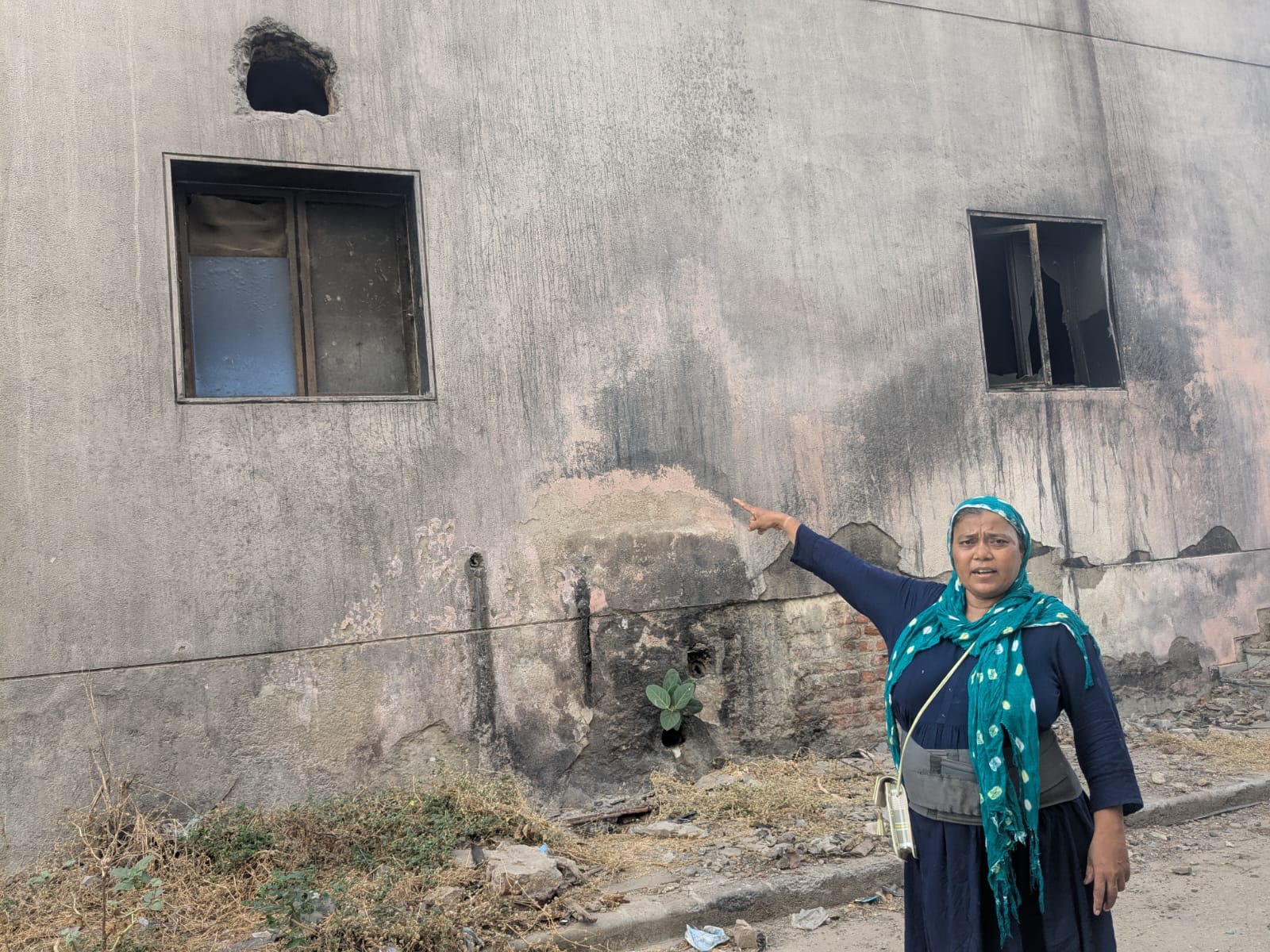
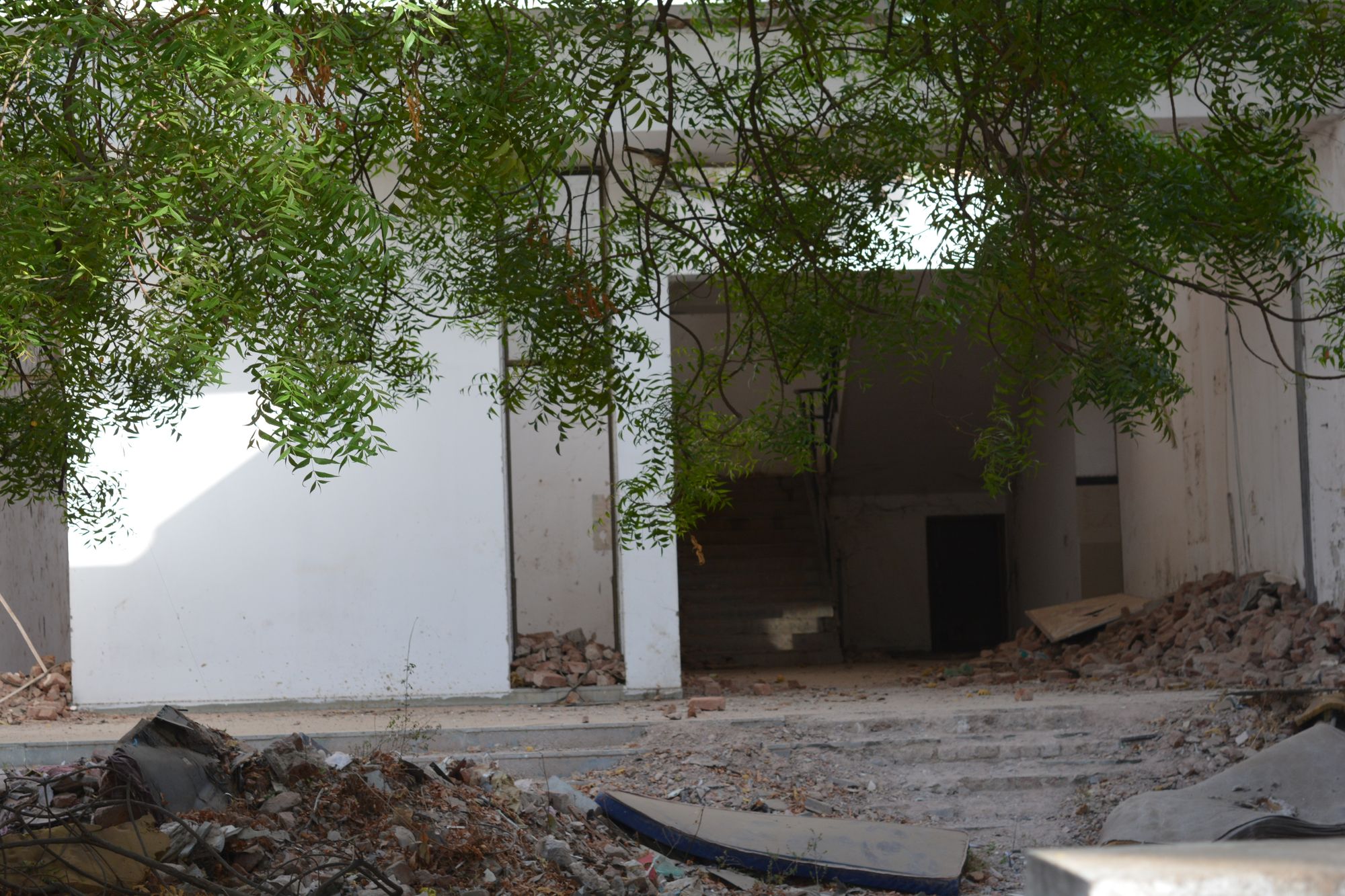
Nearly a year after Air India Flight 171 tore through a medical college campus in Ahmedabad, the physical scars of the disaster remain etched into the landscape. The blackened hostel buildings of the Byramjee Jeejeebhoy Medical College have faded to a dull grey, with a gaping hole where the plane entered the building now looking more like the neglect of age than the impact of one of India's deadliest aviation disasters.
The Independent visited the scene one year on from the crash that killed 260 people, including 19 on the ground, and injured dozens more. For those who lived through the disaster on the ground, time has done little to soften the memories.
Returning to the site is not an act of closure, they say, but a confrontation with trauma and an experience none of them ever wishes to relive. The sight of the ruined buildings revives memories of panic, death and immense pain.
Not all survivors have had a choice about whether or not to return to the scene. Toralben Shaileshbhai Lakshari, a canteen worker, was injured fleeing the inferno on the day of the crash, and recalls with horror how she and other staff were ordered to go back into the charred building to retrieve any kitchen equipment that wasn’t damaged beyond use.
Every step towards the wreckage brought to mind thoughts of those who died there, including a five-year-old girl she knew. “When we went there, my whole body froze,” she says. “I did not have it in me to go inside. I kept thinking about how quickly could I leave.”
Ms Lakshari, 43, was working at the medical college on 12 June when the plane came crashing down. “All that I could think of while visiting the spot was, there are so many people who died at this very spot. How many bodies were here for how long… They must have been screaming. Some must have died without water,” she said.
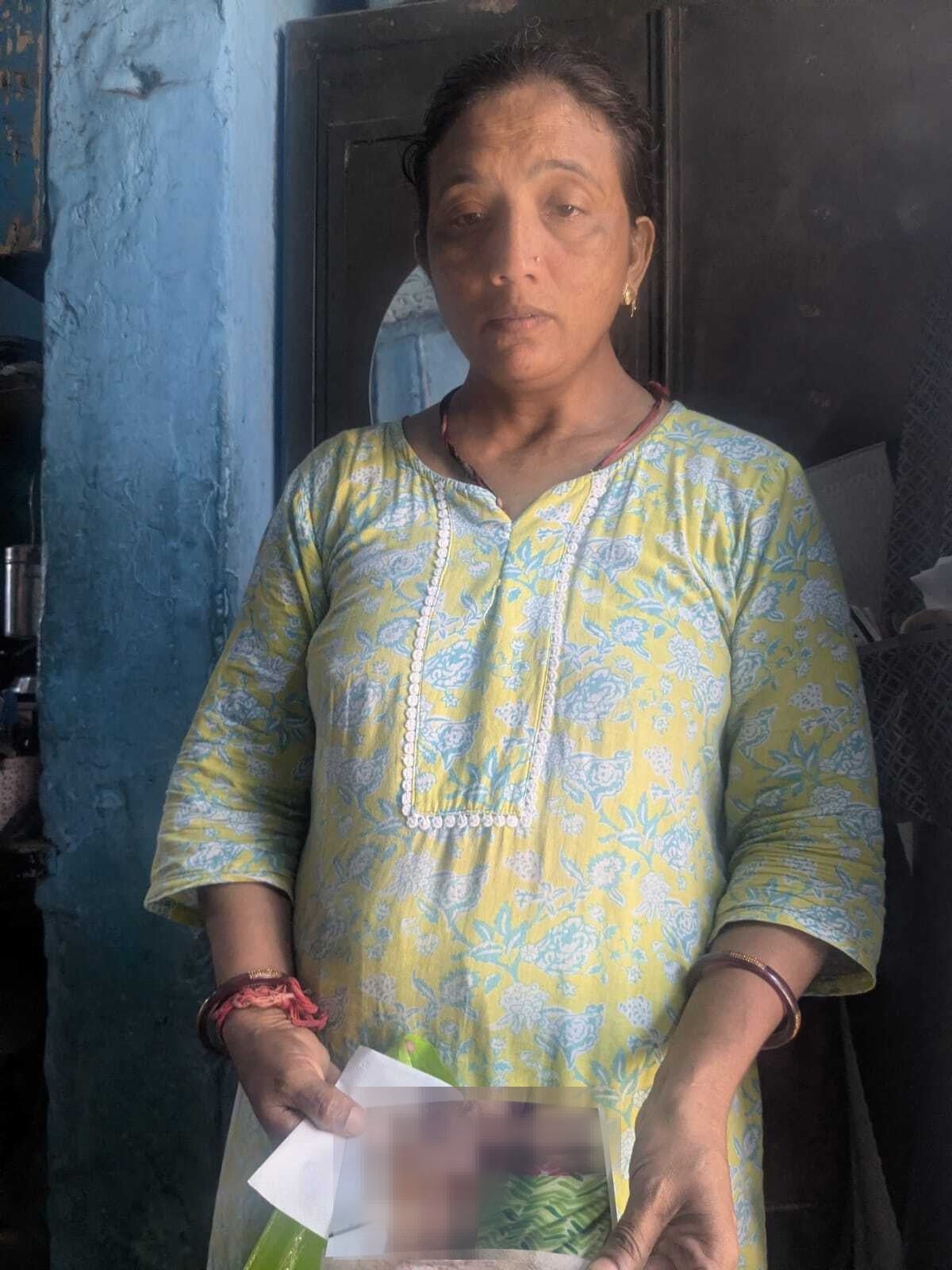
She recounted the death of a five-year-old girl named Adhya, who used to accompany her grandmother, Sarla Ben, in the canteen. Both died in the crash. However, the confirmation of their deaths came seven days later, when the bodies matched DNA samples submitted to the hospital.
“I kept wondering, God did whatever he had to do, but why must he take the life of such a young girl? What was her fault that she had to die before her time?” she asks.
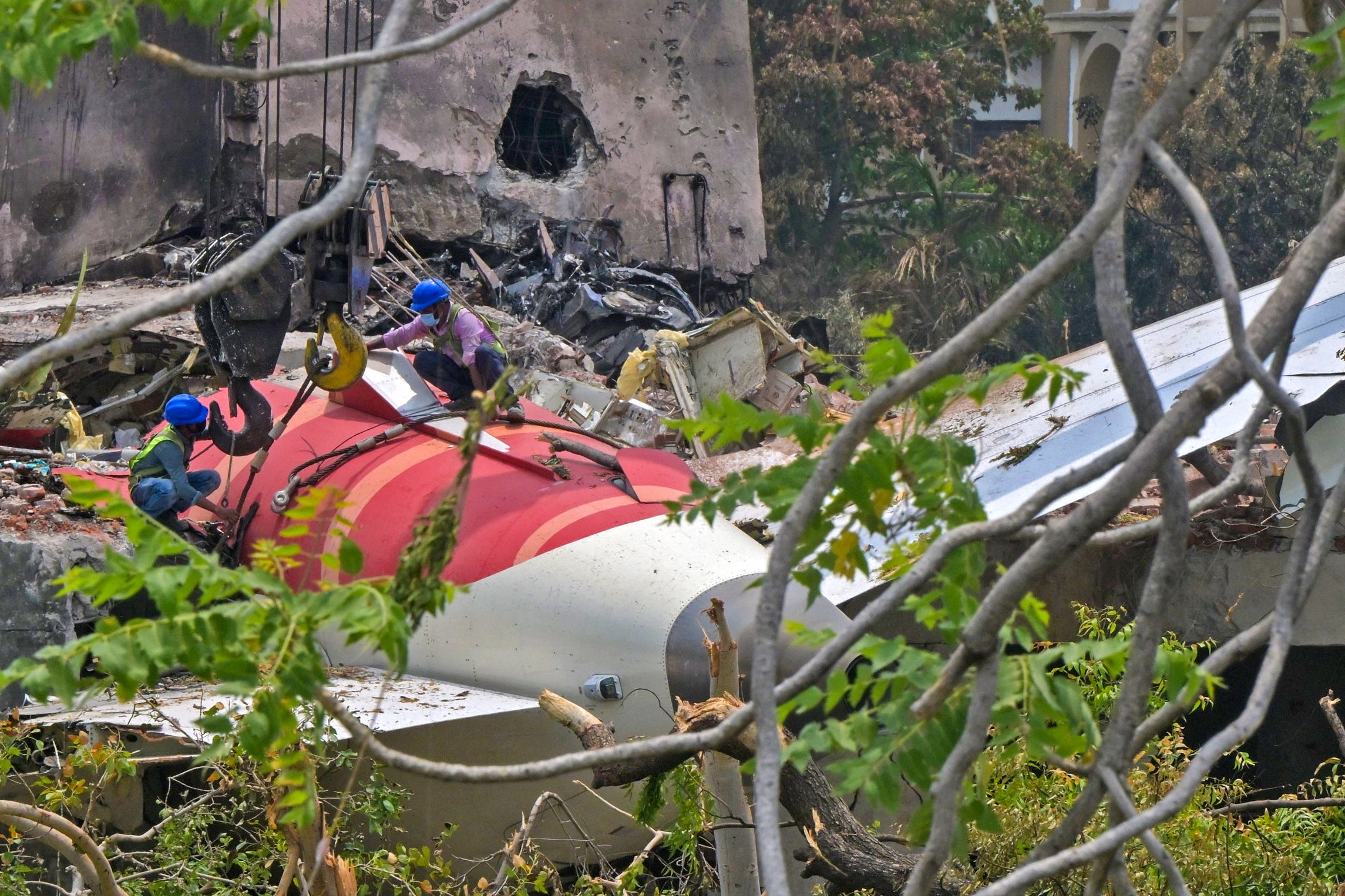
It was not just memories of the crash that made her want to leave, but the space itself. Ms Lakshari says she was forced to return almost a month after the crash, when investigators ordered the removal of any remains of the plane from the site.
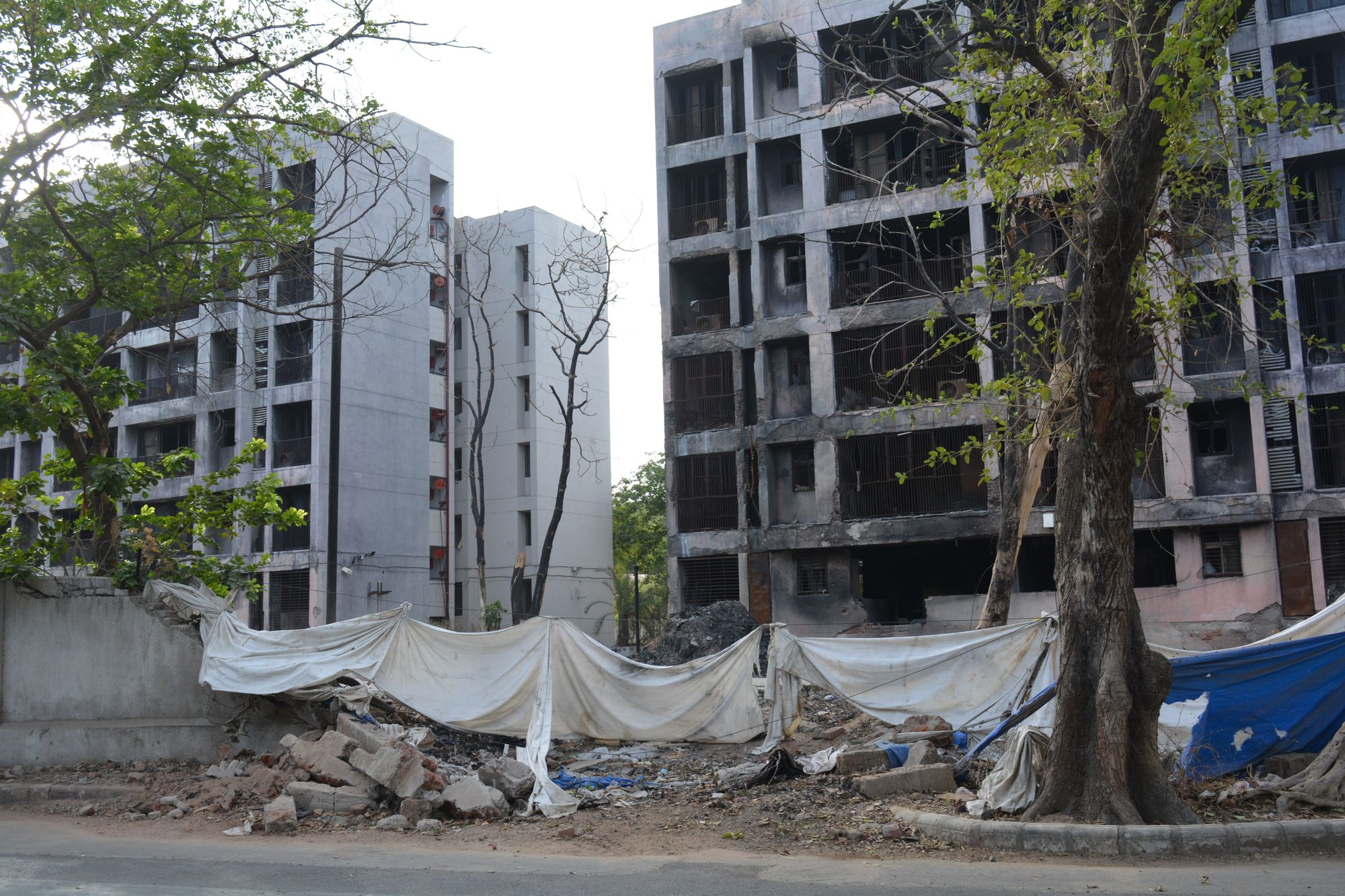
“It was stinking so much. It smelled like bodies had been left to rot. I was scared. There were shattered glasses all over,” she says.
Geetaben Patel, 56, another canteen worker who survived the crash, tells The Independent she suffered a skin condition after being told to enter the site to help clear up. “My entire body had breakouts and rashes,” she says. “I was very itchy. It lasted for three to four days before eventually subsiding.”
The two women vow never to return to the spot in the building where they were at the time of the crash, even as they continue to work in the vicinity of the medical college. However, they have no choice but to walk past the site every day.
“The officials sometimes say that ‘we will rebuild the damaged site and you have to go there and operate from the mess (canteen)’,” says Ms Lakshari. “But I have told them I don’t want to go. I still freeze at the thought of returning. I fear, what if the plane falls there again while overhead.”
The Independent has contacted the dean of BJ Medical College for comment.
Several planes fly over the college compound while Ms Patel shows The Independent around the campus. She looks up each time. On seeing a plane with red colour on the tail, she notes: “It seems like it is Air India. Even now, when the plane comes, everyone gets scared that it will just fall down and crash. We keep an eye on it. While last time, we were able to jump off the windows to escape, I don’t know if we will manage that again.”
Ms Patel injured her lower back after escaping through a window. Both she and Ms Lakshari get startled by loud sounds and sudden movements. Even car horns upset them.
“I get scared even if the pressure cooker blows its whistle or if someone drops a utensil,” says Ms Lakshari. “I fear that something will happen. All the planes fly over the campus, through that route, multiple times a day. I get scared each time. I fear, what if it falls like that time.”
She was making flatbreads in the hostel canteen for lunch when she saw furnace-like fire.
“I thought the cooking gas cylinder exploded. I left everything and started running. It was in the melee that I got hurt, but I did not realise that I was injured,” she says, as she shows a now-healed injury on her upper right arm. She does not know how she got injured, but just that there was a deep wound with blood gushing.
While running she slipped on a cement mound. “At that point I thought that maybe it was an earthquake, and there was no way we would live.” Parts of a building wall fell on two people, she recounts.
“They all were crying, ‘Save us! Save us’. But how could we have saved them when there was so much dark smoke from the plane crash,” she asks.
After she safely made it out of the compound, Ms Lakshari cried and hugged all the people who managed to escape. Her arm was bleeding profusely but at first she was too shocked to go to hospital. Medical students from the college gave her first aid before taking her to the nearby Civil Hospital, where other crash victims were being taken.
“I started screaming. They told me, ‘You are in a state of trauma. Don’t scream.’” On seeing her wound, a doctor sent her to a section where she found herself surrounded by serious burn victims.
“Next to me was a woman with severe burn injuries. A couple of patients were also gravely injured. It scared me a lot. I started crying and ran out of the hospital.”
Ms Lakshari fled while doctors were looking after another patient. She fears that moment may have cost her the right to 2.5m rupees (£19,500) in compensation, the figure paid to those injured and hospitalised after the crash. She instead received just 300,000 rupees (£2,350).
While Ms Lakshari has at least received some compensation, Ms Patel says she has so far been given nothing. Despite having suffered a severe back injury, she is not acknowledged among the list of the 67 injured.
“The X-ray at the time showed that something had happened to the backbone. I cannot even sit upright after waking up, it hurts so much,” says Ms Patel, who has been cooking food at the hostel canteen for male students for 35 years.
She says that on applying for compensation from Air India, she was told that it will be given to only those who were admitted at a hospital after the air disaster.
“A lot of the people from the mess were injured but did not need admission. We have papers with respect to our injuries but were told that since you were not admitted, you are not eligible,” she says.
After the accident, she needed care and her lack of income due to the temporary closure of the canteen did not help. “They should have given us something. We were injured. We lost our place of work and employment due to the damage to the building.”
The medical college students rallied behind her, writing a letter demanding she be provided financial and medical relief.
Ms Lakshari also complains of a significant decline in income after the crash. Students and doctors living in the neighbouring post-graduate hostel who used to buy their meals from her stopped coming after the crash. “Earlier 50-60 children used to come. Now it has gone down to 30-35. The salary has gone down drastically. Earlier I used to earn upto 25,000 rupees (£195). But now it is [between] 10,000 rupees (£78) and 15,000 rupees (£117)."
Air India, in response to a detailed questionnaire by The Independent, defended the compensation rolled out to the victim families and survivors. A spokesperson said: “Air India is committed to supporting every person impacted by the AI171 tragedy with care and compassion. While we cannot discuss individual cases, compensation for those who sustained injuries on the ground has been assessed in a fair and transparent manner in line with applicable law, based on the nature of injury incurred and any loss of livelihood."
Gitaben Patel disagrees. “Air India has done an injustice to us. And not just me – a lot of us were injured. Not everyone’s injury possibly required them to be admitted [to a hospital], but they needed nursing at home and would take medicine from over the counter. They should have given money to them as well.”