TV manufacturers put a lot of emphasis on innovation, from new OLED technology to integrating Dolby Vision 2. But when it comes to accessibility provisions, progress has not been as fast.
According to the RNID (Royal National Institute for Deaf People)one in three adults in the UK are either deaf, have hearing loss or have tinnitus. And more than two million people in the UK are living with sight loss, says the RNIB (Royal National Institute of Blind People).
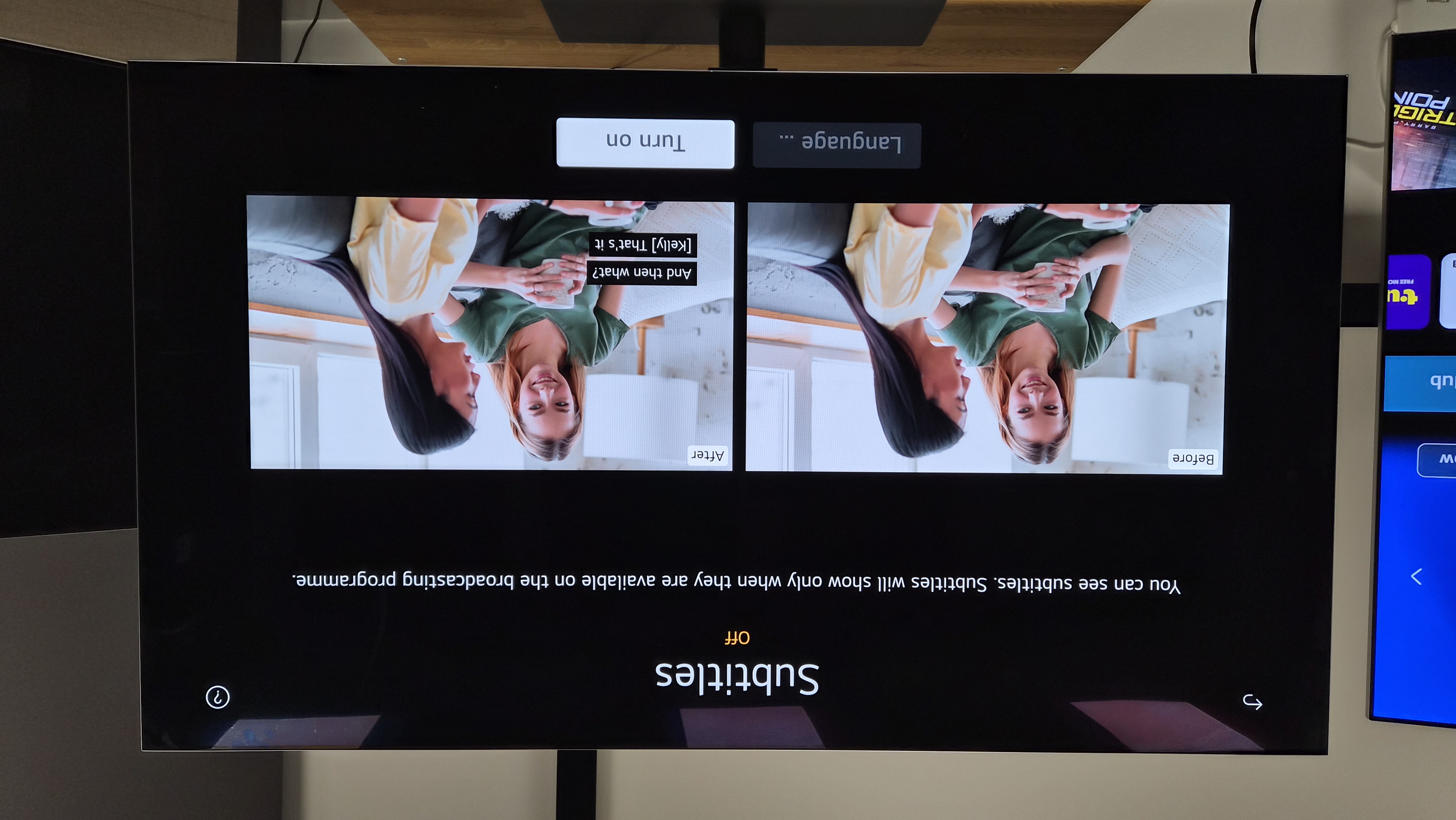
Plenty of provisions can be implemented for those with hearing or sight loss. These range from descriptive subtitles (captions that transcribe not only spoken dialogue but also important sound effects, music, and speech identifiers) to assistive listening technology such as Auracast.
The latter works by broadcasting audio that can be picked up by many other devices (such as hearing aids or cochlear implants) without needing to go through a pairing process.
But ultimately what works for one person might not be suitable for another. So are these accessibility features good enough in order to ensure as many people as possible can enjoy the latest TV shows and films at home?
"A lot of jargon"
Charlie Little, Deaf Action's BSL Film Club co-programmer, says that while manufacturers are improving their accessibility offerings, there is still a long way to go.
They are deafblind, and use descriptive subtitles as their “number one access provision" for watching films at home or in the cinema.
Little told What Hi-Fi?: “At home I have a soundbar, which means the audio can be clearer. It’s not always about whether something is loud enough; it’s about whether it’s clear.”
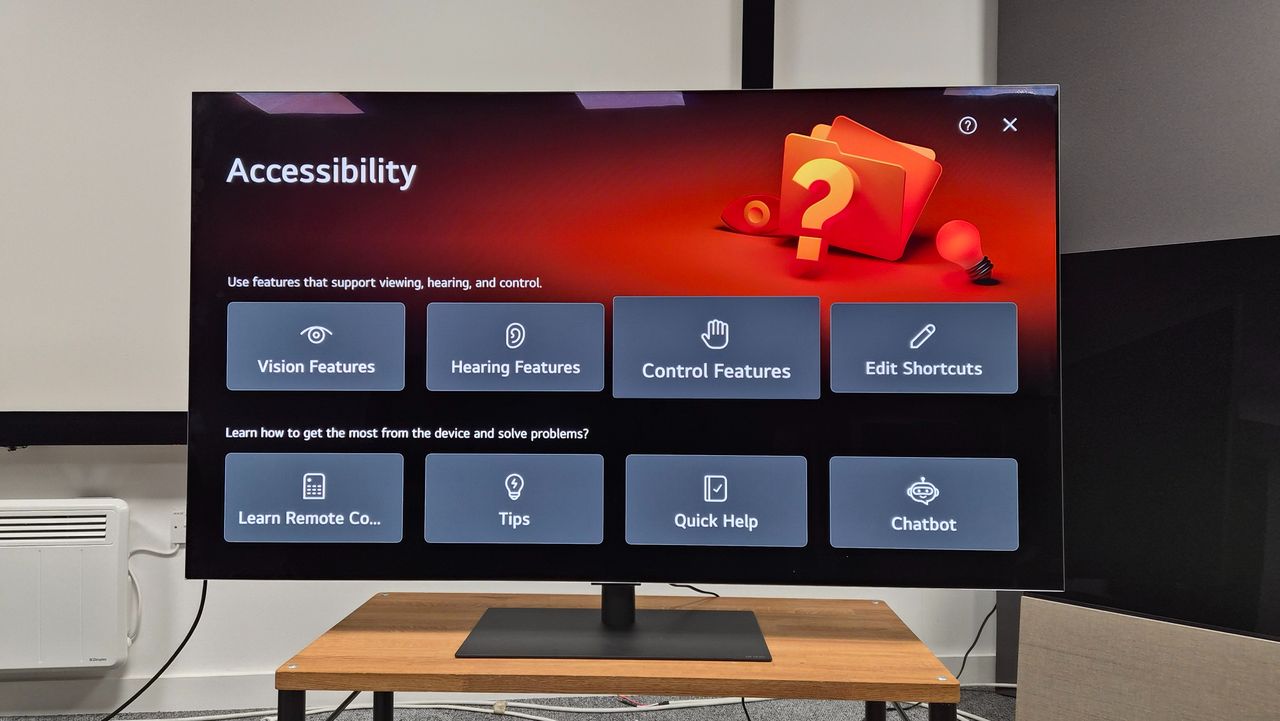
One of the biggest issues for many is that accessibility features are often hidden behind a wall of menus and unclear language.
As Little tells us, “Sometimes these accessibility features are really hard to find out about in the first place, or the actual setting up and navigation of the TV [is hard], especially if you are an older person who doesn't feel as confident with technology.”
They add that Deaf people who use BSL (British Sign Language) can be faced with “a lot of jargon and written information that’s just not very accessible, whether that’s on the manufacturer’s website or within the television itself".
“It feels like such a journey just to get to using that access provision,” Little says.
That’s not to say that there hasn't been an improvement in accessibility in recent years.
Sonos, for instance, worked with the RNID to develop a Speech Enhancement feature with four levels of control that let you adjust dialogue clarity, including one specifically made for those with hearing loss.
It would be encouraging to see more companies following in Sonos's footsteps, and develop new technology in collaboration with the people who need these accessibility features the most.
Streaming has a part to play
It is not just manufacturers who need to improve accessibility provisions – streaming services have a part to play as well.
Until earlier this year, streaming platforms did not have to conform to the same subtitling, audio description and signing requirements that traditional broadcasters follow in the UK.
Now, services such as Netflix, Amazon Prime Video and Disney Plus must ensure that at least 80 per cent of their total catalogue is subtitled, 10 per cent is audio-described, and five per cent is signed.
The largest, mainstream services have four years to meet the requirements, which leaves quite a long wait for those relying on accessible content to watch the latest movies and shows.
Even then, the ratio of content that needs to be signed is low. After all, 22,000 people use BSL as their main language in England and Wales, according to the 2021 Census.
It was partly this lack of provision that led Little, alongside Tomas Gerrard, to create the BSL Film Club in Edinburgh.
Open to all, the BSL Film Club shows movies in an accessible way, followed by a discussion afterwards. Little says: “It’s an inclusive space for people to engage with the film in a way that’s comfortable for them.”
They continue: "We’ve shown things like Alien and Do The Right Thing, which are well-known films but perhaps people have not experienced them on a big screen in an accessible way."
Hopefully, TV manufacturers and streaming services continue to do more, and ensure nobody has to jump through unnecessary hoops simply to enjoy TV and movies in their home.
MORE:
What is JBL PartyBoost? Is it the same as Connect+ and Auracast?
These are the best scenes to test your Dolby Atmos sound system