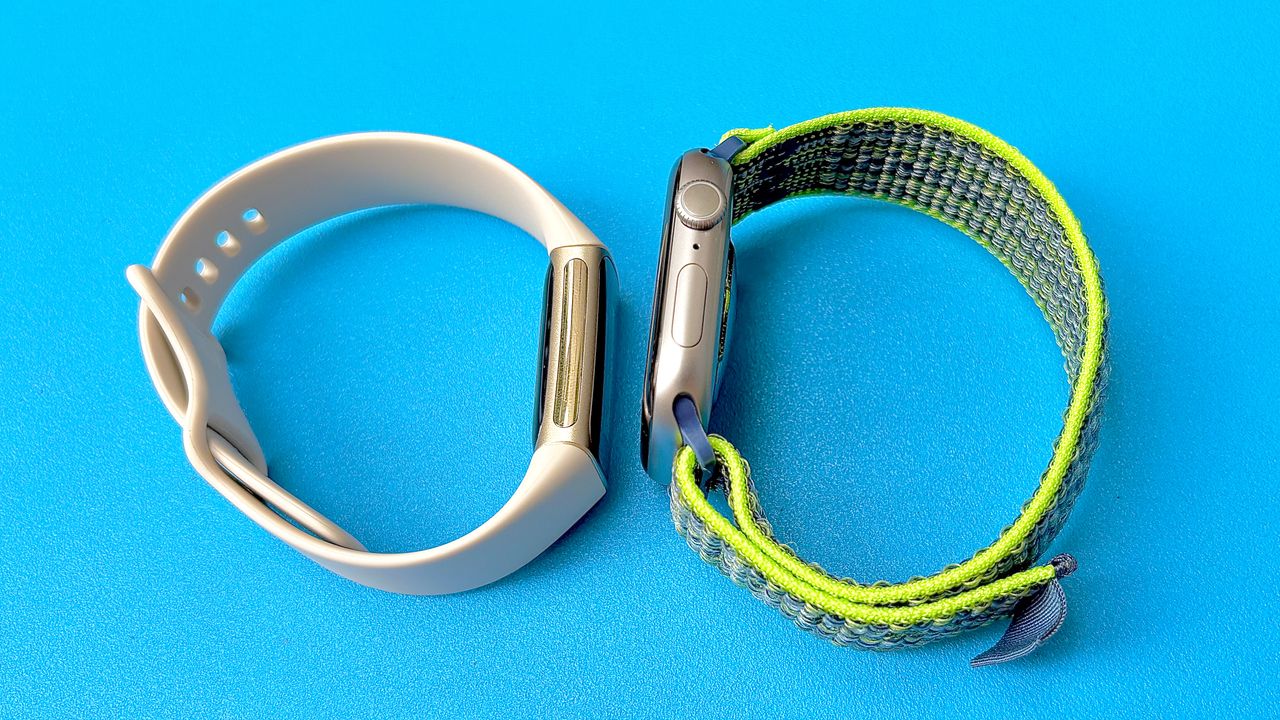
The Fitbit Charge 5 debuted in 2021 around the same time as the Apple Watch Series 7, and even though it was replaced by the Fitbit Charge 6 in 2023, you can still find the Charge 5 on sale in 2026 for around $100 new or ~$40 if you go the used/refurb route.
But can a 2021 wearable, like the Fitbit Charge 5, actually keep up with today’s best smartwatches, like the Apple Watch Series 11, when it comes to fitness tracking accuracy? I just had to find out.
While the Apple Watch Series 11 starts at roughly four times the cost of the Fitbit Charge 5 in today’s market, the two actually have a lot in common. Both sport AMOLED touchscreens — though the one on the Charge 5 is comically small — onboard GPS, heart rate monitors, blood oxygen sensors, and ECG capabilities.
More importantly, in terms of tracking an outdoor workout, you get nearly identical post-exercise stats, with insights into your distance, pace, climb, calories burned, heart rate max/average, and HR zones.
So, how did 2021’s Fitbit Charge 5 perform versus the 2026 flagship Apple Watch model? You can find the full results of my comparison below, followed by the five biggest takeaways from the test.
Old Fitbit vs new Apple Watch: Walk test results
Apple Watch 11 |
Fitbit Charge 5 |
Control |
|
|---|---|---|---|
Steps |
5,429 steps |
5,473 steps |
5,500 steps (manual count) |
Distance |
2.83 miles |
2.98 miles |
2.87 miles (Strava) |
Climb |
481 feet |
324 feet |
456 feet (Strava) |
Average pace |
18 mins 10 secs |
17 mins 43 secs |
18 mins 02 secs (Strava) |
Average heart rate |
125 bpm |
120 bpm |
n/a |
Max heart rate |
156 bpm |
149 bpm |
n/a |
Calories burned |
400 calories |
461 calories |
n/a |
Battery usage |
5% |
14% |
n/a |
1. Fitbit's step count tally is closer
Both the Fitbit Charge 5 and Apple Watch Series 11 calculated step count totals within 100 steps of my manual count (5,500 steps) and Strava's count (5,510 steps). This result is both impressive and well within a reasonable margin of error.
However, much to my surprise, the aging Fitbit proved slightly more accurate than Apple's latest at logging steps, besting the Series 11 by a small but noteworthy margin.
2. Apple's climb data is far more accurate
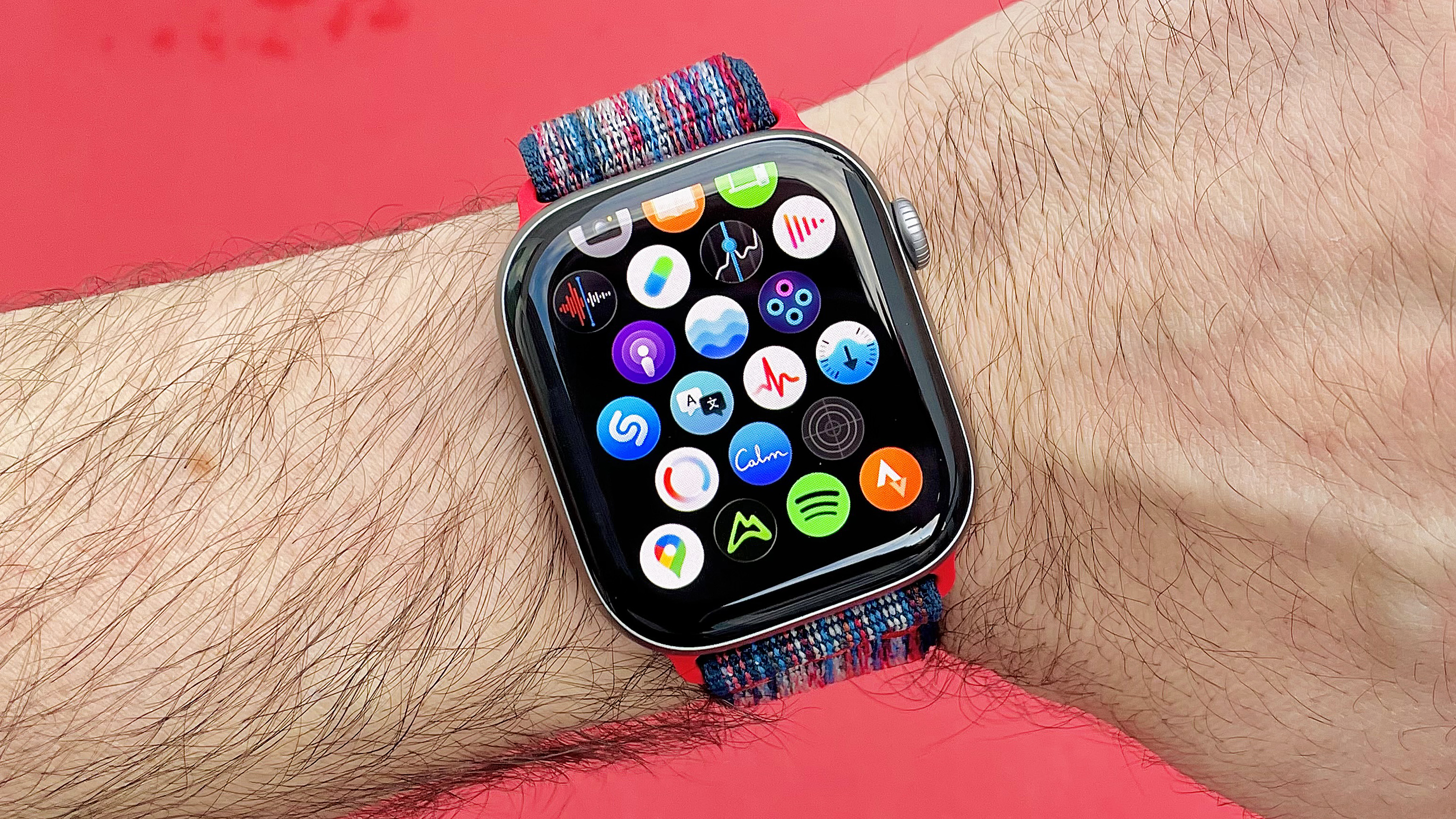
In an effort to thoroughly test both wearables — and to get my heart rate up — this trek involved quite a lot of uphill effort. Unfortunately, the Fitbit Charge 5 struggled to log my climb accurately during this roughly 52-minute walk.
That effort is reflected in both Strava and Apple's post-workout reports, even if the Series 11 slightly inflated my climb (I'm not mad).
Assuming Strava's data is close to correct, which I suspect it is, the Charge 5's climb tally is 132 feet shy of the control, a disappointing result.
It's worth noting that the Fitbit Charge 5 lacks an onboard barometric altimeter, a sensor dedicated to monitoring elevation changes, while the Apple Watch 11 and my smartphone running Strava both sport one.
3. Fitbit recorded a lower heart rate but more calories burned
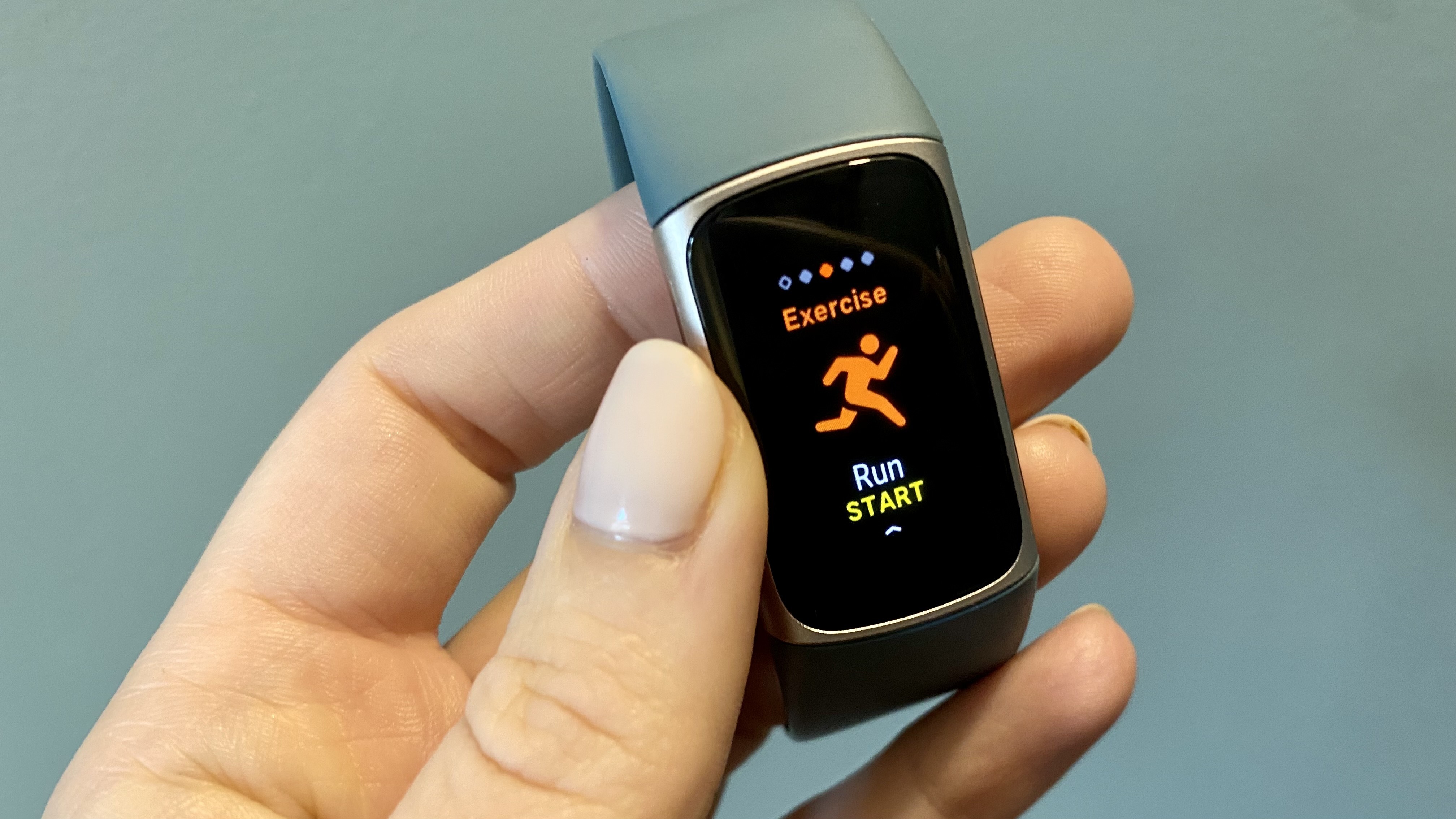
The five-year-old Fitbit Charge 5 recorded a slightly lower average and max heart rate than the latest Apple Watch Series 11. Was the fact that I wore the Fitbit on my right wrist and the Apple Watch on my left a factor in this discrepancy? It shouldn't be. After all, both companion apps let you specify your wrist preference, which I did before this test.
Despite a lower heart rate, the Fitbit noted more calories burned overall than the Apple Watch. Then again, calorie counts are one of the smartwatch workout stats I trust the least.
4. The Fitbit burned through way more battery
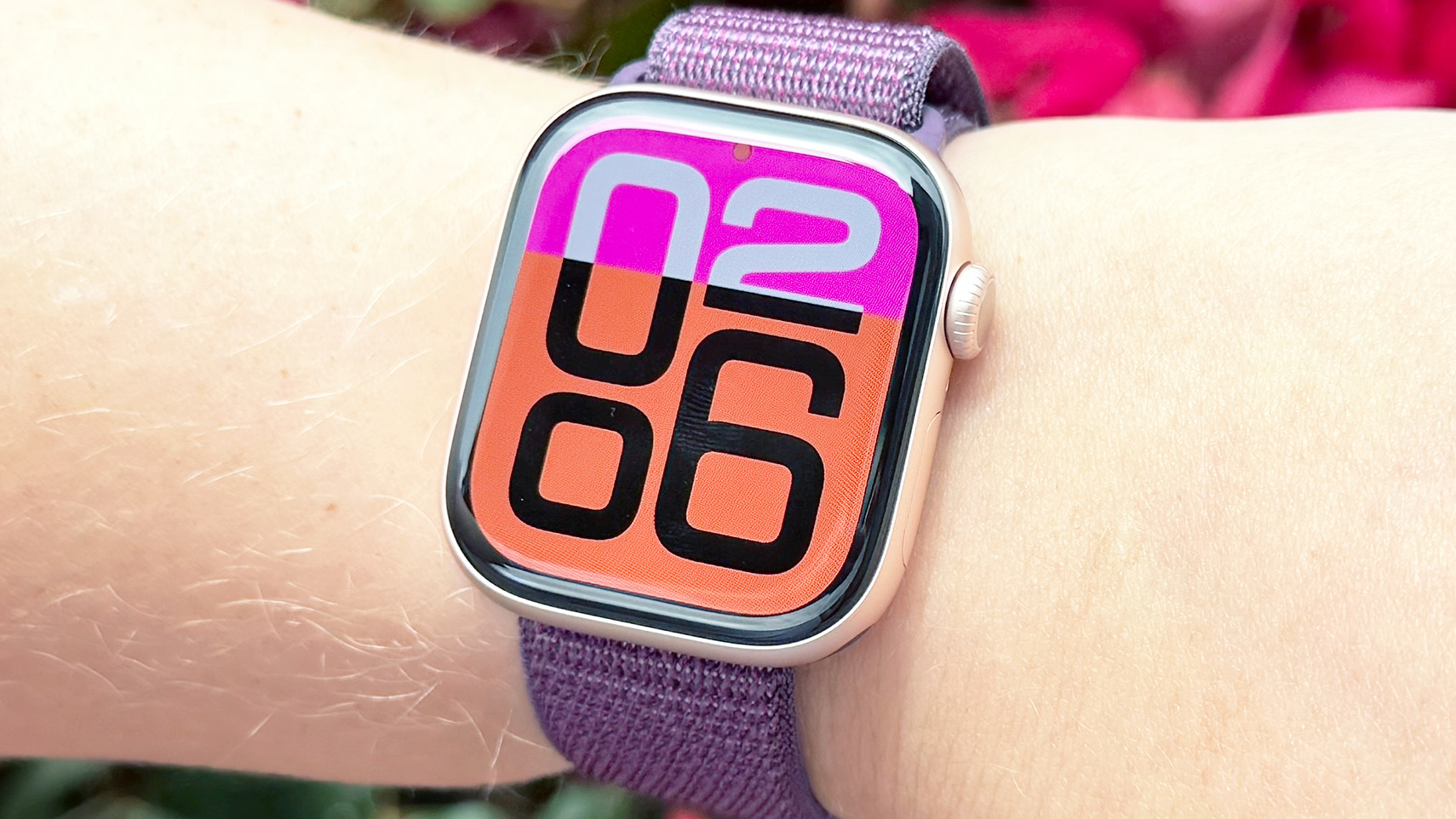
While fitness tracking accuracy — minus climb data — from the five-year-old Fitbit Charge 5 is pretty similar to that of the current Apple Watch Series 11, one area the newer device easily outperforms the older generation is GPS battery life.
On paper, the Fitbit Charge 5 should outperform the Apple Watch 11 in terms of longevity; it's rated to last up to seven days per charge compared to just 24 hours for the Apple Watch.
However, over the course of tracking my 52-minute walk, the Charge 5 burned through nearly three times more battery than the Series 11. At this burn rate, I wouldn't trust the Charge 5 to log any outdoor workout longer than five or six hours, which means no epic hikes or snowboard sessions.
5. The Charge 5 still outperformed my expectations
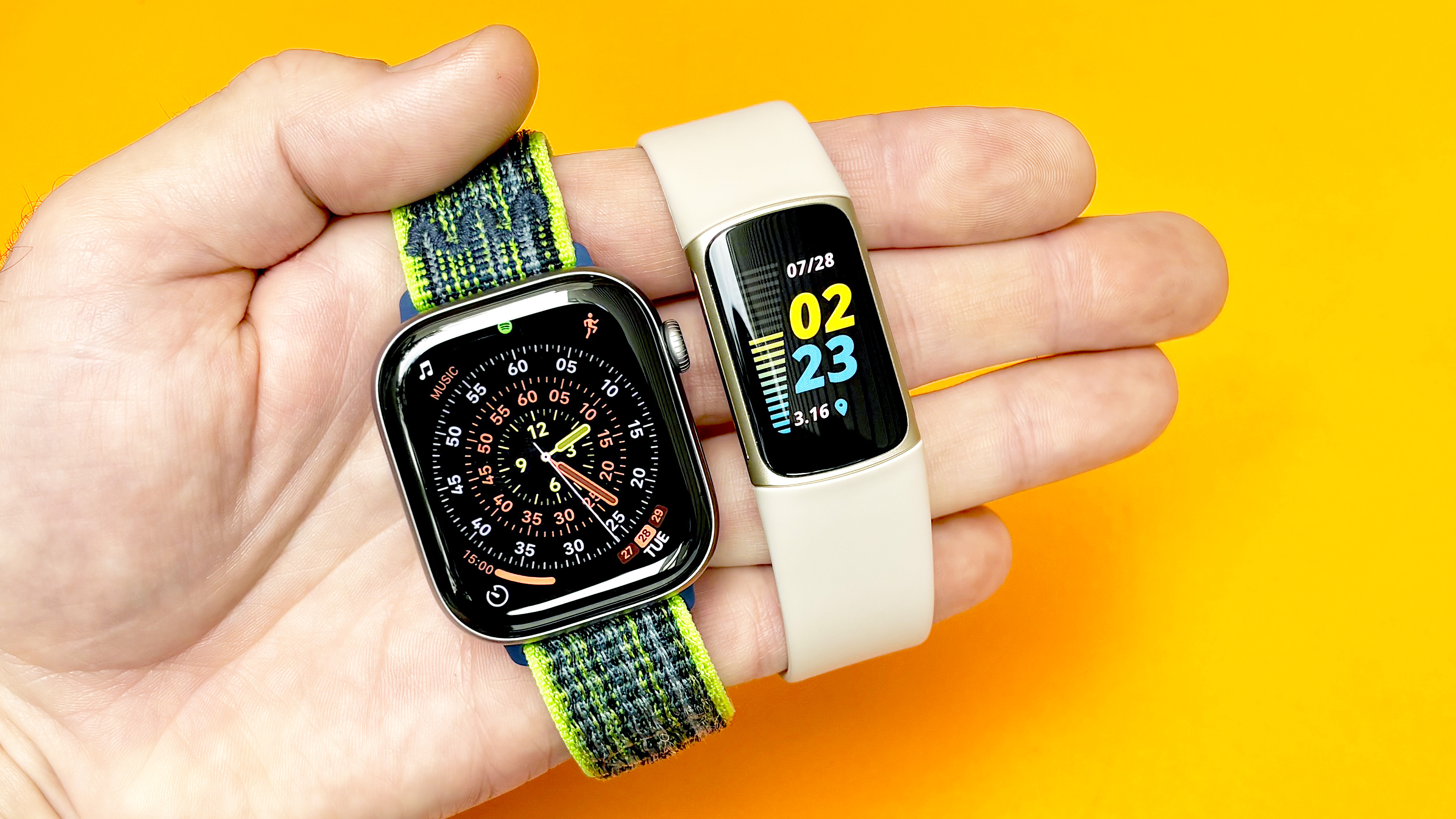
Ultimately, despite coming up a bit short in terms of climb data and battery performance, the five-year-old Fitbit Charge 5 exceeded my expectations compared to the current Apple Watch Series 11, proving to be nearly as good a fitness tracker, despite its age.
Which fitness trackers or smartwatches, new or old, would you like me to test head-to-head next? Let me know below.
More from Tom's Guide
- Can the $99 Fitbit Air beat the $799 Apple Watch Ultra 3 at fitness tracking? I manually counted 4,500 steps to find out
- I walked 4,000 steps with the Apple Watch Ultra 3 vs Samsung Galaxy Watch Ultra 2 — and the winning margin was razor-thin
- Oura vs Whoop vs Fitbit Air — 5 questions to ask yourself before buying a screen-free fitness tracker