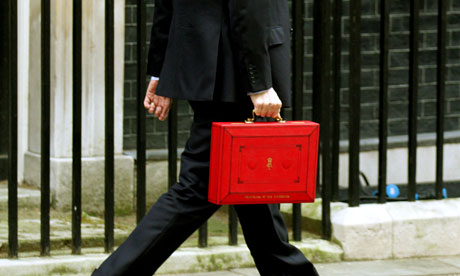
Business and enterprise were always going to be addressed in what was hailed as a "pro-growth" Budget. The initial lamentations of the Chancellor's speech lived up to expectations, announcing the Plan for Growth, reductions in corporation tax, and some rather ruthless scrapping of regulation.
This included, controversially, dual discrimination rules in the Equality Act, a move designed to appeal to employment-regulation-shy businesses (but not the many charities that have campaigned for its implementation over recent years).
We could be forgiven for thinking that, in an environment of financial policy designed to develop industry growth, charities would be left in the dark - forgotten in the tide of pro-business, pro-jobs, pro-growth rhetoric - and left to work out how such changes would impact on their own ability to survive.
However, what we have seen here are some genuinely positive announcements which might, just might, make a difference to a sector close to the hearts of the nation and, in our opinion, as fundamental to economic recovery as any other.
The Giving Green Paper released earlier this year was rather disappointing when it came to addressing the real crux of increasing sustainable funding for the sector. Following the announcement of over £80bn in public spending cuts, charities were left with increased service demand, lower budgets and little in the way of steer for how they could live up to expectations of them.
A rather naïve belief that ideas to enable people to give to charity whilst using cash machines, expectations of increased volunteering and intentions to recognise contributions through a new Big Society Award didn't really cut the mustard. There were, to be fair, some better ideas in the Green Paper, but a real absence of the deeper reforms necessary for change. Tax incentives and de-regulation that would incentivise giving barely got a mention. This was in spite of the recent conclusions from the high profile Gift Aid Forum.
Against the dreary background of an unprecedented financial gloom for charities however, in Budget 2011 the Government might just have started to turn around suggestions that it had entirely lost touch with the sector. Without wanting to sound too positive (nothing is perfect), reforms to Gift Aid announced by Osborne were genuinely beyond what we were expecting. Treasury's response to the findings of the Gift Aid Forum had not allowed us to get over excited at the end of last year.
We were told online filing of Gift Aid claims (yes in 2011 you really do still have to post every single one) would be great, but too expensive, a de minimis level under which paper work could be scrapped was an impossible fraud risk; meaningful de-regulation it seemed, was not a workable option. Perhaps they knew all along that in damping our hopes for reform they would ensure a positive reaction today - but let's not be cynical.
The Gift Aid Simplification survey conducted by CFDG and five other organisations last year revealed that 43.2% of respondents felt they do not maximise potential income through Gift Aid to which they are entitled. The associated administration and complexity means that charities, large and small, are selective about making Gift Aid claims on donations they receive, or worse don't have the option. For a huge proportion of smaller donations the administrative burden leads to vast amounts of tax relief going un-claimed.
In our office, eyebrows quickly raised across the desks as the Chancellor announced that claims on small donations, up to £5000 per year, per charity, would be permitted without the form filling. The Government estimates this to be worth around £240 million to the sector. It's not going to make up for the loss of contracts or the burden of irrecoverable VAT, but it will make a difference to the small charities that need it most and will impact positively in the long term. Many of the organisations that will benefit may even be accessing Gift Aid for the very first time.
The Government has offered fundraisers and charity finance professionals a bit less of a headache when it comes to saying thank you to donors, or incentivising them to give in the first place. The rise in Gift Aid benefits limit to £2,500 from £500 offers greater flexibility for charities in the scale of packages they offer their major donors whilst still being able to claim Gift Aid. It also moves us away from the misplaced critique of charity spending in this area. Contrary to the portrayal in the Giving Green Paper and elsewhere, charities don't generally like to lavish donors with unnecessary gifts and banquets. Charities do however recognise that as with commercial business, one has to spend money to make money… this can take many forms depending on the donor and the cause.
The one real criticism I can make in my initial consideration of Budget 2011 from the perspective of charities is the removal of the dual discrimination rules. We sincerely hope that this de-regulatory measure does not result in the marginalisation of vulnerable minorities. Hidden away in the text is the abolition of Self-Assessment Donate (SA Donate), a little known scheme allowing donors to give to charity through their self-assessment tax return. Not a huge loss to the sector, but something which will need to be looked at in terms of offering new ways for high rate taxpayers to give all of the tax paid on a donated amount to the charity. Not wanting them to rest on their laurels there's something for Treasury to work on next.
Caron Bradshaw is the chief executive of the Charity Finance Directors' Group
This content is brought to you by Guardian Professional.To join the Voluntary Sector Network, click here