You can get The National's Real Scottish Politics newsletter free and direct to your inbox every weekday.
WHAT exactly is the point of Scottish Secretary Douglas Alexander?
That is a question that people in Scotland should be asking anyway, but especially in the wake of Welsh First Minister Rhun ap Iorwerth saying that he does not believe that the position of Welsh Secretary is necessary in this post-devolution era.
"I want to be working with the departmental heads in Whitehall, not a Secretary of State for Wales,” he told The National last week.
Ap Iorwerth’s comments echo what we have heard from the SNP for years now. In 2020, the SNP’s then-shadow Scottish secretary Mhairi Black labelled the Scotland Office a “zombie department” which was acting as a “propaganda unit”.

First Minister John Swinney – who has directly accused Alexander of being responsible for souring relations between the London and Edinburgh administrations – has repeatedly said that he expects to deal with the Prime Minister, rejecting meetings with the Scottish Secretary as being palmed off onto "one of the most junior members of the British Cabinet".
Surely he has a point. Why should the First Minister of Scotland not speak directly to the Prime Minister of the UK? Why should Energy Secretary not deal with Energy Secretary? Education with Education?
What is the point in having a middle-man Scottish Secretary? To simply pass messages on to the relevant department? The UK long ago did away with the Postmaster General.
And if there has to be some conduit for communication, should they not be appointed (at least jointly) by the elected First Minister of Scotland, and embedded equally at Holyrood and Westminster?
On the UK Government’s website, Alexander’s responsibilities are listed as including defence, energy, trade deals, child poverty, and oversight of the Brand Scotland programme.
Apart from Brand Scotland, all of those areas fall under other Cabinet Secretaries’ remits. So is Alexander’s role just a jumped-up brand manager?
Friday provided an example which suggests that the Scottish Secretary is, in fact, surplus to requirements.
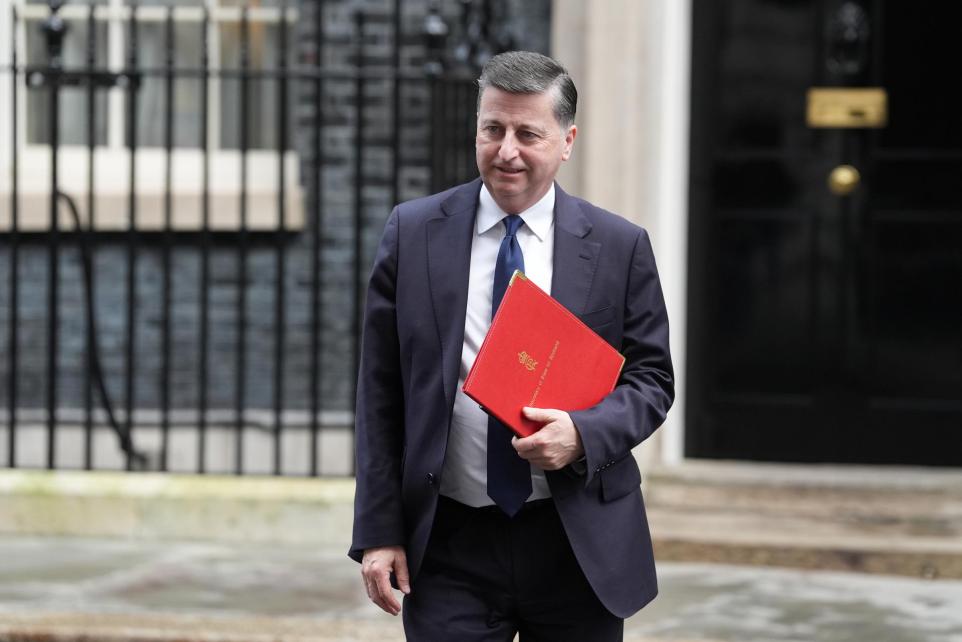
In the early morning, news broke of BP’s plan to sell their North Sea operations. A little before 2pm, the Scotland Office issued a statement in the name of Alexander in which he said: “I am in close contact with BP and had a constructive discussion with the company this morning as this news was announced.”
So what was “constructive discussion” about? And why was BP having it with the Scottish Secretary?
The Energy Secretary, Miatta Fahnbulleh, surely would have been a better point of contact to discuss declining oil and gas reserves.
The Work Secretary, Pat McFadden, would have been the one to talk to about supporting the 1100 BP workers whose futures have been put at risk.
For conversations about financial support or the “windfall tax” on profits which critics have blamed for BP’s sale of North Sea operations, Chancellor John Healey would have been the one to get on the phone.
So what exactly was Alexander’s role? Again, simply to relay messages to the people with actual power?

Ultimately, it comes back to “efficiency” – a key pillar for this UK Government.
Late last year, the “Government Efficiency Framework” was updated, making clear that “driving efficiency is a vital responsibility … [to] maximise the value of taxpayers’ money”.
If you were running a business, would you pay someone £70,000 a year (on top of their basic salary of £99,000) to run messages back and forth? Or might you cut out the middle man in the name of savings and efficiency?
Perhaps the Scotland Office still made sense in 1999, when devolution was new. But in 2026, it increasingly looks like an institution searching for a purpose.
Scotland doesn't need a messenger boy. It needs ministers with the authority to make decisions willing to speak directly to each other.