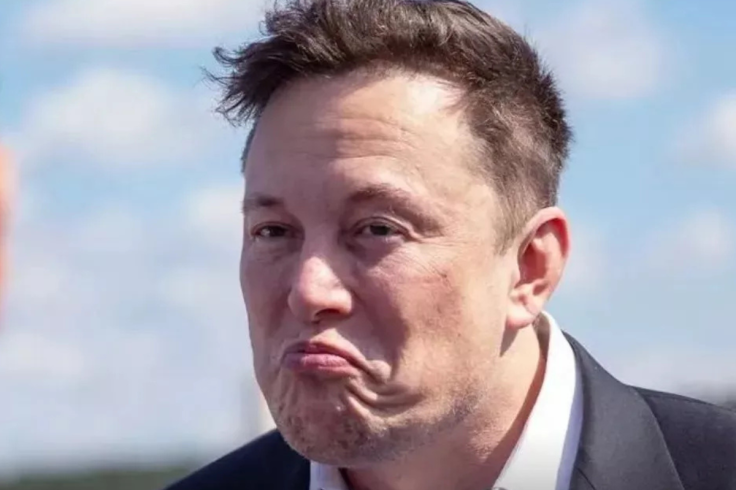
Elon Musk is facing a fresh wave of criticism after he told an audience in Israel this week that some of Neuralink's work could be seen as 'Jesus-level technologies,' a claim that has reignited debate over the Tesla chief's ego, judgement and repeated willingness to invoke Jesus Christ in public boasts.
Musk was speaking by video link at an event in Israel when he complained that Neuralink, his brain–computer interface firm, is not getting the recognition he believes it deserves. The billionaire, already one of the most scrutinised figures in tech, used the appearance to argue that his company's medical ambitions place it on a near‑miraculous plane, a comparison that many religious observers and sceptics alike have found provocative.
Elon Musk Compares His Company Neuralink to Jesus, Neuralink Will Charge People to Restore Their Sighthttps://t.co/LvALht1wzU
— Joe Six Pack (@JoeSixPackShow) May 19, 2026
Musk Brings Jesus Christ Into Neuralink Sales Pitch
During the discussion, first reported by MarketWatch, Musk pointed to Neuralink's stated goals of helping people with severe disabilities. He highlighted potential applications such as restoring movement and vision, then pushed the analogy far beyond standard tech evangelism.
'Restoring control of people who are tetraplegics and restoring sight I think are pretty big deals,' Musk said. 'They're sort of what I might call Jesus-level technologies.'
Neuralink's current implant is broadly comparable to other brain computer interfaces already in development or limited clinical use. The device aims to let patients carry out everyday computer tasks, including typing or moving a cursor, using thought alone. That is ambitious and, if proven at scale, potentially transformative for some patients, but it is a far cry from the miracles described in the New Testament.
Elon Musk explains how Neuralink is achieving "Jesus-level miracles" by giving sight back to the blind and helping paralyzed people walk again
— X Freeze (@XFreeze) May 20, 2026
“I think some kind of brain-machine interface that can give you cybernetic superpowers is probably good
It could help people with brain… pic.twitter.com/Aa3E2VLd8K
In Christian scripture, Jesus Christ is portrayed as the son of God who heals a paralysed man, restores sight to the blind and raises a dead person back to life. Musk has repeatedly hyped the possibility that future Neuralink systems could restore vision and movement to some blind or paralysed patients, but the company has not yet demonstrated such outcomes publicly, and there is no evidence of anything approaching resurrection.
None of Musk's claims about Neuralink's future capabilities has been independently verified in peer‑reviewed data, so they remain projections rather than established fact and should be treated with caution.
Hype, Hubris and the Cult of Musk
In case you missed it, this latest remark fits a familiar pattern for Musk. Over the past decade he has built a reputation not only as the driving force behind Tesla and SpaceX but also as a serial over‑promiser, issuing bold timelines and grandiose statements that do not always keep pace with reality.
Critics argue that the 'Jesus-level' line is another example of that tendency. It places relatively early‑stage medical technology alongside the most sacred figure in Christianity, and in doing so elevates what the company hopes to achieve into something closer to myth. Supporters might hear it as colourful exaggeration. Others hear disrespect.
The comparison also sits awkwardly with the way Jesus Christ is described in scripture. While Musk's public persona is defined by swagger, performative confidence and an endless stream of pronouncements, Jesus is traditionally depicted as a humble figure, reluctant to grandstand and more focused on quiet acts than on public relations.
"In an interview on Monday, the [tr]illionaire said his Neuralink brain-implant company is progressing in its development of ‘[Trump]-like technologies’." https://t.co/UzRwNhZWpe
— Hawthorne Abendsen III ✝🇺🇸🇮🇱🇺🇦🇹🇼😺🎷 (@JASmius) May 19, 2026
On the specifics, Neuralink is only just beginning human trials, and the company has yet to publish detailed results that would confirm any dramatic clinical breakthroughs. The idea of restoring certain functions through brain implants is real and being pursued by multiple groups, but the scale of the benefit, risks and long‑term impact is still being studied.
That gap between aspiration and evidence is where Musk so often operates, and where his critics say he slides into something closer to self‑mythologising. When he labels hypothetical outcomes as 'Jesus-level technologies,' it blurs the line between genuine medical research and messianic branding.
A Familiar Story of Fame, Faith and Overreach
Observers have been quick to place Musk's remarks in a wider cultural pattern. There is a long history of high-profile figures reaching for religious comparisons once they become accustomed to adulation and constant attention. The comment pointedly noted that Kanye West drew intense backlash more than a decade ago after likening himself to Jesus Christ.
Musk now appears to be following a similar script, whether intentionally or not. The world's richest man, lauded for electric cars and rockets, now talks about his next project in terms that borrow directly from the language of miracles. For admirers, that might read as confidence. For others, it looks like the point at which a powerful tech founder stops seeing himself as simply an engineer or entrepreneur.
It is also worth stating the obvious. Neuralink is not yet restoring sight to blind people in the way many would understand that phrase, and it is not returning movement to paralysed patients on a routine clinical basis.
The firm is working on technologies that might, one day, offer limited versions of those outcomes for some patients, under tightly controlled conditions. Nothing approaching the total reversals of illness and injury described in accounts of Jesus Christ has been shown.
EM @elonmusk Elon Musk Compares His Work to Miracles Performed by Jesus Christ - Futurism: Elon Musk Compares His Work to Miracles Performed by Jesus Christ Futurism https://t.co/ePwfTAFGAL #elonmusk #neuralink pic.twitter.com/EDXHADcTD0
— (CTN) Chief Twit News (@elonchieftwit) May 20, 2026
So far, there has been no detailed public response from religious leaders or major Christian organisations to Musk's choice of wording. The backlash has instead come mainly from commentators who see the remark as another step in a long slide towards inflated rhetoric, where achievements that are impressive on their own terms are not allowed to stand without the crutch of cosmic comparison.
In that sense, the controversy says as much about the current culture of celebrity tech as it does about religion. The more Musk casts his projects in near‑divine terms, the harder it becomes to separate what Neuralink is actually doing in the lab from what its founder wants the world to believe.
Nothing about Neuralink's future medical claims, or Musk's religiously loaded comparisons, has been independently confirmed, and many of the loftier promises remain unproven.