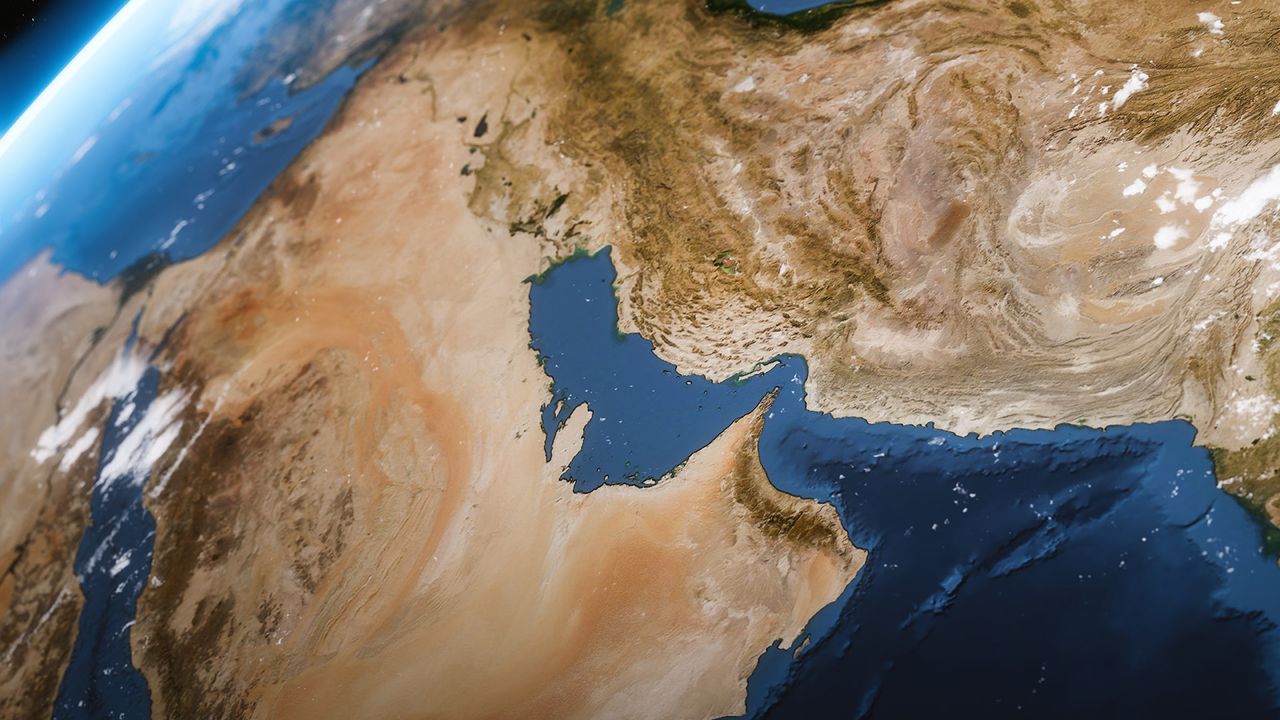
If you thought the crisis centered on the Strait of Hormuz couldn’t get worse, think again. The oil and shipping choke point may also soon become a digital pressure point. That’s if Iranian leaders heed the IRGC‑affiliated Iranian news agency Tasnim (via Iran International), which has called for generating revenue by charging fees on the multitude of undersea internet cables that pass through the channel.
Tasnim is regarded as an official mouthpiece for the IRGC (the Islamic Revolutionary Guard Corps). Those watching the situation in the Gulf may recall that the IRGC often speaks for the government regarding military policy. So Tansim's ideas for extracting value from the $10 trillion of transactions estimated to be pulsing through these cables daily won’t merely be the musings of some journalist.
The Tasnim article was headlined ‘Three practical steps for generating revenue from Strait of Hormuz internet cables.’ In the piece, the writer paints Iran as a nation deprived of any wealth creation from this key infrastructure in a waterway, which, before this conflict, wasn’t seen as Iran’s to rule.
Some of the practical wealth creation steps Iran could take, according to the cited Tasnim post, include:
- Initial licensing and levy of annual renewal fees for foreign cable owners/operators
- Insist that tech companies like Meta, Amazon, and Microsoft, which use the cabling, operate under Iranian law
- Ensure exclusive control and maintenance of the cabling is in the hands of Iranian companies.
Another well-known Iranian news source that is also linked to the IRGC, Fars, has published a similar story, according to Iran International. Fars reportedly floats the idea of disrupting the internet cables in the Strait, causing damage measured in tens or even hundreds of millions of dollars over even just a few days. Such an act would not just hurt the U.S. tech giants, though; local and other global businesses would likely feel the impacts, too.
Threatening the undersea cables in the Strait of Hormuz isn't entirely a new idea, admits the source. It notes that Tasnim mapped the internet cabling in a news report last month. At that time, the IRGC-affiliated media highlighted that the cables running through the strait were of greatest importance to countries to the south, like the western-interest-friendly UAE, Qatar, Bahrain, Kuwait, and Saudi Arabia.
Hopefully, these news articles from Iranian agencies close to the government/military are mostly a saber-rattling effort, another bargaining chip held aloft, in the will-they-won’t-they conflict negotiations that have dominated headlines for weeks.