Iran has elected a new leader, more than a week after Ayatollah Ali Khamenei was assassinated in an Israeli airstrike.
Mojtaba Khamenei, 56, was named by a powerful council late on Sunday evening to succeed his father as supreme leader, despite US president Donald Trump’s insistence that he should have a say in the appointment.
"By a decisive vote, the Assembly of Experts, appointed Ayatollah Seyyed Mojtaba Hosseini Khamenei as the third leader of the sacred system of the Islamic Republic of Iran," the assembly said.
Ayatollah Mohsen Heidari Alekasir, a member of the council, said earlier that it was the elder Khamenei’s guidance that his successor should be “hated by the enemy”.
Iran’s Islamic Revolutionary Guards Corps (IRGC), behind the brutal crackdowns on protesters, said in a statement that they were ready to follow supreme leader Mojtaba.
Mr Trump suggested this week that Khamenei’s son was “unacceptable to me” as a future supreme leader. He also threatened that a new leader would not “last long” if they did not have US approval.
“We want to make sure that we don’t have to go back every 10 years, when you don’t have a president like me that’s not going to do it,” Mr Trump told ABC News.
In a brazen dismissal of Mr Trump’s plans, Iran’s parliament speaker Mohammad-Bagher Ghalibaf said in a statement late on Sunday that following Mojtaba was “religious and national duty”.
He said the new leader “is indeed the shadow of our martyred leader and will guide the ship of the revolution with strength on the path of the Imams of the revolution towards a prosperous, advanced, and unified Iran”.
Khamenei will step into the role having never held a position in Iran’s government. He had attained the clerical rank of Hojjatoleslam, a notch below that of his late father.
Mojtaba’s appointment signifies that the hardliners are still firmly in charge in Iran, analysts say. He has opposed reformers seeking to engage the West in talks to limit the country’s nuclear programme.
Edmund Fitton-Brown, senior fellow at the Foundation for the Defense of Democracies and a former British ambassador, told The Independent that Mojtaba’s selection “is a poke in the eye for Trump, who has said he doesn’t accept him”.
Mojtaba will appeal “to a range of constituencies within the regime and thus can take over without significant changes either to institutions or personnel”, he said. “He is popular with the IRGC. Less so with senior clerics, who however don’t have anything better on offer.
“He would have been a more controversial choice in non-emergency circumstances ... But in time of war, and just after his father’s ‘martyrdom’, he has a better chance of achieving acceptance.”
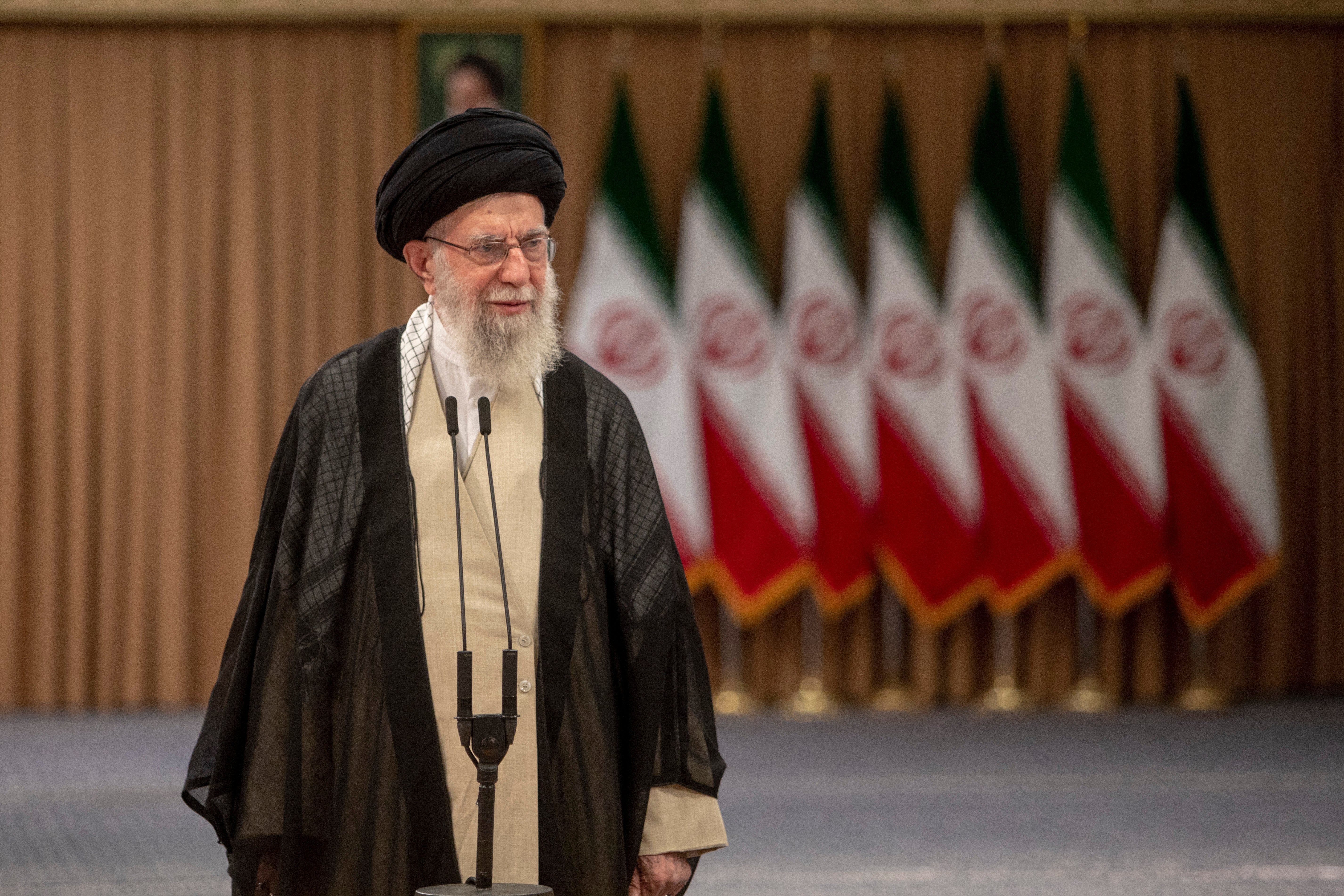
Critics have said Mojtaba lacks the clerical credentials to be the supreme leader, but he has remained in the frame, particularly after another leading candidate for the role – the former president Ebrahim Raisi – died in a helicopter crash in 2024.
The US imposed sanctions on Mojtaba Khamenei in 2019, saying he represented the supreme leader in "an official capacity despite never being elected or appointed to a government position" aside from working in his father's office.
He is reported to own more than 11 luxury properties in the UK through shell companies, according to a Bloomberg investigation. The buildings are valued at over $138m (£103m), including one on Bishop’s Avenue in north London, also known as Billionaire’s Row.
Alex Vatanka, a senior fellow at the Middle East Institute, told Reuters: "Having Mojtaba take over is the same playbook.
"It's a big humiliation for the United States to carry out an operation of this scale, risk so much, and end up killing an 86-year-old man, only to have him replaced by his hardline son.”
Trump says oil spike is small price to pay for ‘safety and peace’
Starmer to reassure public as Iran conflict enters tenth day
Demonstrators gather outside Iranian embassy in support of war
Iran-US war latest: Mojtaba Khamenei named as new supreme leader
Iran war ‘could bring down global economy’ after warning of oil price crisis