At first glance, the phrase sounded surreal. In the middle of a growing Middle East conflict, images circulating online appeared to show an Iranian missile carrying a message referencing the victims of convicted sex offender Jeffrey Epstein.
The viral claim quickly spread across social media, tying the Iran Epstein missile message to the ongoing confrontation between Iran, Israel, and the United States.
But behind the sensational headlines lies a complex story about war propaganda, information warfare, and online disinformation during a rapidly escalating geopolitical crisis.
Understanding what actually happened reveals how modern conflicts increasingly play out not only on battlefields but also in the digital narrative space.
The Viral 'Iran Epstein Missile Message'
The controversy began when images circulated online showing a missile allegedly inscribed with the phrase 'in memory of victims of Epstein Island'. The wording referenced the long-running global scandal surrounding Epstein, who was accused of trafficking underage girls before he died in a US jail in 2019.
The claim spread quickly because it blended two highly charged topics, war and the Epstein scandal.
Several posts suggested the Epstein victims' message was aimed at Western leaders, portraying the strike as symbolic retaliation against elites associated with the scandal.
However, further inspection online has later determined that the viral image had been digitally manipulated. The original photograph of the missile existed online years earlier without any such writing. Analysts using AI-detection tools concluded that the text had been added digitally to the image circulating on social platforms.
That revelation did little to slow the online debate, which had already transformed the image into a talking point across geopolitical and conspiracy-focused communities.
Damn, Israel was writing civilian names and such, look what Iran reportedly writing
— Furkan Gözükara (@FurkanGozukara) March 10, 2026
"In memory of the victims of Epstein Island" pic.twitter.com/e2lNXwfItc
Iran Wartime Propaganda and the Epstein Narrative
Even though the image itself appears altered, the controversy fits into a broader Iranian propaganda campaign unfolding during the war.
Iranian state media and affiliated outlets have been producing highly stylized propaganda content aimed at Western audiences. One widely circulated video used toy-like animation to depict Western leaders examining an 'Epstein file' before launching a missile strike on an Iranian school.
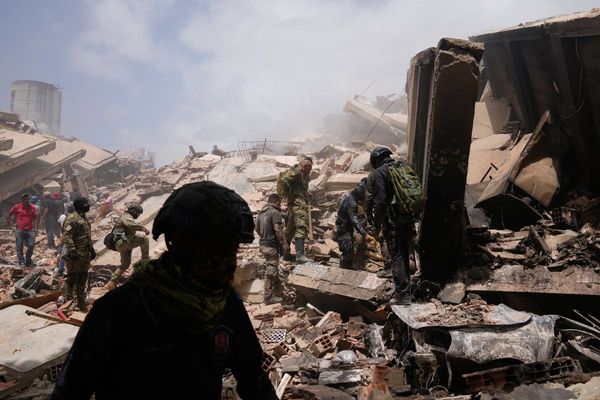
The video referenced a devastating missile strike in the southern Iranian city of Minab in February 2026, where a girls' school was hit during the early days of the conflict.
According to reports, the explosion killed dozens of students and collapsed large portions of the building.
By linking the tragedy to the Epstein scandal, the narrative attempts to portray Western governments as morally compromised while positioning Iran as the victim of aggression.
This strategy reflects a broader pattern in Iran's wartime propaganda Epstein messaging, where international controversies are repurposed to shape global opinion.
On Bloomberg:
— فواد ایزدی Foad Izadi (@IzadiFoad) March 7, 2026
Iran is dealing with the Epstein Class. They rape American little girls and they bomb and kill Iranian little girls.
ایران با طبقهی اپستین مواجه است. آنها به دختران کوچک آمریکایی تجاوز میکنند و دختران کوچک ایرانی را بمبباران میکنند و میکشند.#EpsteinWar pic.twitter.com/op7BCokucR
Iran Media Control During Wartime
The spread of such narratives is also tied to Iran's media control of wartime policies.
During periods of conflict, authorities in Iran have historically restricted access to independent media while amplifying state-aligned messaging. This environment allows official narratives to circulate domestically with limited challenge.
At the same time, digital content aimed at international audiences can push emotionally charged themes that resonate with existing skepticism toward Western governments.
By invoking Epstein, one of the most notorious scandals involving wealthy and politically connected figures, the messaging taps into a global conversation already filled with distrust and unanswered questions.
The Geopolitics of the Epstein Scandal
The episode highlights a growing phenomenon in modern information warfare, the blending of global scandals with geopolitical messaging.
The Epstein scandal geopolitics angle works because it carries strong emotional weight across ideological divides. For critics of Western power, the story symbolises elite corruption and impunity. For others, it represents unresolved questions about political accountability.
Propaganda campaigns often leverage such themes to reach audiences far beyond the immediate battlefield.
In this case, the viral Iran-Israel war propaganda narrative shows how quickly a manipulated image can become part of a broader geopolitical storyline.
Why the Story Matters
Whether real or fabricated, the Iran Epstein missile message illustrates how digital narratives can shape global perceptions during wartime.
In earlier conflicts, propaganda spread primarily through newspapers, radio, or television. Today, viral images and short videos can reach millions within hours, blurring the line between verified reporting and manipulated content.
The lesson is not simply about one controversial image. It is about the evolving landscape of information warfare, where scandals, memes, and geopolitical strategy increasingly collide.
For readers trying to understand modern conflicts, separating fact from narrative is now just as important as following the military developments themselves.