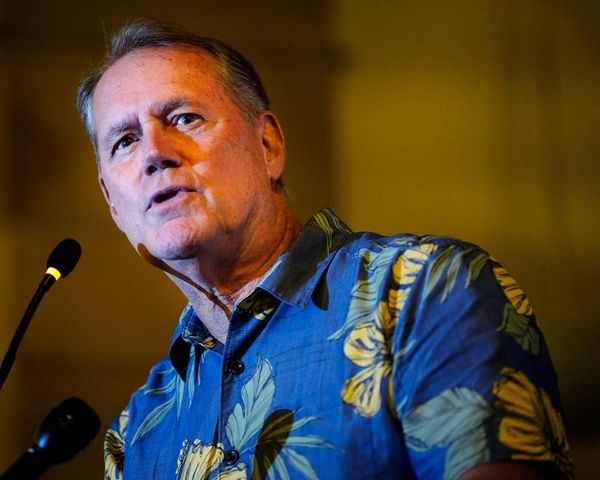

Shannon Saccocia, the Chief Investment Officer–Wealth at Neuberger, an investment management firm, spoke with Kiplinger about what she's predicting for the rest of 2026, resiliency for the market and consumers, and where she sees opportunities for investors.
Kiplinger: What’s your outlook for the second half of 2026? Do you have a target for the S&P 500?
Saccocia: We don’t have price targets, but with the U.S. stock market recently trading below the peak in its price-earnings multiple, while earnings estimates have risen, could we see the S&P 500 up another 5% to 7% by the end of the year? It’s possible, even with the threat of greater market volatility. If you just apply the current P/E multiple to the estimated earnings for companies in the index, that translates into a potential double-digit return for the S&P 500 this year.
The broad market declined nearly 10% and then was back to record highs in no time. What accounts for the resilience in the face of a lot of geopolitical and other uncertainty?
Geopolitically driven sell-offs tend to be short-lived, with stronger returns afterward, whether you measure by three months, six months or a year. We’ve seen a very nice rebound, but there are more buyers that could come into this market. Some of the larger buyers — institutions — haven’t gotten fully back to where they were last year. But first and foremost, we remain strong on the market from a U.S. economic perspective. We came into this year anticipating 2.5% growth in gross national product, and potentially higher.
We’ve seen resiliency in the U.S. consumer for several years. Now we’re seeing manufacturing, which had more of a recessionary tone, starting to strengthen. We’ve had support from fiscal spending, increased tax refunds and lower withholding rates from the One Big Beautiful Bill Act. And our view is that the Federal Reserve will cut interest rates twice this year, a quarter point each time.
Back to consumers — can they remain resilient if oil prices stay elevated?
If that happens, perhaps the tailwind that higher tax refunds were expected to deliver to the economy won’t be as pronounced. But they’re acting as a cushion. Even though consumers were already fatigued by higher prices over the past couple of years, we haven’t seen a meaningful tick down in consumer spending.
Our view is that we’ll bump along here and start to see pressures ease on energy prices. But consumers can’t digest these higher energy prices forever.
Are you sticking with your economic growth forecast of 2.5%?
Maybe a touch lower, 2.3% to 2.5%. The risk that our original forecast was not high enough is what’s been taken off the table. We’ve seen incremental, modest pressure on discretionary consumer spending — and the consumer component is such a big part of the GDP calculation. But we anticipate meaningful capital-spending growth from companies this year, and at the end of the day, we don’t see evidence of widespread deceleration in economic activity.

Considering that backdrop, where do you see opportunities for investors?
Our biggest change has been to upgrade U.S. large-company stocks, based on a combination of stronger and accelerating earnings growth, along with a compression in P/E multiples. We’d already been overweight in small-cap stocks, and we remain overweight. But our view on large-cap and small-cap is now about balanced. We’ve also been constructive on global equities in general.
When I tell people that we upgraded large caps, they say, “Well, you must like technology today more than you did yesterday.” And that’s probably a justifiable conclusion given the size of the tech sector. We thought tech-stock prices were vulnerable coming into 2025; now they’re more attractive.
Energy stocks are also interesting at this juncture. There’s a bit of a war premium built into energy prices, and some of that will remain even if there’s a cease-fire and an opening of the Strait of Hormuz. We don’t feel that energy stocks have fully incorporated this longer-term impact on energy prices.
We’ve had the call on small caps for some time. But it’s no longer a “buy small caps because they’re cheaper” story, it’s an improvement-in-earnings story, and those earnings are likely to continue to accelerate through the back half of the year.
Has the war short-circuited a move toward international stocks?
I think there’s been a pause, but not a short circuit. There could be some short-term strength in the dollar, but it’s still likely to be flat-to-weaker as we move into the back half of the year, and that supports investing outside the U.S.
But the war has been a reminder of the energy dependence that many of these markets have. Europe and Japan are very dependent on energy imports, and the ability for their consumers to digest those higher prices is pretty limited. There’s a pronounced fear in the market that European central banks could make a policy mistake by raising rates — European response to prior inflationary shocks has been poor.
In international developed markets, we’re underweight Europe and more positive on Japan. Japan is clearly energy-reliant, but it has already started to see the benefits of equity market and shareholder reforms, and wage growth in Japan is supporting the consumer.
In emerging markets, we like China, where a significant amount of spending on artificial intelligence is offsetting challenges from higher energy prices and a burst real estate bubble; India; and Brazil, which is actually on the other side of the energy trade and could perhaps benefit from this environment.

What do you like in the fixed-income market?
We like Treasuries, mostly around the two-year mark. We think they’re mispriced because of an expectation for higher rates, which we don’t see. [Bond prices and interest rates move in opposite directions.] We like investment-grade corporates across the range of maturities.
We like municipal bonds and also some non-U.S. bonds from Germany and the U.K. We like emerging-markets debt, but it has performed well, so valuations are not as attractive. But it’s a great diversifier. We are neutral on high-yield bonds in the U.S.
We’ll all be talking about the midterm elections soon. What’s the likely impact on financial markets?
There’s a typical cadence to the elections. Going into July and August, we could see another pickup in volatility, which typically spikes in the weeks leading up to the election. Returns in this time frame tend to be a bit weaker, then stabilize in September and move higher through the end of the year. I don’t expect a lot of change in the policies from the Trump administration’s second term.
Tariffs are still going to be in the dialogue in some way, shape or form — there’s a need for that revenue to lessen some of the impact from increased fiscal spending. There might be some changes on the margin with a switch of party in the House, whether it’s something like funding for the Department of Homeland Security or Medicare reimbursement rates.
I will say this: We came into this year with affordability already one of the biggest concerns. The affordability challenge is what will drive voters to the polls, and the current situation in the Middle East is complicating that challenge.
Note: This item first appeared in Kiplinger Personal Finance Magazine, a monthly, trustworthy source of advice and guidance. Subscribe to help you make more money and keep more of the money you make here.