
The successful launch of its top-end 12th Gen Core desktops processors based on the hybrid Alder Lake architecture this past November injected some much needed excitement into Intel’s product line-up. The initial salvo of 12th Gen Core processors — spearheaded by the flagship Core i9-12900K — propelled Intel into a much more competitive position versus rival AMD across a wide variety of use-cased and workloads. The hybrid Alder Lake architecture marries high-speed P-cores (Performance) with power-friendly E-cores (Efficient), and the end result is a processor platform with industry-leading single-thread and gaming performance, with multi-threaded performance that’s competitive with AMD’s entire mainstream Ryzen CPU line-up.
Today, during its CES 2022 reveal, Intel expanded its Alder Lake-based processor offerings with a myriad of both desktop and mobile 12th Gen Core processors, targeting every market segment, from thin-and-light notebooks, to powerful desktops. Intel announced no fewer than 50 processors this morning, including 28 new mobile and 22 new desktop 12th Gen Core processors. An expanded chipset line-up was also announced, as was some interesting Arc Alchemist discrete GPU news.
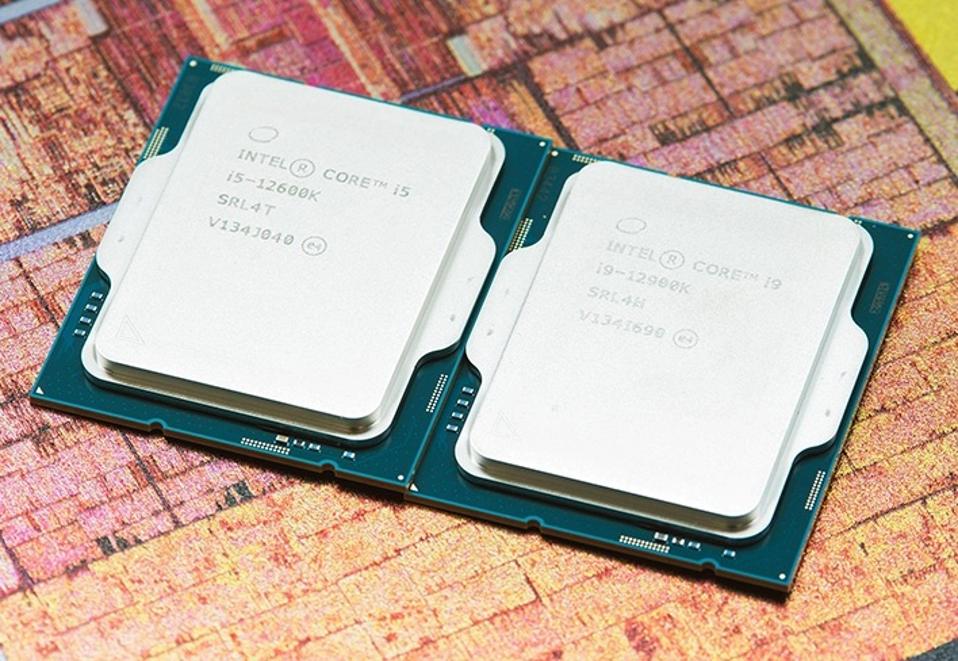
The Expanded Line-Up Of 12th Gen Core Desktop Processors
The first wave of 12th Gen Core desktop processors launched late last year targeted enthusiasts and gamers. The chips featured relatively high clocks and peak power, and were what are known as “K-SKUs”, which means they’re unlocked for easier overclocking. Today, Intel fleshed out the rest of the desktop 12th Gen Core line-up, with new 65 and 35-watt 12th Gen Intel Core desktop processors, which address more mainstream applications.

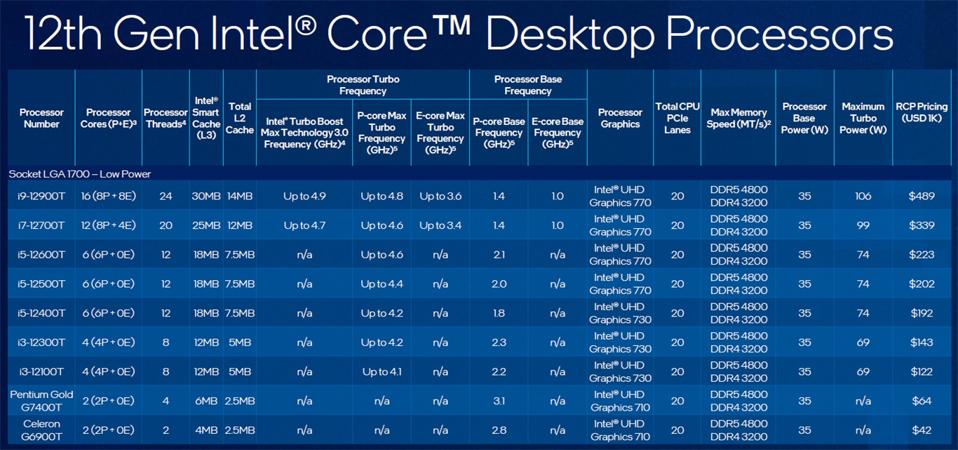
The tables above list the entire family of new desktop Alder Lake processors, which will begin shipping immediately. Pricing ranges from $42 for an entry-level dual-core Celeron processor, on up to $489 for the 16-core / 24-thread Core i9-12900. The Core i9-12900 is fundamentally similar to the existing Core i9-12900K, but it is not unlocked and has somewhat lower peak frequencies and power.
As you look up and down the stack, core counts, cache sizes, max turbo frequencies and power scale as you would expect. Some aspects of this new 12th Gen line-up could probably use some clarification, though.
Intel continues to differentiate its processor offerings not only by core counts and frequencies, but in terms of feature support as well. What I mean by that is some processors support HyperThreading on their P-cores (so one core can process two threads simultaneously), while others do not. Some processors in the expanded 12th Gen Core line-up also eschew the low-power E-cores, and instead rely solely on P-cores. This isn’t necessarily a bad thing, however, because Alder Lake’s P-cores are excellent performers that offer class-leading throughput and responsiveness, especially when paired with Windows 11, which best leverages Intel’s Thread Director technology.
The mainstream Core i3 and Core i5 processors in the $120 - $225 range all leverage P-cores exclusively, and should offer highly competitive performance in their respective price brackets. I look forward to testing these chips out soon.
New Chipsets And Coolers Arrive To Support Intel’s Latest Processors
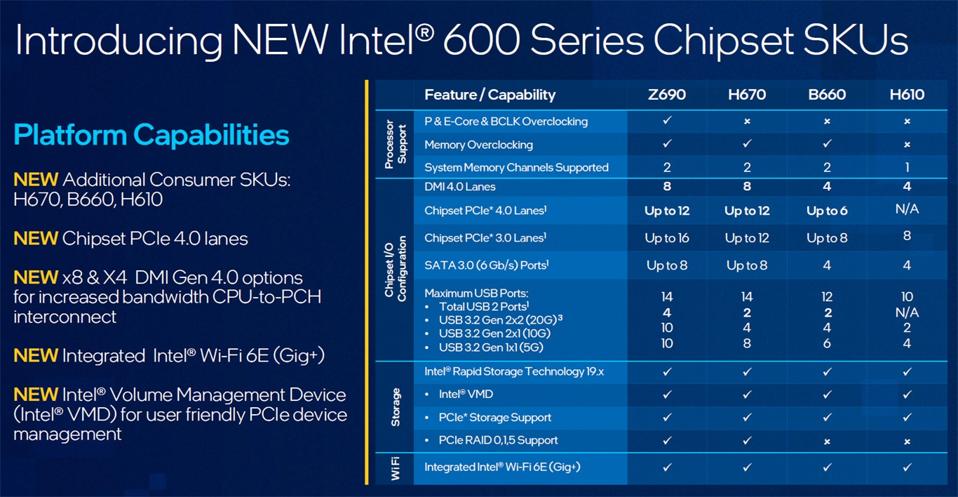
Intel’s 12th Gen processors (desktop and mobile) offer broad memory support for DDR5/LPDDR5 and DDR4/LPDDR4 modules up to 4800 MT/s, along with leading-edge IO and connectivity, including Wi-Fi 6e and Thunderbolt 4. To that end, Intel also introduced the new H670, H610 and B660 chipsets to accompany its expanded line of consumer processors.
The new chipset options deliver similar, though somewhat scaled down, feature-sets in comparison to the high-end Z-series enthusiast platform, like PCIe 4.0 lanes, integrated Intel Wi-Fi 6E (Gig+) and Intel Volume Management Device (VMD) support. Some models support memory and processor overclocking as well.
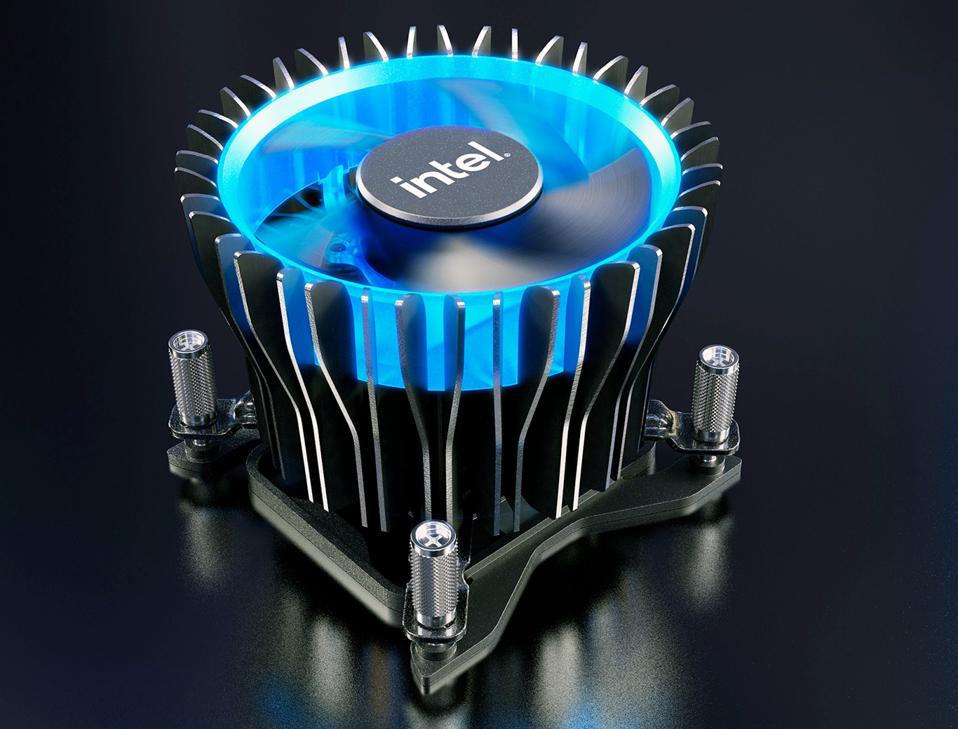
To better handle thermals and add a bit of aesthetic appeal, Intel also revealed some new coolers for its 12th Gen Core desktop processors.
Intel’s new Laminar Coolers will accompany 65-watt 12th Gen processors. There are three new Laminar coolers in total, the RH1, RM1, and RS1. All of the coolers offer near-silent operation and have similar design language, but vary in size and features.
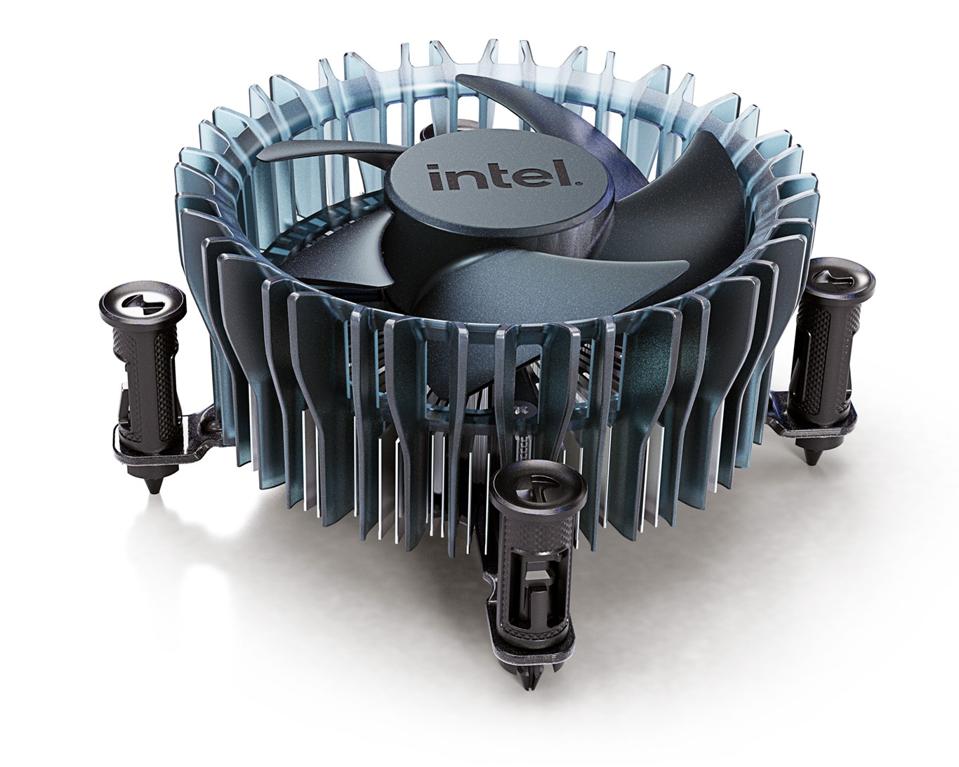
The RS1 is the smallest of the three and has no lighting or additional features. The RM1 is a similar size, but ads a lighted blue ring around the fan. The top-end RH1 is significantly taller that its counterparts, has more surface area, and features a copper heat columns to better dissipate heat. The Laminar RH1 also features addressable RGB lighting.
12th Gen Core Mobile Processors: Alder Lake Invades Laptops And Notebooks
In addition to expanding its desktop offerings, Intel is scaling Alder Lake to address a wide-range of mobile form factors as well. As mentioned, 28 new 12th Gen Core mobile processors are inbound, including models with up to 14 cores / 20 threads.
The most powerful of Intel’s 12th Gen Mobile processors are in the H-Series. These mobile processors have base power envelopes of 45 watts, and include the flagship Intel Core i9-12900HK. Intel is calling this chip “the fastest mobile processor ever” and “the world’s best mobile gaming platform”. The “K” in the model names also alludes to this chip being unlocked, so overclocking will also be supported by some mobile platforms.
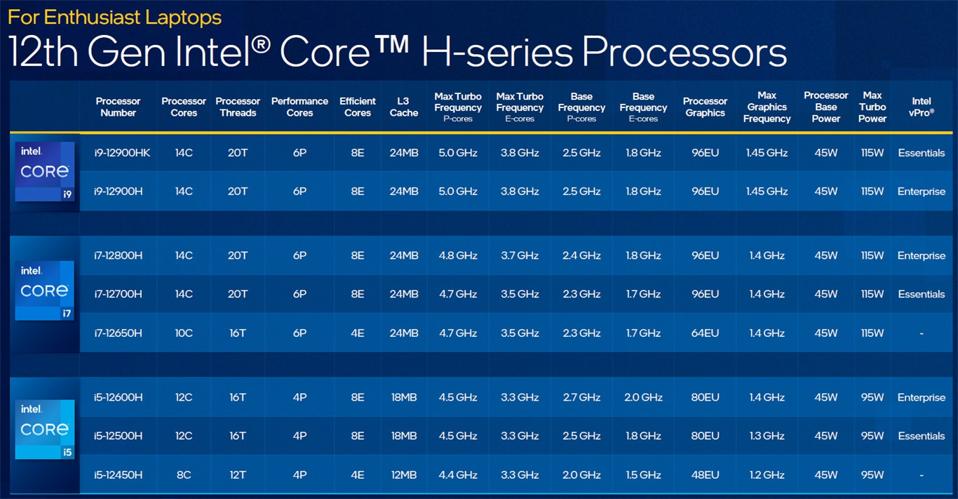
Intel 12th Gen Core mobile processors are built on the Intel 7 process and feature frequencies of up to 5GHz, with up to 14 cores (6 P-cores and 8 E-cores) and 20 threads. Intel is claiming performance improvements of up to 40 percent versus previous generation mobile processors and big gains over competing products from AMD as well.
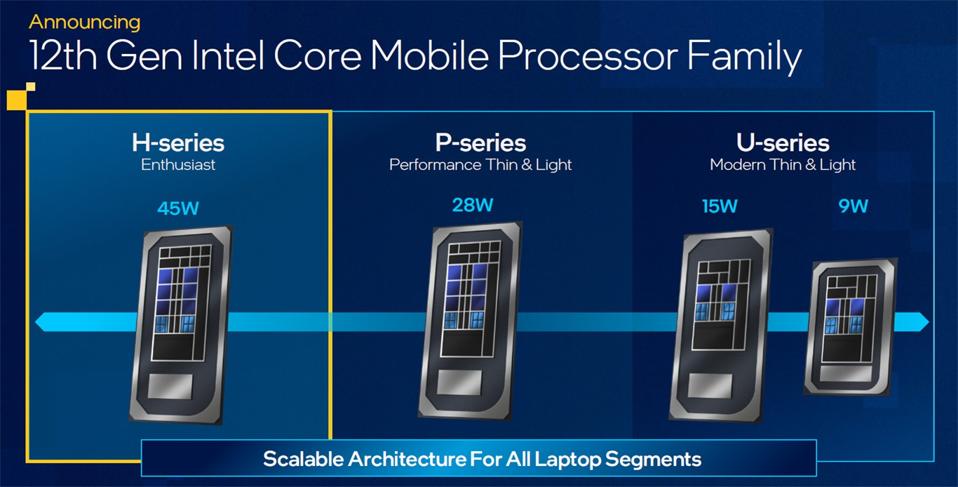
Like desktop processors, Intel scales 12th Gen Core mobile processors by varying core counts, frequencies and feature support. The H-Series scales from 8-cores / 12-threads on up. But Intel revealed the specifications of its upcoming, lower-power P-Series and U-Series processors too.
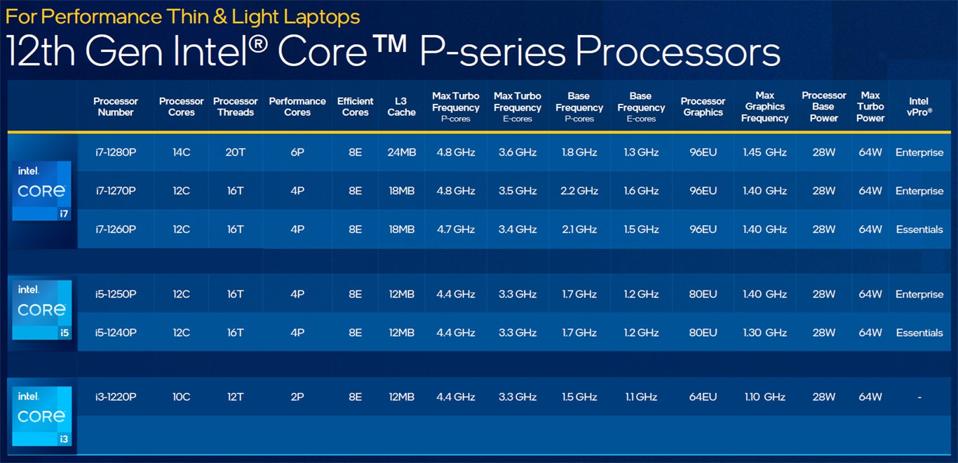
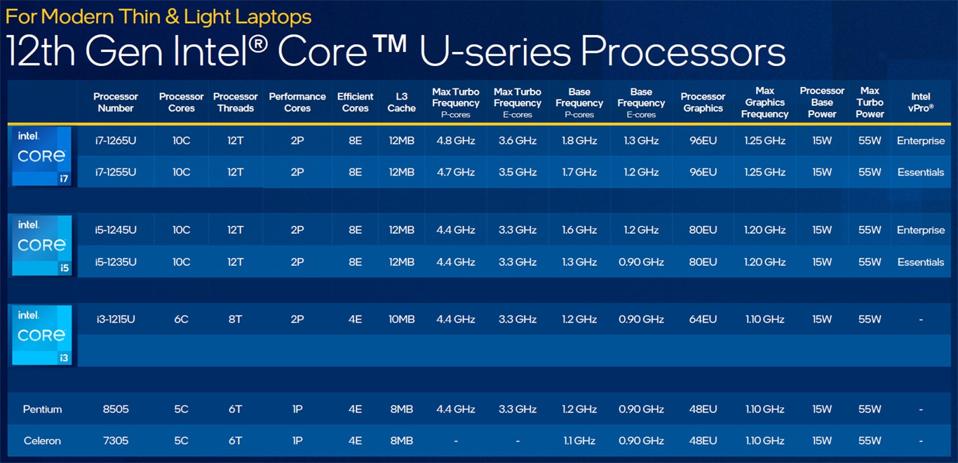
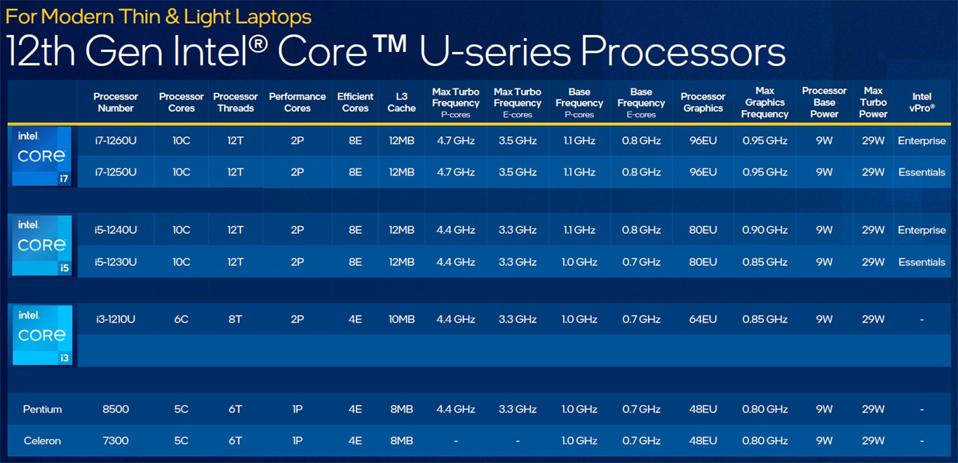
P-Series 12th Gen Core processors have lower 28 watt base power envelopes, while U-Series processors scale that further downward into the 9-15 watt range. The higher-power H-Series will be leveraged in an array of higher-end, somewhat larger high-performance gaming and content creation notebooks, while the P-Series will arrive in smaller, premium performance systems. The U-Series targets leading-edge ultra-thin-and-light systems.

12th Gen Core mobile processors should offer strong performance up and down the stack. At the top-end, Intel is claiming up to 28% faster gaming performance and significant gains in content creation and productivity workloads as well.
Discrete Intel Arc Alchemist GPUs Have Begun Shipping
Intel also revealed some interesting news regarding its upcoming Arc discrete graphics solutions. The first wave of Intel Arc Alchemist GPUs have apparently begun shipping to OEM partners. Although a range of Arc GPUs are inbound this year, the Arc Alchemist will be Intel’s initial mainstream offering that targets the sweet spot of the gaming and content creation markets.
In addition to shipping Arc Alchemist, Intel also disclosed some new feature and software support. Death Stranding Director's Cut will reportedly gain XeSS (Intel Xe Super Sampling image upscaling technology) support and specific 12th Gen Core optimizations and DaVinci Resolve, the popular video editor, will support next-gen Intel QuickSync and Deep Link technology.
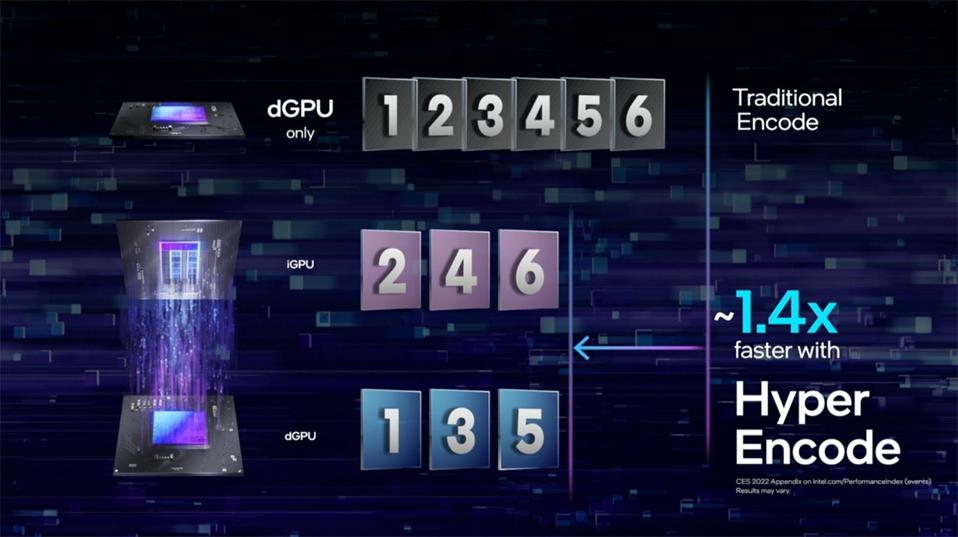
DaVinci Resolve will support Deep Link Hyper Encode, which leverages both integrated and discrete graphics engines simultaneously to accelerate the encoding of video.
All told, there weren’t many surprises during Intel’s CES 2022 disclosures – the company has been rather vocal about its intentions to bring Alder Lake and Arc to a variety of platforms this year. The expansive 12th Gen Core desktop and mobile line-up, along with its leading-edge platform technologies, and upcoming Arc discrete graphics solutions, however, send a clear message that Intel is aggressively going after every market segment, with compelling, forward-looking and feature-rich solutions for virtually every type of user.