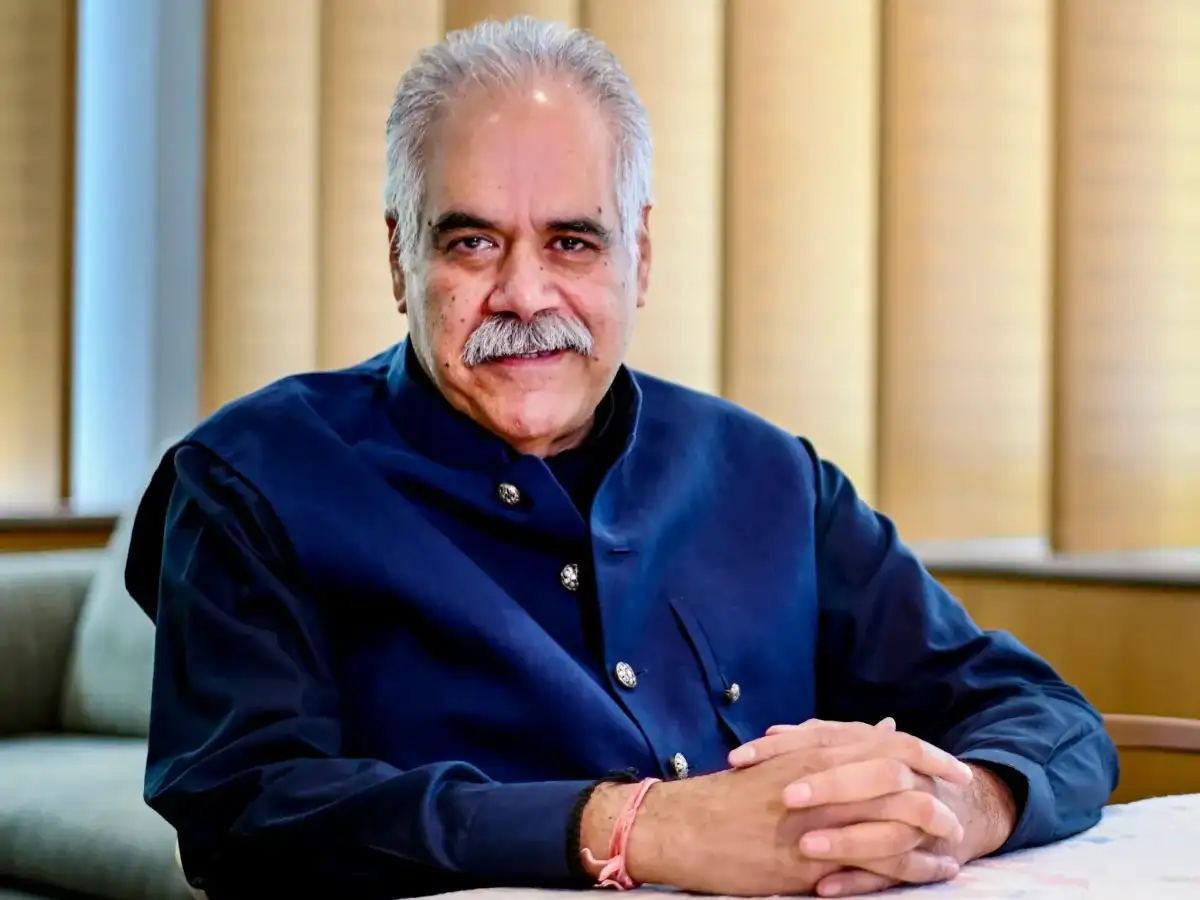
IndiGo Managing Director Rahul Bhatia has urged the government to rationalise taxes on aviation turbine fuel (ATF) and airport charges, saying lower airfares could unlock "massive" demand in India's price-sensitive aviation market, PTI reported.
Arguing that air travel has become a public utility, Bhatia said it continues to be taxed "as if it's an elitist mode of transport", making it difficult to keep fares affordable.
Also Read: IndiGo's Rahul Bhatia says pilot duty rules make aviation 'uncompetitive', calls for review
"I think some of these things have to get rationalised. Because the Indian consumer is so price sensitive that if you can lower fares, you just open up a massive demand," the report said, citing Bhatia.
Airlines absorbing rising costs
Bhatia's remarks come as airlines face mounting cost pressures from higher ATF prices and longer flying times due to airspace restrictions arising from the West Asia conflict.
He said carriers have absorbed much of the increase in operating costs instead of passing it on to passengers. Over the past three years, while inflation has risen by around 12%, fares retained by airlines have increased by only 1-3%, he said. During the same period, airport User Development Fee (UDF) charges have surged by as much as 95%, while landing and parking charges have risen by up to 34%.
Bhatia said IndiGo, which held a 66.3% share of India's domestic aviation market in June, has a responsibility to lead fare increases when higher costs make them unavoidable.
"If the fuel goes up 30 per cent and nobody raises fares, it's an excruciating pain for the industry," he said, adding that airlines also bring fares down when market conditions allow.
ATF accounts for about 40% of an airline's operating costs. Bhatia said IndiGo's best protection against fuel price volatility is inducting more fuel-efficient aircraft, adding that, to the best of his knowledge, no Indian airline currently hedges jet fuel prices.
Calls for review of pilot duty rules
Bhatia also called for a review of India's Flight Duty Time Limitations (FDTL) norms, arguing that the revised rules have reduced cockpit productivity, increased costs and made Indian aviation less competitive than global peers.
"I think Flight Duty Time Limitations (FDTL) needs a review... All we want to do is appeal to the government that we must follow the global best practices," he told PTI.
The comments mark one of IndiGo's strongest public criticisms of the revised FDTL norms, which took effect in phases from November 2025. The Directorate General of Civil Aviation (DGCA) introduced the changes to reduce pilot fatigue by increasing mandatory weekly rest from 36 hours to 48 hours, limiting night flying and revising duty period calculations to better account for circadian rhythm and fatigue.
Also Read: IndiGo parent InterGlobe Aviation appoints Kiran Thadimarri as CFO; Gaurav Negi takes advisor role
The new rules contributed to operational disruptions at IndiGo during last year's peak travel season. The airline cancelled 2,507 flights over three days in December 2025, prompting the DGCA to cite over-optimised operations, inadequate preparedness, software deficiencies and shortcomings in management structure and operational control.
The regulator subsequently reduced IndiGo's winter schedule by 10% and granted the airline temporary relaxations in implementing the revised norms until February 10.
"We were in the eye of the storm" during the implementation of the new rules, Bhatia said, adding that airlines were not seeking lower safety standards but regulations aligned with global practices.
"No airline wants to have unsafe operations. If India wants to compete with the world, then one cannot have FDTL regulations that are so far off the mark from global benchmarks that it actually drives a deep wedge into your efficiency," he said.
Calling aviation a "fine margin" business, Bhatia said every incremental cost matters for airlines operating on thin margins.
Rejects dominance concerns
Responding to concerns over IndiGo's market dominance, Bhatia said nearly one-third of the airline's capacity is deployed on around 250 unique city pairs where it has created new markets rather than competing with other carriers.
He argued that after excluding these routes, IndiGo's share in competitive domestic markets falls to the low-40% range. Internationally, the airline accounts for only about 20% of the market, he added.
"There is a collective responsibility on airlines, airports, certainly with the government on taxes, to make sure that we have an abundant offering that is attractive because the market is 1.4 billion people," Bhatia told PTI.
India is among the world's fastest-growing aviation markets. IndiGo operates more than 2,100 flights daily with a fleet of over 400 aircraft. As of March 31, 2026, the airline employed 41,907 people, including 5,786 pilots and 11,203 cabin crew.