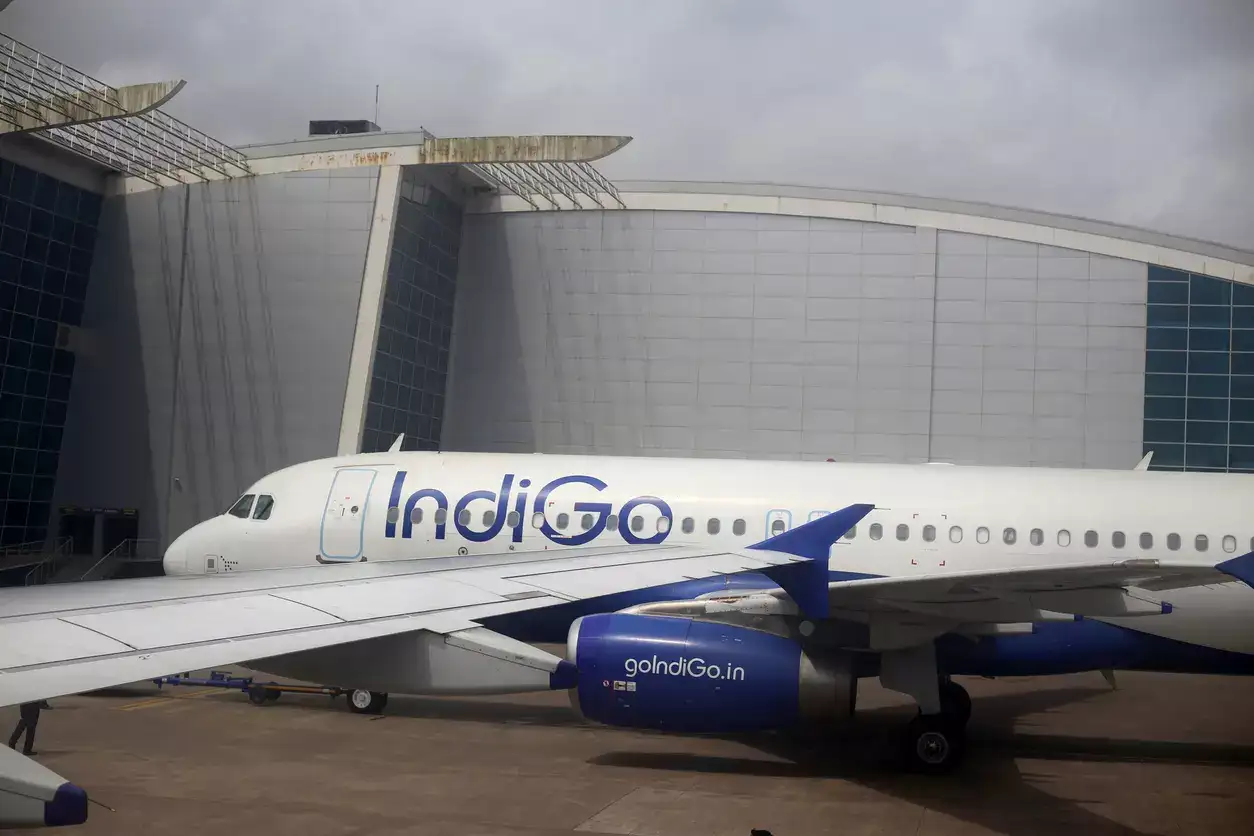
For InterGlobe Aviation, the operator of India's largest airline by market share, 2026 has been a year of back-to-back challenges. The troubles began in February when IndiGo found itself at the centre of one of the worst episodes of air travel disruption in the country. The implementation of new Flight Duty Time Limitation (FDTL) norms forced the airline to overhaul crew scheduling, triggering a severe pilot shortage and widespread operational disruptions.
Just as the airline was beginning to recover from the disruption, a much larger challenge emerged. The Israel-Iran conflict, which later drew direct U.S. involvement and has now entered its third month, sent shockwaves through global markets. Few industries have felt the impact as directly as aviation.
The conflict triggered widespread airspace restrictions across key international routes and disrupted traffic through the Strait of Hormuz, the world’s most critical oil chokepoint, through which nearly 20% of global oil exports flow.
For airlines, the consequences are severe. Longer flight paths due to airspace closures increase flying time and fuel consumption. At the same time, geopolitical uncertainty has pushed oil prices higher, inflating operating costs. The result is a double blow to profitability.
Also read: Wipro buyback alert! Last date to buy shares to participate in Rs 15,000 crore share buyback
Investors have taken notice. IndiGo shares have fallen nearly 20% over the past six months and are down almost 30% from their August 2025 peak of Rs 6,232.
The pain is showing up in earnings
The operational and macroeconomic headwinds have already started reflecting in the airline's financial performance. IndiGo reported a net loss of Rs 2,536 crore in the fourth quarter of FY26, compared with a net profit of Rs 3,067 crore in the corresponding quarter last year. Revenue from operations, however, rose 1% year-on-year to Rs 22,438 crore.
The airline said its operational performance during the quarter was impacted by disruptions arising from the ongoing conflict in the Middle East.
The pressure has also forced the carrier to rethink parts of its network. On June 3, IndiGo announced the suspension of flights to and from Manchester from August 31 as prolonged airspace restrictions and elevated operating costs continue to weigh on long-haul operations.
Will the troubles continue?
Analysts broadly agree that the near-term outlook remains challenging. The trajectory of IndiGo's performance now hinges largely on two variables: oil prices and airspace restrictions.
On the energy front, markets are closely tracking negotiations between Washington and Tehran for signs of progress or further escalation. Investors are particularly focused on developments around the Strait of Hormuz and the movement of oil tankers through the strategically important route.
Analysts caution that even if a ceasefire is formally agreed upon, shipping activity through the Strait of Hormuz could take several months to normalise. Any damage to energy infrastructure may delay the recovery further. Last month, Saudi Aramco Chief Executive Officer Amin Nasser warned that disruptions in the Strait of Hormuz could delay stability in global oil markets until 2027.
Morgan Stanley has also warned that the oil market is engaged in "a race against time". According to the brokerage, factors that have so far prevented a sharper spike in crude prices could begin to weaken if the Strait of Hormuz remains shut through June.
The brokerage noted that stronger U.S. crude exports and softer Chinese demand have helped absorb part of the supply shock. However, it cautioned that prolonged disruptions could tighten global supplies again if the outage lasts beyond the point at which the U.S. and China can offset the impact.
Government to the rescue?
There is, however, some relief on the horizon. The government has approved a Rs 100 billion Aviation Turbine Fuel (ATF) Price Stabilization Fund, a move widely viewed as supportive of the aviation industry. The mechanism will provide interest-free advances to oil marketing companies (OMCs), allowing them to stabilise ATF prices for airlines and shield carriers from extreme swings in global fuel prices.
Morgan Stanley believes the scheme could provide meaningful support to airline cash flows and operating margins, particularly since fuel accounts for roughly 40-60% of airline expenditure. Goldman Sachs echoed a similar view, stating that the support mechanism will allow OMCs to absorb losses when global ATF prices exceed predefined benchmarks. According to the brokerage, the scheme is designed to improve fuel price predictability and protect airlines from sharp cost shocks arising from the ongoing West Asia crisis.
Should investors buy IndiGo shares?
Despite the near-term challenges, brokerages remain constructive on the stock. Morgan Stanley has maintained its Overweight rating on InterGlobe Aviation while revising its target price to Rs 5,913 from Rs 6,498. The brokerage expects pressure on margins from higher crude prices, moderating demand and currency depreciation, resulting in a weak first half of FY27 before a gradual recovery in the second half.
Goldman Sachs has retained its Buy rating with a target price of Rs 5,200. The brokerage noted that IndiGo has not provided full-year FY27 capacity guidance and that elevated costs remain an overhang. However, Goldman highlighted that the broader Indian aviation industry, excluding IndiGo, continues to struggle with weak profitability and stressed balance sheets. It has maintained its valuation at 10x FY28 estimated EV/EBITDAR.
Motilal Oswal also remains positive on the airline and has maintained its Buy rating with a target price of Rs 5,600. The brokerage acknowledged near-term pressures from Middle East airspace disruptions, higher fuel prices, rupee depreciation and increased damp-lease exposure, but believes IndiGo's long-term growth story remains intact.
According to Motilal Oswal, the airline is well-positioned to benefit from India's strong domestic aviation demand and its expanding international network. It expects a gradual normalisation of international operations, fewer Pratt & Whitney-related aircraft groundings, continued fleet additions and the deployment of A321XLR aircraft on international routes to support earnings recovery.
Operationally, the airline appears to be moving in the right direction. During the March quarter, around 18% of total capacity was affected by the West Asia conflict, with more than 160 daily international flights disrupted. However, IndiGo has indicated that capacity recovered to roughly two-thirds of normal levels in May and expects full normalisation by the end of June.
JM Financial also pointed out that the number of grounded aircraft remains in the 40s but is expected to decline to the 30s by year-end, a development that could provide a meaningful boost to both capacity and costs.
Also read: Rajesh Exports shares hit 5% lower circuit after Sebi says 97-99% revenue inflation. Check key details
For now, investors appear caught between two competing narratives: a near-term earnings squeeze driven by geopolitical uncertainty and fuel costs, and a longer-term growth story backed by India's expanding aviation market. Which of those forces ultimately prevails may depend largely on what happens next in West Asia and the global oil market.
( Disclaimer : Recommendations, suggestions, views and opinions given by the experts are their own. These do not represent the views of The Economic Times)