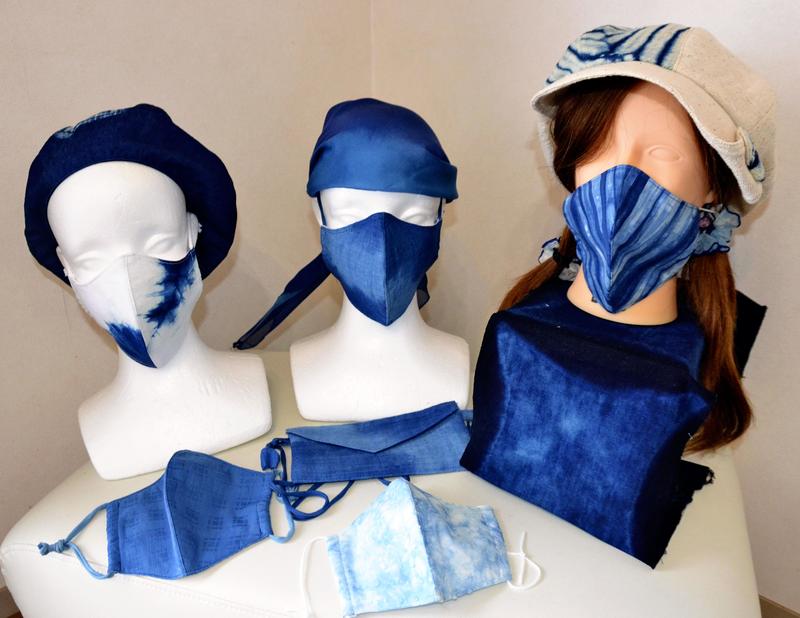
TOKUSHIMA -- Face masks dyed with indigo in a traditional method of Tokushima Prefecture are gaining popularity amid a shortage of masks due to the new coronavirus pandemic.
Indigo is said to have antibacterial properties, and the popularity of the masks has spread by word of mouth, making it difficult for manufacturers to produce enough. The town of Aizumi in the prefecture decided to send the indigo masks as a gift in return for contributions to the hometown tax, and has been flooded with applications for the tax since then.
"I hope [the masks] will be a new specialty of Tokushima [Prefecture]," said an official in charge.
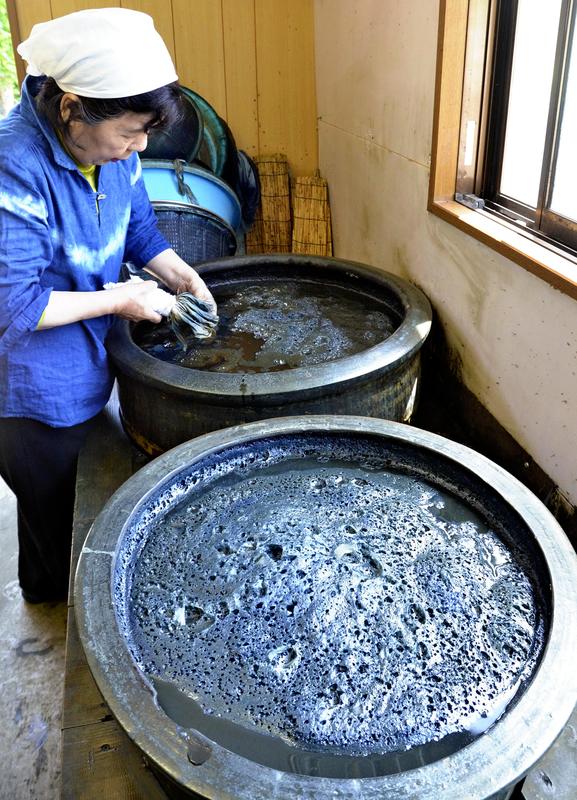
Indigo was chosen as the color of the official emblem of the Tokyo Olympics and Paralympics. It's popular overseas as "Japan blue."
In May last year, the Cultural Affairs Agency designated Awa indigo, the traditional indigo dye in Tokushima
Prefecture, as a Japan Heritage. The application was submitted by nine cities and towns in the prefecture along the Yoshinogawa River, where the production of indigo dye is common.
Clothes, shawls and other products dyed with Awa indigo were popular with tourists, but sales have been suspended because of the new coronavirus.
The indigo masks drew interest when Tokushima City Mayor Sawako Naito, the youngest female mayor in the history of Japan, and Tokushima Gov. Kamon Iiizumi, who is also head of the National Governors' Association, wore the masks at press conferences and on other occasions.
In mid-April, an indigo workshop in Tokushima called Tatta Ippon no Shiawase produced handmade cotton masks using the traditional Tokushima method of dying with indigo made from sukumo, the dried and fermented tadeai indigo plant. Priced at 1,300, yen each mask has three layers and is designed to fit to the face.
Word spread that the masks feel soft to the skin and look cool after they went on sale at JR Tokushima Station, the Aigura souvenir shop, and Arudeyo Tokushima, a prefectural souvenir and tourism plaza.
When the masks were publicized on Facebook, the online shop of Arudeyo Tokushima was flooded with orders from all over the country.
The masks remain short in supply because their production is limited to about 20 to 30 per day. In June, the manufacturers will start selling high-quality masks made of hemp and silk for 3,000 yen each.
"I'm surprised at how big the impact has been. I hope users will appreciate Awa indigo, which looks beautiful in many different shades, from dark to light," said Misako Kondo, who represents the Tatta Ippon no Shiawase workshop.
Read more from The Japan News at https://japannews.yomiuri.co.jp/