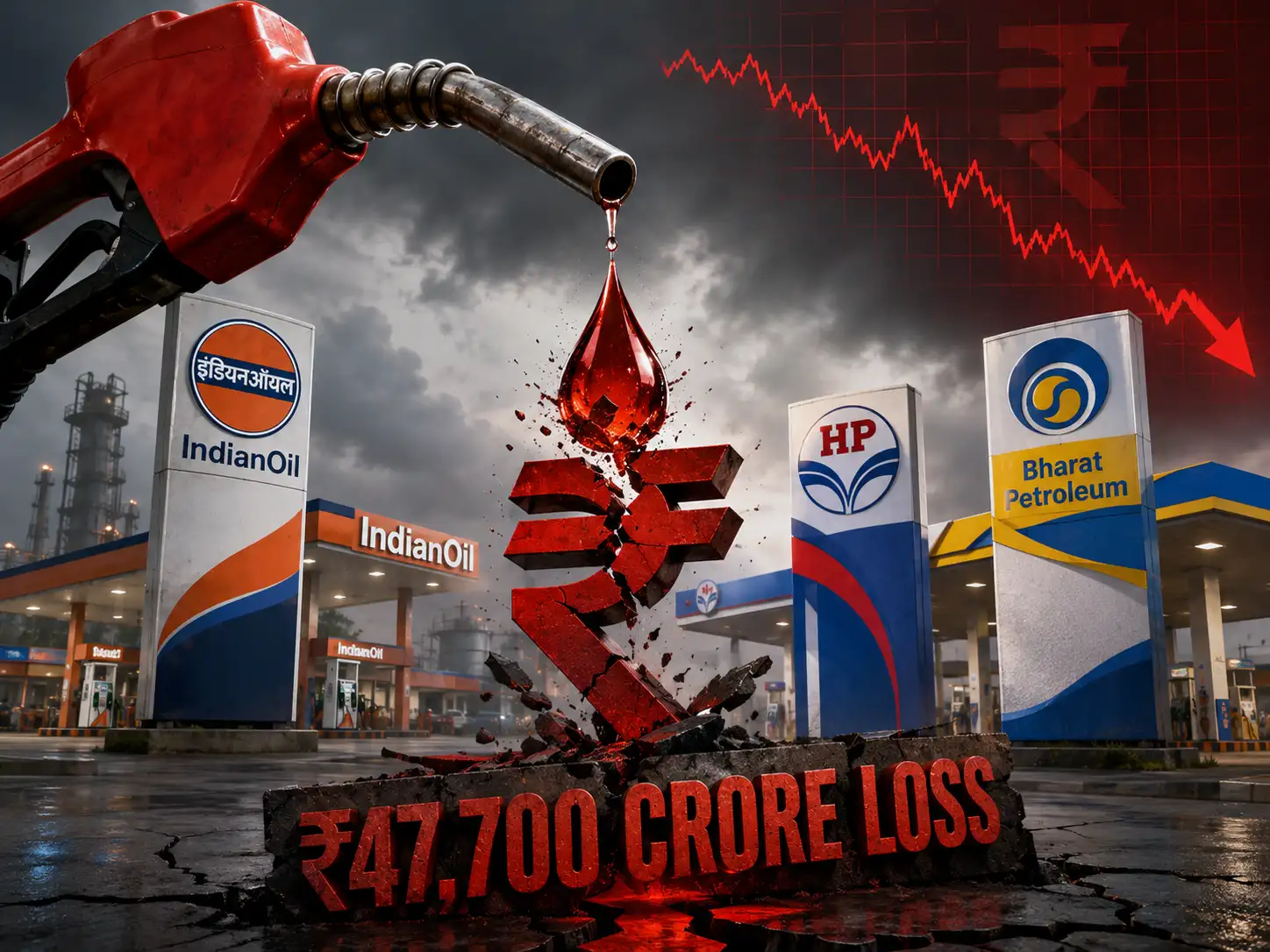
The West Asia crisis and the subsequent surge in oil prices may leave their deepest mark on India's oil marketing companies in the first quarter of the financial year 2027. As soaring crude prices squeeze fuel marketing margins, analysts expect HPCL, BPCL and IOCL to report combined EBITDA losses of as much as Rs 47,700 crore in the June quarter.
Investors, brace for washout
Japanese brokerage Nomura expects HPCL, BPCL and IOCL to report EBITDA losses of Rs 13,900 crore, Rs 15,800 crore and Rs 17,300 crore, respectively, in Q1FY27F, citing significant losses on the retail sale of petrol, diesel and LPG as the companies were unable to pass on higher crude oil prices to consumers. The brokerage said stronger gross refining margins (GRMs) are likely to have partly offset the marketing losses during the quarter.
Nomura also expects blended marketing margins to have deteriorated to a loss of Rs 20-21 per litre in Q1FY27F from a loss of around Rs 5 per litre in Q4FY26, primarily due to higher refinery transfer prices and rupee depreciation.
Domestic brokerage JM Financial expects HPCL, BPCL and IOCL to report a combined EBITDA loss of around Rs 47,700 crore in Q1FY27, comprising losses of Rs 17,300 crore for HPCL, Rs 17,200 crore for IOCL and Rs 13,200 crore for BPCL.
The brokerage said the weighted average auto fuel gross marketing margin of oil marketing companies (OMCs) is estimated to have declined to negative Rs 23.4 per litre in Q1FY27E from positive Rs 0.7 per litre in Q4FY26, remaining well below the historical average of Rs 3.5 per litre. It attributed the decline to a 108% quarter-on-quarter increase in diesel cracks and a 36% sequential rise in crude prices on a rupee-per-litre basis, driven by higher crude prices and aided by rupee depreciation.
Motilal Oswal echoed the view and expects the oil and gas sector to report a 94% year-on-year decline in profits, primarily due to oil marketing companies, which are estimated to post a combined loss of Rs 36,400 crore.
LPG under-recovery woes complicate it further
Nomura estimates LPG under-recoveries at Rs 560 per cylinder in Q1FY27F, up from Rs 77 per cylinder in Q4FY26, driven by higher Saudi contract prices and rupee depreciation.
JM Financial expects LPG under-recoveries to rise sharply to around Rs 25,000 crore in Q1FY27 from Rs 5,000 crore in the previous quarter, following a surge in global LPG prices due to supply disruptions in the Middle East.
With a significant decline in petrol and diesel marketing margins and around Rs 340 per cylinder LPG under-recovery, gross marketing margin losses for OMCs are expected to remain around Rs 8-10 per litre. Current petrol and diesel marketing margins stand at Rs 5.9 per litre and Rs 0.1 per litre, respectively, a sharp reversal from the deeply negative under-recoveries of Rs 8.1 per litre and Rs 19.5 per litre recorded through Q1FY27 due to the de-escalation of the West Asia conflict. As fears of supply disruptions ease and the Strait of Hormuz reopens, OMC earnings could gradually recover as conditions move towards normalisation.
Centre's petrol hike offers little help
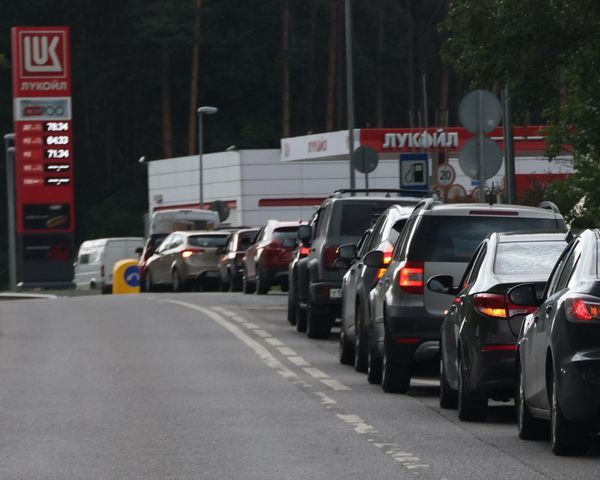
Even after the government raised petrol and diesel prices by Rs 3 per litre, Indian fuel retailers continue to face under-recoveries and would require another Rs 25 per litre increase merely to break even on marketing margins, according to analysts, who estimate the daily loss run rate for oil marketing companies at Rs 1,380 crore.
According to calculations by Nomura analyst Bineet Banka, OMCs are currently losing around Rs 25 per litre on petrol and diesel on a blended basis. Including LPG, the brokerage estimates their daily loss run rate at Rs 1,380 crore. At the current pace of integrated losses, Nomura estimates IOCL, BPCL and HPCL would exhaust their balance sheet equity within 10 years, four years and two years, respectively, if losses continue unchecked.
Who will face maximum heat?
Nomura believes HPCL remains the most exposed among the three oil marketing companies due to its higher marketing exposure.
"Integrated margins for HPCL are most impacted due to higher marketing exposure," the brokerage said, estimating the company is currently losing $19 per barrel on an integrated basis. IOCL is losing $4 per barrel, while BPCL is losing $8 per barrel, compared with integrated margins of $12-14 per barrel that all three companies were generating before the current oil shock began.
Read more: Iran promises a 'decisive' answer to US strikes
Elara Capital's Gagan Dixit highlighted the same concern, saying HPCL is the most vulnerable OMC because of its higher retail marketing exposure relative to refining capacity. According to him, Q1FY27 will be challenging due to expensive crude, lower product prices and elevated volatility.
Elara estimates the Rs 3 per litre fuel price hike will reduce annualised integrated losses on petrol and diesel by around Rs 34,500 crore. "Unless crude corrects, further retail price hikes or additional fiscal support would be required," Dixit said.
Nomura believes the latest fuel price increase may only be the first step. The brokerage drew parallels with 2022, when fuel prices remained unchanged for nearly a month after Russia invaded Ukraine and Brent crude climbed from around $94 per barrel to $110 per barrel.
Prices were subsequently increased by roughly Rs 0.80 per litre each day for about 15 days, resulting in a cumulative increase of Rs 10 per litre. At that stage, OMC marketing margins had turned sharply negative at around Rs 18 per litre on diesel and Rs 14 per litre on petrol.
"The current Rs 3 per litre hike could be the first in a series of fuel price increases, similar to what was seen during the Russia-Ukraine war in 2022," Nomura said. "If crude prices stay high, this could be the start of further gradual hikes to support OMC margins."
At the peak of the conflict that began in February, crude oil had surged to a high of $126 per barrel. Downstream oil marketing stocks typically come under pressure during periods of rising crude prices as their input costs increase sharply while their ability to pass on the higher costs remains limited.
These companies buy crude oil at elevated prices, refine it into petroleum products and sell them in a regulated pricing environment, resulting in margin pressure when retail fuel prices do not keep pace with higher crude costs.
HPCL, BPCL, IOCL shares have dropped 23%, 20%, and 17%, respectively in 2026.
With crude prices remaining elevated and geopolitical tensions showing little sign of easing, the June quarter is shaping up to be a challenging one for downstream companies. While stronger refining margins and recent fuel price hikes may provide some relief, the pace of recovery will largely depend on the direction of crude oil prices. With the geopolitical situation still evolving, the outlook for oil prices remains highly uncertain, leaving earnings visibility hanging in the balance.
(Disclaimer: Recommendations, suggestions, views and opinions given by the experts are their own. These do not represent the views of The Economic Times)