India still stays slightly above the baseline GDP threshold for education set by Unesco, although it finds its share in total government expenditure dipping under the required level. Education accounts for 4.1% of GDP and 14.2% of total public expenditure, down from 15.7% in 2015 and below UNESCO’s 15% benchmark, according to its 2026 SDG 4 Scorecard.
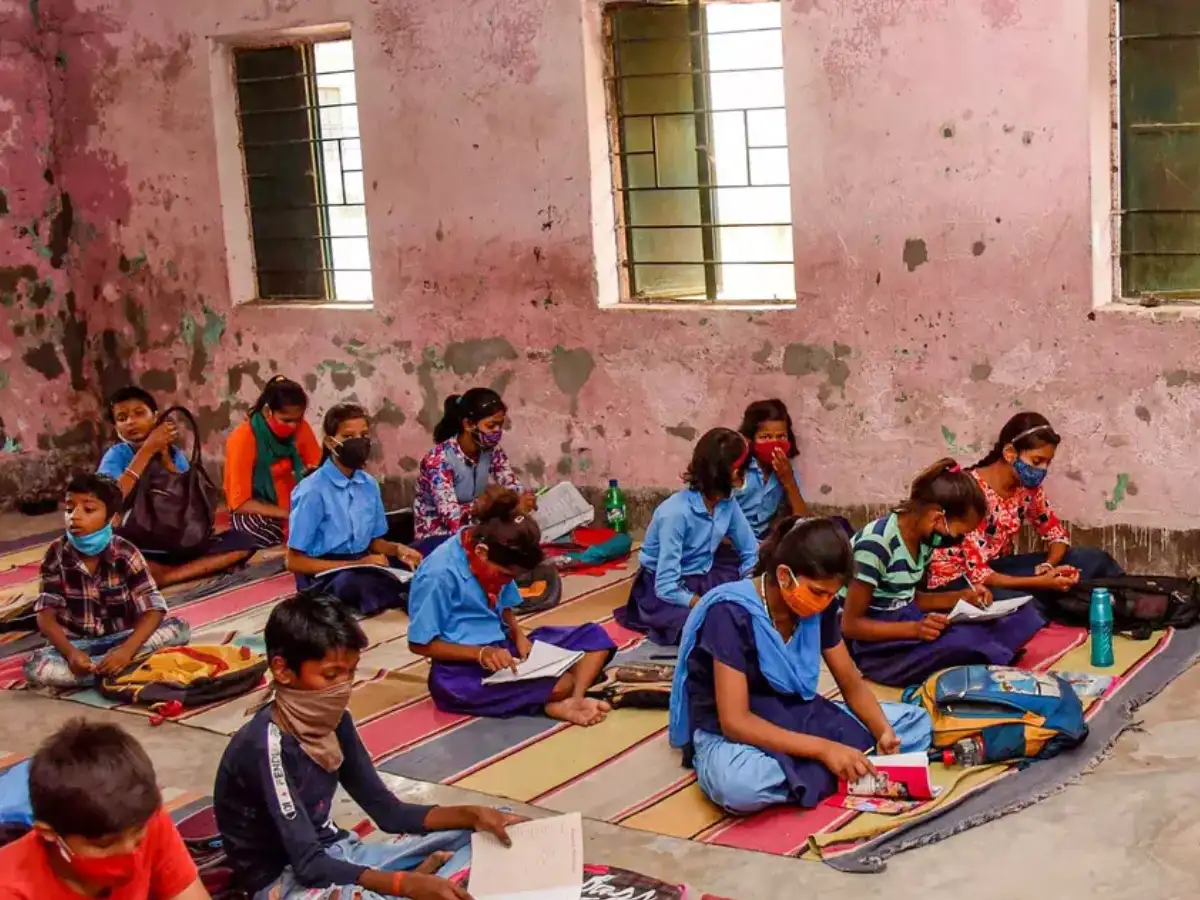
The funding situation in education becomes more conspicuous as it trails behind in terms of secondary school completion as well. According to the latest figures, the lower secondary (Classes VI-VIII) completion rate is at 86% compared to the target figure of 99% for 2025, while the upper secondary (Classes IX-XII) rate is at 51% as opposed to 84%. Progress at both levels has been classified as slow by Unesco.
According to the Education 2030 framework, countries have agreed to allocate 4-6% of GDP or 15-20% of total public expenditure towards education.The scorecard uses the lower thresholds as minimum benchmarks. While India meets one requirement, the share of education allocation has remained at 4.1% since 2015. Its share of public expenditure has gone down 1.5 percentage points to 14.2 %.
Among major emerging economies, China meets one benchmark, with the figures at 4% of GDP and 11.9% of public spending, while Brazil records 5.6% and 12.9%, respectively. South Africa meets both benchmarks at 6% and 19.1%, whereas Indonesia, Bangladesh and Pakistan meet neither.
These economic trends also appear to be common in advanced economies as countries like the US, UK, Germany and France fulfill the GDP requirement only to fall short of the public spending one, while countries such as Sweden and Switzerland are able to surpass both requirements.
Unesco noted that richer countries tend to meet the GDP requirement but do not adhere to the spending limit because these economies tend to earn more revenues. In contrast, education often bears a bigger share of total budgets in poorer nations.
As things now stand, out of the total of 205 nations there are only 39 or 19% that can be regarded as meeting both requirements, while only 72 or 35% are failing to meet both requirements. The above-mentioned figures indicate that 64 countries, including India, are exceeding the GDP figure of 4% but are below the public expenditure quantum of 15%. While with regard to high-income nations, only 11% fulfill both quotas, 50% demonstrate a situation similar to the one existing in India.
Read More: Student loans, GoI reading this right
However, India still has a bigger gap concerning elementary education. The completion of lower secondary schooling has grown significantly from 81% to 86% from 2015, however, it still lags behind the 99% target by 13 percentage points. Moreover, even Unesco has given "feasible" 2025 benchmark of 90% which is four points above the latest rate.
This is despite the expansion of programmes functionality. According to Unesco’s profile of the country, Samagra Shiksha caters to around 15.6 crore pupils, and PM-Poshan, around 11.8 crore children across 11.2 lakh of government and aided schools. This is a microcosm of a larger international trend visible with regard to education. The scorecard concludes that, on average, countries are moving away from public education financing benchmarks of not less than 4% of GDP or 15% of total public expenditure.