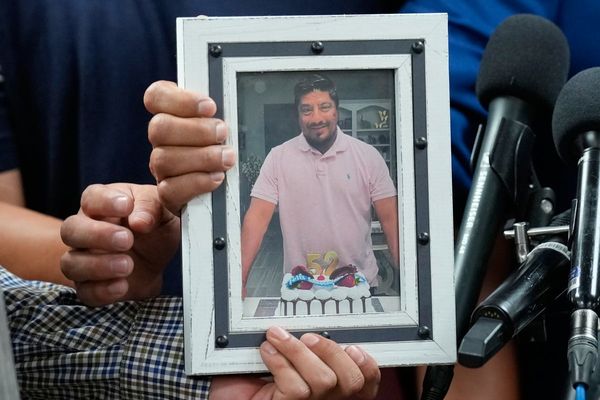

Such is the case of Manish Kumar, an Indian-origin restaurateur who has spent the last three decades living in Japan. Kumar recently drew widespread attention after breaking down emotionally during an event at the Japanese parliament while speaking about the possibility of being forced to leave the country he now considers home.
Kumar, who operates a restaurant in Japan’s Saitama Prefecture, revealed that Japanese authorities denied the renewal of his business visa under the country’s revised immigration regulations. As a result, he has been forced to shut down the restaurant he had successfully run for the past 18 years.
During the May 13 event, Kumar delivered an emotional speech in Japanese, expressing concern for his family’s future. Fighting back tears, he said that his children — born and raised in Japan — only speak Japanese and have never truly known life in India.
“My children were born here and are now in high school; they can only speak Japanese and have only Japanese friends,” he said. “I worked hard and even bought a house. To tell me unilaterally to go back to India — how is that humane?”
Kumar explained that he had spent decades building his life in Japan with the support of customers, local communities, and fellow business owners. He stressed that he had followed the rules and worked diligently to establish himself in the country.
“I’ve done nothing wrong,” he said. “It’s cruel to tell people to return to their home country just because the rules have suddenly changed.”
Japan’s Stricter Immigration Rules
Japan revised its business manager visa programme in late 2025, significantly tightening eligibility requirements. Under the new rules, the minimum capital requirement for applicants increased from 5 million yen to 30 million yen (approximately $190,000).
Authorities stated that the stricter measures were introduced following concerns that the visa system was being exploited for migration purposes. Investigations reportedly uncovered shell companies operating under the programme.
In addition to the increased financial threshold, applicants and full-time employees are now expected to demonstrate Japanese language proficiency, generally equivalent to the Japanese Language Proficiency Test (JLPT) N2 level, according to reports referencing a KPMG assessment.
Kumar reportedly continued renewing his business visa over the years instead of applying for permanent residency or Japanese citizenship. Under the revised regulations, he no longer meets the updated requirements.
Public Reaction and Growing Debate
Kumar’s case has sparked debate across Japan and among immigrant communities worldwide. A Change.org petition calling for a review of the revised visa regulations has already gathered nearly 60,000 signatures and was recently submitted to Japan’s Immigration Services Agency.
Data released by Japan’s Immigration Services Agency reportedly showed a dramatic decline in visa applications after the rules came into effect. Monthly applications are said to have fallen from around 1,700 to nearly 70 — a drop of approximately 96%.
Despite growing criticism, Japanese officials have defended the policy changes. Kimi Onoda, Japan’s Minister of State for Economic Security, recently stated that concerns surrounding misuse of the visa programme “have been largely allayed” due to the stricter regulations.
A Human Cost Behind Policy Changes
While governments often revise immigration systems to address legal and economic concerns, Kumar’s story highlights the human impact such changes can have on long-term residents who have built their lives around stability and belonging.
For Kumar and his family, Japan is no longer simply a foreign country — it is home. His children’s identity, education, friendships, and future are tied to Japanese society. The uncertainty surrounding their future now raises broader questions about how immigration systems balance regulation with compassion for those who have spent decades contributing to their communities.