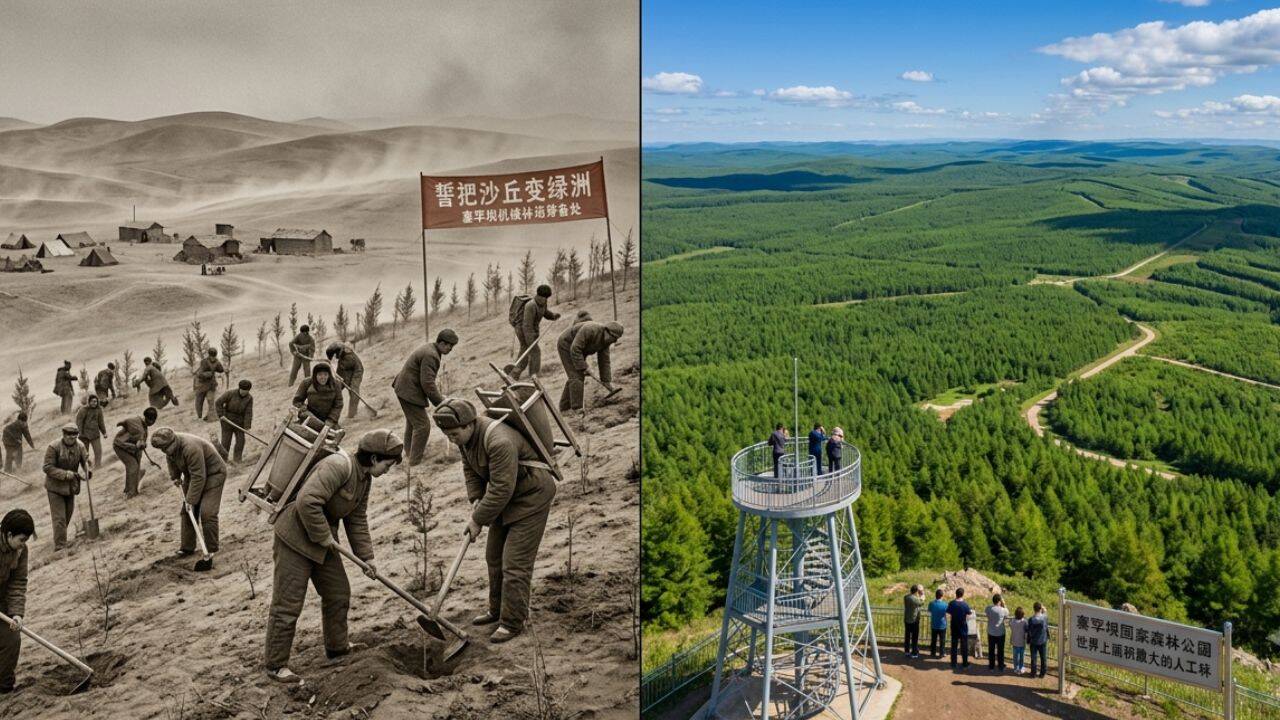
In the highlands of northern China’s Hebei Province, a vast stretch of forest now covers a landscape that once appeared almost beyond recovery. Saihanba National Forest Park spreads across around 185,000 acres, with dense stands of trees rising where sand and dry winds once dominated the horizon.
Get breaking news anytime, anywhere. Download the TOI app now!
As reported by The State Council Information Office (SCIO), the transformation is difficult to connect with the area’s earlier history. Centuries ago, Saihanba was valued by China’s Qing rulers as a cool summer retreat and a hunting ground. But by the final years of the dynasty, the forests had largely disappeared. Fires, logging and years of conflict stripped away much of the vegetation, leaving exposed land vulnerable to the powerful winds that arrived from the Inner Mongolia region.
The bare ground did not remain a local problem. Sand carried from the north contributed to repeated dust storms that reached Beijing, affecting the capital’s air and daily life for decades. In 1962, a group of more than 350 young foresters was sent into this damaged landscape with an ambitious task: rebuild the forest.
How 350 foresters turned a former desert into a thriving forest
When the first workers arrived, Saihanba was not a green wilderness waiting to be restored. It was a harsh, open expanse where trees struggled to survive. The team had to begin with the basics. They built their own shelters, grew food and learned how to live in a place where winter temperatures could fall to around -40 degrees Celsius. The climate created constant challenges. Strong winds dried the soil, freezing conditions damaged young trees, and many early planting efforts failed. The foresters were attempting to recreate a forest in an area where the original ecosystem had almost completely vanished.
For those sent there, the scale of the work was overwhelming. They had no guarantee that the seedlings they planted would survive, or that the land could support a new forest at all. Then they found an unexpected reminder that trees had once existed there. Standing alone among the empty landscape was a larch estimated to be about 200 years old. The tree had survived decades of environmental decline, showing that the region still held the possibility of supporting forest growth.
Building a forest in one of China’s harshest climates
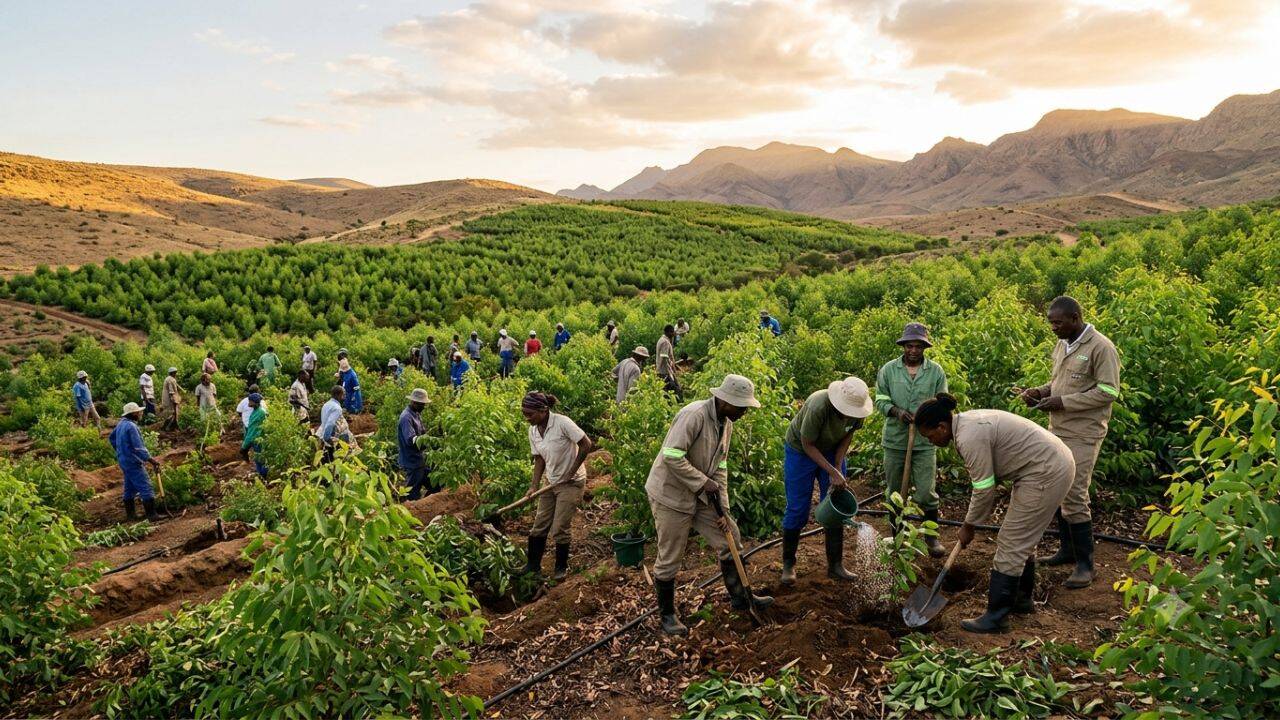
The early years were spent experimenting. Foresters tested different species, adjusted planting methods and worked to understand the difficult conditions of the plateau. Some trees failed repeatedly before methods were improved.
The project became a long-term effort rather than a single campaign. Generations of workers continued the work started in the 1960s, gradually expanding planted areas and restoring vegetation across the region.
Life for the forest workers remained demanding. Many spent years in remote conditions, far from cities and modern conveniences. They faced cold winters, limited resources and the uncertainty of whether their work would eventually reshape the landscape.
Over time, however, the scattered patches of trees began connecting into larger areas of woodland. The empty ground slowly changed colour, with young forests replacing stretches of exposed soil. The work was measured not in months or years, but decades.
From desert edge to a vast artificial forest
More than half a century after the first planting began, Saihanba had become one of the largest human-created forests on Earth. What had once been a source of dust and erosion became a major ecological barrier in northern China.
The forest now helps protect surrounding areas from desert expansion and reduces the impact of strong winds carrying sand toward nearby regions, including Beijing.
The trees also created new habitats for wildlife and helped restore parts of the local environment. Streams, plants and animal populations have benefited from the return of forest cover, changing an area that had once been described as a wasteland.
Saihanba’s transformation was not the result of a single breakthrough. It came from repeated planting, failed attempts, adaptation and the continued work of several generations of foresters.
A forest with a role in the climate fight
Beyond its impact on the landscape, Saihanba has become valuable for its ability to store carbon. The forest absorbs hundreds of thousands of tonnes of carbon dioxide each year, providing an environmental benefit alongside its role in protecting northern China from land degradation.
The carbon storage value also creates an economic opportunity. Under carbon trading systems, the forest’s ability to capture carbon can generate funds that support continued conservation and maintenance.
The original mission was focused on bringing trees back to a damaged landscape. Decades later, the forest has become part of a much larger conversation about restoring ecosystems and managing climate risks.
The legacy of three generations
Saihanba’s story is tied closely to the people who worked there. The first group arrived when success was uncertain, planting trees in conditions that offered little encouragement. Later generations continued the same effort, caring for a forest they inherited rather than created from scratch.
Today, the landscape looks completely different from the one they encountered in the 1960s. The winds still pass over the plateau, but instead of moving across bare ground, they now meet millions of trees. A former royal hunting ground that became a desert has been turned into a vast forest built slowly, one tree at a time.