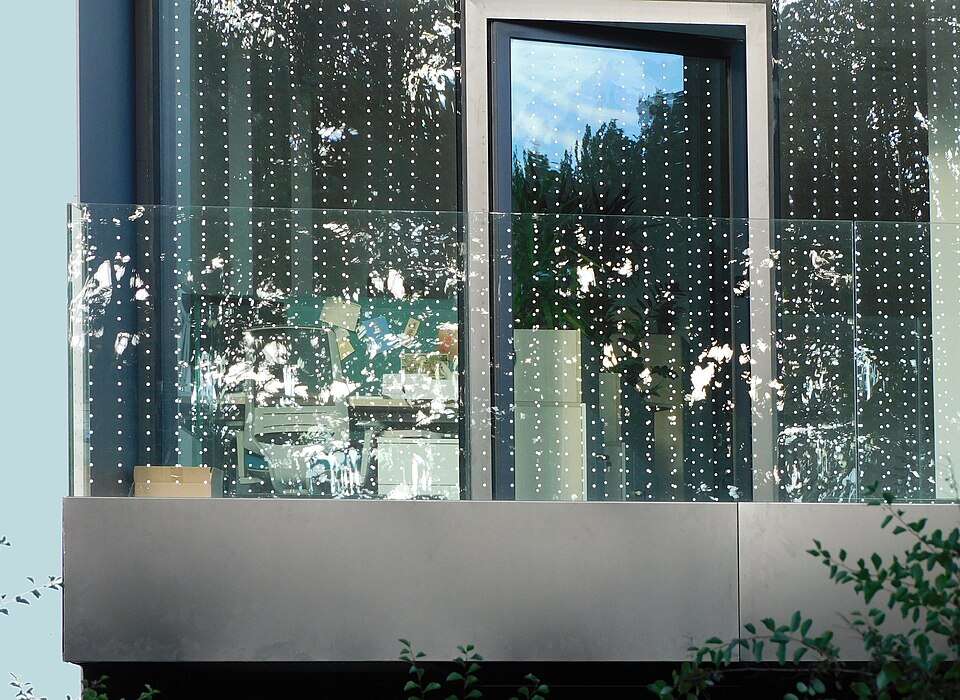
For years, the glass walls of Chicago’s McCormick Place convention centre posed a serious threat to migrating birds. From the outside, the building reflected the sky, trees and surrounding landscape. To birds flying through the city, the glass could look like open sky until they struck it.
Get breaking news anytime, anywhere. Download the TOI app now!
According to research in the Proceedings of the National Academy of Sciences (PNAS) , in October 2023, the danger became impossible to ignore. Nearly 1,000 migrating birds died after colliding with the building in a single night, making it one of the worst mass bird-collision events recorded at the site. A year later, workers covered large sections of the building’s glass with a pattern of tiny white dots. The result was striking: bird collisions fell by more than 95% during the following autumn migration period. The fix was simple, but it addressed a long-running problem in cities around the world: glass buildings can be nearly invisible to birds.
Why birds collide with glass
A bird does not always see a reflective window as an opaque obstacle. Rather, the glass could reflect the sky, plants, or other elements from the environment, providing the impression of open airspace for the bird to fly. A bird flying toward the reflective surface may not realise there is a solid barrier ahead. The problem is especially severe when millions of birds migrate through cities along established routes. Artificial light creates even greater problems at night, when migratory birds are drawn to lit buildings.
The scale of the problem is difficult to measure precisely because many collisions go unrecorded. Some birds die in places where they are never found, while others may fly away after being injured. However, the National Park Service notes that window collisions kill about one billion birds annually in the United States. It also highlights an important point: the danger is not limited to skyscrapers. Almost half of bird-building collisions are estimated to occur at buildings shorter than four storeys, many of which are located near vegetation or other attractive bird habitat. At McCormick Place, the building’s location along Chicago’s lakefront made the risk especially serious. The convention centre sits near a major route used by migrating birds, while its expansive glass surfaces created a large obstacle in their path.
Tiny dots, a major reduction in collisions
What was put into use at the building was a bird-safe film that had little white dots spaced evenly across the window. These disrupt the clear view through the glass and make it more visible to birds. The dots must be spaced appropriately. Based on information from the National Park Service and American Bird Conservancy, markings should not be spaced more than two inches apart on the exterior side of the windows. Larger spacing will still leave gaps for birds to try and fly through.
At McCormick Place , the film covered about 120,000 square feet of glass, an area roughly equivalent to two football fields. During the autumn migration period after the installation, recorded bird collisions dropped by more than 95% compared with previous years, according to the building’s operator. The result shows that small visual changes can make a major difference. The glass stayed in place, and the building did not need to be redesigned. Instead, the dots altered how the surface appeared to birds.

A simple idea that could change building design
The Chicago project is part of a wider shift in how architects, conservationists and building managers approach the problem. Bird-friendly designs can include patterned glass, external films, decals, paint, tape or other visual markers. In some cases, reducing unnecessary lighting during migration periods can also lower the risk.
The National Park Service has described a range of retrofit options, from inexpensive temporary measures to permanent bird-friendly glass installed during construction. The agency's work at national parks has shown that even buildings with relatively small areas of glass can become collision hotspots, particularly when they are surrounded by good bird habitat. The approach is straightforward. Birds have to identify glass walls as barriers before they reach them. However, not all window treatments are effective. The location of the patterns, the distance between them and their visibility against the reflection should be taken into account because there may be gaps through which birds can try to fly.