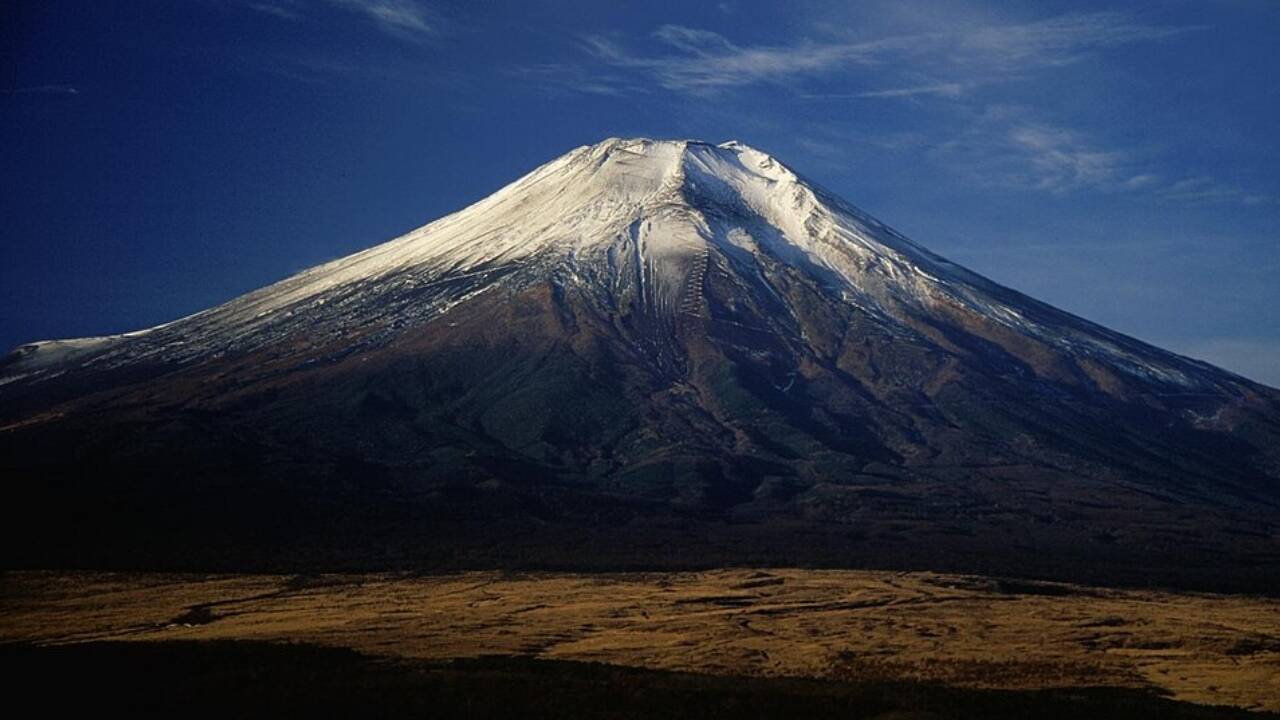
A narrow lava tunnel hidden beneath the forests at the northern foot of Japan’s Mount Fuji tells a story that spans geology, religion and cultural memory. Known as the Funatsu Tainai Lava Tree Mold, the cave was formed after one of the volcano’s eruptions in 937 CE, when molten lava flowed across forests, engulfing fallen trees before cooling into rock. According to UNESCO and Japan’s Ministry of Land, Infrastructure, Transport and Tourism (MLIT) , the trees burned away inside the hardened lava, leaving behind long tubular cavities whose ribbed walls resemble the contours of a human womb. Centuries later, pilgrims came to regard these natural wombs as sacred, believing that passing through the cave symbolised spiritual rebirth before ascending Japan’s highest mountain. The cave is now a part of the UNESCO-listed Mount Fuji World Heritage Site, highlighting how a geological phenomenon evolved into an enduring place of faith.
Get breaking news anytime, anywhere. Download the TOI app now!
A place where volcanic fire met faith
UNESCO ’s nomination dossier mentioned that the cave belongs to the Ken-Marubi lava flow created during Mount Fuji’s eruption in 937, a volcanic event that spread lava across the mountain’s northern slopes. As the lava enveloped the fallen tree trunks, it solidified around them while the intense heat burned away the wood, preserving their shape as hollow molds. Today, the Funatsu area contains dozens of these molds, an unusually dense concentration that many geologists regard as valuable evidence of past volcanic activity. According to the official Yamanashi tourism authorities , these formations are recognised as nationally protected Natural Monuments and are among the natural features that contributed to Mount Fuji’s inscription as a UNESCO World Heritage Site in 2013. Thus, their scientific importance lies not just in recording the path of ancient lava flows but also in preserving the delicate impressions of bark and wood within the rock.
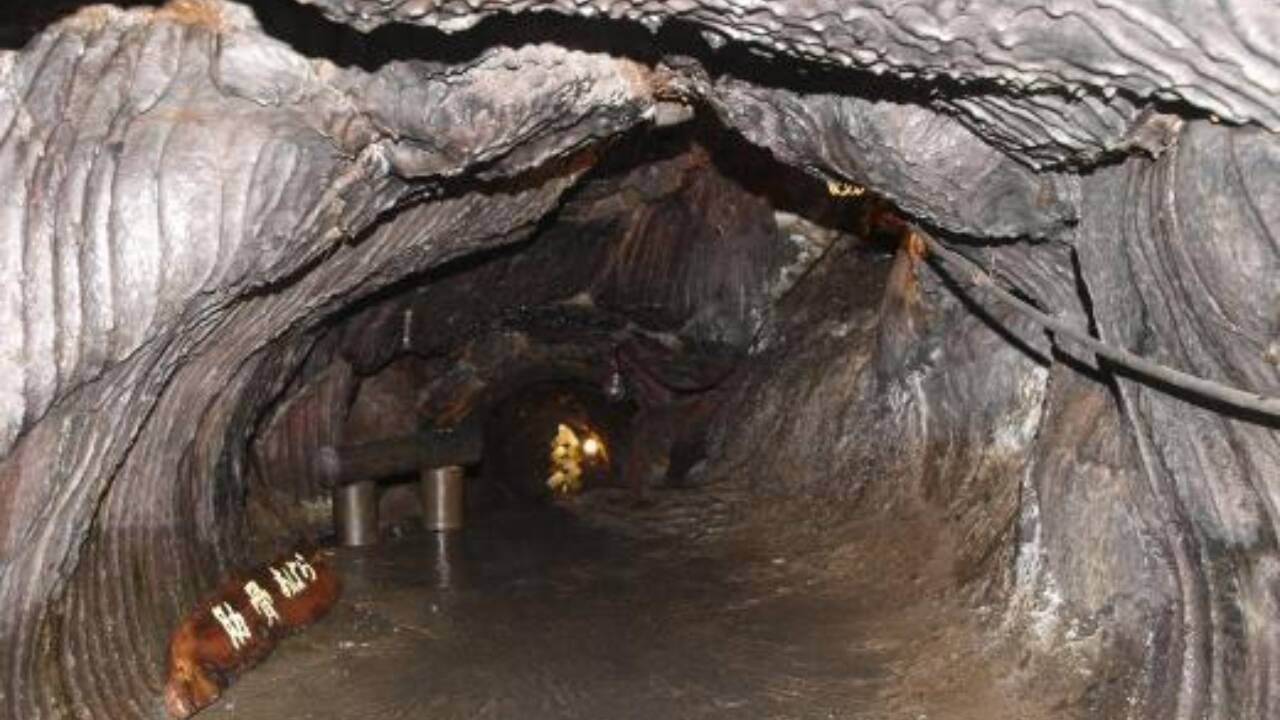
UNESCO says the cave’s significance extends beyond its volcanic origins: it became one of the most important sacred sites of the Fuji-ko, a religious movement dedicated to Mount Fuji that flourished during the Edo period (1603–1868). Pilgrims believed the narrow passage represented the womb of the mountain itself, known as “Otainai,” and crawling through it symbolised purification and rebirth. Devotees performed this ritual, called Tainaimeguri, or “touring inside the body”, a day before climbing. After exiting the cave, they rested at traditional Oshi lodgings to prepare for the final mountain ascent. The cave's association with Konohanasakuya-hime, the Shinto goddess of Mount Fuji, further strengthened its spiritual status, making it a revered destination for women praying for safe childbirth.
A rare landscape where nature shaped religion
The Funatsu Tainai Lava Tree Mold remains one of the clearest instances of how an unusual geological feature evolved into a living cultural landscape. Mount Fuji’s World Heritage inscription recognises not just the mountain’s striking volcanic form but also the interconnected shrines, pilgrimage routes, lava tree molds, springs and lakes that together reflect centuries of religious devotion and artistic inspiration. It is worth noting that although Mount Fuji’s last confirmed eruption was the Hoei eruption of 1707-08, the volcano is still classified as an active volcano by the Japan Meteorological Agency, thus making its ancient lava flows enduring reminders of the forces that shaped both the landscape and local traditions. Today, visitors can still enter the cave after passing through the Utsumuro Sengen Shrine, entering a ritual space where geology, mythology and history converge. The site shows how volcanic activity created not just a cave but a place generations came to regard as a symbolic birthplace of spiritual renewal.