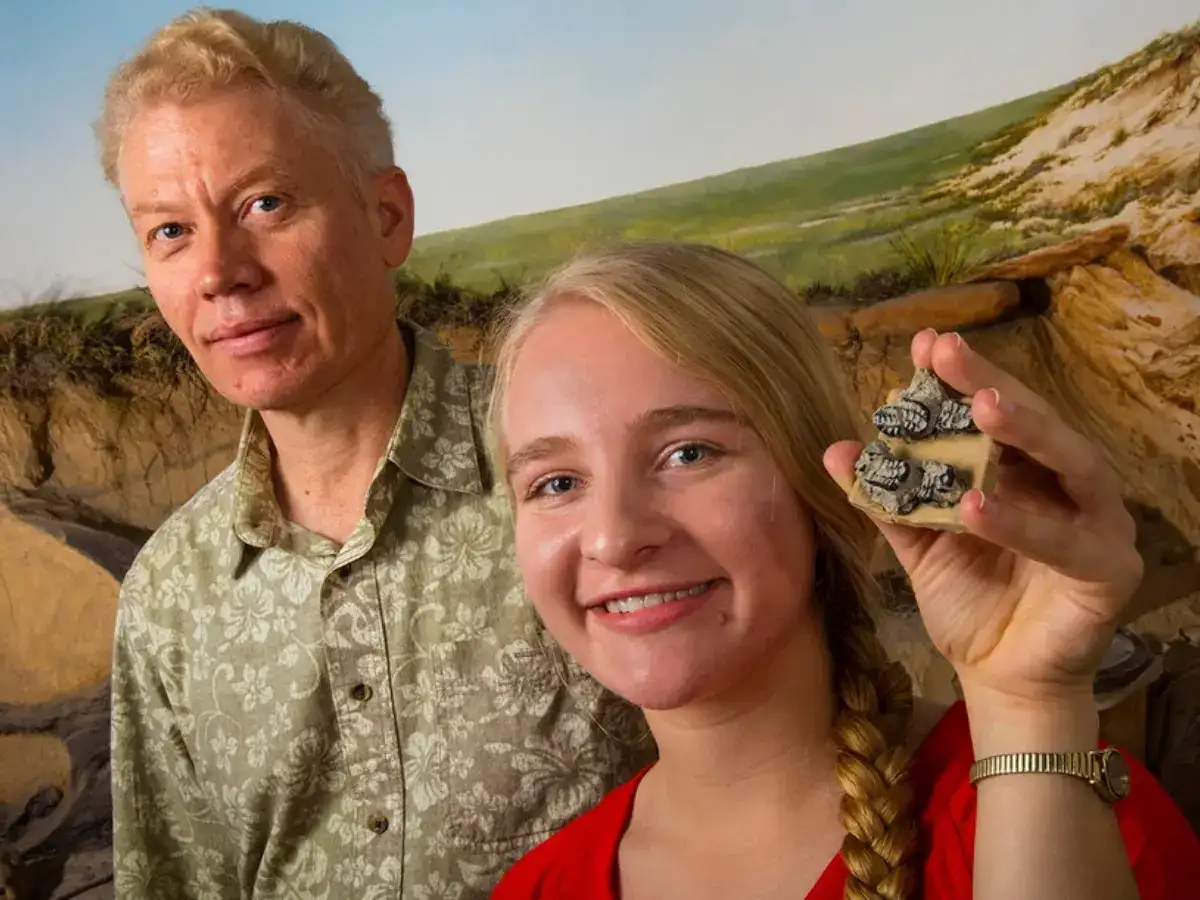
First-time fossil enthusiasts usually assume they will gain basic field experience. However, few think they could take part in finding an animal species that was not known to humans. This is precisely what happened to a first-year undergraduate student, Carissa Raymond of the University of Nebraska-Lincoln, who went on a fossil hunt in the San Juan Basin of New Mexico in 2014. In the process of the field activity, Raymond uncovered fossilized remains consisting of teeth and jaw fragments, which were later determined to be the fossils of a previously unidentified mammal species.
The animal was identified as a new species of the multituberculate mammal family, namely Kimbetopsalis simmonsae. What makes this discovery unique is the place it was made. Despite having been excavated for decades, the San Juan Basin yielded a species that was yet to be scientifically defined by researchers.
Unidentified mammal species found after the first fossil hunt
As stated by the University of Nebraska-Lincoln, Raymond made the discovery during her first fossil field trip and research at the university in New Mexico. This made the entire event quite unique for undergraduate students. They help with digs, cataloging, and surveys, but big finds aren't common on their first visit. This fossil wasn't just casually collected and documented. It was carefully dug out, and the information about its geological background was preserved, which is essential for paleontology.
Paleontologists explain this kind of organized fieldwork is so important as fossils become valuable when scientists know their location, stratigraphy, and additional details. Researchers working with the specimen in university publications revealed that it became obvious early on that the fossil was unusual.
Teeth and jaw fragments showed something new
This fossil didn't contain an entire skeleton. However, some significant features were preserved by it. According to the university's description, the specimen included teeth, jaws, incisors, molars, premolars, and a portion of the braincase. Fossils of teeth are particularly important for paleontologists since their structure helps identify species.
It became clear that the tooth structure didn't match any known specimens of multituberculates in the area. The specimen was examined against fossils held in museums around the world before declaring its identification as a new species. Multituberculates were a group of mammals that lived in the dinosaur age and even persisted for many years after the end of the dinosaurs.
The multituberculates have since gone extinct, but are still studied by scientists to understand the evolutionary history of mammals. The precise anatomical information provided in Raymond's specimen was enough to officially classify Kimbetopsalis simmonsae as a new species.