Atlantic salmon, once found in large numbers across eastern Canada, suffered a dramatic population decline over the past few decades due to habitat destruction, dam construction, overfishing, pollution and rising river temperatures. The species, particularly the Inner Bay of Fundy population, came close to extinction, prompting one of Canada's biggest freshwater conservation efforts. Today, after years of restoration work, scientists are seeing encouraging signs as wild salmon are once again returning to their native rivers to spawn.
Why did Atlantic salmon populations decline?
Wild Atlantic salmon numbers began falling sharply in the late 20th century, with the decline accelerating in the early 2000s. According to the Government of Canada's Committee on the Status of Endangered Wildlife in Canada (COSEWIC), several human-driven and environmental factors combined to push the species toward extinction.
Hydroelectric dams blocked traditional migration routes, preventing adult salmon from reaching spawning grounds. Logging, urban development and other land-use changes damaged river habitats, while pollution reduced water quality. Overfishing further shrank breeding populations, and climate change increased river temperatures and altered water flows, making survival even more difficult.
Why Atlantic salmon are unique
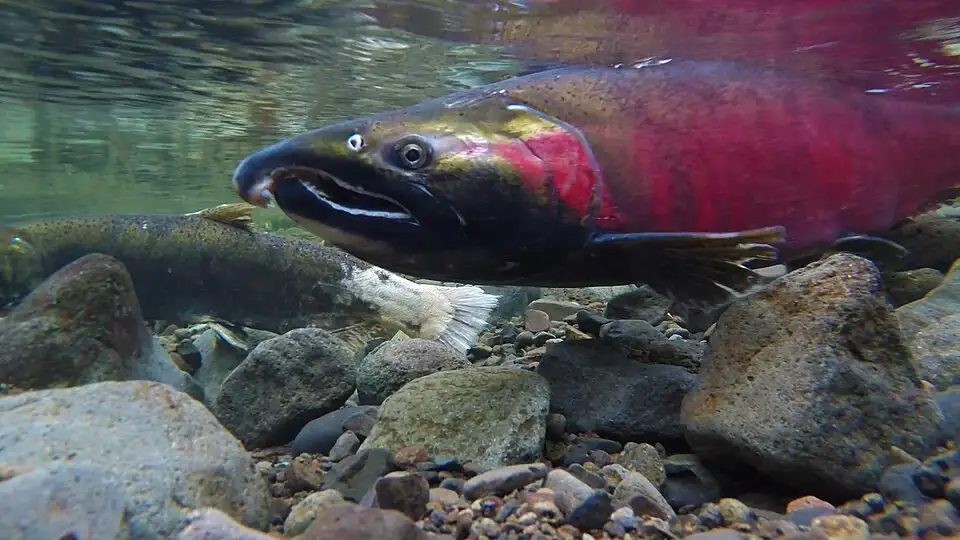
Atlantic salmon have one of nature's most remarkable life cycles. They hatch in freshwater rivers, spend several years growing before migrating to the Atlantic Ocean, and later return to the exact river where they were born to reproduce.
Because the species depends on both healthy rivers and healthy marine ecosystems, disruptions in either environment can have serious consequences for its survival.
Among the hardest-hit populations were the Inner Bay of Fundy Atlantic salmon, whose numbers fell by more than 99% by the end of the 20th century, making them one of Canada's most endangered fish.
Canada's conservation efforts to save Atlantic salmon
With some salmon populations on the verge of disappearing, Parks Canada, Indigenous communities and scientists launched captive breeding and habitat restoration programmes in the mid-2000s.
Young salmon raised in hatcheries were released into carefully selected rivers, while restoration teams worked to improve natural spawning habitats; barriers that blocked fish migration were removed, damaged riverbeds were restored, illegal fishing was restricted and captive-bred salmon were released into suitable rivers.
Fundy National Park in New Brunswick became one of the key locations for these recovery efforts because it is home to the critically endangered Inner Bay of Fundy Atlantic salmon.
Respectful Returns project brings new hope
The restoration initiative expanded in 2010 with the launch of the Respectful Returns project across seven national parks. The programme combines habitat restoration with greater Indigenous leadership in salmon conservation.
One of its most innovative experiments began in 2016. Parks Canada partnered with an aquaculture company to capture juvenile salmon as they migrated downstream. Instead of releasing them immediately into the ocean, the fish were raised to adulthood in sea pens in the Bay of Fundy before being returned to their native rivers to spawn naturally.
The approach significantly improved survival rates compared to earlier release methods.
Salmon return to their natal rivers
The new strategy produced encouraging results.
Scientists recorded an increase in juvenile salmon in restored rivers, indicating that the released adults had successfully spawned in the wild. Researchers also tracked electronically tagged salmon that completed the full migration cycle—returning to the ocean and then back to the same river to spawn again.
This marked the first time in nearly a decade that such a migration had been documented in the river, providing strong evidence that restoration efforts were working.
Indigenous communities played a key role
Indigenous knowledge has been central to Canada's salmon recovery programme.
Communities including the Fort Folly First Nation and the Metepenagiag First Nation have helped design restoration projects, monitor river ecosystems and revive cultural traditions linked to Atlantic salmon.
Scientists have combined Indigenous ecological knowledge with modern scientific monitoring to guide habitat restoration, fish stocking and long-term conservation. Community volunteers, students and visitors have also participated in fish-release events, strengthening public involvement in the recovery effort.
In 2024, the United Nations Environment Programme (UNEP) recognised the Respectful Returns initiative as one of its World Restoration Flagships , highlighting it as a model for ecosystem restoration.
Is Atlantic salmon still endangered?
Although the recovery has shown promising results, conservationists caution that Atlantic salmon remain under significant pressure.
The species has been reclassified as Near Threatened , but many populations continue to decline because of climate change, deteriorating habitats, blocked migration routes and changing ocean conditions.
Researchers say long-term recovery will require continued habitat restoration, artificial breeding programmes, improved water quality and stronger protection of spawning rivers.
Canada's experience demonstrates that even populations pushed to the brink of extinction can recover when scientific research, habitat restoration and Indigenous stewardship work together. While the journey is far from over, the return of Atlantic salmon to rivers where they had nearly disappeared offers renewed hope for the future of the iconic species.