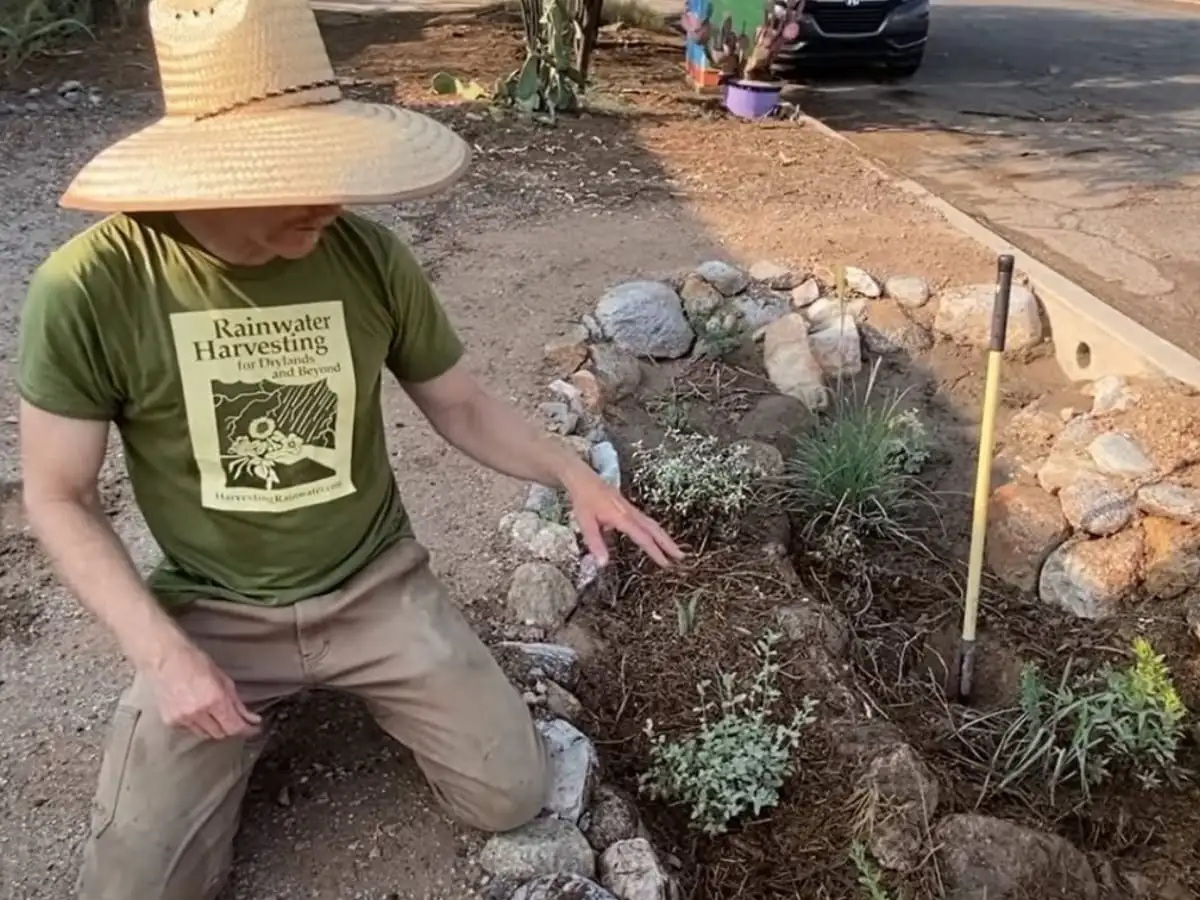
The grass is not always greener on the other side; sometimes it's greener where you stop the water from leaving. In 1998, Brad Lancaster, the author of “Rainwater Harvesting for Drylands and Beyond,” quietly drilled 6 holes in the concrete curb out front of his house, which would allow him to "steal" rainwater before it disappeared down the storm drain inlets. He later elaborated this concept in his writings, where he identified the problem of viewing rain as a burden rather than as a resource in cities. About twenty-eight years later, as recounted in a 2026 Substack article titled “The Man Who Farms the Rain,” those curb cuts were a vivid demonstration of civil disobedience exposing the inefficiency of the law against ecological common sense.
The crime scene: a desert city throwing water away
At first glance, Tucson, Arizona, does not appear to be a land of water. The city receives an annual rainfall of only 11 inches, and during rainfall, thousands of gallons of water pour into the drains. The infrastructure in the modern era has relegated stormwater to flood risk, rather than an environmental resource.