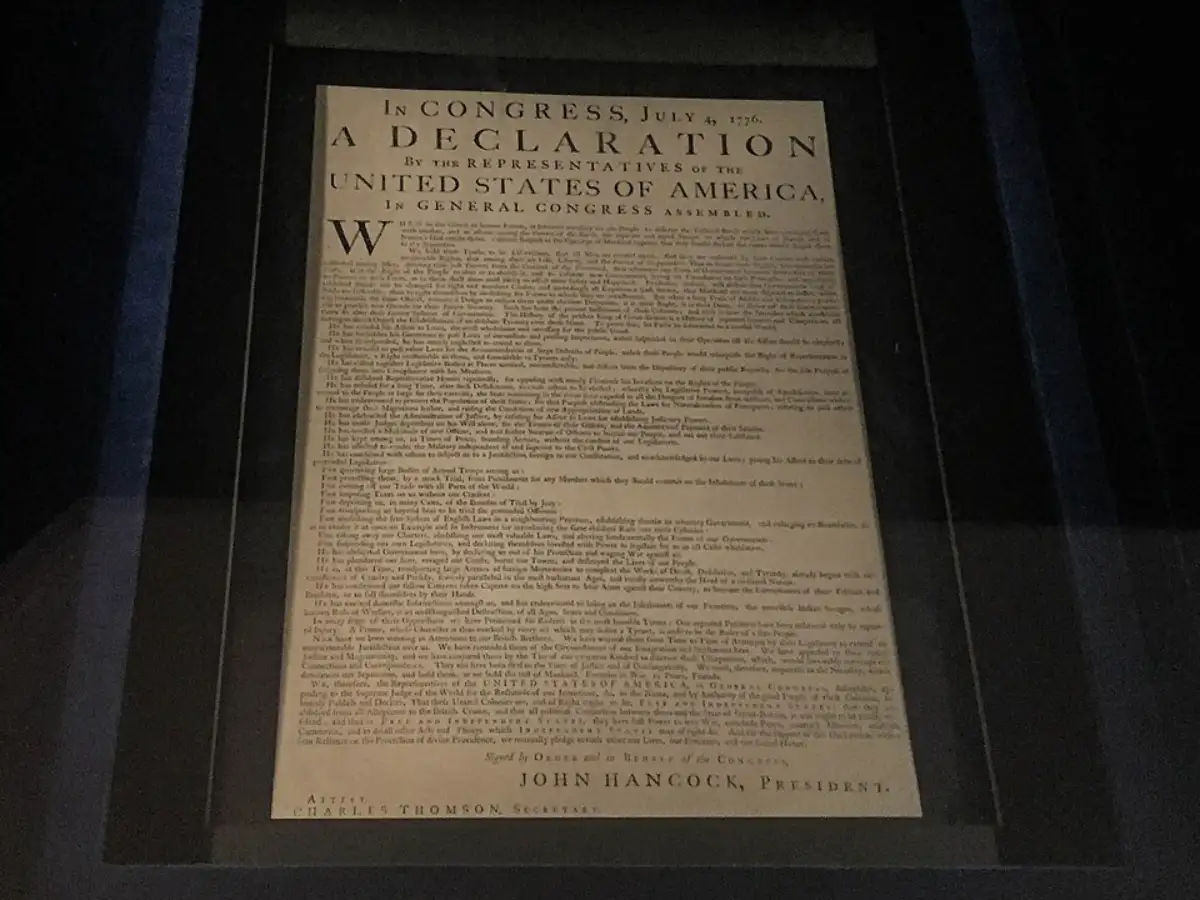
It was in 1989 that a man visiting a flea market in Pennsylvania allegedly found a folded parchment inside a cheap frame while looking for an old, inexpensive frame. At first sight, it appeared to be no more than some old paper stuffed into the frame, but it was a Dunlap broadside, which was one of the rare copies of the Declaration of Independence printed in July 1776.
The unusual aspect of the event is the discrepancy between the place and the item. This document was discovered not at the National Archives, museum, library, or auction, but in the common flea market, and this kind of disparity between the place and the historical value of the document is probably the main reason why this story is still told by many people.
According to the National Archives, the Dunlap broadside is considered to be the first printing of the Declaration of Independence, created by John Dunlap on July 4, 1776. This detail is particularly important since it makes the document very close to the original publication of the Declaration.
The Dunlap broadside helped carry the Declaration into public view
The document hidden inside the picture frame was not a reprinted decoration or commemorative copy, but was part of one of the earliest editions associated with the Declaration of American Independence. The National Archives states that John Dunlap printed the broadsides right after the Continental Congress had adopted the Declaration, making possible the dissemination of copies across the colonies.
The role that the document played in history makes its significance much greater than that of any other antique piece of paper. In fact, it was used as a means of early communication, which helped disseminate the Declaration of Independence.