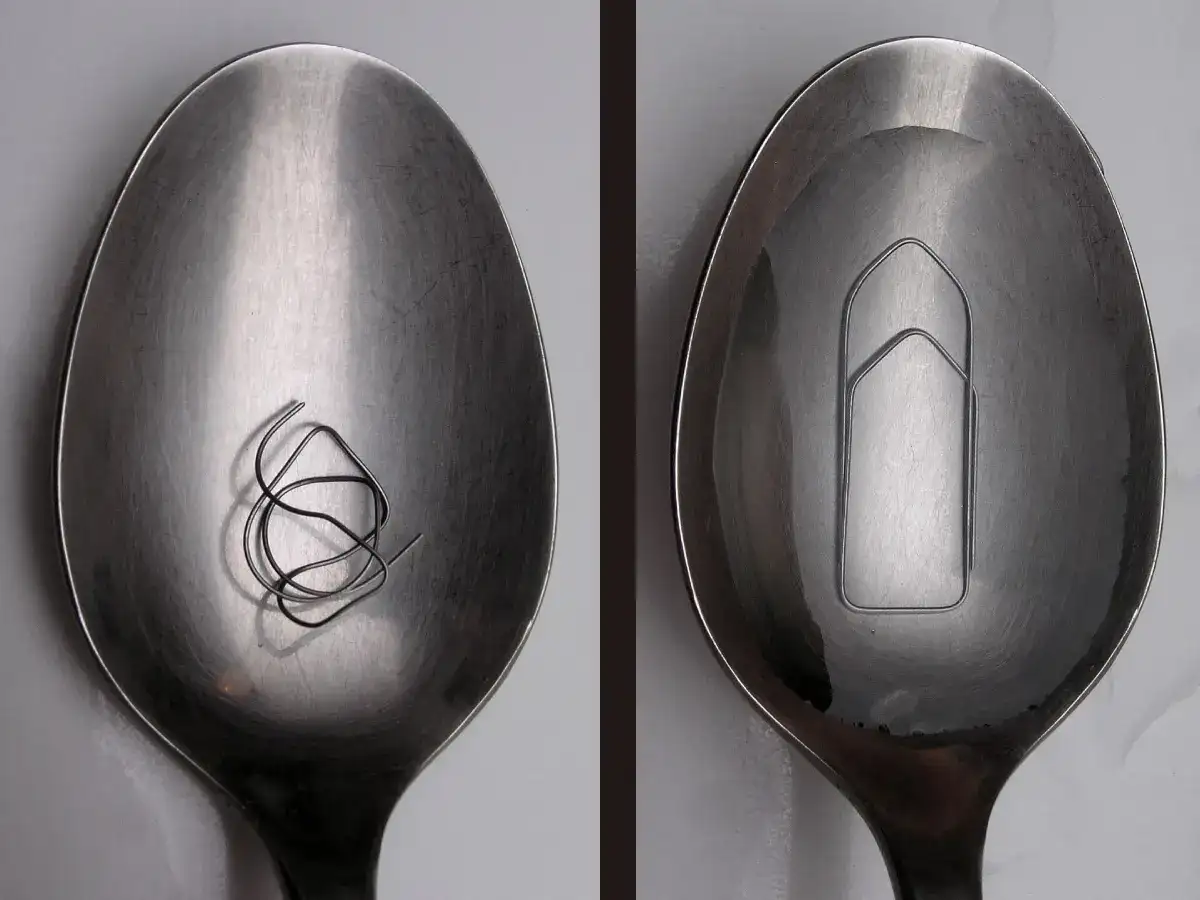
This phenomenon was observed in 1959 by military materials scientists when they stumbled upon an alloy that was capable of changing its shape and restoring its original form through heat treatment. This alloy went on to be called Nitinol – a name that referred to the fact that the material consisted of nickel and titanium and that it had been observed at the Naval Ordnance Laboratory as part of a military research initiative.
It was the discovery of an alloy like this one which went on to revolutionize engineering science and lead to the concept of shape-memory alloys. According to NASA, Nitinol stands for nickel, titanium, and Naval Ordnance Laboratory.
Discovery of Nitinol was made as a result of defense-related research
Nitinol alloy did not start off life as a material which was going to become a scientific sensation. Instead, scientists who discovered it were looking for practical solutions to their military concerns at the time.
According to the University of Utah, the alloy was discovered in 1959 by a metallurgist named William J. Buehler as part of his investigation of materials used in Polaris missiles. However, the alloy's most critical property proved to be entirely unexpected.
When deformed and then heated, the metal returned to its original position. Scientists soon understood that they were working with something quite unlike ordinary metals. Ordinary materials become permanently bent after they are deformed unless new pressure is exerted on them. It appeared as if Nitinol could remember its original state. This particular property provided the basis for the study of shape memory materials.
Why was the alloy nearly impossible?
NASA has named Nitinol a "memory alloy" due to its ability to return to its initial state after bending. The reason is associated with the change occurring in the internal phase of the alloy. The material can shift from one internal phase to another depending on the circumstances and bend or take an original position under heating.
For engineers and scientists of the time, this behavior seemed extraordinary. According to Georgia Tech research records, despite being developed by Buehler in 1959, the shape-memory property was identified only in 1961. This particular fact is significant since the strange properties of the material were noticed even before they were explained. The visual demonstration occurred before the scientific explanation.
According to experts, it is typical for material sciences. It may happen that the discoveries arise due to the surprising findings which will be explained later.
The metal contributed to forming a whole new field
Scientists continued their research on Nitinol, and soon they discovered that the alloy was applicable not only in military areas. One dissertation from North Carolina State University says that further investigations of Buehler et al. helped to understand the mechanism of action of the shape-memory effect.
Nitinol became the most widely recognized material with shape memory effect. Scientists started investigating opportunities to use Nitinol in systems with automatic recovery and other characteristics. In addition, NASA called Nitinol a very significant engineering material with many practical applications far beyond military use.
At present, shape-memory alloys find application in different spheres, including medicine, aerospace industry, robotics, optics, and various technologies.
Why Nitinol still matters
According to a review article from Materials published in 2018, nickel-titanium alloys became famous shape-memory alloys due to their recovery and flexibility features. To date, studies on the mentioned alloys have taken place many years after their initial discovery. As stated in the various research databases, there are current research activities aimed at advancing shape-memory technology and developing potential future applications.
The significance of Nitinol is explained by more than the uniqueness of its properties. The discovery has revolutionized the way of thinking of engineers concerning metals' possibilities. It enabled scientists to start designing materials capable of reacting dynamically to mechanical stress and changes in temperature and environment.
A discovery made by accident
Nitinol is among the most impressive discoveries in engineering made by chance. Researchers studying missiles expected neither to develop nor invent any new metal which would have the ability to regain its previous form after bending. However, the accidental discovery became the cornerstone of an entire sphere of material science.
The unique property of the metal stands out even more because it is characterized by both surprising performance and a remarkable scientific effect. A small experiment conducted in Cold War times proved to be revolutionary for engineers. For more than sixty years now, Nitinol symbolizes the moment when a bent piece of metal seemed to remember its own shape.