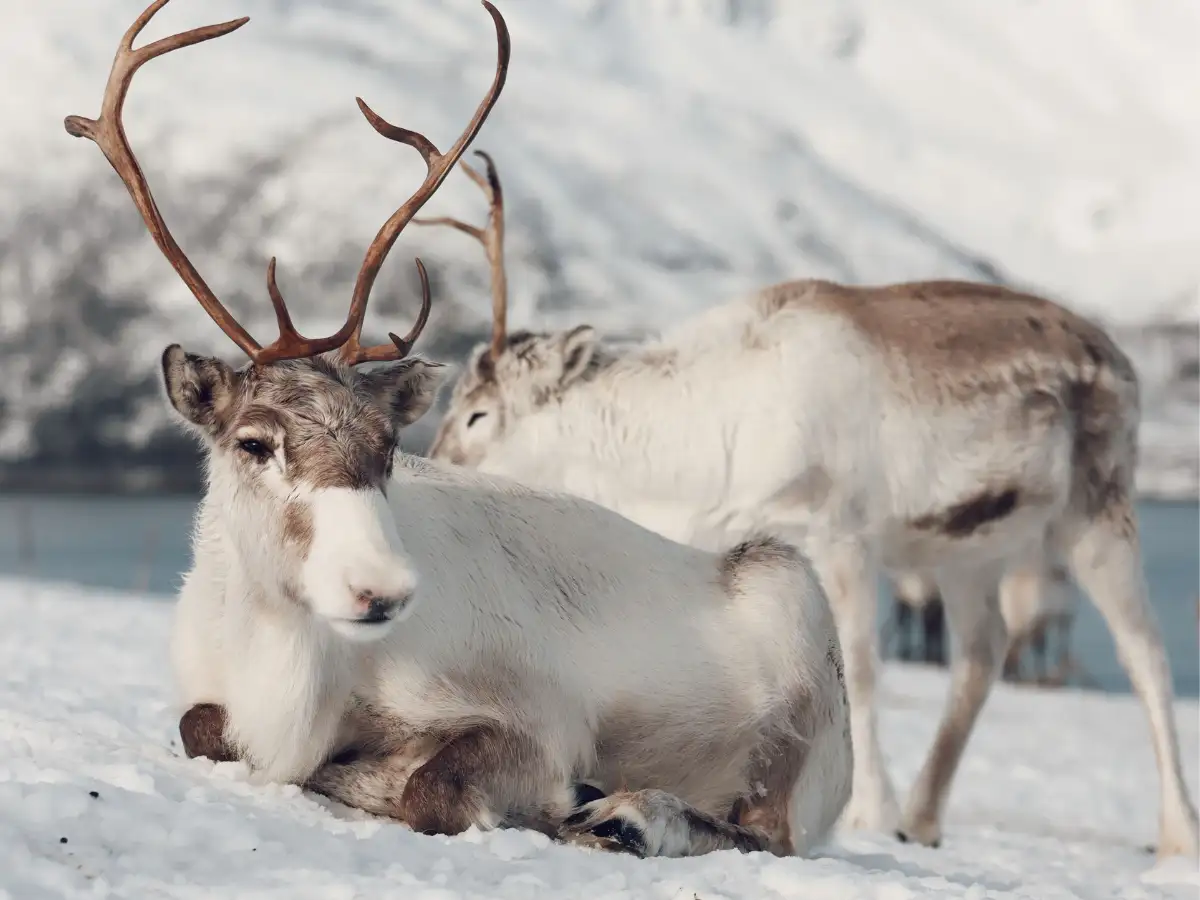
In August 1944, the U.S. Coast Guard did something that made perfect sense at the time. They trucked 29 reindeer (24 females and 5 males) from Nunivak Island to St. Matthew Island, a remote 128-square-mile patch of tundra in Alaska's Bering Sea. The idea was to give the station's 19-man crew a dependable backup food source. And then the Second World War ended, and the station was abandoned, and the reindeer were left on their own.
In the next two decades, what followed became one of the most cited cautionary tales in all of ecology. According to the landmark study ‘The Introduction, Increase, and Crash of Reindeer on St. Matthew Island,’ published in the Journal of Wildlife Management by wildlife biologist David R. Klein, the reindeer population grew from 29 animals to 6,000 by the summer of 1963 before crashing to fewer than 50 in one winter. The last female reindeer on the island died in 1981, leaving the island completely empty, according to the U.S. Geological Survey.
No hunting. No predators. No significant illness. Only reindeer, open tundra, and a food supply, they had no reason to ration.
Paradise, at first
When Klein first visited St. Matthew in 1957, the herd had grown to 1,350 animals and was thriving. Klein's research showed that St. Matthew reindeer were 24 to 53 percent heavier than domestic herds in females and 46 to 61 percent in males. The lichens were deep and untouched, the rate of birth was high, and that of mortality was low. This was a population living under optimal conditions by any standard.
But that abundance was quietly masking a crisis in the making. There were no natural checks on their numbers, and reindeer were steadily eating away the island’s most critical resource, lichen, the slow-growing organism that was their primary winter food. According to research, ‘Monitoring Recovery of Overgrazed Lichen Communities on Hagemeister Island, Southwestern Alaska’ published by the Canadian Conservation and Land Management Knowledge Network, after reindeer overgrazing on Hagemeister Island, it was estimated that it might take 34 to 41 years to recover only grazeable lichen biomass, and full recovery could be as long as 400 years. The reindeer were eating up a resource that would not bounce back quickly.