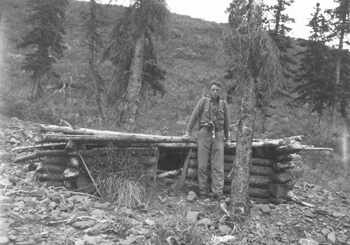
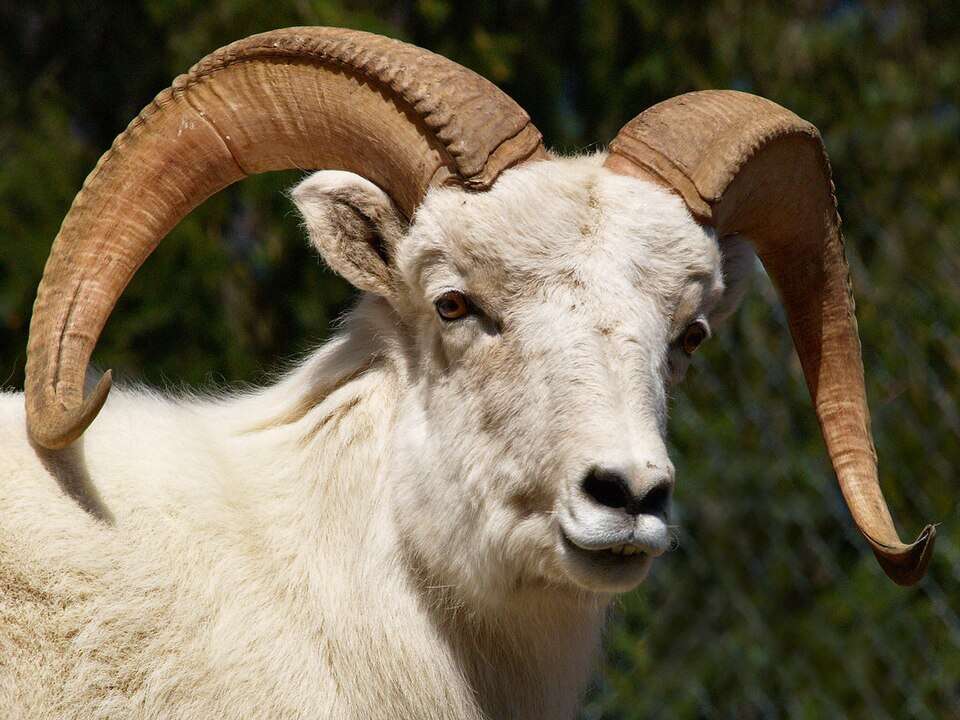
When wildlife populations decline, predators are often blamed. That is what happened in Alaska’s Denali National Park, where Dall sheep numbers fell sharply in the 1930s. Many people thought wolves were to blame and demanded predator control measures. However, a field study by wildlife biologist Adolph Murie challenged that assumption and changed how conservationists understood predators.
Get breaking news anytime, anywhere. Download the TOI app now!
According to the US National Park Service , Adolph Murie spent two years studying wolves’ effects on the Dall sheep population in Mount McKinley National Park. In the summer of 1939, he walked about 1,700 miles to conduct a major study of wolves in North America.
Wolves were vilified for several reasons
In the early 1930s, fewer Dall sheep were seen in the park. The wildlife management policy in America at the time was mostly predator control, and wolves were generally considered a menace to game.
According to the National Park Service, officials wanted scientific evidence before removing wolves from the park. In 1939, Murie was given the task of finding out the relationship between wolves and sheep, which resulted in a study that lasted until 1941. Rather than focusing only on wolves, Murie studied the broader ecology and behaviour of both predator and prey.
Intensive fieldwork in one of America’s most untamed environments
To carry out his work, Murie relied on field observation rather than technology. According to the National Park Service, he walked through mountains and valleys, watched wildlife with binoculars and telescopes, and made nightly notes in field journals.
His study also included analysing wolf scat to identify prey, studying animal skulls and bones to assess age and condition, taking photographs, and examining habitats. According to the National Park Service, Murie had travelled almost 1,700 miles on foot during the summer season of 1939.
The unexpected conclusion
After about two years of field research, Murie reached a conclusion that contradicted popular belief. As stated by the National Park Service, the decline of Dall sheep was not the result of wolf predation. Severe winter weather had killed off many of the sheep. The wolves mainly preyed on weakened, wounded, or injured sheep, making them part of the natural system rather than the cause of the decline. Predators and prey formed a complex ecological system in which weather, food supply, and habitat were all significant.
A study that influenced conservation
Murie released his results in 1944 in the form of a government bulletin entitled The Wolves of Mount McKinley. According to the National Park Service, the bulletin became an influential ecological study and one of the first comprehensive scientific examinations of interactions between wolves and other species in the park.
The results also influenced management decisions. Instead of continuing predator control programmes, conservation efforts increasingly focused on preserving ecosystems with natural predator-prey interactions.
Legacy of Denali National Park
Murie’s contributions went beyond his wolf studies. The National Park Service noted that Murie monitored wildlife in the park for decades, published numerous works on Alaska’s mammals and birds, made educational films, and became an outspoken champion of wilderness preservation.
He also opposed several development projects planned in the park during the 1950s. He believed that road construction and other major projects could spoil the area's wilderness. This made him an important figure in shaping conservation policy at Denali National Park. The Department of the Interior recognised his work and awarded him the Distinguished Service Award in 1965. The Murie Science and Learning Center in Denali was named after him.
A lesson that still matters today
Murie’s study remains relevant because it shows the value of basing conservation on scientific evidence. He spent years collecting data in some of the harshest regions of North America. His study showed that wildlife populations can decline for several environmental reasons, not just one. More than eight decades later, the study is still recognised as an early example of ecosystem-based wildlife management.