When Nazi persecution of Jews intensified across Europe, Gilbert Kraus and his wife Eleanor, an American couple from Philadelphia, decided they could not remain bystanders and chose to rescue children.
In January 1939, shortly after the Kristallnacht attacks, the Jewish organization Brith Sholom asked them to lead a mission to rescue 50 Jewish children from Nazi-controlled Europe. The couple immediately agreed.
For the unversed, in 1938, the sounds of breaking glass shattered the air in cities throughout Germany and parts of Austria while fires across the countries devoured synagogues and Jewish institutions. By the end of the rampage, gangs of Nazi storm troopers had destroyed 7,000 Jewish businesses, set fire to more than 900 synagogues, killed 91 Jews and deported some 30,000 Jewish men to concentration camps
A race against time
Before leaving, Gilbert Kraus worked with the US State Department to identify children whose families were already waiting for American immigration visas, increasing their chances of approval. He also gathered financial affidavits from supporters who promised to help care for the children after they arrived in the United States.
ALSO READ: Sam Altman, Satya Nadella, Sundar Pichai, Elon Musk and Jensen Huang unite behind one AI vision
When the Krauses reached Vienna, they found a frightened Jewish community desperate to escape to the United States. With the help of Philadelphia pediatrician Dr. Robert Schless, they selected 25 boys and 25 girls, aged 5 to 14. One child who became ill shortly before departure had to be replaced.
Tragically, that child did not survive the Holocaust.
The journey to America
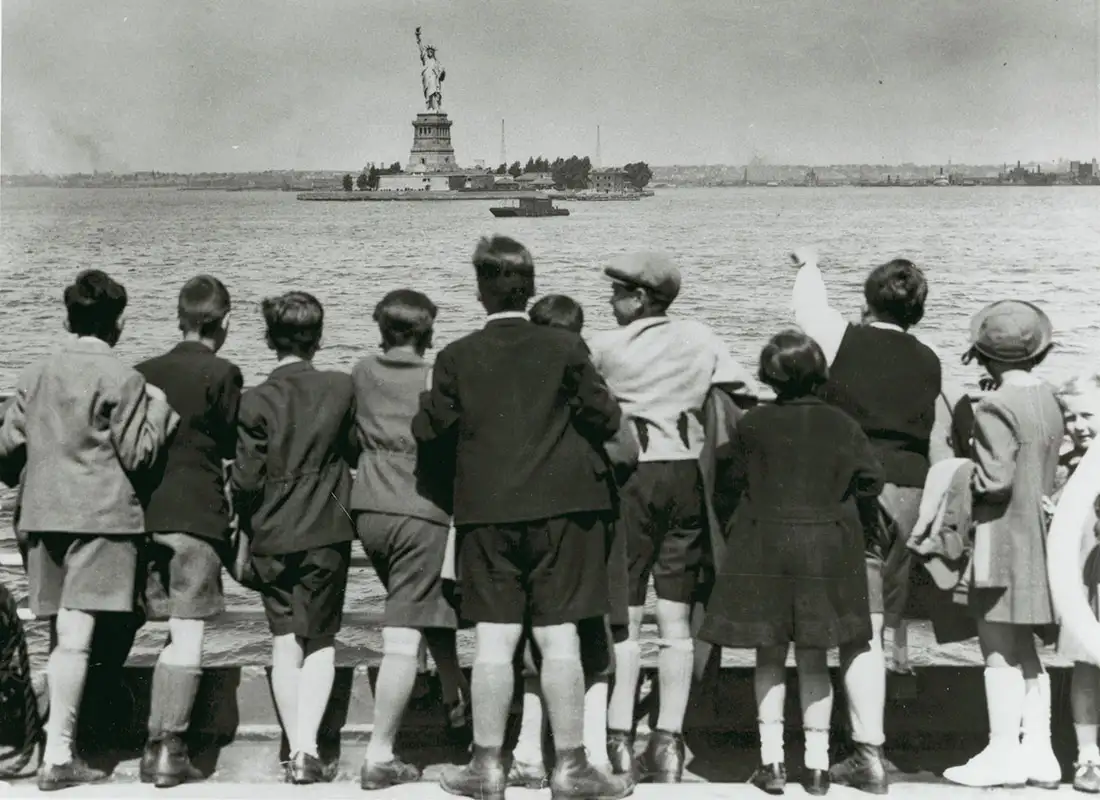
The children traveled to Berlin for their visas before boarding the SS President Harding in Hamburg on May 23, 1939. They arrived safely in New York on June 3, 1939.
ALSO READ: Sam Altman says ‘we are now in the singularity’
The children stayed at Brith Sholomville, a summer camp in Pennsylvania, where they learned English, adjusted to life in America and stayed in touch with their families through letters.
A rescue that changed 50 lives
Over time, some children reunited with parents who later reached the United States, while others stayed with foster families. Gilbert and Eleanor Kraus even welcomed two children into their own home until the war ended.
Remarkably, all 50 rescued children were eventually reunited with at least one parent.
An extraordinary act of courage
The rescue happened when public support for refugee children was low. A January 1939 poll found that 67% of Americans opposed admitting refugee children into the United States.
Despite the political climate, the Krauses raised money, secured visas and personally traveled into Nazi-controlled Europe to save 50 children—creating one of the most successful private Jewish rescue missions before the Holocaust.