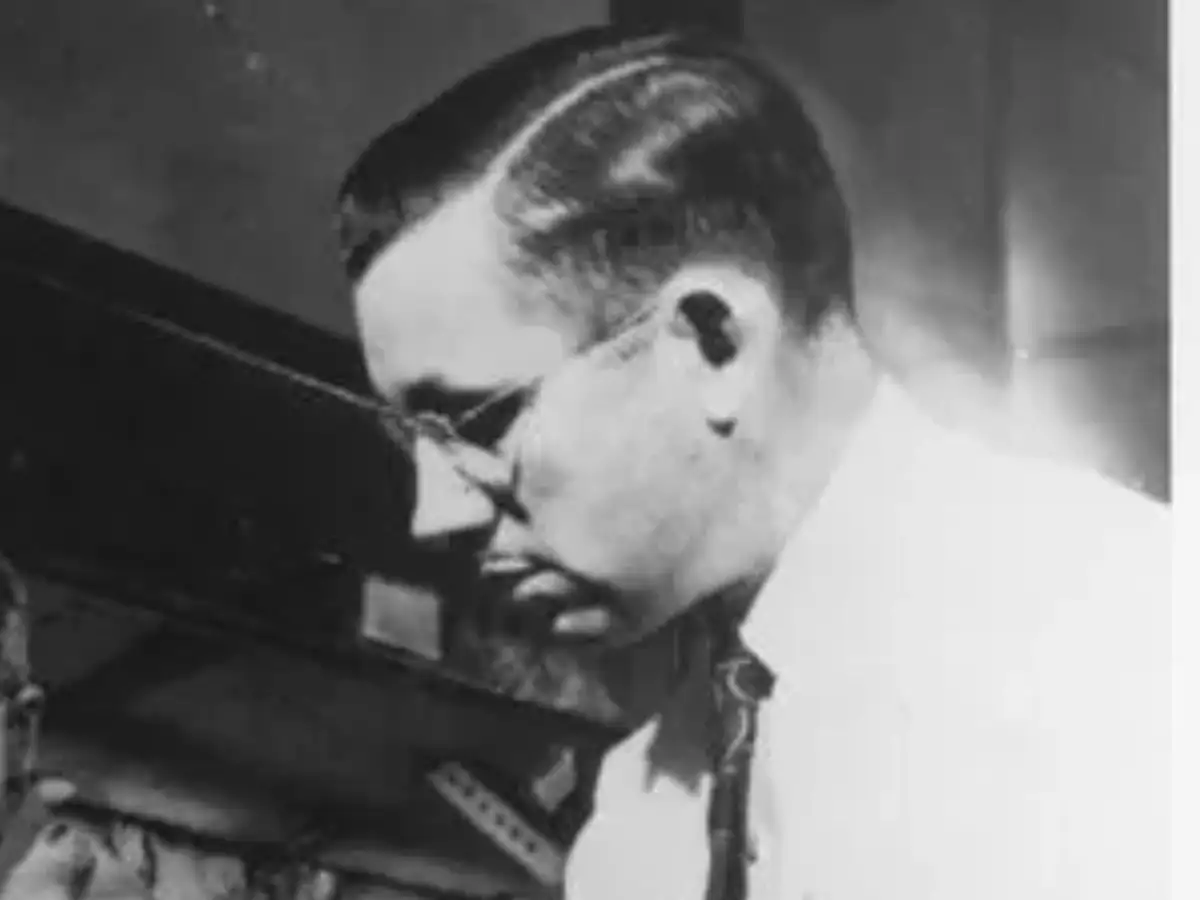
In 1938, while conducting experiments in the laboratory using gaseous substances, chemist Roy Plunkett encountered a situation that no one could have predicted. The gas cylinder got jammed, which should normally allow for the normal flow of the substance inside; however, this did not happen. When it was opened, Plunkett and his colleagues did not find gas in it but saw something else, a strange, white, waxlike material inside the cylinder.
This is how Teflon was invented. From the description given by the Lemelson-MIT website dedicated to Roy Plunkett, it can be said that he managed to take advantage of a "chemical accident" that would soon turn out to be one of the most well-known polymers in the history of industrialization. This is an exact reflection of the event and what made it special.
Plunkett managed to recognize the uniqueness of the white substance and the behavior of its molecules.
Why the white residue stood out
The material contained in the cylinder was unique due to its chemical properties because it was part of an entire class of fluorinated compounds. According to a recent review available in PubMed Central, fluorinated materials owe their structure to the strong carbon-fluorine bond. This means that the compounds tend to exhibit stability far above the levels observed in most materials.
Stability turned out to be another key characteristic of Teflon. The material was resistant to high temperatures, chemicals, and mechanical stress in ways that were not normally seen in industrial compounds. As PubMed Central states, those unique properties eventually contributed to fluorinated materials gaining prominence in many industries.
That is what made the white wax found in the cylinder so significant. Not only was it surprising, but it also exhibited behaviors that implied its uniqueness to the scientists examining it. That difference would become a point of departure for the development of further research.
From accidental discovery to industrial material
Teflon did not stay a mere laboratory phenomenon for long, either. According to a historical account documented in PubMed, by 1990, it was clear that both the properties of Teflon and the ways it was applied had grown in scope greatly from the time after World War II. Such a situation indicates the importance of the material in industrial use.
Once the potential of the material was understood by both engineers and manufacturers, its practical applications multiplied significantly. Its use spread through industrial recognition of problems that the material was capable of solving better than existing solutions.
As such, what was considered to be the breakthrough was not simply the discovery, but rather all the processes that came afterward.
It is rare for scientific discoveries to bring rapid change to the world. Instead, it usually happens that discoveries take on meaning in time when scientists, manufacturers, and various industries learn how to make use of them.
A turning point in fluorocarbon chemistry
The Teflon story was also important in that it established some faith in fluorocarbon chemistry in general. As described by a review in Chemical Society Reviews from the Royal Society of Chemistry, the significance of highly fluorinated materials as a field of chemistry emerged from their remarkable and valuable properties.
Teflon turned out to be among the best examples of what fluorine-based materials can deliver. Fluorination was found capable of creating materials that combine stability and resistance in a way difficult to replicate elsewhere. Such recognition opened doors to further exploration of fluorocarbon chemistry throughout the twentieth century.
It appears that the discovery became important not only as a development in its own right but also as a signpost for other materials.
The double-edged nature of chemical stability
While the chemical properties of fluorinated products provided benefits, they also posed challenges down the line.
According to the PubMed Central review, the stability provided by strong carbon-fluorine bonds would later become crucial to environmental debates regarding fluorinated materials. The durability that was desired in specialized applications translated to similar qualities when exposed to external environments.
This historical background adds an interesting dimension to the story of Teflon.
While the product would become famous for resolving challenging engineering issues and bringing stable compounds into production, the history of fluorinated chemistry as a whole would require scientists and regulators to look at the implications of non-degrading materials.
Why the 1938 accident still matters
Almost a century later, Plunkett’s discovery continues to be one of the key cases of accidental scientific invention.
As indicated by the Lemelson-MIT biography, the importance of the event does not lie in chance alone but in making the conscious decision to explore the anomaly rather than dismiss it. The combination of these factors played a significant role in transforming a malfunctioning gas cylinder into a revolution in industry.
All the available sources relating to the discovery share one common element. An unsuccessful experiment yielded an unusually chemically structured material. Scientists realized its potential. Manufacturers learned to use it. And gradually, the material changed manufacturing, engineering, and materials science.
This is precisely why the white wax discovered in 1938 retains its relevance even a hundred years later. It was not just another surprising occurrence in the laboratory. It went on to become one of the most influential materials stories of the modern industrial era.