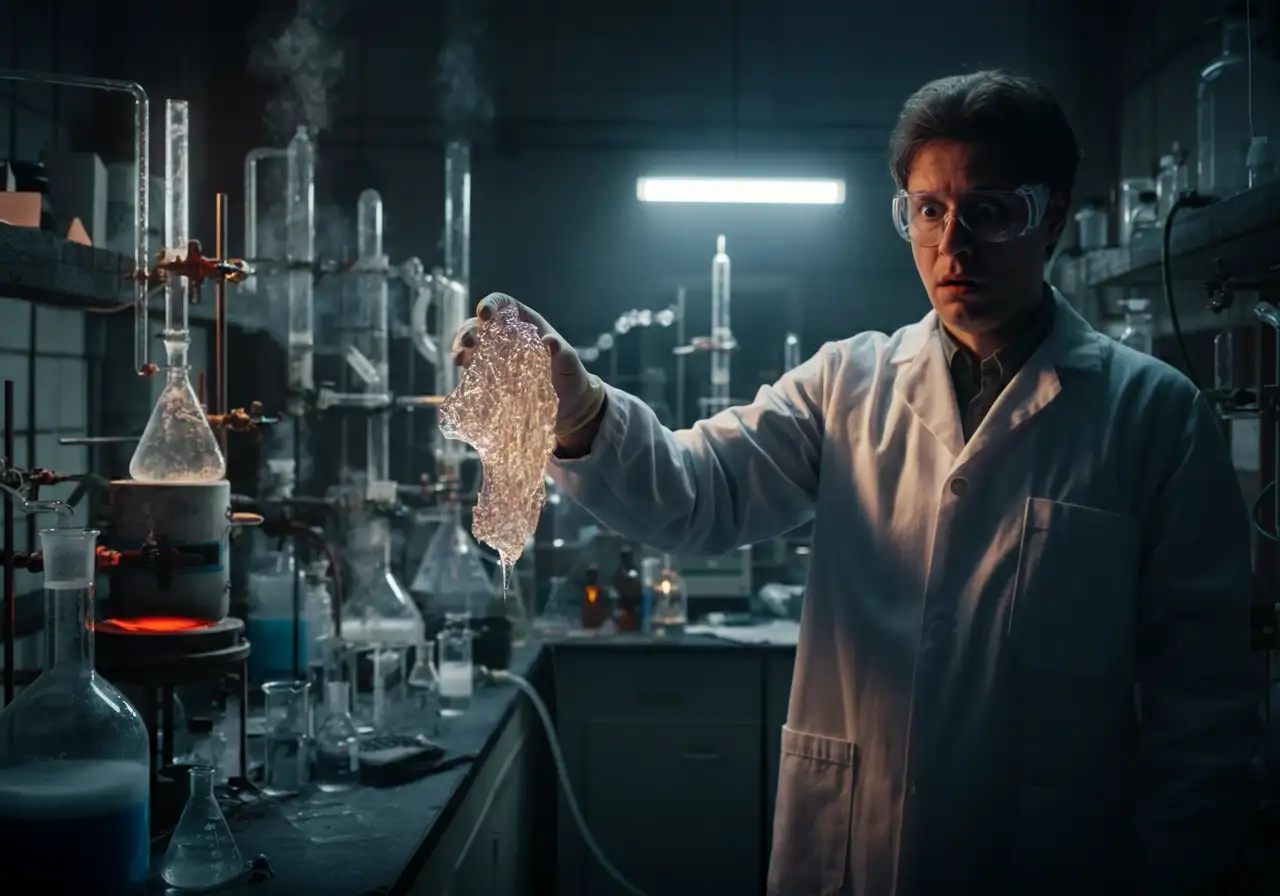
Polyethylene, which is one of the most commonly used plastics, owes its existence to an unfortunate experiment in a laboratory. In 1933, two chemists, Eric Fawcett and Reginald Gibson, working at Imperial Chemical Industries, or ICI, in England, were performing an experiment on ethylene gas at very high pressure. The chemists were trying to see the reaction process which might give rise to new industrial materials.
But, rather than the expected reaction, there was a strange waxy substance left in the equipment. Initially, the chemists thought that the substance was just another sign of a failed experiment or contamination. But, soon enough, it turned out that the substance was much more than that. This unexpected product was polyethylene, which later became indispensable in packaging, insulation, and other applications.
The accident in the reactor
As per Syracuse University Plastics Collection, the first ever synthesis of polyethylene occurred accidentally when the chemists performed high-pressure experiments in 1933. The experiments were conducted under difficult conditions where temperature and pressure were involved.
In addition to this, the experiments involved reactive gases. Polymer chemistry in the early stages had been unpredictable, especially when conducted in industrial reactors. What made the waxy substance different? Scientists discovered that the substance could be melted, shaped, and processed into lightweight plastic products.
This discovery meant that high-pressure ethylene reactions could lead to the creation of long-chain polymers instead of just small chemicals.
How high pressure altered the chemistry
The reaction parameters were key to the discovery. According to a study published by PubMed Central, even now, the industrial polyethylene synthesis process requires very high pressures and temperatures. These extreme conditions allow for the binding of ethylene molecules in the form of long chains, which can create flexible plastic substances.
As explained in the same study, controlling such reactions was challenging in the early days of polymer chemistry because of unexpected textures, deposits, and residues appearing in reactors. Such a background may help us understand why, at first, the wax-like substance appeared to be insignificant. In such an unpredictable environment, it was not clear if one should regard unexpected reactions as errors or signs.