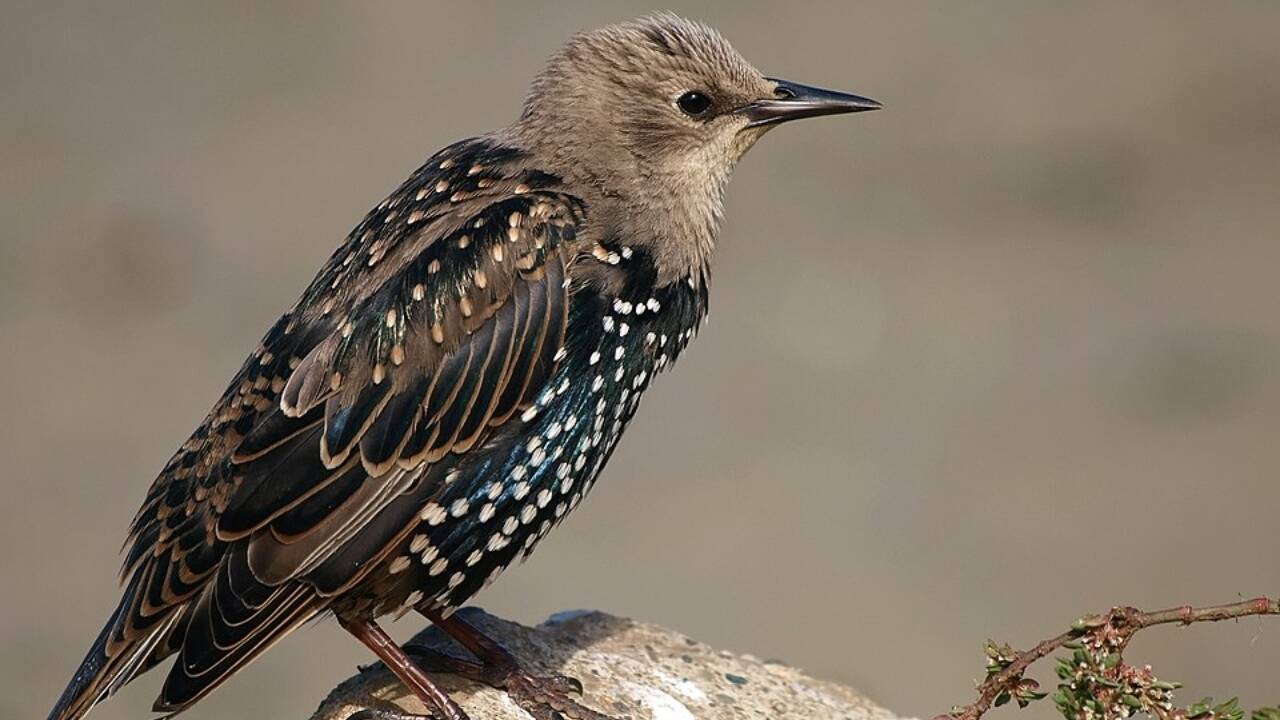
One of North America’s most successful and controversial biological invasions began with a small experiment in New York City’s Central Park. According to the U.S. Department of Agriculture (USDA) Animal and Plant Health Inspection Service (APHIS), the first recorded successful release of European starlings took place in 1890, when a member of the American Acclimatization Society introduced the birds into Central Park. Notably, over the following decades, the adaptable species spread across the continent and eventually reached an estimated population of around 150 million birds. Today, the European starling can be seen in nearly every corner of the continental United States, southern Canada and parts of Mexico, making the species both one of the most abundant and controversial invasive birds on the continent.
Get breaking news anytime, anywhere. Download the TOI app now!
A small introduction turned into a continent-wide invasion
According to the USDA APHIS Wildlife Damage Management Technical Series, the birds adapted quickly to their new environment and expanded rapidly because they could exploit a wide range of habitats, foods and nesting sites. Furthermore, the USDA records show that by 1918 starlings had spread from Ohio to Alabama; by 1926 they occupied territory stretching from Illinois to Texas, and by 1941 the species had reached Idaho and New Mexico. Notably, researchers often describe this expansion as one of the fastest avian invasions ever documented, achieved in less than half a century.

While the exact number of birds released in Central Park remains the subject of debate, the National Park Service reports that the American Acclimatisation Society released European starlings in 1890, with other scientific sources suggesting that roughly 100 birds were released in 1890 and 1891. It is worth noting that many accounts also attribute the effort to pharmacist Eugene Schieffelin, who has long been associated with introducing birds mentioned in Shakespeare’s works , although historians note that the famous Shakespeare motive is supported more strongly by later historical accounts than by contemporary records. However, despite the lack of precise details, researchers agree that the successful New York introductions founded virtually the entire North American population of the European starling.
An adaptable bird with costly consequences
According to USDA APHIS, European starlings thrive in this environment because they are highly opportunistic. They consume insects, fruits, grains, seeds and livestock feeds, nest in urban areas as readily as forests, and form huge winter flocks that can number in the hundreds of thousands. Additionally, their aggressive behaviour also allows them to displace native cavity-nesting birds, including bluebirds, woodpeckers and purple martins, from their nesting sites. Notably, this invasive species also causes substantial agricultural losses by consuming fruits, grain crops and contaminating livestock feed with droppings that could spread disease-causing organisms.
According to the USDA, dense starling flocks increase the risk of bird strikes around airports because thousands of birds can move together in a tightly coordinated group. Therefore, wildlife managers employ a range of non-lethal and targeted management measures to reduce hazards near airfields, agricultural facilities and urban roosts. It is worth noting that the researchers are continuing their study on how the species spread so successfully, hoping the lessons can help prevent future biological invasions by other non-native animals. Therefore, more than 130 years after the first successful introduction, the European starling remains a textbook example of how introducing a non-native species can permanently reshape an entire ecosystem.