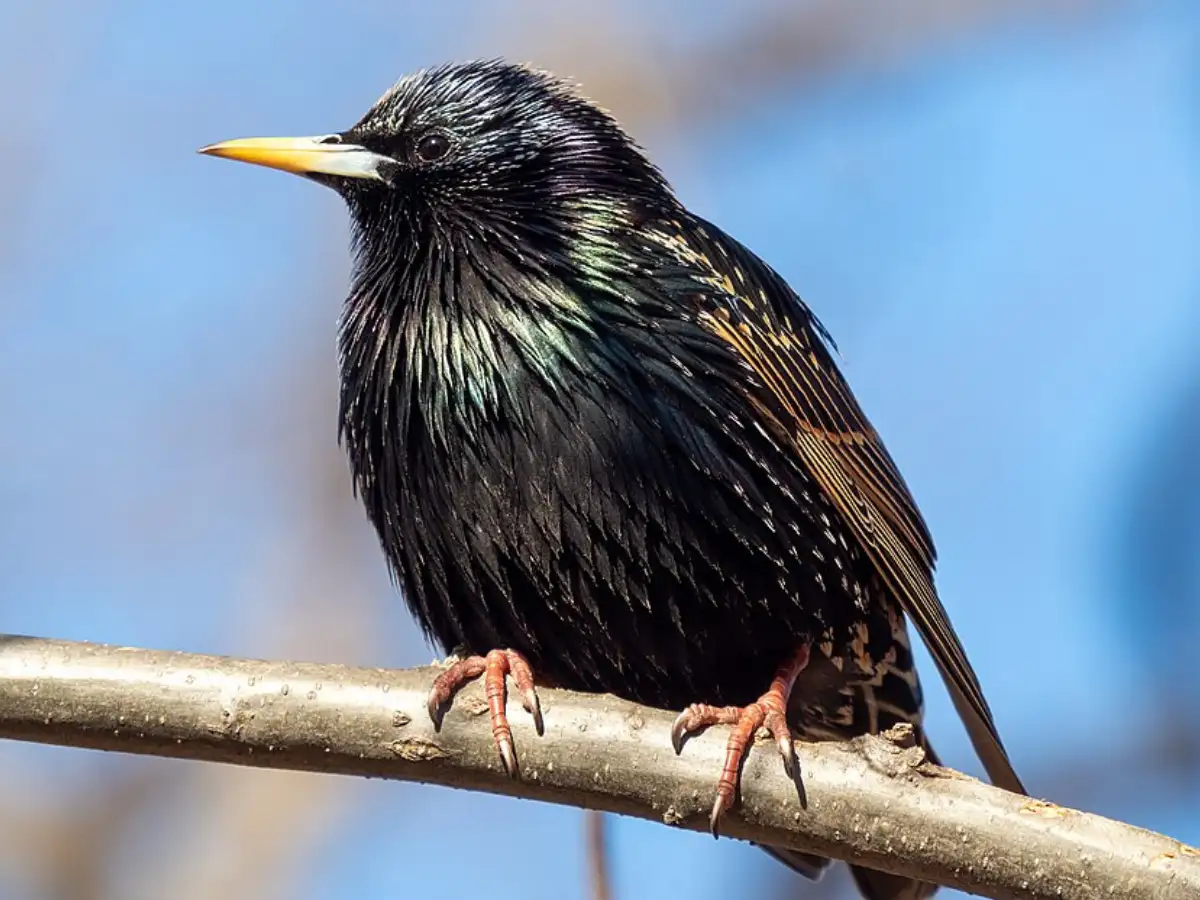
Imagine a wealthy New Yorker standing in Central Park in 1890, opening a few small cages, and letting go of birds that had never before flown over American soil. It seemed like a harmless, even sentimental gesture at the time. According to the US Forest Service invasive species learning kit, that single afternoon helped change the sound of American mornings for good.
He released several dozen European starlings among the park's trees, accounts vary on the exact number, with estimates ranging from about 60 to 80, hoping to add a familiar bird to his adopted home. He returned the following spring with a second release of similar size, bringing the total closer to 100 birds. Within 69 years, the birds had crossed the entire continent and reached the Pacific coast.
The man behind the birds
His name was Eugene Schieffelin, a wealthy New York drug manufacturer who chaired the American Acclimatization Society, a group devoted to introducing European plants and animals to North America. For decades, the popular version of his story has cast him as a Shakespeare superfan who set out to bring every bird mentioned in the playwright's works to America, but that detail is on shakier ground than most retellings suggest.
According to the National Invasive Species Information Center resource, Schieffelin's starling release is widely cited as part of a broader plan to introduce Shakespeare's birds to the United States. However, researchers Lauren Fugate and John MacNeill Miller, in a 2021 study, found no contemporary evidence that Shakespeare was actually his motivation.
The connection first appeared in print in 1947, four decades after Schieffelin's death, in an essay by naturalist Edwin Way Teale that presented it as fact without citing a source. Schieffelin's own obituary mentions his love of painting and his career as a pharmacist, but never Shakespeare or literature at all.
According to the JSTOR Daily account, Schieffelin had already tried and failed to establish other European birds in Central Park over the preceding decades, including house sparrows years earlier, long before the starlings ever arrived. The release that finally took hold came in 1890 and 1891, and according to the US Forest Service account, he said it was for "the good of the community." His most lasting success, by a wide margin, turned out to be the European starling.
According to the National Invasive Species Information Center resource, Schieffelin's starling release is widely documented as part of a broader plan to introduce birds mentioned in Shakespeare's works to the United States.