On 8 October 1871, two enormous fires erupted in the American Midwest. The Great Chicago Fire would become one of the best-known disasters in US history, but hundreds of kilometres away, another blaze was becoming far deadlier. In northeastern Wisconsin, the Peshtigo Fire swept through forests, farms and communities with such extraordinary speed that the town of Peshtigo was effectively destroyed within an hour.
Get breaking news anytime, anywhere. Download the TOI app now!
The US National Weather Service (NWS) describes the Peshtigo Fire as the most devastating forest fire in American history. It killed more than 1,200 people and scorched an estimated 1.2 to 1.5 million acres. Yet because Chicago was a much larger and more prominent city, its fire captured most of the national attention. The disaster was made even more deadly by the extreme conditions surrounding it, with strong winds, exceptionally dry vegetation and a landscape filled with highly flammable timber allowing the fire to spread with terrifying speed and leaving residents with little time to escape.
How an unusually dry Wisconsin landscape turned fire into a deadly inferno
The summer of 1871 had been unusually dry, leaving forests and vegetation dangerously flammable. Peshtigo was a lumber town surrounded by heavily wooded country, and timber-clearing had left considerable combustible material across the landscape.
The exact origin of the fire is not known with certainty. According to the NWS account, survivor testimony and later historical research suggest that railroad workers clearing land for tracks may have started a brush fire on the evening of 8 October. Whatever its precise ignition point, the flames found ideal conditions for rapid expansion.
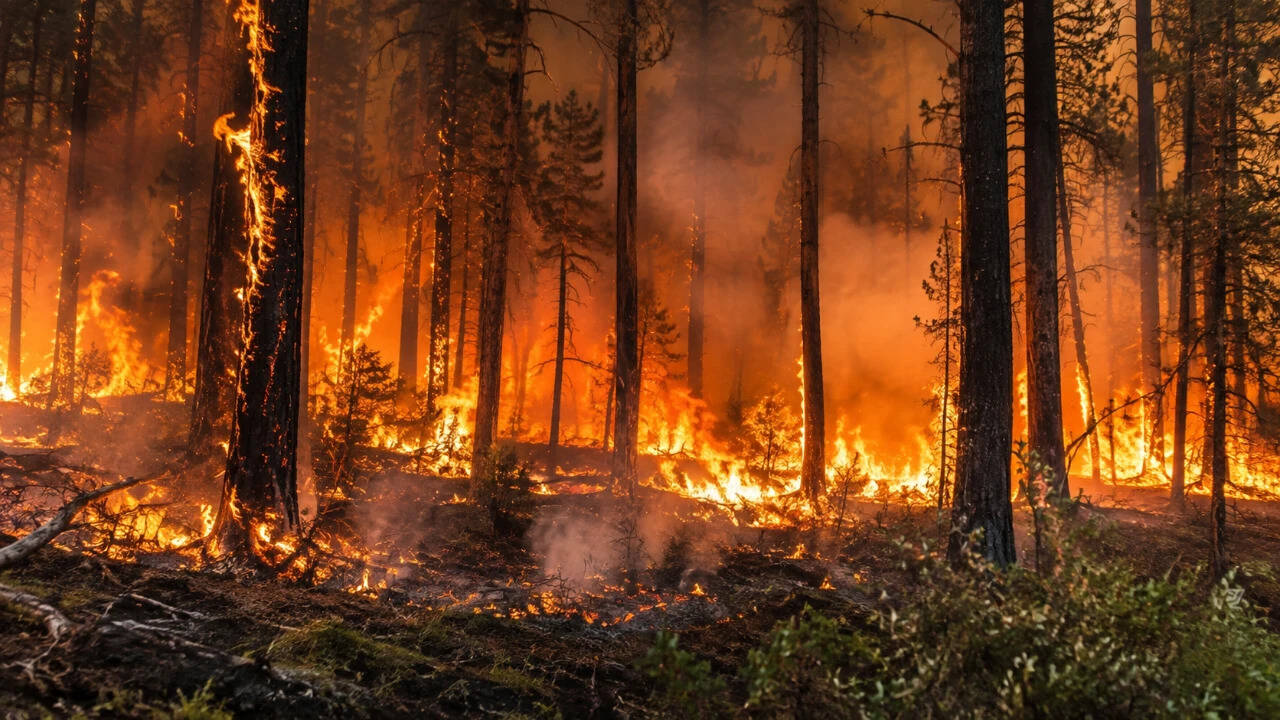
As winds drove the fire through the dry landscape, it developed into something far more destructive than an ordinary forest blaze. Survivors later described the flames as moving “like a tornado”, while the intense heat consumed oxygen so rapidly that people attempting to escape were sometimes caught and set alight.
Peshtigo was destroyed in about an hour as the fire swept through 16 other towns
The fire ultimately burned between 1.2 million and 1.5 million acres, affecting parts of northeastern Wisconsin and even crossing Green Bay to burn sections of Door and Kewaunee counties. 16 other towns were also affected, although Peshtigo suffered the greatest destruction.
Within roughly an hour, Peshtigo itself was gone. About 800 people died in the town, while the overall death toll from the wider disaster exceeded 1,200. The scale of the tragedy made it the deadliest wildfire in US history.
For many residents, there was almost no time to understand what was happening, let alone organise an orderly evacuation. People fled towards whatever they believed might offer protection, with the Peshtigo River becoming one of the few places where some could escape the flames.
The river became the setting for some of the most extraordinary survival stories associated with the disaster. The NWS recounts the story of a 13-year-old German immigrant girl who survived by holding on to a cow's horn while sheltering in the river.
Why America remembers the Chicago Fire more than the deadlier Peshtigo disaster
The two fires happened on the same night, but history remembered them very differently.
Chicago was a major American city, and its destruction generated enormous newspaper coverage. The city became associated with dramatic stories about the fire, including the famous, though unproven, story involving Mrs O'Leary's cow. Peshtigo, by contrast, was a relatively small and remote community, meaning news of its destruction travelled less widely.
The anniversary of the Peshtigo Fire still receives comparatively little attention outside the region, partly because the Great Chicago Fire continues to dominate the story of 8 October 1871.
Yet the difference in historical fame hides a remarkable contrast: Chicago's fire killed roughly 300 people, while the Peshtigo disaster killed more than four times as many.
What happened after the fire as survivors rebuilt Peshtigo
The immediate aftermath left survivors facing the destruction of homes, businesses and much of the surrounding landscape. Many victims could not be identified, and the community had to deal with both the enormous loss of life and the practical challenge of rebuilding.
Peshtigo did eventually recover. The town was rebuilt, and the story of the disaster survived through survivor accounts, historical records and oral histories. The researchers continue to study these accounts, while the Peshtigo Fire Museum preserves many of the stories associated with those who died and survived.
The museum itself occupies a former church building in downtown Peshtigo, providing a permanent place for the community to preserve the memory of the disaster.
What the Peshtigo Fire taught America about forests, weather and wildfire risk
The Peshtigo disaster helped highlight how dry conditions, abundant forest fuel and human activity could combine to create catastrophic fires. The Forest History Society notes that disasters such as Peshtigo strengthened calls for better forest protection and contributed to the development of America’s national forest system.
When the US Forest Service was created in 1905, fire suppression became a central part of forest management. After the devastating Great Fires of 1910, the government increasingly pursued a policy of putting out wildfires as quickly as possible, eventually formalised through the Forest Service's 10 a.m. policy in 1935.
That philosophy later changed as scientists recognised that fire can also play a natural role in maintaining healthy ecosystems. From the 1960s and 1970s, federal policy gradually moved towards allowing some naturally occurring fires to burn under controlled conditions. The history of US fire management therefore evolved from treating fire almost entirely as a destructive force to recognising that some forests need fire as part of their natural cycle.
(Wisconsin Historical Society)
155 years later, Peshtigo still exists and its deadliest fire remains part of its identity
Peshtigo did not become a ghost town after the disaster. The community survived, was rebuilt and remains a town in Wisconsin today, while the site of the tragedy continues to preserve its history through the Peshtigo Fire Museum and local memorials.
The fire itself, however, remains one of the most devastating wildfire disasters ever recorded in the United States. The National Weather Service continues to recognise the 1871 Peshtigo Fire as the most devastating forest fire in American history, with more than 1,200 lives lost and up to 1.5 million acres burned.
More than a century and a half later, its greatest historical lesson may be the simplest one: the most famous disaster is not always the deadliest one. While Chicago's flames became a defining chapter in American history, the far more lethal fire that swept through Peshtigo remains a reminder of how quickly extreme weather and a landscape filled with fuel can turn fire into catastrophe.