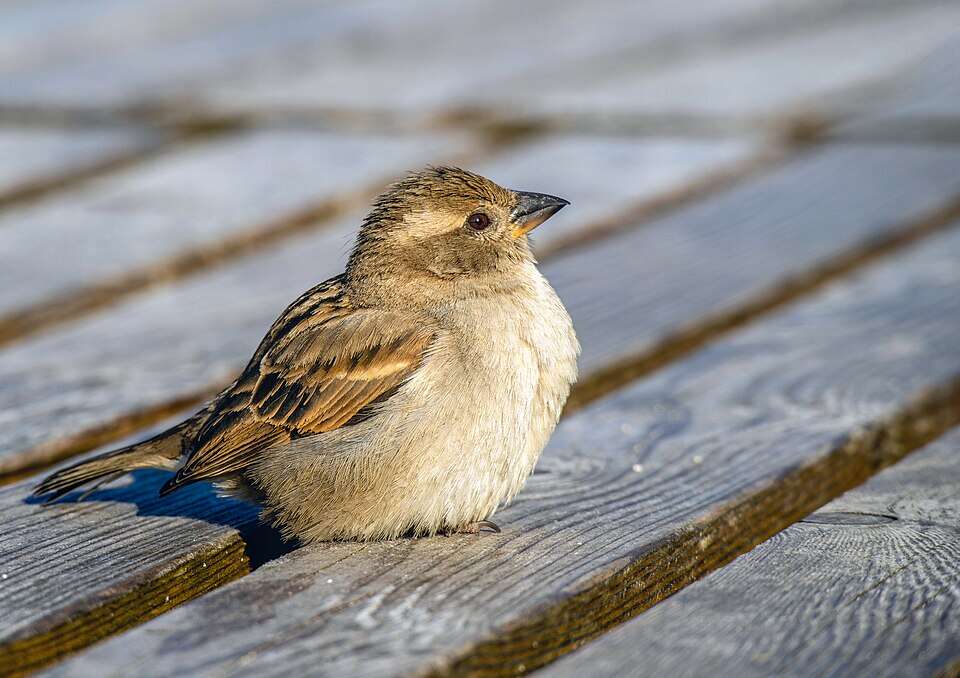
In 1851, a small group of birds was released in Brooklyn to eat insect pests and protect the city's trees. The house sparrow, a familiar bird across Europe and Asia, was introduced to New York in the 1850s as part of efforts to establish European birds in North America, with some supporters also viewing the species as potentially useful for controlling insect pests.
Get breaking news anytime, anywhere. Download the TOI app now!
According to American Bird Conservancy , within decades, the experiment had produced something far larger than its organisers had intended. The birds spread rapidly across the United States, adapting to cities, farms and human-built structures. By 1900, they had reached the Rocky Mountains, and additional introductions helped them establish populations across the West. In less than half a century, a bird that had not previously been present in North America had become a permanent part of the continent's urban landscape.
A bird brought in to control pests
The house sparrow (Passer domesticus) was introduced to Brooklyn in 1851 as part of an effort to control caterpillars and protect city trees from insect damage. However, the exact details of the first introduction have been debated.
According to a study published in Biological Invasions , the historical record was re-examined and concluded that the first successful New York introduction may have involved just 16 birds, rather than the much larger numbers often reported in earlier accounts. The researchers argued that this small founding population may have been enough to establish the species in the city. It is a worrisome condition for conservationists when the population of a species drops to a few dozen. However, these house sparrows demonstrated something opposite and phenomenal. A small population of sparrows exploded into millions with favorable environmental conditions. Establishment of a new population by a small number of individual species is called the ‘founder effect.’ The founder effect is now being extensively explored in the fields of genetics, ecology, and conservation biology. It is quite interesting to study and draw reasoning because in the founder effect, only a small part of the original founding species’ genetic diversity is passed on to the new population. It means the newly established population can show significant differences in the genetic makeup from the original ‘founders.’ These descendants may develop distinct genetic characteristics over a long time. In this case, this tiny population of sparrows had an outsized impact on the local ecology. Its arrival reflected a broader 19th-century enthusiasm for introducing familiar European species to North America. Some releases were motivated by nostalgia, while others were intended to provide practical benefits such as pest control.
The house sparrow appeared to offer both. It was small, adaptable and capable of feeding on insects. But its diet was broader than the caterpillars it had been brought in to control. House sparrows also eat seeds, grains and other food, allowing them to survive in a wide range of environments.
From Brooklyn to the Rocky Mountains
The house sparrow's expansion did not stop in North America. Human introductions helped the species establish populations across much of the world, making it one of the most widely distributed birds on Earth. The bird also showed signs of geographical variation as its populations spread. Studies of North American house sparrows documented differences in traits such as body size and plumage between populations, showing that the species was not entirely uniform across its expanded range.
In 1900, it had already spread to the Rocky Mountains. Additional introductions in the early 1870s in San Francisco and Salt Lake City helped the bird spread more quickly across the western United States. Today, the sparrow is widespread throughout North America except for Alaska and the far north of Canada. Its spread was not due to its reproductive ability alone. This sparrow was highly adaptable to landscapes modified by humans. It could nest in buildings, eaves, streetlights and other artificial nesting sites that few other birds use.
A successful introduction creates new problems
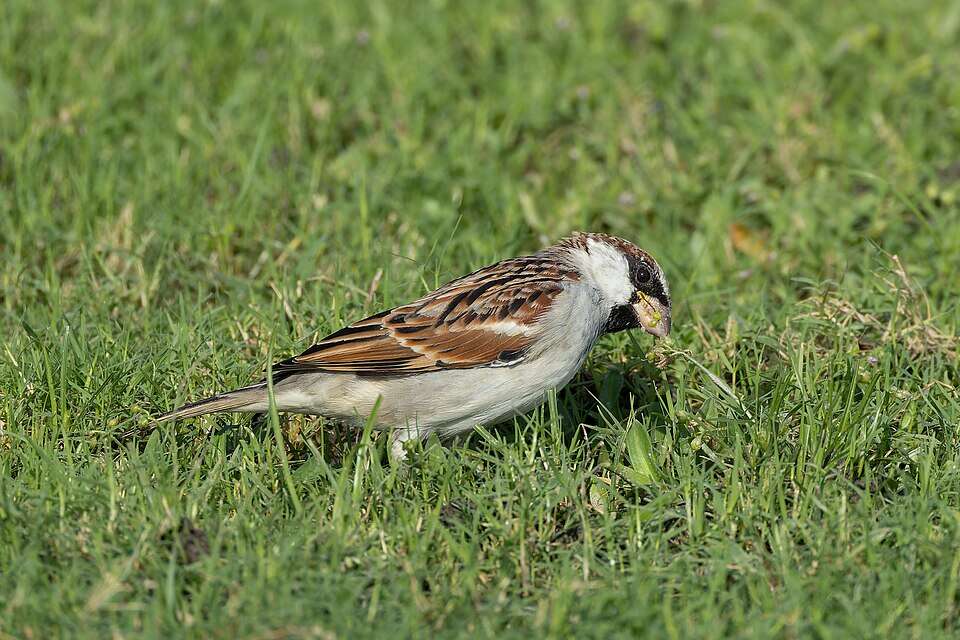
The house sparrow's rapid expansion eventually turned it from a pest-control experiment into a species-management problem. The species is highly competitive around nesting sites and can displace native birds from nest boxes and other suitable cavities. The American Bird Conservancy notes that house sparrows can drive native species such as Eastern Bluebirds away from nest boxes and, in some cases, kill them while competing for nesting space.
The bird's role in insect control was more complicated than its original supporters had expected. A 19th-century account published in Nature described the widespread belief that house sparrows would protect trees from caterpillars, while questioning how effectively they actually performed that role. The article also reported concerns that the introduced birds were displacing native species.
The story of the house sparrow illustrates how introduced species can have difficult-to-control ecological effects. The release of a few sparrows in Brooklyn in 1851 was intended to combat the destruction of trees by insects. Instead, the species was able to colonise an entire continent and adapt to a human environment to become one of the most widespread birds in the world. In doing so, the experiment highlighted the species' adaptability and the potential impact introduced species can have.