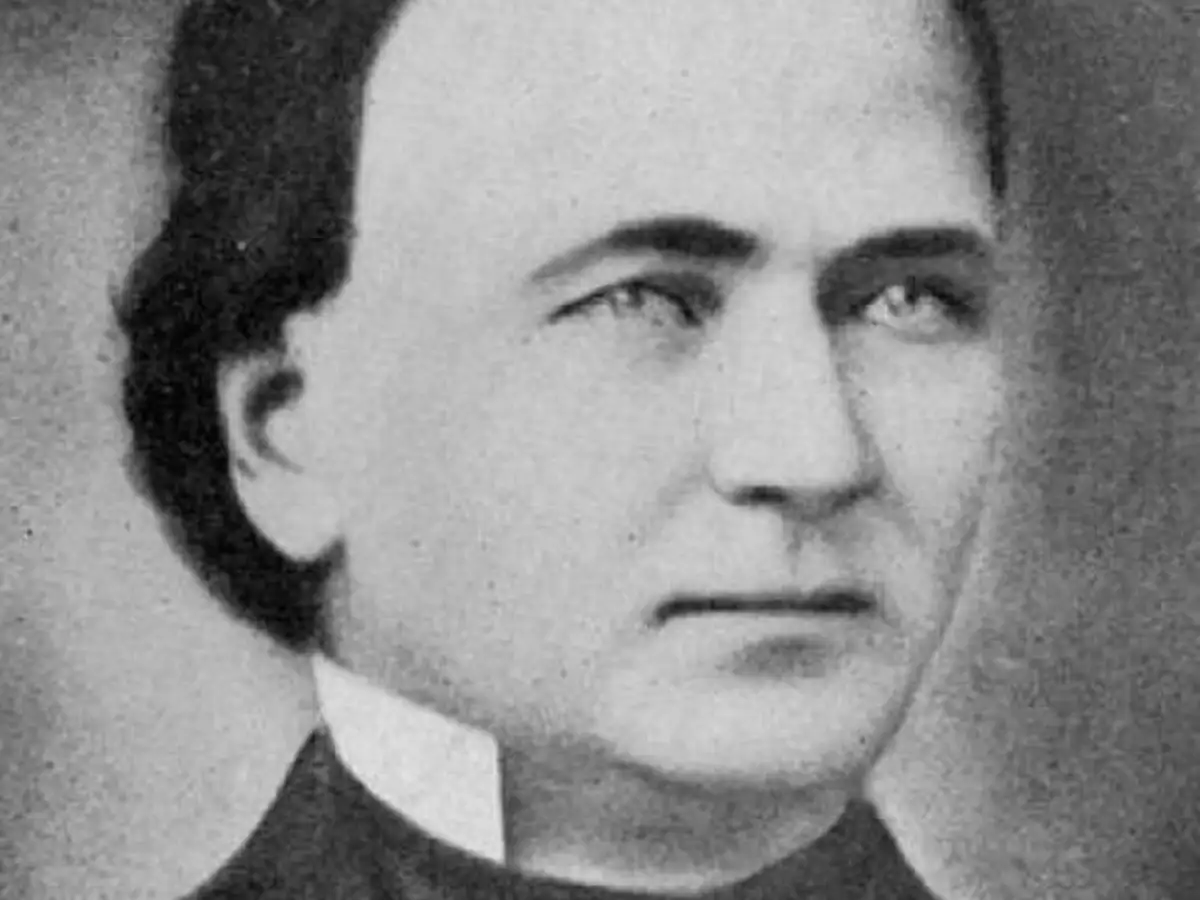
In 1849, an American named Walter Hunt invented the first incarnation of the modern safety pin through his innovative twisting of a wire that incorporated the spring feature as well as the securing catch. Part of the reason the invention story has remained popular to this day is the unique background of the invention process.
According to reports by the Lemelson-MIT Program, Hunt was allegedly preoccupied with a debt as he worked on the design using a wire. While this detail has largely become folklore among other stories of inventions, it is known for certain that Hunt patented the invention of the safety pin in 1849 and made use of the spring and catch feature.
As explained by Lemelson-MIT, the inclusion of a spring mechanism and protective covering for the needle made the new design significantly superior to previous versions in the sense that it enabled the pin’s sharp end to be locked in position rather than left exposed. This was very significant because of the way in which it changed what was essentially a dangerous device into one that was safe enough for use and reuse on many occasions without any risk of accidental injury. What made the invention valuable was its practical nature rather than anything complex about it. It was not a machine that could only be used by industry specialists.
The modern safety pin succeeded because it improved on an older idea
Another point that tends to be forgotten is that Hunt did not design the earliest version of the clasping pin to ever be made. As noted by Lemelson-MIT, earlier patents for pins that would fasten together had been created prior to Hunt's patenting of the safety pin. Instead, the innovation came from developing the fastener so that it would be safe, dependable, and easy to use for everyone. This is crucial information since many innovations have come about through refinements rather than being entirely new ideas. Hunt's spring catch mechanism was able to overcome practical issues that previous designs had not.
This account reveals a lot about the process of inventing throughout the nineteenth century. Independent inventors working alone in their own workshops were common during the period. The inventions usually involved straightforward materials and mechanical principles that could fix common problems. Hunt, in particular, had a reputation for inventing useful things rather than large-scale machinery. The cultural staying power of the safety pin demonstrates just how powerful even a little bit of engineering ingenuity can be when dealing with commonplace annoyances.
Walter Hunt’s invention became far more valuable than the inventor himself
Hunt was able to patent his invention, but never made millions from it. As stated in a research paper from the University of Rochester economics department, Hunt eventually sold the patent rights while companies manufacturing the item on a grand scale were making more profit out of their work. This is typical of history since it often demonstrates that inventors do invent very significant products that make no money for themselves. In other words, the value of the safety pin lies in the simplicity of the design as well as the cost-effectiveness of manufacturing it.
The thing that really adds longevity to the tale is just how basic the invention is. After all, how often do people consider that such a trivial detail in their lives as a safety pin actually required somebody to invent it? And yet it does show just how practical the invention truly turned out to be. Instead of inventing complicated mechanisms, Walter Hunt had found how to simplify an existing one. His safety pin proved to be useful and therefore managed to survive in our day because of its practicality and simplicity.