What sounds like an unbelievable urban legend was, in fact, one of the strangest industrial disasters in British history. On 17 October 1814, a massive vat of fermenting beer burst at a London brewery, sending a huge wave of porter through nearby streets and homes. The incident, now known as the London Beer Flood, claimed eight lives and left lasting changes in the brewing industry.
What was the London Beer Flood?
The London Beer Flood occurred at Meux & Co's Horse Shoe Brewery, located at the junction of Tottenham Court Road and Oxford Street in London.
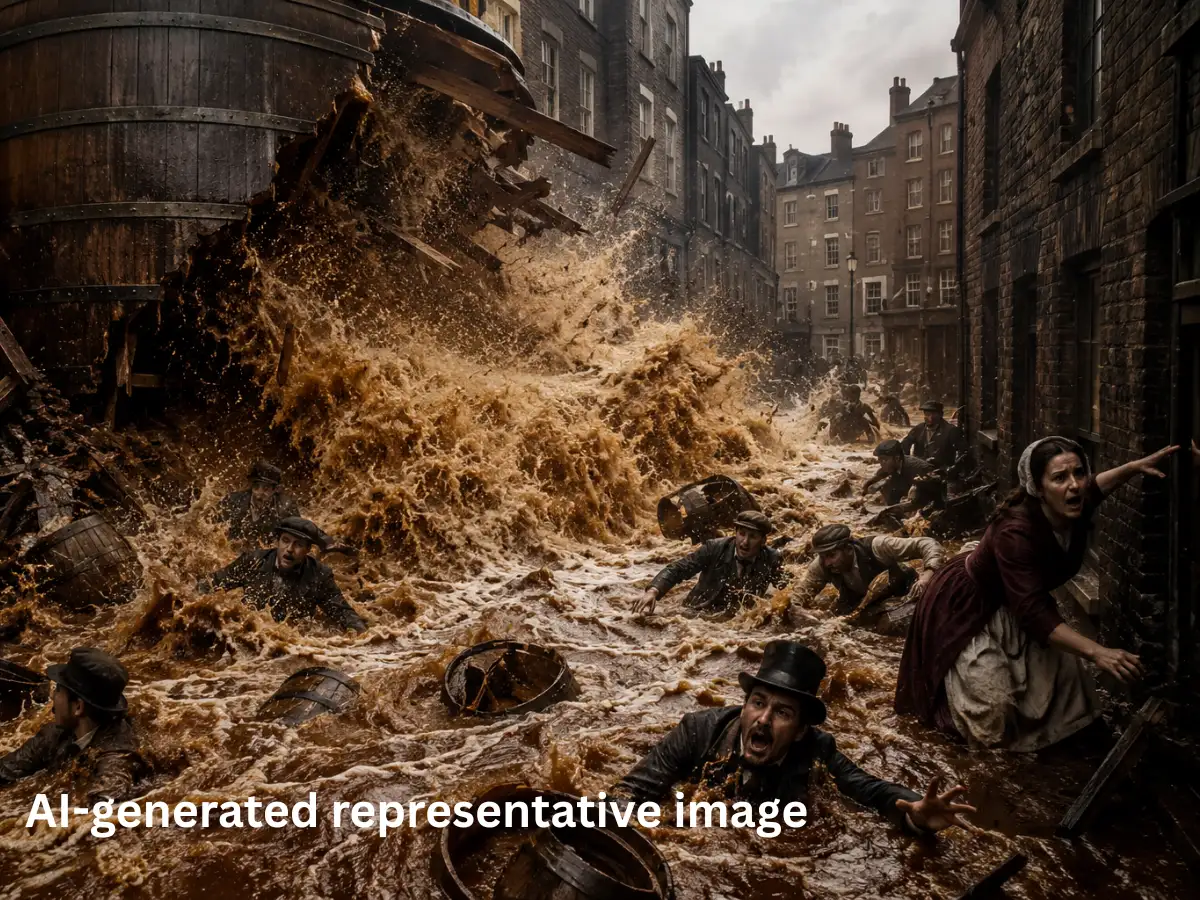
One of the brewery's enormous wooden vats, standing around 22 feet (6.7 metres) high, suddenly burst while holding fermenting porter. The force of the explosion caused another vessel to fail and several large barrels to rupture.
According to multiple reports, an estimated 128,000 to 323,000 imperial gallons (approximately 580,000 to 1.47 million litres) of beer gushed out of the brewery within moments.
Why did the beer vat burst?
The brewery relied on giant wooden vats reinforced with heavy iron hoops to store porter while it matured.
On the day of the disaster, one of the iron hoops reportedly slipped from the massive vat. Although such incidents had happened before without serious consequences, the enormous pressure inside the vessel eventually caused it to rupture. The escaping beer triggered a chain reaction that destroyed neighbouring storage containers.
How the flood devastated a London neighbourhood
The torrent smashed through the rear wall of the brewery and surged into the St Giles rookery, one of London's poorest and most overcrowded neighbourhoods at the time.
The powerful wave swept through narrow streets and fragile homes, causing buildings to collapse and trapping residents beneath the debris.
How many people died in the London Beer Flood?
According to historical records, eight people lost their lives in the disaster. Among the victims were five mourners attending the wake of a two-year-old child when the wave of beer crashed into the building. The remaining victims died after nearby homes collapsed under the force of the flood.
A coroner's inquest later ruled that the deaths had occurred "casually, accidentally and by misfortune", meaning no criminal liability was assigned.
Why were such enormous beer vats used?
During the early nineteenth century, porter was London's most popular alcoholic drink. Large breweries stored the beer in gigantic vats for months, sometimes up to a year, to allow it to mature before sale.
Meux & Co was one of London's largest breweries, alongside Whitbread, and used some of the biggest wooden storage vessels in the country. The largest vat at the Horse Shoe Brewery could hold around 18,000 imperial barrels of porter.
Did the brewery survive the disaster?
Although the flood caused extensive damage and the loss of a vast quantity of beer, the brewery avoided bankruptcy.
The company received a rebate from HM Excise on the duty paid for the lost beer, helping it recover financially.
The Horse Shoe Brewery continued operating for more than a century before relocating in 1921. The site where the brewery once stood is now occupied by the Dominion Theatre in London's West End.
How the London Beer Flood changed brewing
The disaster highlighted the risks of storing beer in enormous wooden vats under high pressure.
Over the following decades, breweries gradually moved away from these giant wooden vessels in favour of safer storage methods, including metal tanks, reducing the risk of similar accidents.
Why the London Beer Flood is still remembered
More than 200 years later, the London Beer Flood remains one of the most unusual industrial disasters ever recorded. Its combination of engineering failure, tragic loss of life and extraordinary circumstances has made it a lasting part of London's history and a reminder of the importance of industrial safety.
Inputs from agencies