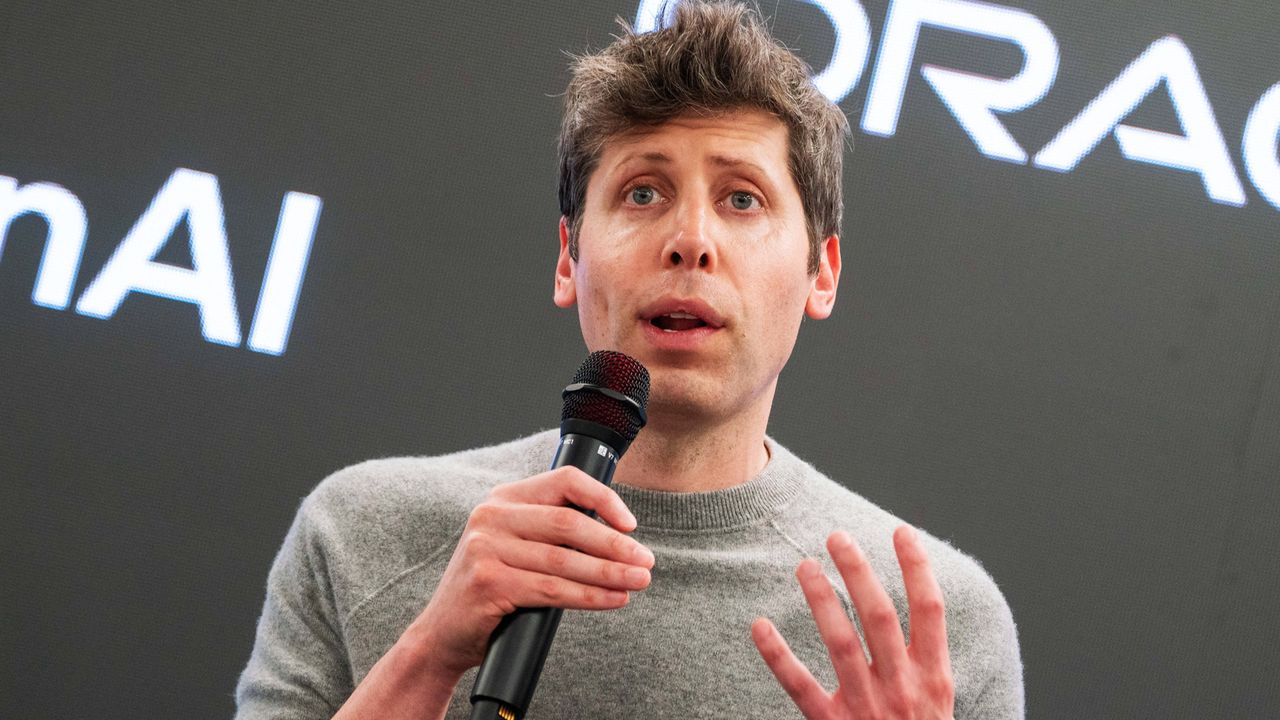
- Sam Altman says he doesn't think AI will lead to a "jobs apocalypse"
- OpenAI CEO says a human interaction will always be needed
- Altman says he uses AI to respond to Slack and email messages
Sam Altman has hit out at claims the increasing global usage of AI technology worldwide will lead to a "jobs apocalypse", despite widespread reports this is exactly what is happening in many industries.
The OpenAI CEO also admitted that while he believed his company has been "roughly right" on the technological predictions it made when it launched ChatGPT in 2022, they were "pretty wrong" on the social and economic implications.
Altman also noted that while he was initially concerned about the impact AI would have on global employment levels, he believed things were not as bad as many have made out.
"I'm delighted to be wrong"
"I'm delighted to be wrong about this, I thought there would have been more impact on entry-level white-collar jobs being eliminated by now than has actually happened," Altman told CBA Chief Executive Matt Comyn in a virtual interview at a Commonwealth Bank of Australia (CBA) conference in Sydney (via Reuters).
"I now think I understand more about why it hasn't, and I'm obviously grateful but that is an area where my intuitions were just off," he added.
"People are like 'oh you could have saved the world a lot of fear mongering and a lot of doom and gloom' but at the time I was like 'I see this is a real risk we should probably talk about it' and it still may."
Altman's comments come days after Meta laid off around 8,000 workers following multiple failed AI-linked projects, with many others forcibly re-assigned to new AI work.
Banking giant Standard Chartered was also widely criticized recently after its CEO described workers as 'lower value human capital' shortly after cutting thousands of jobs in favour of AI tools.
Altman also revealed a little about he uses AI tools for his personal work life, including having it respond to Slack and email messages.
However he noted he had reverted to answering some himself, as there is still a 'human part' of employment which needs to be present.
"I had it reply to messages, saying 'this is Sam's AI' and it was an amazing example to me of we really do care about people," he said.
"We really do care about our interactions with people and this thing, which is a huge amount of my time, is not something that I can imagine myself outsourcing to an AI anytime soon."
Overall, Altman said these feelings made him realize human workers will still have a place in most roles going forward.
"It really, in both positive and negative ways, updated me to thinking that the jobs picture is likely to be very different than we thought," he said.
"I don't think we're going to have the kind of jobs apocalypse that some of the companies in our space advocate or talk about."