
I first met Bryony Deery a few months ago, at a lululemon event where she hosted a mat-based classical Pilates workout for 450 attendees. She was clear with her instructions, concise in her encouragement, and effortlessly charming in the way she guided the room while I was fighting for my life. It was one of the spiciest workouts I'd done in a while, and I'm a Health Editor who works out for a living.
A classical Pilates instructor who's built her empire around the premise of helping women feel strong, Deery is so much more than "just" a Pilates instructor. She's the founder of Pilates By Bryony, a Dior Beauty Global Wellness Expert, and author of the revered Notes To Self Substack, as well as the co-founder of Cloudcha Matcha.
At the end of last year, she gave birth to her first child, an experience that, when we chat, she shares she felt well prepared thanks to her Pilates background. But nothing, she openly admits, could have prepared her for the physical and emotional transformation of becoming a mother.
Deery is candid and open, sharing her lived experience and how her own birth experience unfolded in ways she couldn't have prepared for. Like so many women before her, she had to navigate the messy, often confusing terrain of postpartum recovery—where joy sits alongside grief, exhaustion and uncertainty, and where healing is front and centre of mind, but far from linear.
Now, seven months postpartum, Deery is purposely forging her own path—prioritising softness, self-compassion, and coming back to herself, while enjoying all of the joys that new motherhood brings over the outdated notion of "bouncing back."
Below, she shares her birth story, the lessons she's learnt in the last year, and why redefining what strength really means after birth is so critical.
My Honest Birth Preparation and Postpartum Recovery
I've spent my career teaching movement and structure through Pilates, and in some ways, that expertise shaped how I approached preparing my body for birth.
I felt so lucky approaching the birth of our daughter, because there aren't many things that ask you to tune into your body quite like preparing for labour.
Pilates had already given me that. More than anything, it gives you a mind and body connection that lets you really know when you can challenge yourself and when your body needs to rest, which becomes invaluable in pregnancy when everything is changing week to week.
Physically, it prepared me in all the ways that are key for birth: the mobility to stay open and comfortable as my body changed, the strength to carry the bump as well as possible, the core and pelvic floor awareness you rely on so heavily during labour, and the controlled breathing that honestly was one of the biggest things during labour. The method I teach is classical and low-impact; I could keep going for as long as it felt right, adapting as I went rather than stopping and starting.
But the benefits aren't only physical. Pilates was the only time when I found my calm, centred myself, got into the zone and really learned to believe in the power of the female body.
So much of pregnancy is spent preparing for the baby, and we forget that we're the ones who have to go through the birth and recover afterwards. For me, Pilates was how I prepared myself and the more you invest in yourself during pregnancy, the more prepared you feel when your baby arrives, and you're more depleted than you've ever been.
If I could recommend one thing to other expectant mums, it would be to find a practice that strengthens your body and quietens your mind in equal measure. Preparing yourself is preparing for your baby too.

Preparing both body and mind
My birth preparation was a mix of physical and mental.
Physically, I kept my body moving in a way that felt supportive rather than strenuous. I carried on with my Pilates, adapting as I went. I filmed our prenatal workouts in real time while I was pregnant, so the sessions on the app are the exact ones I was doing myself right through those months. I also added lots of walking, good rest and really nourishing food, because I wanted to go into birth feeling strong and looked after rather than depleted. In the final weeks I also used an EPI-NO, a device that helps you gently prepare and train the pelvic floor and perineum for birth. It also really helped me to visualise the birth itself and practise my breathwork.
Mentally was just as important to me, if not more. I spent a lot of time getting into the right headspace and protecting my mindset, and I chose not to fill my head with other people's birth stories. The biggest thing I did was listen to positive affirmations, over and over, until believing in my body felt completely natural. By the time I went into labour, I had my headphones in and those affirmations playing, and they genuinely carried me through.
I can't recommend preparing your mind as seriously as you prepare your body enough. Find the affirmations, the breathing and the calm that work for you, and practise them long before the day so they're already in your system when you need them. The physical preparation matters enormously, but feeling calm and truly believing in yourself is what you'll lean on a lot too, alongside small, practical things like the EPI-NO that genuinely make a difference.
A post shared by Bryony Deery (@bryonydeery)
A photo posted by on
A calm mind and body will carry you through the unexpected
The birth itself I felt so ready for, but what I hadn't expected or prepared for came 24 hours after having Elle. I had a large blood clot, and having it removed was worse than labour. It was the worst pain I've ever felt in my life. No amount of understanding the female body, workouts, or visualisation can prepare you for a pain like that.
My doctor removed it by hand as I didn't want to go through an operation. I had gas and air and put my headphones in, listened to Louise Hay affirmations and reminded myself that my body knew what it was doing and that I could trust my amazing doctor, Claire Mellon.
It taught me that you can prepare so thoroughly and still be handed something you never saw coming, and that your calm mind and your body will carry you further than you ever think they can.
Gently rebuilding
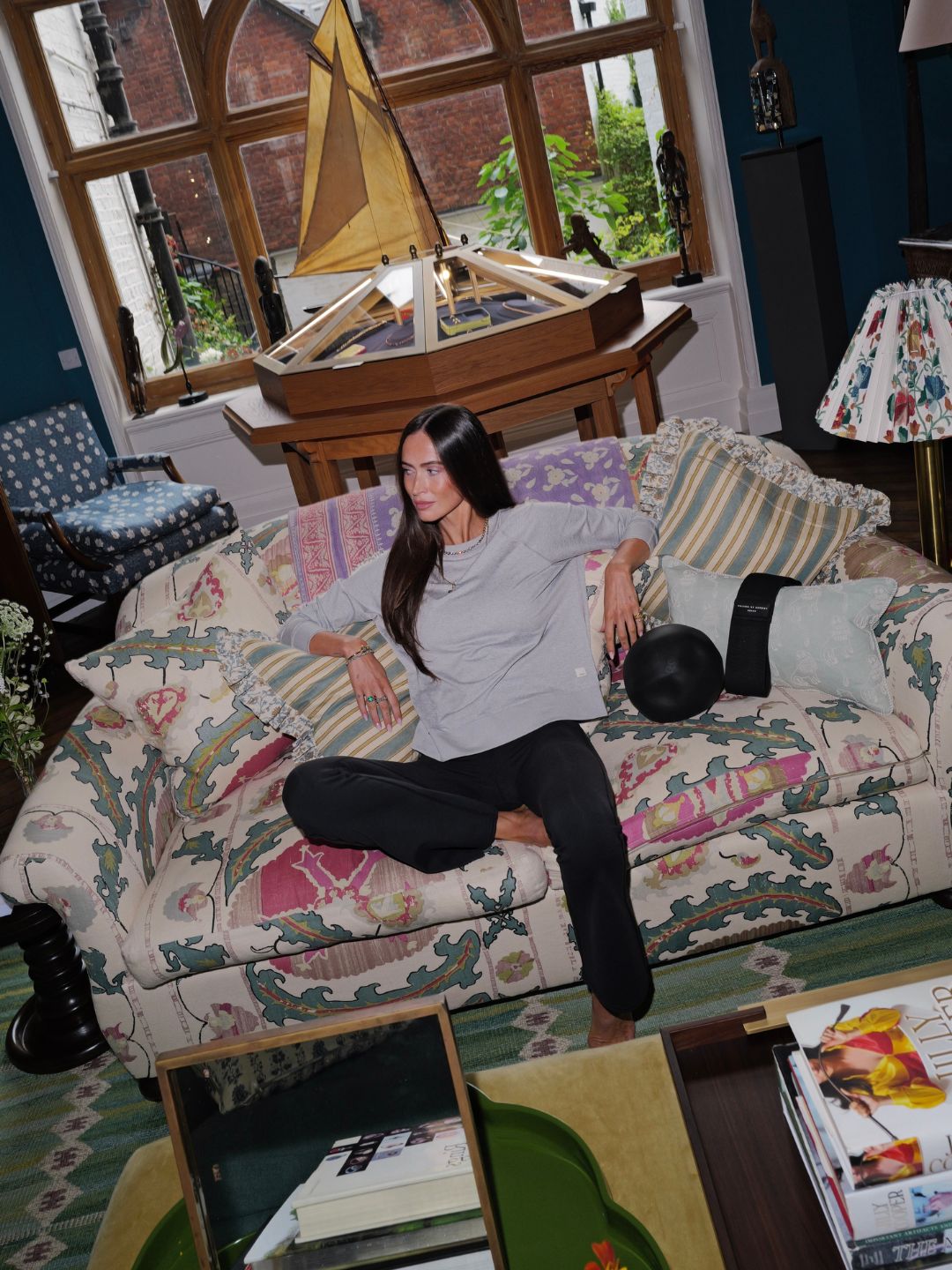
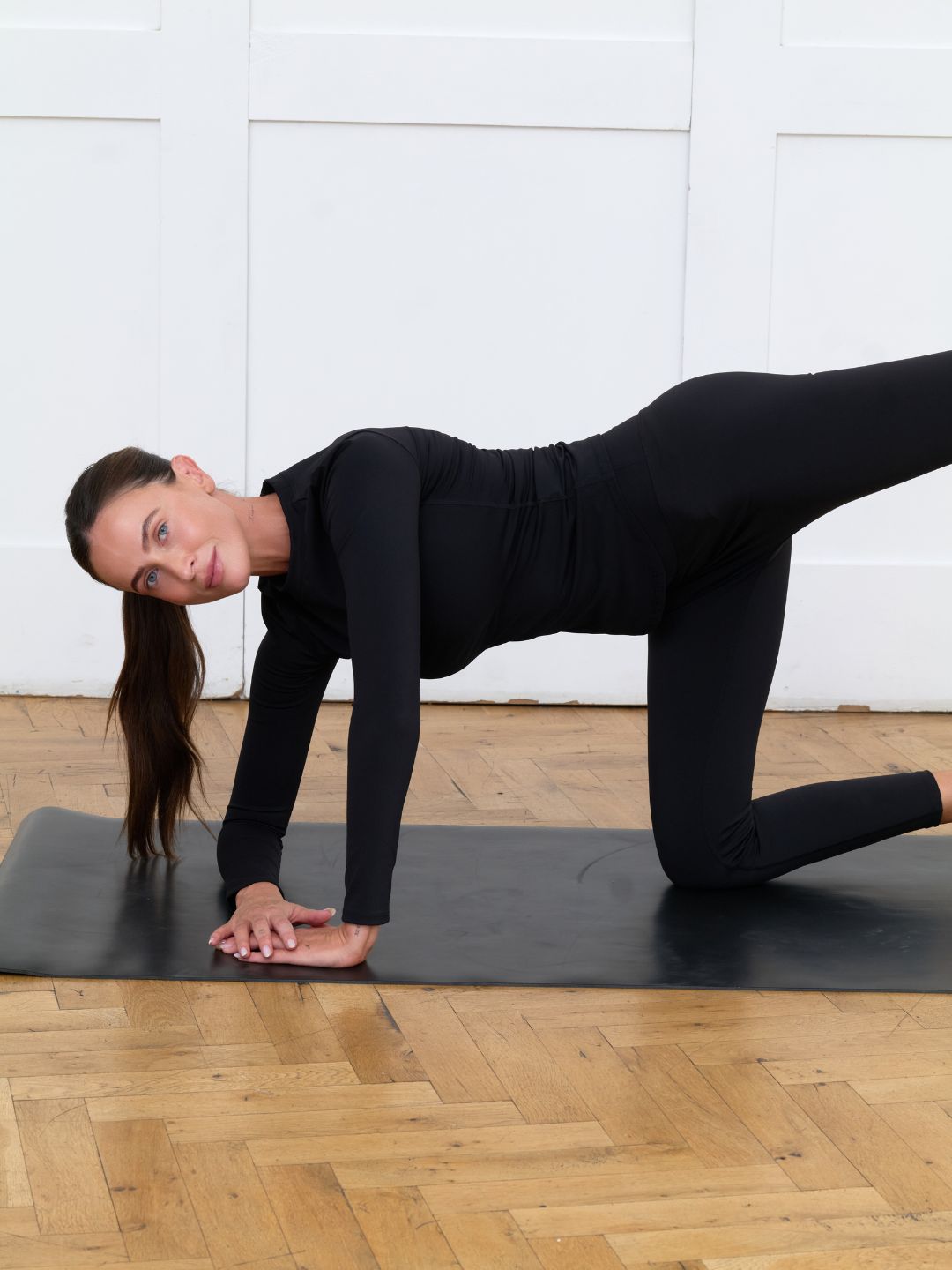
In those first few weeks postpartum, I really had to listen to my new body rather than stick to my usual routine. Movement is such a huge part of who I am, so of course I craved it, but I also knew this was a time to rebuild gently rather than pick up where I'd left off. I started modifying and slowly building my core back up; at first it was just breathwork and small activations, as the body needs time to reconnect and get strong again.
Within a couple of weeks, I was moving in a really gentle, considered way. I would always recommend that people typically wait between 6 and 8 weeks depending on their delivery, but I was lucky - I've been teaching for so long and had a very easy delivery, so I was able to very slowly start to introduce movement early on.
It felt so good not because I was “getting back” to anything, but because movement has always been how I feel like myself. It's become much more of a mental thing for me, and I am hearing that it's the same for so many of our members.
A post shared by Bryony Deery (@bryonydeery)
A photo posted by on
Preparation for the baby as well as recovery of the mother
One thing nobody told me about postpartum recovery is how depleted you feel, and how much of it isn't purely physical. You expect to be tired, but no one really prepares you for the way your hormones are completely all over the place at the same time as you're caring for this tiny human who needs you constantly.
Even in the wellness world, we talk so much about preparing for the baby and so little about the recovery of the mother. I wish someone had told me that looking after yourself in those early weeks isn't selfish; it's essential, and that giving yourself even thirty minutes in the day to move, breathe or just something for me still is part of the recovery, not a luxury on top of it.
Your body has done the most extraordinary thing. It deserves to be looked after just as carefully as your baby is. The hormonal side of pregnancy and postpartum really surprised me; it's really important to ask for help from family, doctors and friends when you feel you need it or something is off.
Rest and stillness
Rest and stillness played a much bigger role in my recovery than I expected, and it was probably the hardest lesson for me. My whole life is built around movement, structure and showing up every day, so learning to be still and let my body simply recover didn't come naturally at all.
But rest is where so much of the healing actually happens, and in those early weeks it truly was the work, resisting the urge to prove I was fine, and instead allowing myself to slow down. I came to see stillness not as doing nothing, but as another form of looking after myself, just as important as any workout. Choosing to rest was its own kind of discipline.
A post shared by Bryony Deery (@bryonydeery)
A photo posted by on
Understanding movement in a new light
Motherhood has completely changed the way I teach and think about Pilates and movement for other women, and I think for the better.
Before, I taught pre- and postnatal movement from everything I'd studied and knew was right, but now I teach it from having actually lived it. I understand the exhaustion, the small windows of time a new mum really has, and why the reconnection has to come before anything else.
I'm gentler with it now in terms of how much pressure we put on ourselves as women and our limited time, and I give women so much more permission to go slowly and to meet their bodies where they are, rather than rushing towards where they think they should be.
Having Elle made it so real for me in a way no training ever could, and I think the women I work with can feel that difference. It's no longer theory to me; it's something I've been through myself.
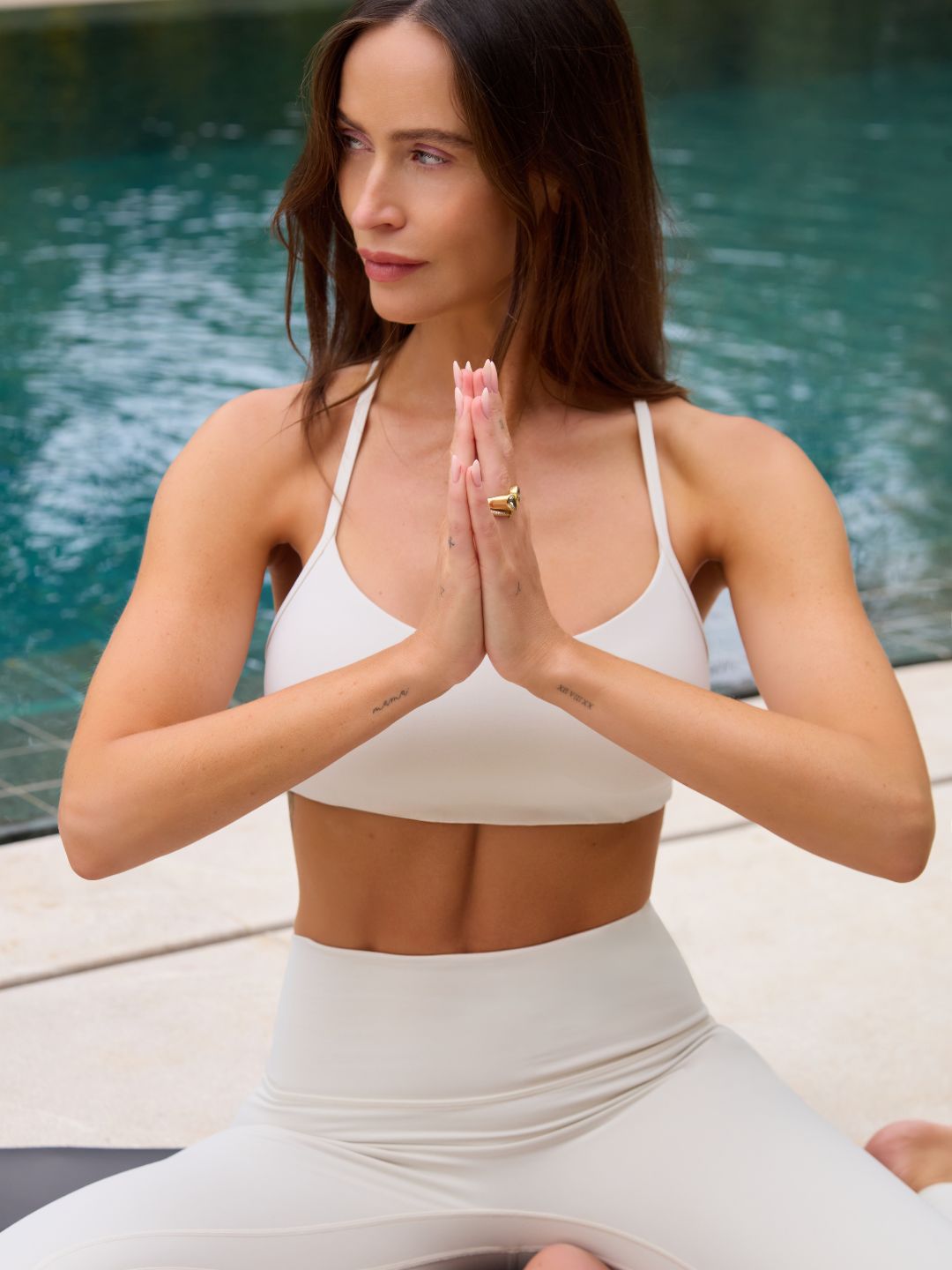
My top piece of advice?
If I could go back and give myself one piece of advice before giving birth, it'd be to trust my body and let go of trying to control every part of it. I'm someone who likes to prepare and plan, and birth is the one thing that asks you to surrender to it completely. I'd tell myself that all the preparation was done, that my body already knew what to do, and that I could simply trust it and let it lead.
I'd also remind myself to be just as gentle with the recovery afterwards as I was diligent with the preparation before because that part matters just as much. I would also tell myself to soak up every little self-care moment for myself as much as possible.
A post shared by Bryony Deery (@bryonydeery)
A photo posted by on
"Bouncing back"
I've never really loved the idea of “getting your body back,” because it suggests the body you had before was the one you were meant to keep, and that pregnancy is something to undo. I think of it far more as rebuilding — gently, and in the right order, into a body that's actually stronger and more capable than before. Having my daughter deepened that completely. I understood it as a teacher, but living it made it real: feeling how much the body has to reconnect and rebuild from the inside out, and how well it does when you give it time and consistency rather than pressure. You're not going backwards. You're building something new, and that feels like a far kinder and more powerful way to look at your body after birth. Equally, I do really understand it because we want to feel good and ourselves again. I reframed it to wanting to be the strongest I have ever felt and gave myself that goal.
I feel quite conflicted about the phrase “bounce back." On one hand, I completely understand the message that you don't bounce back, because you're a new person now and it's not realistic to expect your body to simply return to how it was. But at the same time, I don't think a woman should feel guilty for wanting to feel strong or like herself again, because having physical goals that make you feel confident is more than okay too.
There's no single right way to do this. Whatever feels right for you is the answer, and everything else is just noise you can quieten. My whole approach has always been about strength and confidence built gently and consistently over time, never quick fixes or pressure, and that's even more true after birth.
Give yourself grace, move in a way that makes you feel good, and do it entirely in your own time. There's enough pressure on women already, especially now, without us adding to it ourselves.