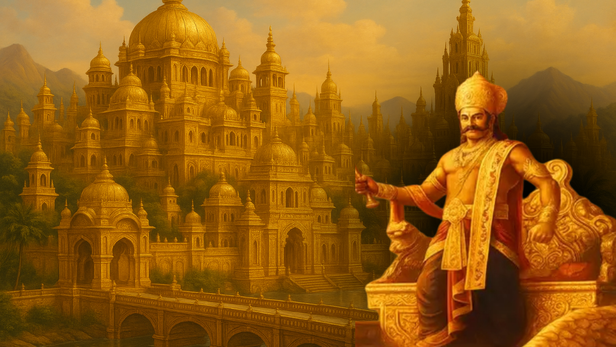
The idea of Lanka has always stirred the imagination. In the Ramayana, it appears as a place of astonishing wealth, power, engineering, and royal grandeur, a city so magnificent that it has stayed alive in memory for centuries. That is exactly why the question keeps returning: if Lanka was really so advanced, where is it now?
This is not just a question about stones, ruins, or archaeology. It is also a question about how we read epics, how time destroys even great civilizations, and how memory can outlive material evidence. The Ramayana is one of India’s most influential epics, traditionally associated with Valmiki, but historians and scholars do not treat every literary description in such texts as direct archaeological proof. At the same time, there is no widely accepted archaeological consensus identifying a surviving site as Ravana’s Lanka exactly as described in the epic.
A city in memory, not on a map
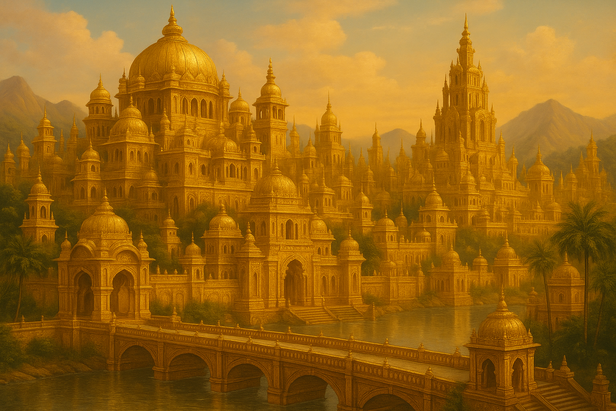
One reason we do not “see” Lanka clearly today is that epic geography does not always work like modern geography. When people say Lanka, they often directly equate it with present day Sri Lanka, but literary tradition, regional retellings, and later interpretations do not always behave with modern cartographic precision. The Lanka of the epic is remembered first as a civilizational and symbolic space, not as a GPS location.
This is relatable even now. People often remember a childhood home, an old city market, or a grandparent’s village as larger, brighter, and more magical than any map could ever show. Memory preserves emotional truth, but not always measurable coordinates.
Grandeur in epics is often amplified
When the
Ramayanadescribes splendor, gold, power, and extraordinary architecture, that does not automatically mean the text is offering a literal archaeological blueprint. Scholars have long noted that literary traditions frequently heighten descriptions to communicate status, moral contrast, or emotional scale. A city described as golden may reflect power, luxury, and awe, not necessarily streets paved in metal.
That makes Lanka feel familiar in a modern way too. Even today, when people describe a billionaire’s mansion, a futuristic city, or a dazzling wedding, the language becomes larger than life. Human beings instinctively exaggerate what overwhelms them.
Time is harsher than imagination
Even if a powerful urban center once inspired the Lanka tradition, time may have erased far more than people assume. Across the world, great settlements have vanished under forest, soil, rivers, coastlines, and later construction. Nature does not preserve greatness out of respect. It breaks, buries, floods, corrodes, and reuses.
This is one of the most relatable truths in the whole mystery. Think of how quickly a house changes after a few decades of neglect. Paint peels, walls crack, wood rots, memories fade. Now stretch that decay across centuries or millennia, and the disappearance of visible remains becomes far less surprising.
The sea may have changed the story
Coastal worlds are especially fragile. Scientific research on South and Southeast Asian coastal zones shows that sea levels and shorelines have changed significantly over long periods, reshaping habitable land and severing older connections. If traditions around Lanka preserved memory of a coastal or island center, later marine change could easily complicate what survives and where we search for it.
This matters because people often assume lost places must still look recoverable on today’s land. But coasts are restless. Entire landscapes can shift enough that yesterday’s center becomes today’s seabed, marsh, or broken fringe.
War destroys more than buildings
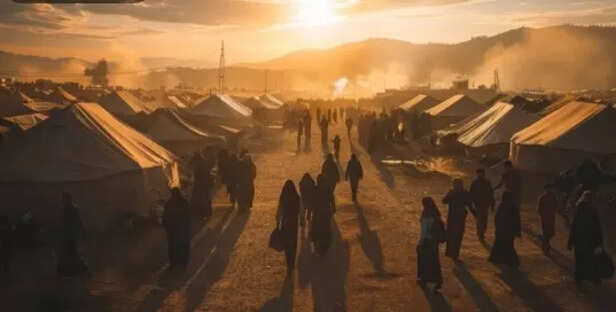
Within the epic itself, Lanka is not remembered as a peaceful city that simply continued unchanged. It is remembered as the site of a devastating war. Once a city becomes the stage for conflict, fire, siege, and collapse, its continuity breaks. Whatever was magnificent before may not remain magnificent after.
This too feels deeply human. A family home after a bitter dispute is not the same home. A nation after war is not the same nation. Places are not made only of architecture. They are made of continuity, and war shatters that continuity first.
Archaeology has limits, not magic
Many people expect archaeology to work like a final courtroom verdict: dig, discover, confirm. In reality, archaeology is slower, fragmentary, and cautious. Scholars have noted that there is no conclusive evidence proving the historicity of Rama in a strict archaeological sense, and similarly no accepted archaeological proof identifying a surviving Lankan capital exactly as epic tradition narrates it. That does not “disprove” belief, but it does place limits on what can currently be claimed as verified history.
This is relevant far beyond mythology. In ordinary life too, absence of proof is not always proof of absence. Sometimes it simply means the tools we have are incomplete, the record is damaged, or the question itself belongs partly to history and partly to faith.
Later cultures build over older worlds
Another reason remains may not stand out clearly is simple reuse. Ancient sites are often occupied again and again. Stones are repurposed, foundations are built over, sacred spaces are renamed, and memory gets layered rather than erased. What survives may no longer look like the original civilization that inspired it.
That happens in everyday life too. Families repaint old rooms, replace courtyards with concrete, and turn ancestral homes into apartment blocks. The past still exists there, but not in the form we expected.
Lanka may survive more as meaning than masonry
In the end, Lanka endures not because archaeologists can point to one uncontested ruin, but because it represents something larger than physical remains. It stands for brilliance without restraint, material power without moral balance, and the tragic truth that outer greatness cannot save inner downfall. That is one reason the story survives so strongly even when the stones do not.
And perhaps that is why the question still touches people. We all know versions of Lanka in our own lives: impressive on the outside, unstable within, admired by the world, but unable to protect itself from its own flaws.
Maybe the better question is not only “Where are Lanka’s remains?” but also this: when something disappears from the earth yet remains unforgettable in human memory, has it really vanished at all?