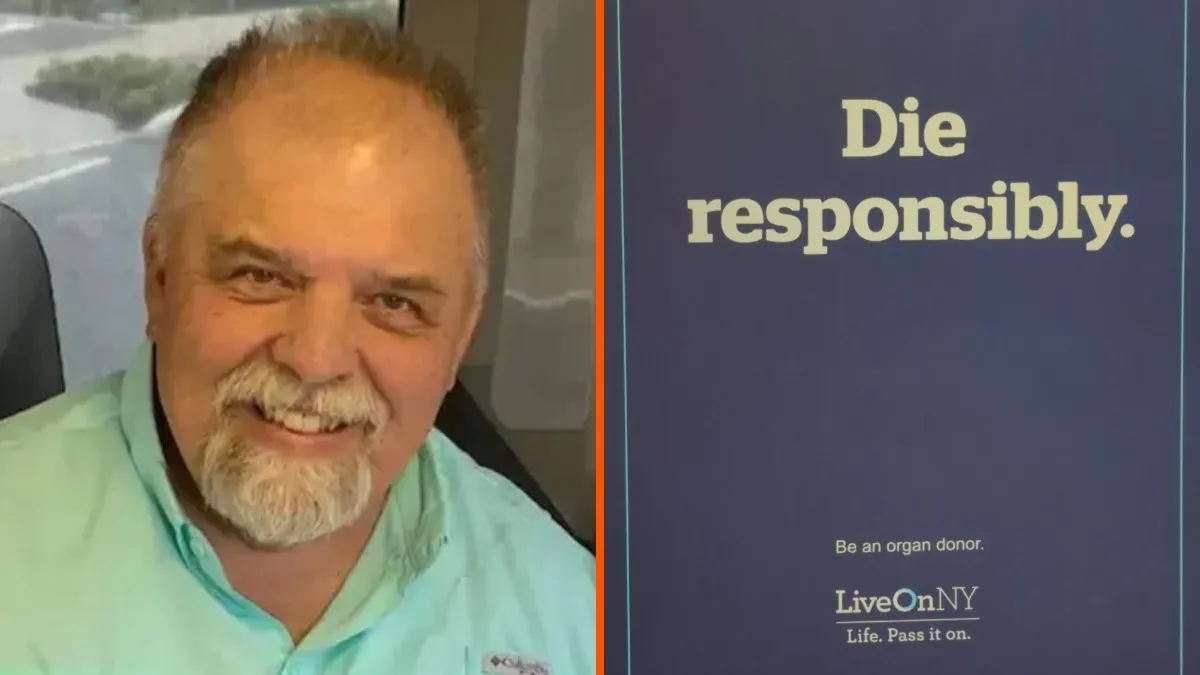
A highly unusual medical crisis unfolded after an Idaho man, James Martin, became an organ donor upon his death, only for his donation to inadvertently spread a deadly rabies infection. The situation began in December 2024, when the 59-year-old father of three passed away in the midst of health complications, and following a brief coma. It left his family to believe his death was the result of heart-related issues.
According to Scripps News, medical professionals now believe the root cause was a rabies infection contracted about five weeks earlier. The infection likely stemmed from an encounter with a skunk in the Martin family’s front yard. Unfortunately, he quickly fell into a coma before he passed away. Because no one suspected rabies, the standard tests for the virus were not performed, and his organs were processed for donation.
The consequences were devastating for the recipients. Barney Kurowicki, a 76-year-old Michigan grandfather who had been on dialysis for two years, received James’ kidney in Ohio. A month later, he began to show devastating symptoms, but they were caught too late. His death triggered a CDC investigation that then led them to three cornea recipients.
Researchers believe that the skunk was carrying the silver-haired bat strain of the virus
When James encountered the skunk, he downplayed his injury as a scratch. However, the virus was working through his system. Weeks later, his wife, Kim Martin noticed strange behavior that she now knows was a delirium episode. She caught James talking to himself in the room. A little while later, she found him collapsed on the floor with his face blue, and despite her attempts at CPR, she couldn’t revive him.
Kim honored her husband’s wish to be an organ donor. “It just made me smile and go, ‘That’s him. That’s just him. Like, that’s the big, tender panda bear of him, to help someone else,’” she told Scripps when she found out that he had signed up.
Organ Donor Unknowingly Gave Rabies to Cornea Graft Recipient as Well as Kidney Recipient Who Died https://t.co/3R5XPa4yLk
— People (@people) May 30, 2026
She confirmed that she disclosed the skunk scratch on the Donor Risk Assessment Interview questionnaire, but because rabies is so incredibly rare, the test was not conducted. As PEOPLE reports, between 1978 and 2024, there were only three documented cases of rabies transmission through organ donation in the United States.
Kurowicki began to show symptoms in January 2025. He suffered from tremors, weakness, and hydrophobia. Per a CDC report, hydrophobia is a hallmark symptom of rabies, where the throat swells, making it painful to swallow and causing a genuine fear of water. By the time the medical team consulted the CDC, it was too late to save him.
The investigation then turned to other recipients. Cornea tissue from James had been distributed to patients in Idaho, New Mexico, California, and Missouri. Dr. Christine Hahn, Idaho’s state epidemiologist, worked with the CDC to track down everyone who had been in contact with the tissue.
“It was a pretty tense conversation,” Hahn said regarding her discussion with the doctor of the Idaho patient who received a cornea. The medical teams ultimately decided to remove the grafts and administer the post-exposure prophylaxis, or PEP, vaccine to prevent the virus from taking hold.
“Those first five to seven days were pretty stressful with a lot of phone calls largely around the idea of: do we start vaccinating people before we even know this is a rabies case?” said Ryan Wallace, a veterinary epidemiologist at the CDC. While the rabies vaccine is effective, it is also expensive and only works before symptoms begin. Fortunately, none of the cornea graft recipients developed symptoms.
Kim Martin did not know of the full situation or Kurowicki’s death until a CDC report summarized the incident a year later. She expressed deep remorse for the unintended outcome, telling Scripps, “I would just apologize. We didn’t do this on purpose. We didn’t know, and we actually had to go through a lot afterwards.”
Midwest dad hoped kidney transplant would save his life – but it ended up giving him RABIES and killing him https://t.co/C1IbHkOLPn
— Daily Mail US (@Daily_MailUS) May 29, 2026
The Kurowicki family has since filed a lawsuit against the medical professionals and agencies involved, citing negligence in the vetting process. Meanwhile, organizations like the Health Resources and Services Administration have proposed new screening protocols, with more comprehensive questions about animal exposure and a formal procedure to contact the CDC for risk assessments in those instances.
Despite this complication, experts emphasize the need for organ donation. One expert noted that the primary challenge facing the transplant community is a critical shortage of organs, with 13 people dying every day while waiting for a match.
Organ donor unwittingly had rabies – and now one kidney recipient is dead and others are at risk https://t.co/StGToYoAnE pic.twitter.com/6SaAanaIYa
— New York Post (@nypost) May 29, 2026
So, it is of great value when a family signs off on the donation. A recent high-profile donation came after the unfortunate death of a 23-year-old TikToker. However, even though organ donation is safe, there have been surprising complications in identifying valid donors when one opened his eyes just before the procedure.