Day five of getting over England’s defeat to Argentina. Long runs. Cold showers. Thinking about Djed Spence’s tackle while another dad talks at me by the gates. Imagining England’s possession figures in a final against this Spain. Isn’t it better to go out beating France 6-4 than losing to Spain 1-0? Better to go out praying to god with French players than begging for mercy from Spanish ones? Pete’s taking the kids to the zoo, or something.
I’ve watched it back twice now, from Anthony Gordon’s goal to full-time. It’s weirdly cathartic being transported back to a moment in time when hope still burned, when you can still draw a little thrill from England celebrating their lead, like re-reading a great book even though you don’t like the ending.
At the time, the prevailing reaction was that Tuchel had committed a tactical war crime when he made his contentious substitution during the hydration break. There were 24 million people watching in the UK, chewing over exactly what England should do with their 1-0 lead, and I’m fairly sure not a single person leant over to a friend or loved one and uttered the words: “Konsa for Gordon?”
Having read some alternative views, having listened to Andros Townsend’s articulate explanation, having rewatched Elliot Anderson needlessly drift away from Enzo Fernandez too many times, I understand the thinking. But my view is unchanged. Tuchel blunted England, emboldened Argentina and diminished his own players’ belief.
Watching back that second half, there are three glaring issues that hurt England’s chances. The first is Tuchel’s new team shape after 72 minutes, putting an extra man needlessly in defence; the second is the lack of pace up front and tired legs left on for too long; and the third is England’s regrettable decision to stop playing football, and the untold reason for it.
On the first of those, it is true that England retreat after Gordon scores, but they also retain some semblance of threat. They go forward on 66 minutes and Kane shoots, yet the camera cuts to the touchline and Ezri Konsa is already getting ready to come on. Tuchel has made up his mind.
This substitution is not the sole reason England did not win the semi-final. But the decision to replace Gordon with Konsa – England’s only change in the first 82 minutes of the game – is hugely influential in everything that follows.
With Konsa on, England switch to a back five (Tuchel’s tactical whiteboard actually shows 3-5-2, but that never materialises as they fail to get a grip). There is some logic in Tuchel’s post-match explanation that England needed to better defend crosses. But now they have a row of defenders strung across their box doing very little else. Crucially, they have one less player in midfield to compete, one less player to shut down the passes out wide, one less player to stop the crosser himself.
Which leads to the second point: England also have one less player to pass to, one less outball, one less attacking threat. This is an issue even before the hydration break: in the 63rd minute, Argentina struggle to break down England’s low block and Reece James wins the ball, but there is no one ahead of him – Kane and Bellingham are defending so deep, too deep – and all James can do is hack it out for a throw-in. England need pace and energy, but Tuchel doesn’t inject any.
These instances keep cropping up over the following 30 minutes. Kane keeps dropping on top of his midfield and doesn’t have the pace to then get forward and counter. Gareth Southgate might have taken Kane off at this point, as he did late in games during Euro 2024. Tuchel didn’t and that is understandable – it’s Harry Kane, after all. He is England’s leader, their goalscorer, he can pick a pass, he can win a foul. He’s a penalty taker if the game goes that far.
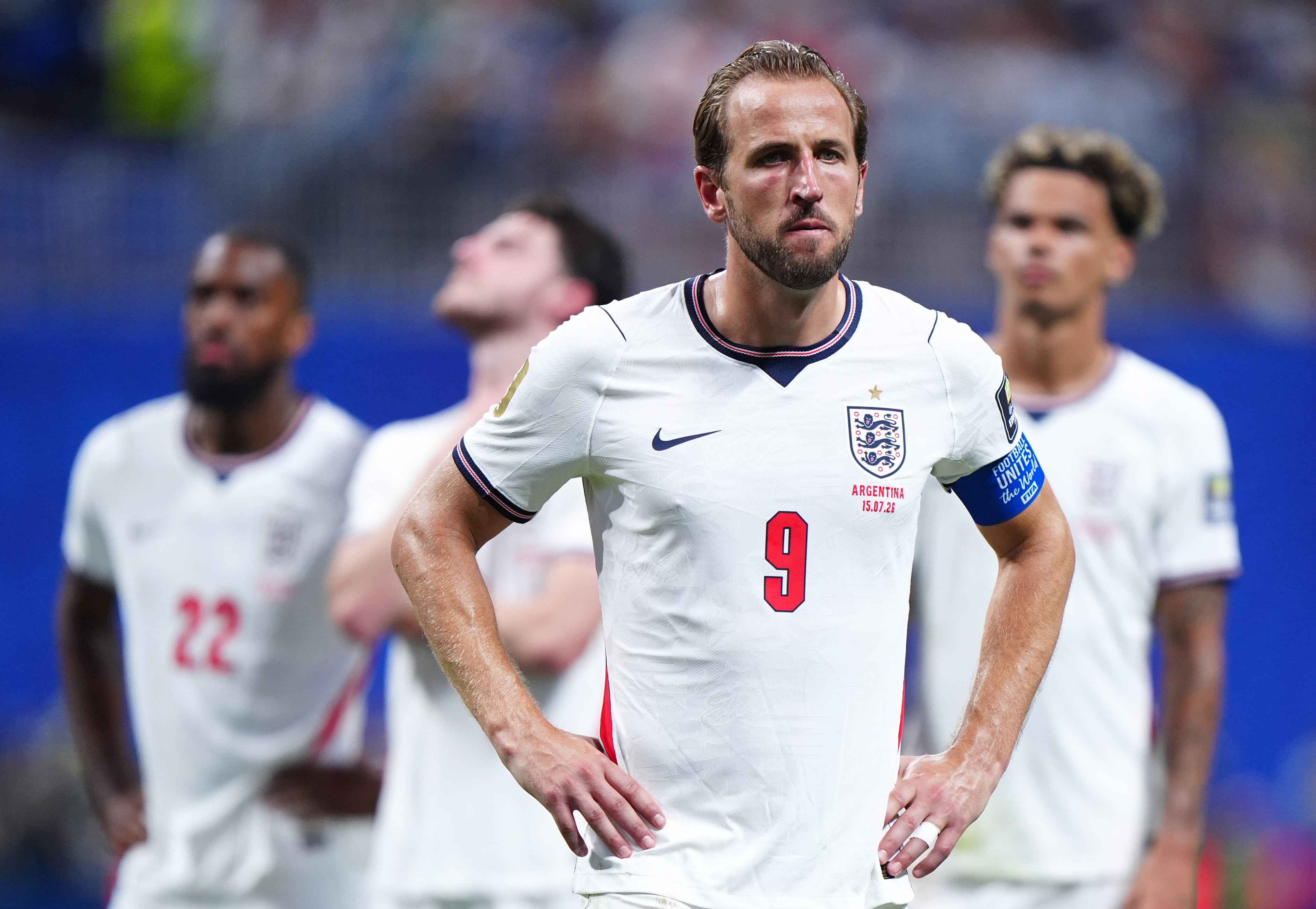
But the game probably isn’t going there and Tuchel does nothing to recharge his attack. Declan Rice and Rogers are flagging. Gordon has gone. Kane is a ghost. Bukayo Saka, Marcus Rashford, Ollie Watkins and Eberechi Eze stay seated.
The third issue hasn’t been discussed enough since the game. England stop playing football and the root cause is Jordan Pickford. For much of the match, Pickford played short passes out to his defenders, but now he is hammering long balls forward. Right before Argentina’s equaliser, Pickford opts to smash upfield. Argentina come forward, win a corner and score 56 seconds later.
Then, straight from the restart, Kane passes back to Pickford. Spence is calling for the ball in space on the left, but Pickford punts it once more and England lose the ball. In those final 30 minutes, Pickford is the epicentre of England’s tension, their lack of possession and their forced retreat. It is not so much that England fail to keep the ball, it’s that Pickford hardly lets them try.
Which isn’t to blame him for the result, but it is a curious shift. Did Tuchel’s subs change the goalkeeper’s mindset? On 82 minutes, Tuchel brings off Rice and James, replacing them with Nico O’Reilly and Dan Burn in a 5-4-1. Does Pickford look at the line of defenders in front of him and think, I’d rather not risk it? Does he stop passing short because of an instruction from the touchline? Because of something in the English DNA? Is it that England are exhausted and he feels there is no alternative?
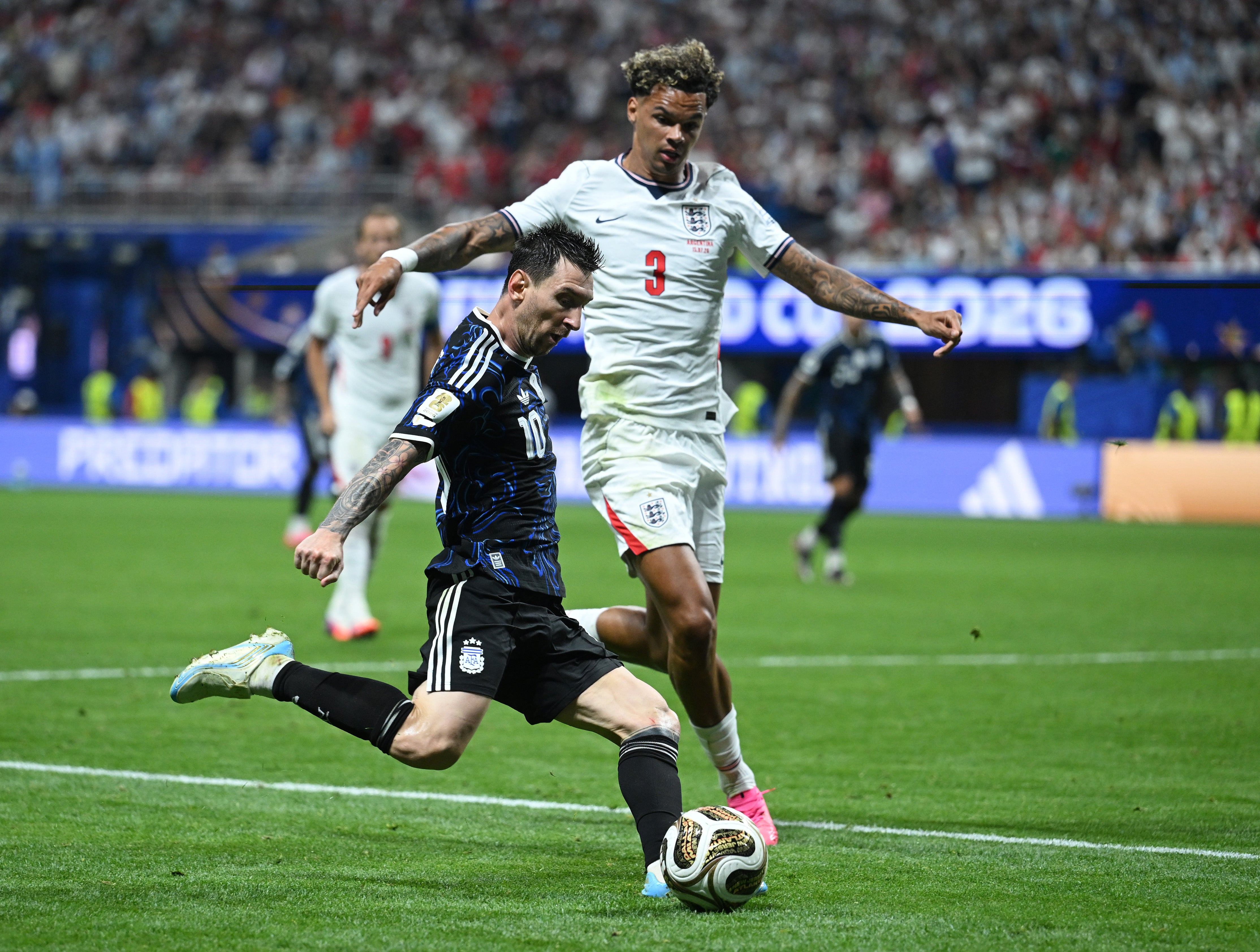
Of course, Argentina become more attacking. There are threats to deal with, to react to. But Tuchel breaks England’s shape and impacts their mentality in the process. They were handling themselves, just about, before the hydration break. They still carried some threat on the counter. Then England lost all attacking impetus, Kane slumped, Pickford kicked it away and they collapsed in on themselves.
Tuchel’s plan even has unintended consequences at the end of the match when Konsa, now England’s right wing-back, wastes crucial crosses in the dying seconds when England are 2-1 down chasing an equaliser. Perhaps a different player gives Burn one chance to aim a header at goal, to keep the game alive. But it never comes, and the match ends before England can test Emi Martinez at all.
The question now – and I should really go inside and collect the kids at this point – is whether Tuchel is the right man to be England’s manager going forward. Will he learn from his mistakes? Would he do it all again in another major knockout game?
The deeper question is whether he actually believes in England. His comments about DNA suggest he thinks there is some deep flaw that cannot be modified with a few rondos on the training pitch. It is Tuchel himself who didn’t pick technical ball-protectors in his squad. Trent Alexander-Arnold helps build from the back. Adam Wharton’s line-breaking passing is off the charts. Tuchel geared England away from possession to physicality, not the other way around.
And when England come up against a better ball-retaining side, that doesn’t mean they have to lie down and stop attacking. Why not then play to their physical strengths and be a counter-attacking side? Why not use Saka and Rashford on the break? Argentina’s booked centre-halves would have been unnerved, but England never tried. Instead, Tuchel focused exclusively on defensive resistance.
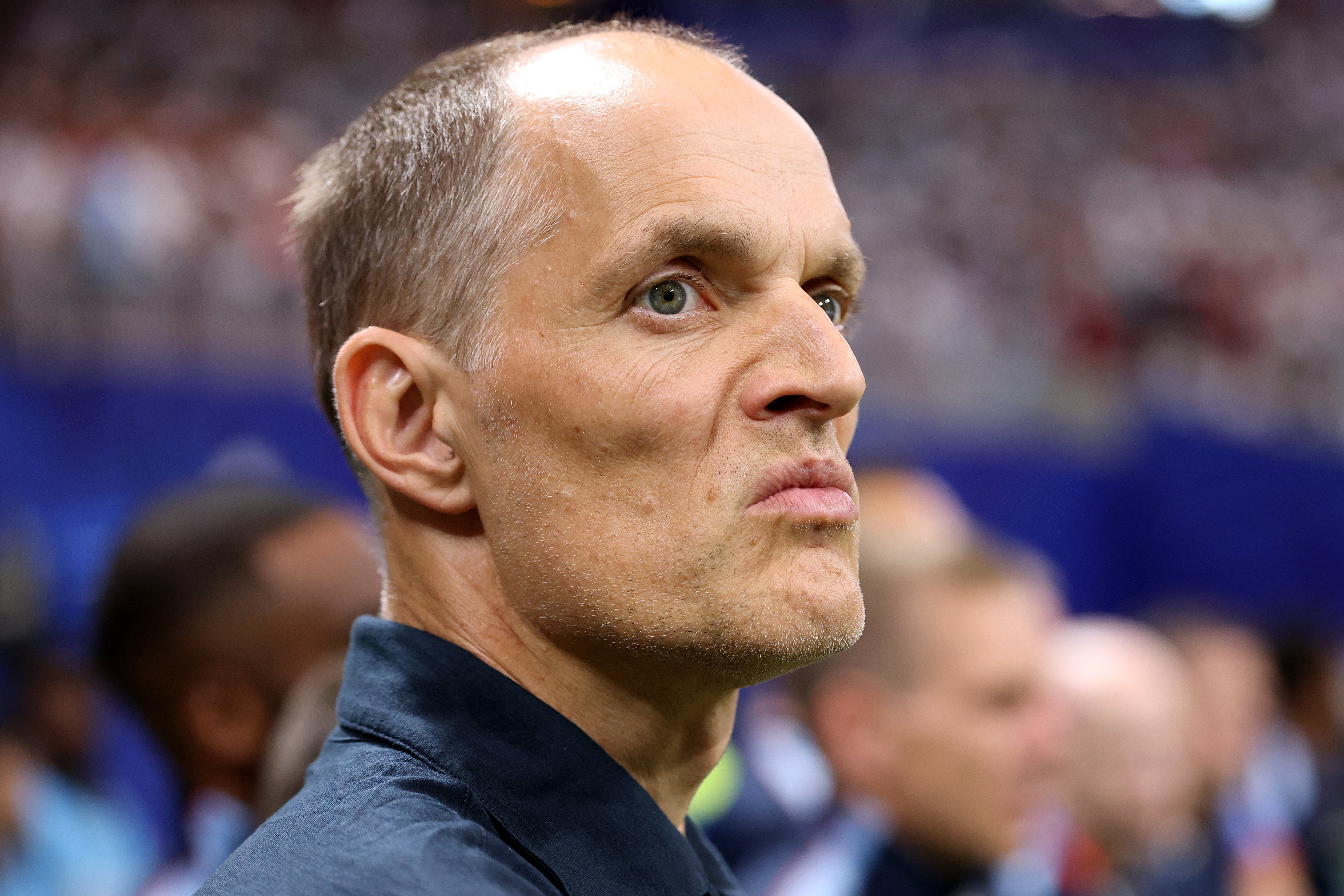
And that too is understandable. It was Tuchel’s first World Cup semi-final, after all, a game perhaps even bigger in his mind than his Champions League finals. There is a clip of Tuchel on the bench watching that epic Spence tackle on Giuliano Simeone and, as the Argentinian bears down on goal, the England manager looks like a nervous wreck.
What followed was reminiscent of Tuchel’s Mainz team at the start of his career, when he would tweak the system to counter opponents’ strengths. But this is not what he was hired to do for England. And perhaps it reveals how Tuchel saw England in that second half: as a team incapable of responding. He looked at his bench and didn’t see players able to recover the situation. He stopped trying to hurt Argentina, perhaps because he didn’t believe his players could.
That is a worrying lack of faith in the squad he picked. And if Tuchel doesn’t have faith in his players, do they still believe in him? They showered him in praise after beating Croatia in Dallas, for a half-time team talk Tuchel was happy to take credit for. Declan Rice said he realised in that moment why Tuchel was an elite manager. Can Tuchel ever have that effect again after this?
Tuchel would have learnt a lot from this World Cup, Kane assured this week. The problem is that there isn’t much time to learn. The next World Cup is four years away. Kane will be 36. England needed their coach to succeed now, this summer. And when it came to the crunch, Tuchel failed.