As amateur golfers we all go through tough periods on the greens from time-to-time, but rather than tackle the problem and attempt to improve our putting, we often just get our head down and power through - which isn't really the best course of action.
Our putting improvement guide is packed with expert tips and drills, curated by some of the most well-respected coaches in the business including flatstick guru James Jankowksi, so it's usually a good place to start for guidance on the greens.
We often see tour players trying different methods for how to grip a putter, or switching between the best putters on the market, but this curiosity and thirst for improvement doesn't always translate to the amateur game.
World No.1 Scottie Scheffler switched to the claw grip for putting, which appeared to work wonders for a once relatively 'weak' area of his game, but you also see Major winners like Xander Schauffele and Jordan Spieth rocking the left-hand-low putting grip and many others sticking with the conventional method.
Putting guru James Jankowkswi has coached 3000 golfers to improve their putting, so we asked him to share his favourite putting grip, a common fault that many amateurs fall into and three other options that could help you fire up the flatstick in 2026...
Putting Expert's Grip Guide
You might think you've tried everything. You've bought one of the best putters on the market, gone through some putting drills on the practice green and even watched a few YouTube videos, but for some reason the flatstick is still not firing.
Taking a look at your grip is a great way to explore a new avenue to potential improvement, just as Golf Monthly's instruction lead Baz Plummer did when he carried out a putting experiment to see which worked best for him.
So, with a bona fide expert on our roster of Top 50 Coaches, we thought it was best to reach out to James Jankowksi so that he can guide you through this process and set us straight on a common misconception relating to his favourite grip...
My Favourite Putting Grip And A Common Misconception About It
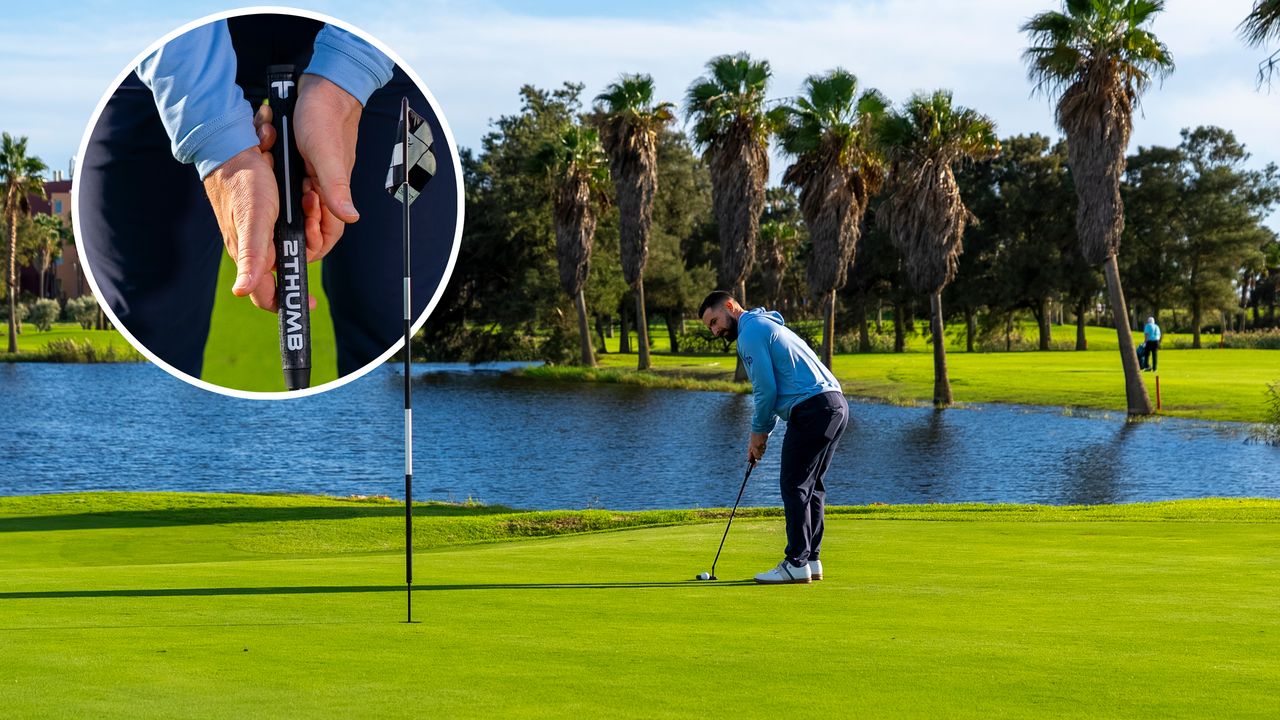
The conventional grip is my favourite, when positioned properly. This is where many amateurs go wrong. They blame the conventional grip for their lack of face control, which is a common misconception, when really it's how they position their hands when doing it.
With a neutral, conventional grip, the hands oppose each other with the palms facing the sides of the grip. The back of the left hand points towards the target and the back of the right hand points away.
A key reference point is the intersection of the life line at the base of the hand. The left hand should see the life line run along the front left edge of the grip, with the thumb pad on the front and thumb straight down.
Once in place, remove the trigger finger for a reverse overlap and feed the right hand fingers underneath. From here the right hand should have this lifeline intersection on the knuckle or finger nail of the left hand middle finger.
Feel like you're hinging the right hand into the grip. This lengthens the trigger finger away from the middle finger and shortens the thumb. See the rectangle created by the right thumb and trigger finger below.
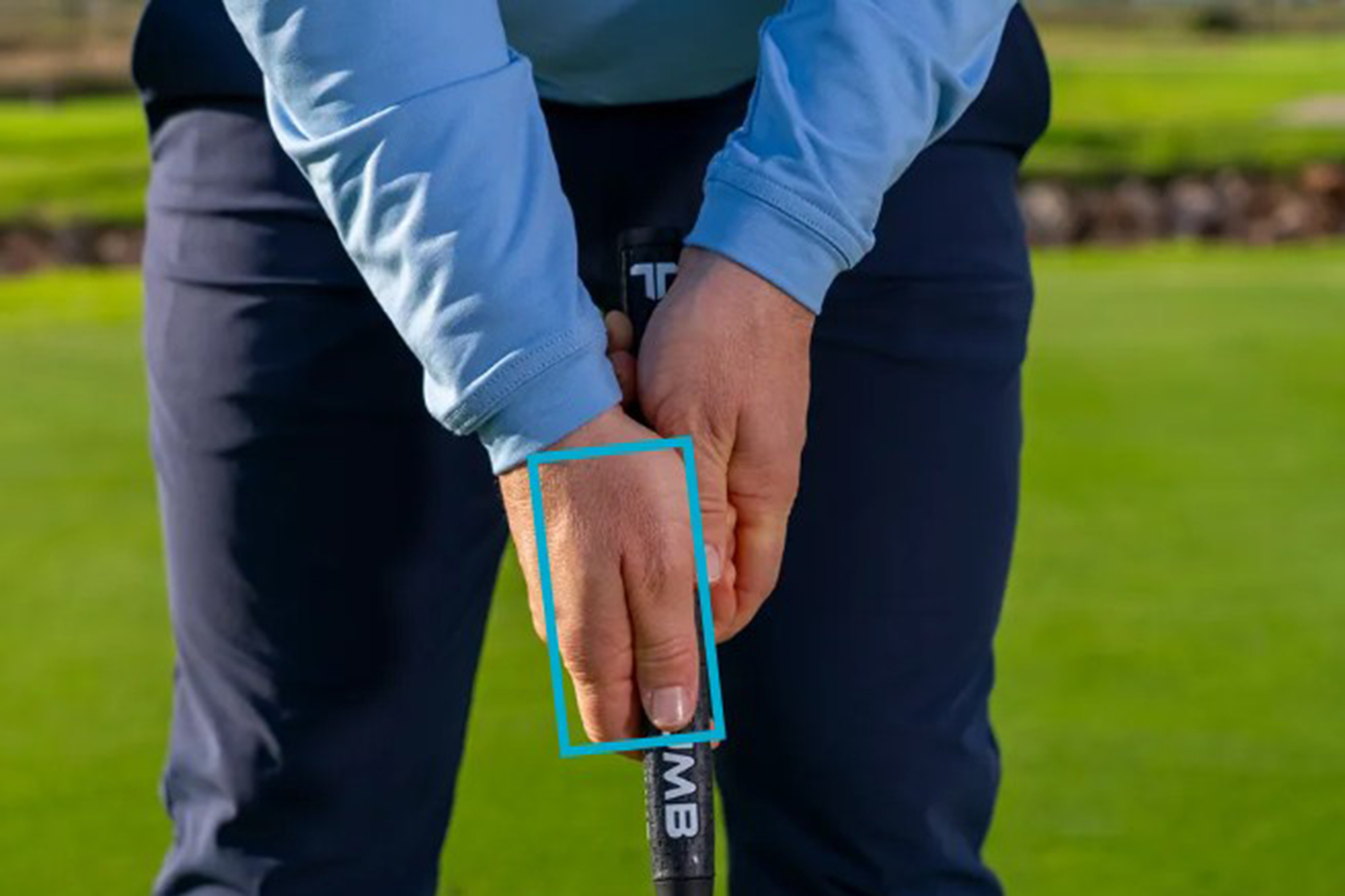
Again, the thumb travels down the front of the grip. The wrist joints, forearms and elbow joints should all be parallel to each other and the target.
The reverse overlap is really important, as it allows you to get the right hand (for right-handed golfers) on the putter in the right position.
Be careful not to move the fundamental low hand position as you wrap it over onto the front of the grip, which is a common misconception, but instead try to move the thumb independently as you stretch over to ensure the thumb faces down the grip.
This is the most common starting grip because most golfers are trail-hand dominant, and the lower trail hand helps to provide a strong sense of feel and awareness.
This might not suit every amateur golfer, so I have shared a few other options below for you try as you search for what feels right for you on the greens.
Lead Hand Low Grip
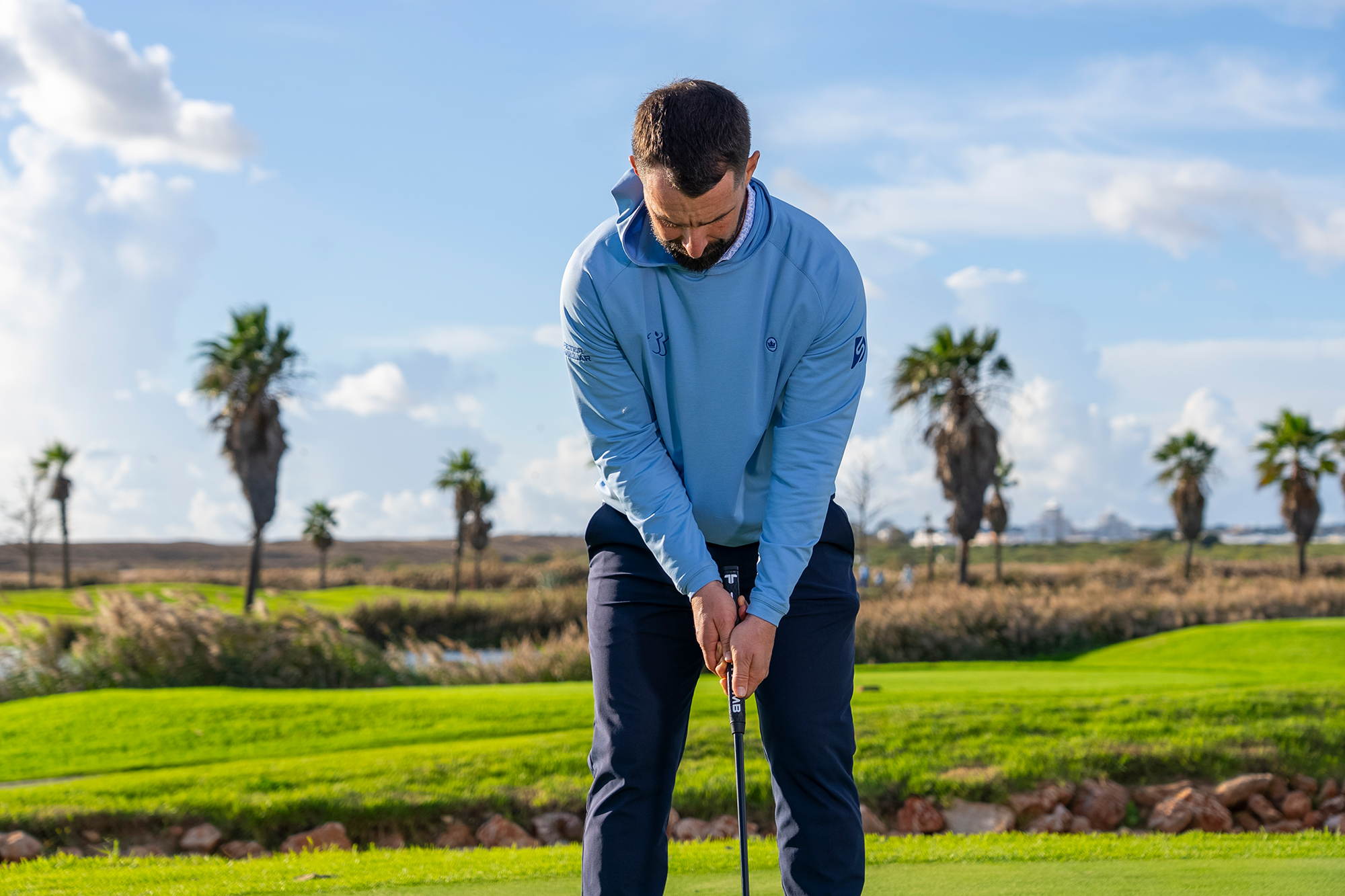
This is a good option for lead-hand-dominant strokes or those who prefer a more lead-side holding technique.
You will likely need a shorter putter to help you retain the same trail-arm structure as in a conventional set-up and stop the trail arm bending more and drifting along the side of the torso.
The lead arm hangs straighter than in a conventional grip, with shoulders fairly level. Keeping the lead wrist flexed in the hitting zone helps prevent the putter head from overtaking too quickly.
Claw Grip
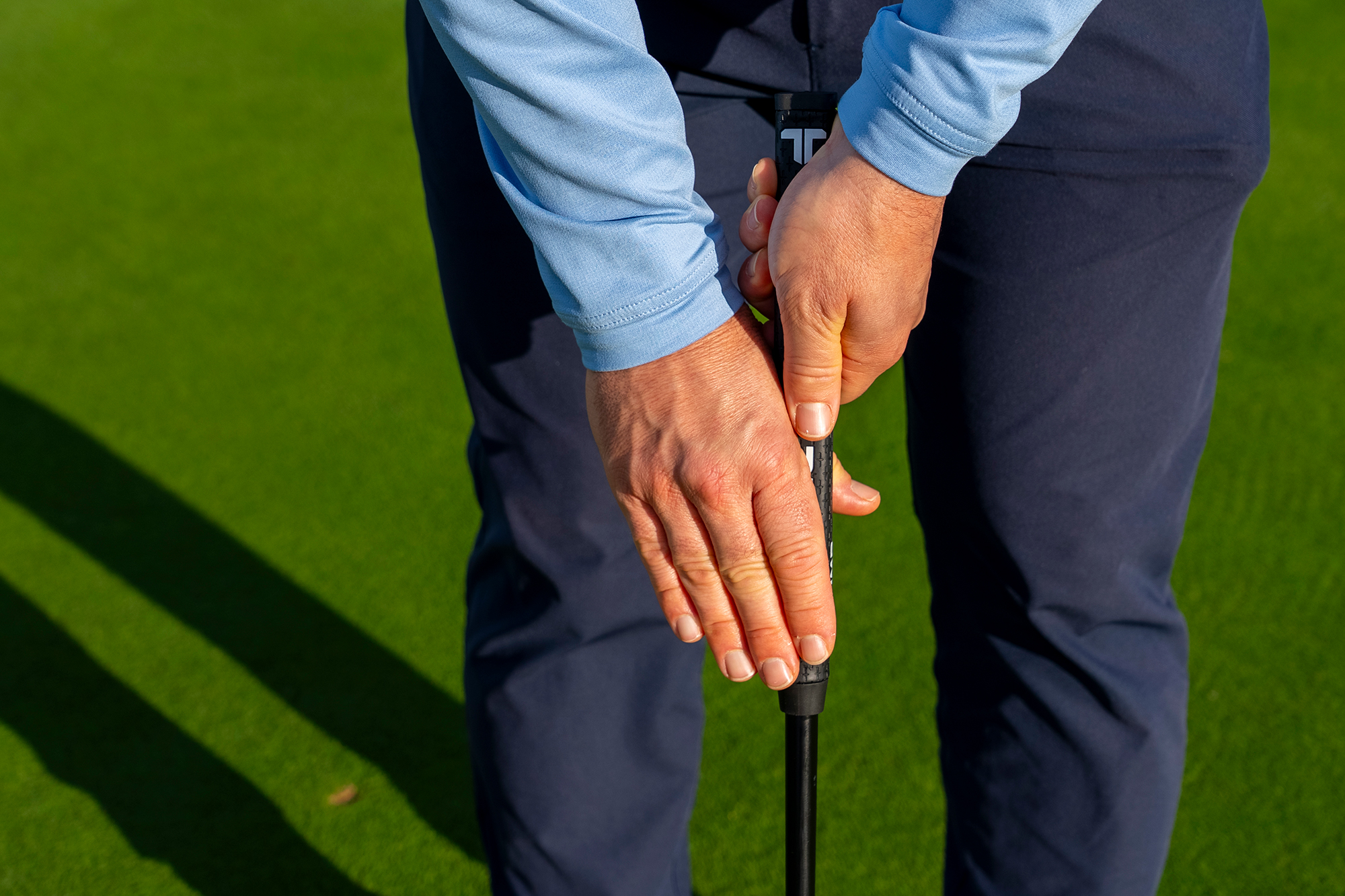
The claw is an excellent option, especially on short putts, for golfers who struggle to coordinate face rotation and suffer from pushes or pulls.
It works by altering the trail-hand position through forearm pronation, which often stabilises the rotation of the trail arm.
To set it up, start in a conventional grip and remove the trail hand, then pronate the forearm (turn it anticlockwise for a right-hander) until the back of the hand faces away from you.
Let the trail arm hang long, with the thumb placed on the back of the grip and the trigger finger resting lightly along the front. These are your feel receptors.
Prayer Grip
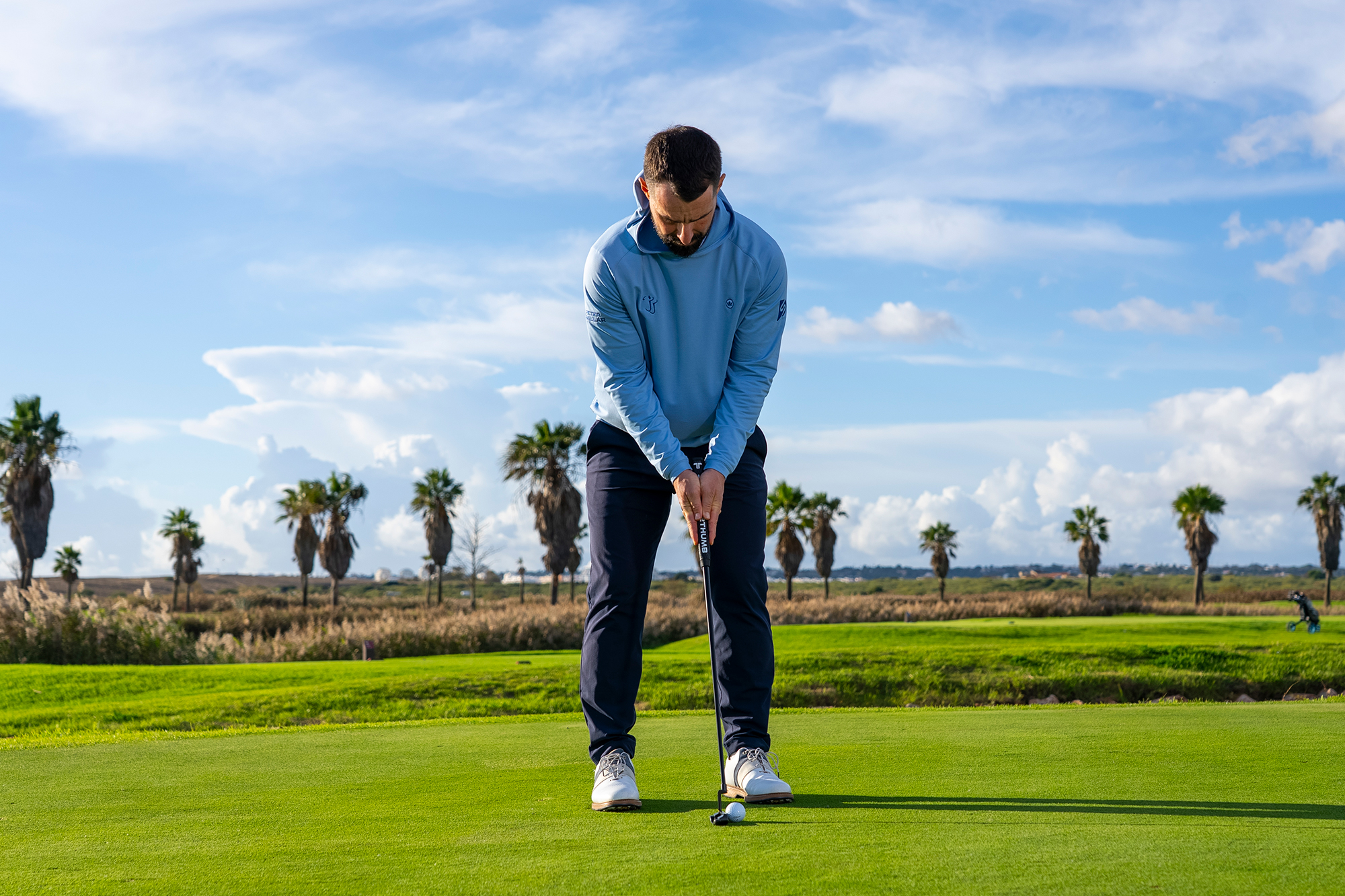
The prayer grip encourages a torso-driven stroke, which may help golfers who struggle to coordinate arm motion.
Place your hands on either side of the grip in a palm-to-palm ‘prayer’ position and wrap the fingers behind – you may overlap or interlock the fingers at the back.
You will probably need a larger grip for this style. Grip and shoulder tension typically increase with the prayer grip to promote stability and a sense of connection, though this can slightly reduce feel.
Keep your tension consistent and allow your head to stay centred as you pivot through the stroke.
What Grips Have You Tried?
The putting grip is a very personal thing, but crucially important to success on the greens, so we'd love to know which method you currently use and which you have tried in the past.
Also, If you have any question for James, or you want to share your experience of how his advice has helped your game in the 2026 season, drop us a comment below and we'll get back to you!