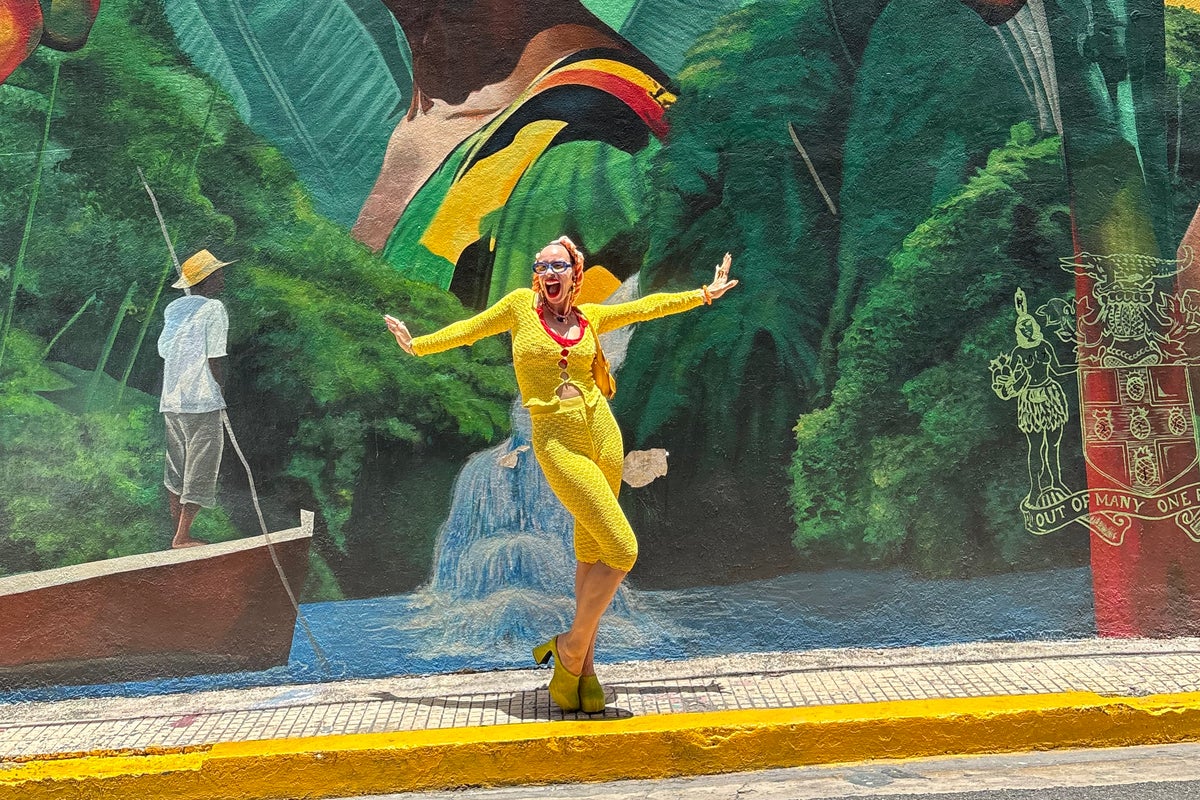
"Mi pic up, mi gaan." I've picked her up. We're on our way. That was the whole conversation when my driver’s phone rang. And something in me – some tightly wound, overthought, over-planned part of me that had been bracing for this trip for weeks – just let go. I sank back into that seat and I thought, that's it. I'm here. I've actually arrived.
Before I could process anything further, the driver pulled over to his mate on the side of the dual carriageway and I was handed a fresh coconut, machete-cracked open right there on the side of the road – warm from the sun, sweet and utterly perfect. The reggae on his radio didn't pause. The Kingston air didn't wait.
Me, I’m half Jamaican, Yorkshire born, reggae-raised, gospel-churched some Sunday mornings by a Grandma who speaks Patois like music. I sat there in that car drinking my coconut, and I felt, for the first time in my life, completely, entirely, bone-deep grounded. Belonging.
“Welcome home,” he said.
Read more: How Jamaica is fighting back six months on from Hurricane Melissa
Kingston: Where the soul gets fed
The Clarendon parish of Kingston is where my Grandma was born and raised. Kingston doesn't ease you in. It doesn't do gentle introductions or quiet first impressions. Kingston announces itself in surround sound and saturated colour and you either get on the frequency or you stand on the pavement overwhelmed.
I got on the frequency.
Reggae is not background music to me; it is the soundtrack of my childhood, both at my mum’s in my white British household, and the sound that filled my Jamaican grandma’s household. So when it came rolling through the thick Kingston air and I’m there singing word for word, something happened in my chest that I genuinely wasn't prepared for. Emotion arrived fast and unannounced. I've been to other places in the Caribbean before. I've sat on beautiful beaches and eaten beautiful food and felt that lovely, particular holiday loosening in my body. But this? This was something else entirely. This was next level. This was recognition.
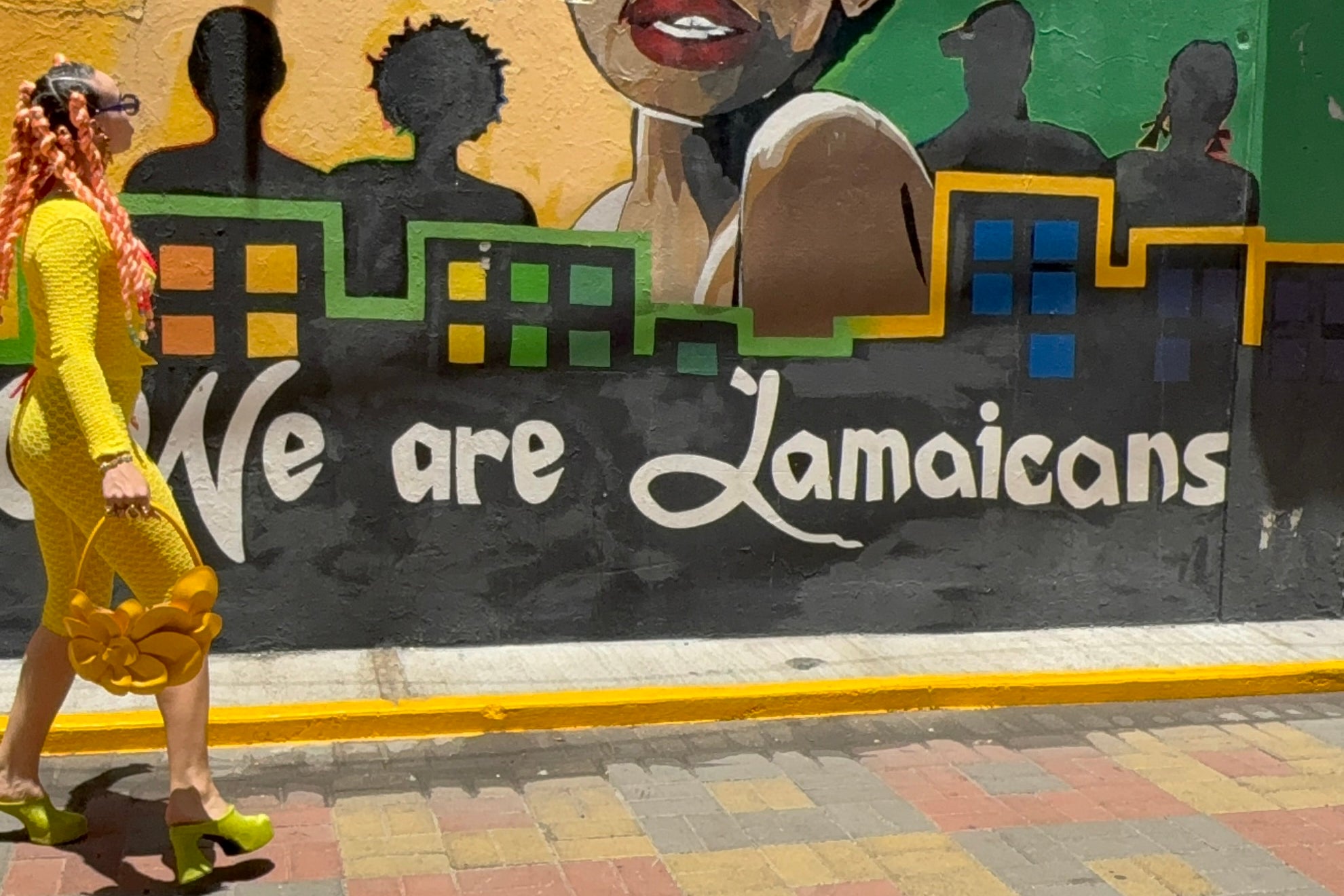
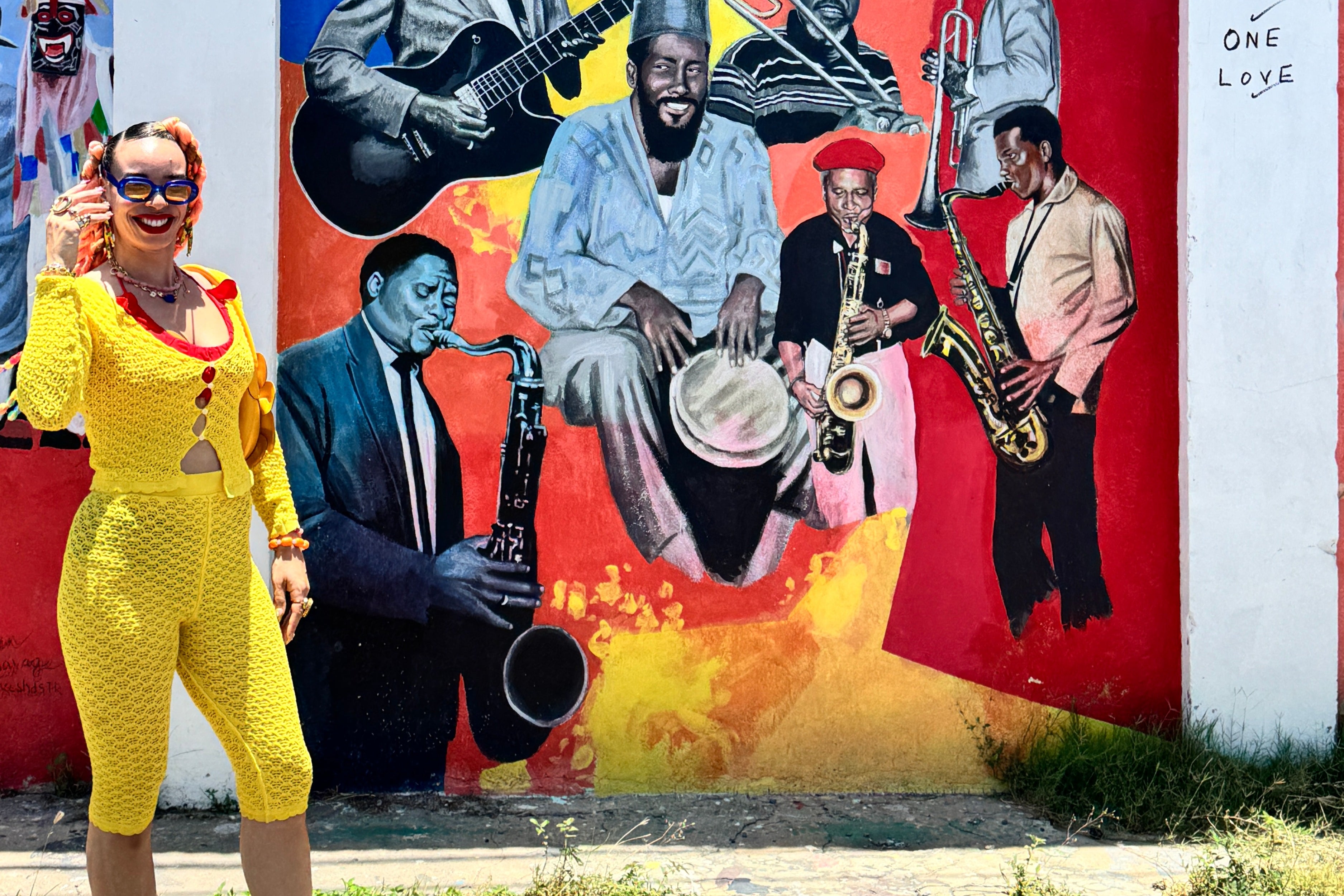
I had barely found my footing before I was standing before the Water Lane Murals, in the Kingston Art District – a sprawling, sun-drenched corridor of street art that stopped me completely still with a huge smile on my face. Enormous faces gazed back at me. Hands reached. Histories spoke. I thought about my grandma. I thought about my dual heritage and my childhood. How my two worlds fused beautifully. Colour, sound, shape, tone, texture. Everything I use to navigate the world. All of it, right here.
The Gallery: Where the walls speak
As a cultural communicator, I needed to understand the deeper architecture behind what I was seeing. So I sat down with Dr Nadine Boothe-Gooden, director of the National Gallery of Jamaica, a woman who speaks about Jamaican art with precision and fire. Sharp and warm, she is utterly uncompromising on why this work matters.
"I think one of the most remarkable things about Jamaican artistic identity is that it has never been static," she tells me. "It is constantly evolving while still remaining deeply rooted."
Walking the collection with her is walking through a living negotiation: history, survival, beauty, spirituality, politics, migration, joy, self-definition, all visible on canvas, in sculpture, in illustration. Earlier works have wrestled with nationhood and independence. Contemporary Jamaican artists now engage global conversations, climate anxiety, gender, diaspora, memory and technology, through a lens that is unmistakably, irreducibly Jamaican.
"The defining shift is that the world is finally beginning to understand that Jamaican culture is far more intellectually and artistically layered than it has often been portrayed," Dr Nadine says. "For years, Jamaica's global image was dominated by music and tourism, but now there is growing curiosity about the deeper cultural ecosystem behind that influence."
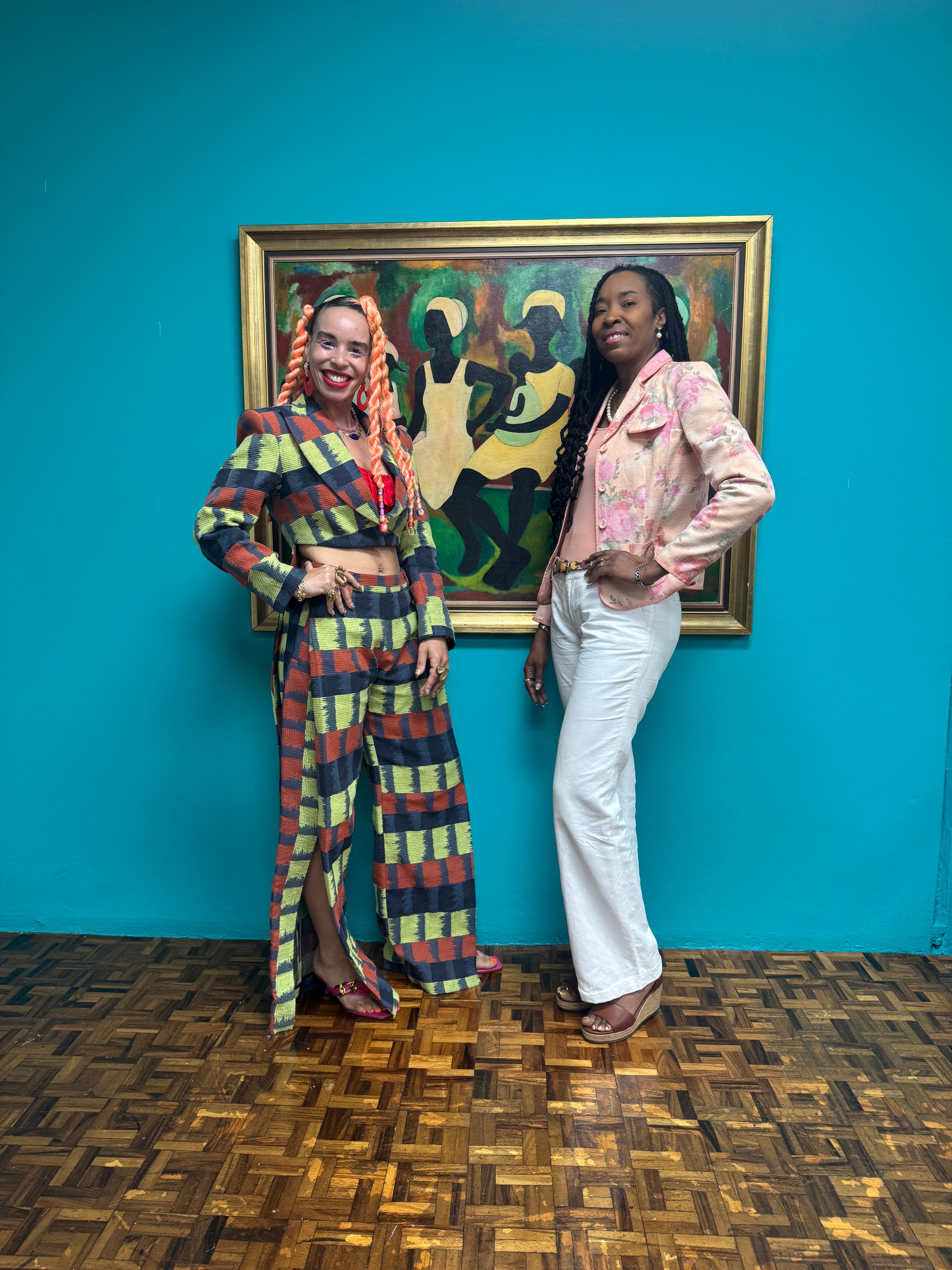
Kingston's rawness, its creative immediacy, the authenticity many major art capitals have quietly traded away, is exactly what's drawing people in. Visibility, she stresses, must never mean simplification.
She says: "Our responsibility is to resist simplifying Jamaica for international consumption. Jamaica is sophisticated, contradictory, deeply intellectual, deeply spiritual, and profoundly creative all at once."
For me, half inside this culture, half outside of it my whole life, these words land somewhere deep.
It is while walking the gallery with Dr Nadine that I stopped in front of Edna Manley's Negro Aroused and something sparked. Carved from dark mahogany in 1935, the figure emerges from oppression, gaze cast heavenward, embodying struggle and almost unbearable hope. As a sculptor myself, I felt the conversation she was having with her material. That is not technique. That is reckoning. That is someone working something out through their hands.
She told me I could go find it at Kingston Harbour.
Read more: I discovered a foodie paradise in the heart of the Caribbean
The Harbour: Where the conversation continues
On the Kingston waterfront, the large-scale bronze replica of Negro Aroused stands facing the sea and it commands. The figure rises from the earth, hands clasped, gaze turned skyward in an expression of determination and awakening. Rooted yet striving, present yet reaching.
There is something that happens when one sculptor encounters the work of another, especially work of this magnitude, this conviction. You feel the decisions in your body. The arms and hands are disproportionately large, posed in front of the figure in a way that is somehow both graceful and forceful, their thickness emphasising power, the lines pulling your gaze upward to the outstretched neck and lifted face. Edna Manley made this figure insist on being seen. And standing there on that harbour, with the sea behind it and all of Kingston at its back, that insistence felt like the whole city speaking in one voice.
Power, resilience, emergence. This is what Jamaican art does, it doesn't decorate a room, it starts a conversation. There I was, in that moment, entirely willing to be changed by it.
The National Museum: History that belongs to all
Jonathan, director of the National Museum of Jamaica, opens our conversation with a warmth that is instantly infectious. The main demographic of the museum is working-class Jamaican school kids arriving wide-eyed, encountering their own history in three dimensions for the very first time. "They find themselves on a school trip," he tells me and the simplicity of that line stopped me in my tracks. Experiential learning. Culture as curriculum. I was also finding the other half of myself.
The shared history between Britain and Jamaica is written into the very architecture. I was driving through Lucea, later in my trip and spotted Georgian buildings standing incongruously in the Jamaican sun. Beautiful. History doesn't resolve, but it can be examined honestly by the children who inherit it.
Emancipation Park: The portal
My last stop in Kingston was Emancipation Park and it felt exactly like what it is: a portal. A threshold you cross and come out of differently.
Opened the day before Emancipation Day 2002, every detail is deliberate – it’s a constant, living tribute to the ancestors brought to this island in chains.
At the entrance, you see her: ‘Redemption Song,’ Laura Facey's eleven-foot bronze sculpture, a Black man and woman, nude, facing each other, both gazing skyward. Inspired by Marley's own words: "None but ourselves can free our minds." Facey said she wanted to communicate "transcendence, reverence, strength and unity”. As a fellow sculptor, I felt every millimetre of that ambition.
I walked out lighter than I'd felt in years. Rooted, enriched, connected, then released. I'd found what I came for, in the murals, the galleries, the harbour, the conversations, the coconuts, the car.
My soul had been fed. Now I was free to go.
Read more: This Caribbean island is at its most joyful in the off-season
Round Hill: Where the soul gets restored
Then came Round Hill, and with it, the exhale.
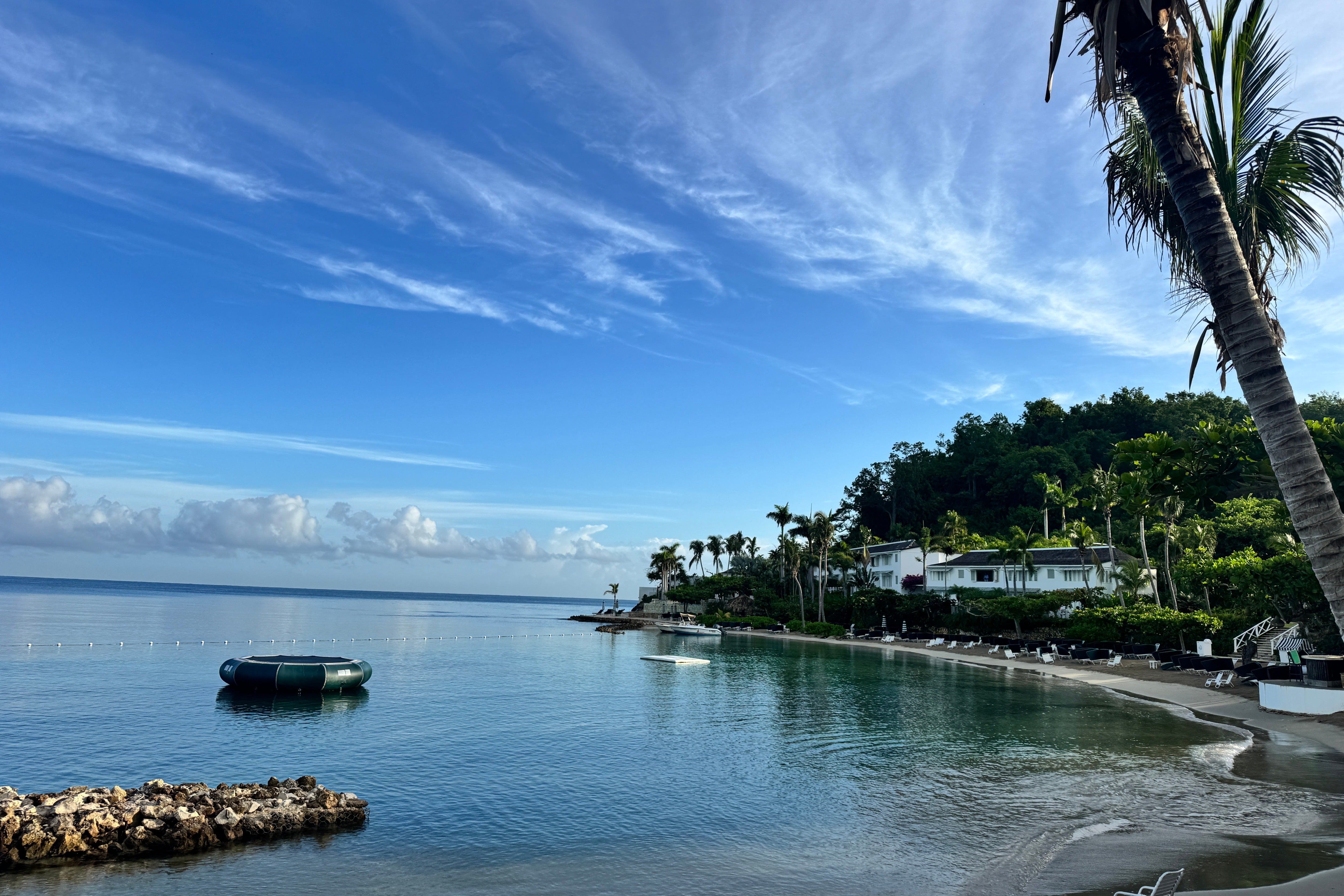
Perched on its own private peninsula above a glittering Caribbean cove, Round Hill Hotel and Villas, a member of The Set, operates at a frequency modern travel has almost forgotten: timeless, unhurried, entirely itself. Oceanfront rooms, suites and the cocktail bar are distinctively designed by Ralph Lauren.
This is not a place that performs elegance. It just is elegant. Understated luxury in the truest sense: flowers flowing in the sea breeze, food that tastes like it knows exactly where it came from, warmth that can't be trained into anyone. It either lives in you or it doesn't. At Round Hill, it lives in everyone.
I arrived still buzzing with Kingston's electricity, reggae looping in my head, murals bright behind my eyes, and Round Hill didn't ask me to leave any of that at the door. It welcomed me with a cold towel, a rum punch and more art and style peppered throughout.
I sat. I smiled. I slept like someone who had finally arrived after an extraordinarily long journey. Because that is exactly what I had done.
Sadie travelled as a guest of The Set and Visit Jamaica.