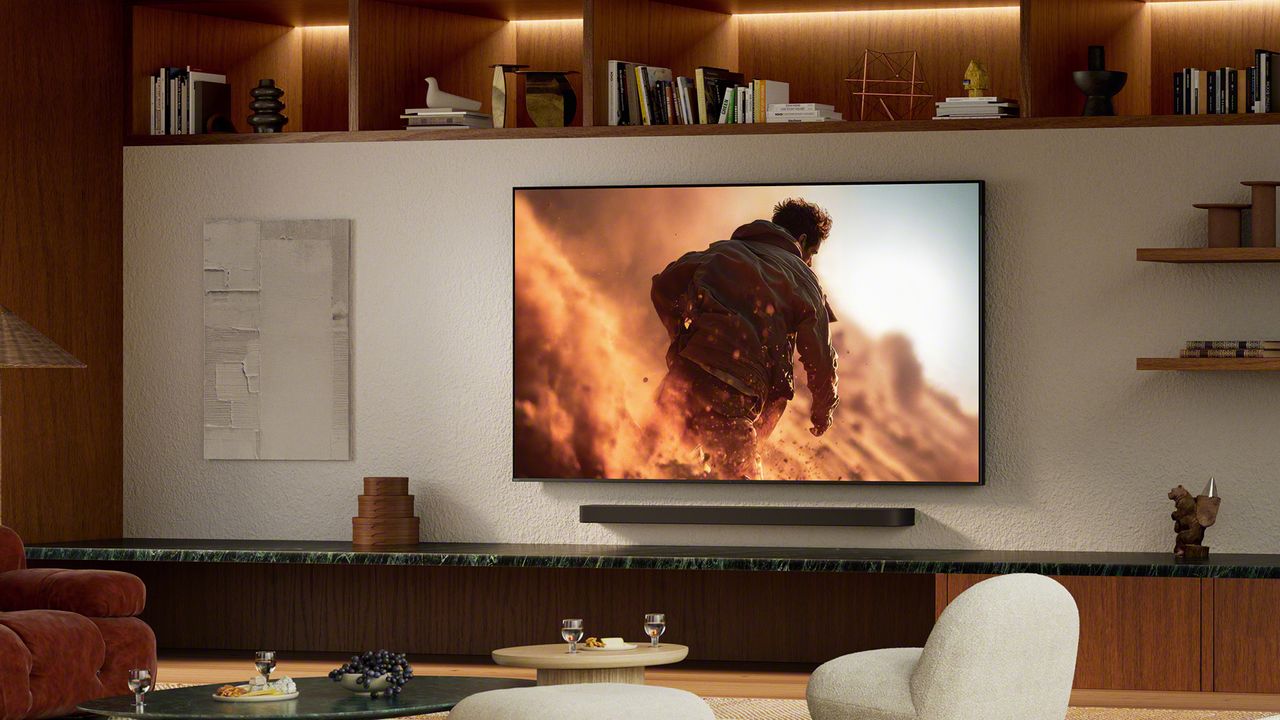
After a week of testing it with the darkest scenes I could find, the Sony Bravia 7 II True RGB TV made me reconsider what today’s TVs are actually capable of in low light. I lined up the usual stress‑test material — everything from “The Batman” to “House of the Dragon” — and watched it alongside my Samsung Neo QLED TV to see how each set handled the same challenges. I wasn’t trying to crown a winner right away; I just wanted to see how differently two modern TVs approach the same problem.
In our Bravia 7 II review, we praised the TV for its ability to deliver "really deep blacks" alongside "precisely managed highlights", but its handling of contrast goes deeper than that — what stood out to me was how the Bravia 7 II's True RGB backlight system treated near‑black detail.
Even before digging into side‑by‑side comparisons, it was clear Sony’s Bravia 7 II had a distinct way of presenting dark scenes that didn’t rely on simply brightening them. That contrast with the Mini LED-backed Samsung TV became more noticeable the longer I watched.
The main takeaway is that the Bravia 7 II doesn’t try to reshape dark scenes to make them easier to see — it leans into how they were graded. Sometimes that means a scene stays intentionally dim; other times it reveals details that are easy to miss on other sets. Taking into account how difficult it is to accurately capture the colour and brightness of all RGB TVs in photos, here's how the Bravia 7 II handled the darkest scenes I could throw at it.
‘House of the Dragon’
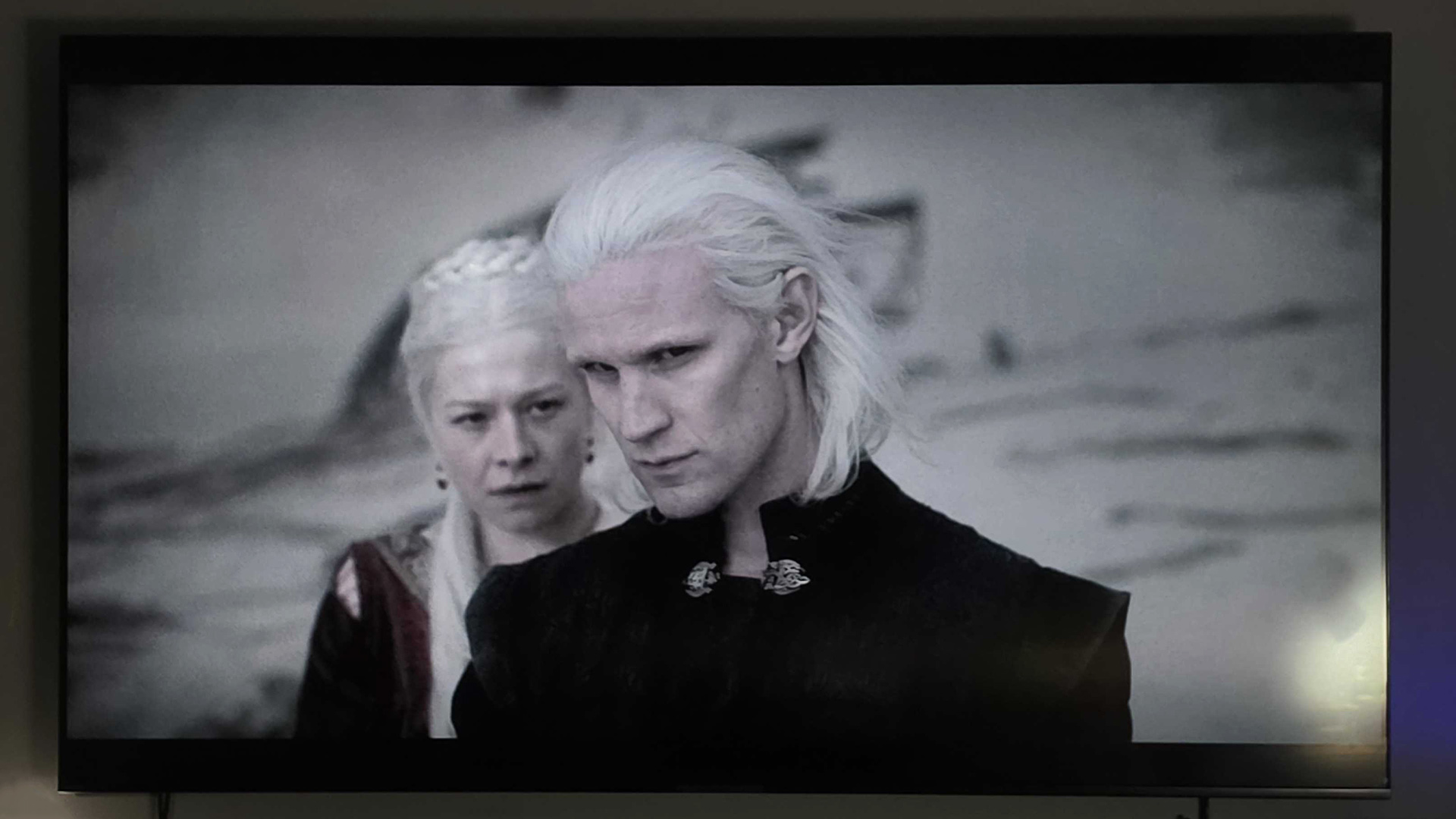
Like many people who watched the first season of HBO’s “House of the Dragon”, I was incredibly frustrated by one episode that was almost impossible to sit through. I’m talking about episode seven, “Driftmark” — the one filmed and graded so darkly that I could barely tell what was happening on screen, even while watching on Samsung’s flagship at the time, the QN900A Neo QLED 8K TV.
In his testing, Vincent Teoh from the YouTube channel HDTVTest revealed that some sections of the episode “barely went above 1 nit” of brightness, so it’s no surprise that my television’s backlighting system went haywire in an attempt to compensate for the darkness on display, resulting in extreme haloing and light bloom. The episode also reportedly caused many OLED TVs to auto-dim until the image was almost totally black.
The backlash from viewers was so intense that showrunner Ryan Condal would eventually comment on the matter, telling Variety that future seasons would “take much more into account the fact that we are making the show for people’s television sets versus in a perfectly calibrated movie theater environment.” In other words, the viewing experience was less than ideal for those of us without super expensive reference monitors.
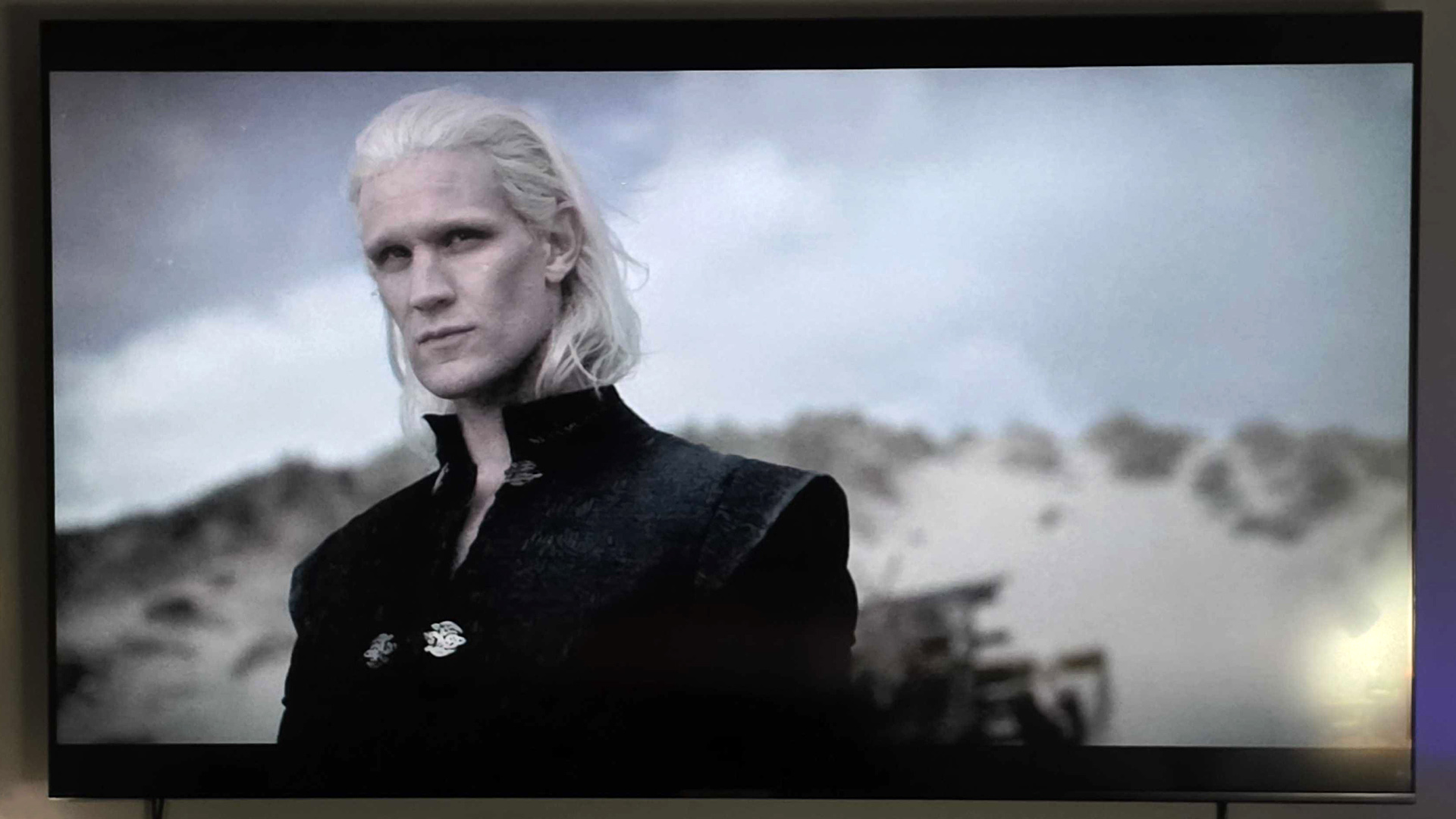
Naturally, this particular episode was my first stop in testing the Bravia 7 II’s handling of dark scenes. Taking into consideration Sony’s claims that its new True RGB TV range is factory-calibrated, I went in expecting the Bravia 7 II to do a decent job. Sure enough, I was pleased by how I could now make out what was happening in one of the most problematic scenes, which features two characters walking and talking on a beach. While the scene was clearly filmed day for night and then graded down for the sake of additional darkness, shadow detail was now much more visible, and I was able to see the characters’ faces without much issue. Don’t get me wrong — it’s still a very dark scene, but the murkiness and overcompensating backlight from my previous experience was gone.
The Bravia 7 II’s exceptional tone‑mapping also deserves credit here. Sony’s XR processor does a good job of preserving what the filmmakers actually meant you to see, especially in tougher HDR scenes. Instead of letting deep shadows swallow everything, it balances the contrast just enough so textures in faces or the outline of a creature in a night shot remain visible without brightening the whole frame.
‘The Batman’
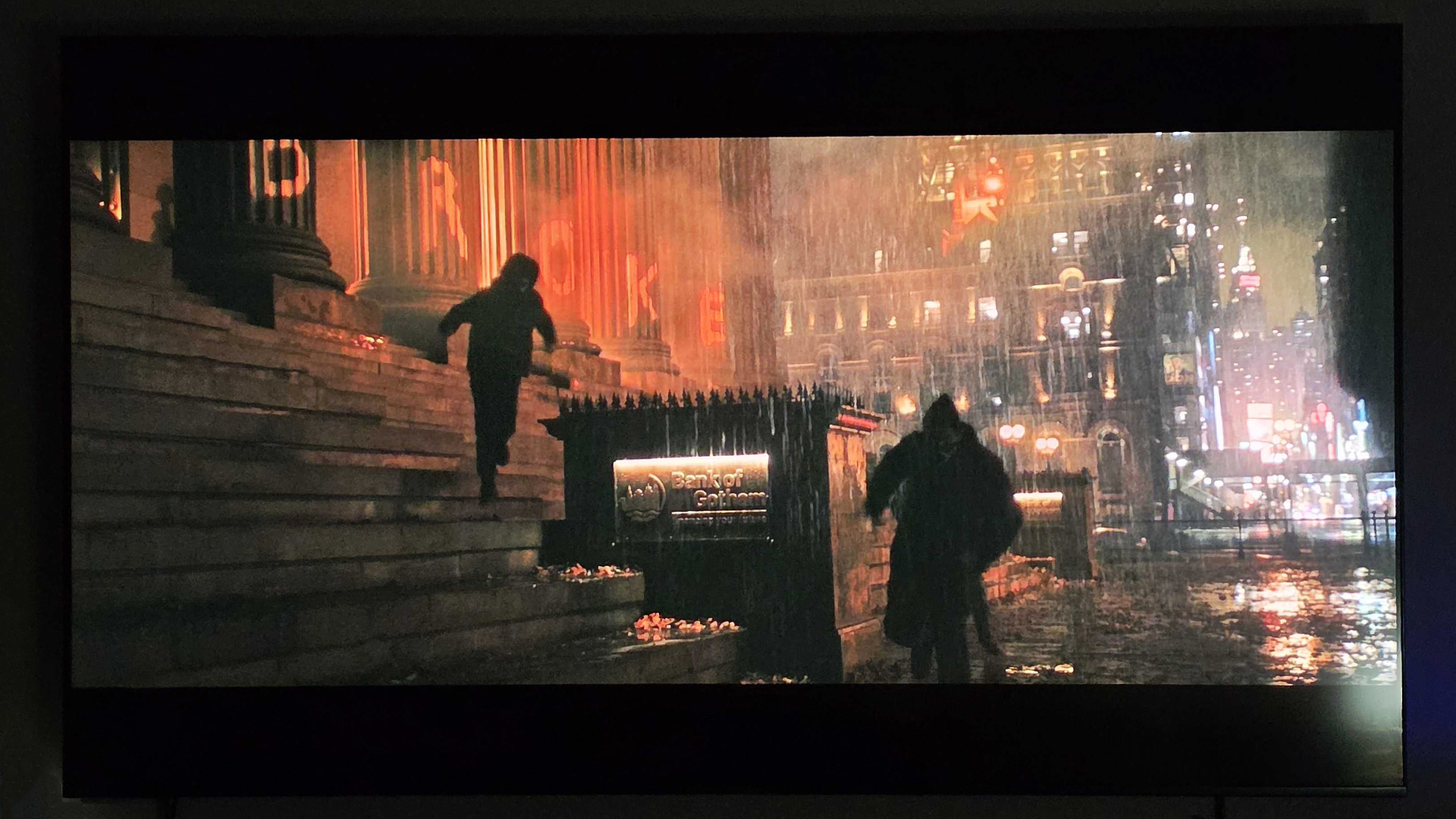
I absolutely loved “The Batman” when I saw it in theatres, and was excited to watch it again once it hit 4K Ultra HD Blu-ray. While my current Samsung QN900C Neo QLED 8K TV did a decent job displaying most of the film, it did struggle with some of its darker scenes. The opening train station brawl, in particular, was one that caused my TV to raise the brightness until blacks became somewhat grey and washed out.
Predictably, the Bravia 7 II handled this scene far better, revealing far more shadow detail without dulling the film’s contrast‑heavy mood. The moment when Batman slowly emerges from the darkness to confront a group of thugs has always been a trouble spot on the aforementioned Samsung TV, yet here it finally looked as dark and dramatic as I imagine the filmmakers intended.
It’s likely that Sony’s XR Backlight Master Drive, which uses a proprietary dimming algorithm, played a big part in keeping “The Batman” moody and dark without letting the shadows turn into a murky blur. The automatic switch to Dolby Vision Bright could also have helped, lifting just enough detail out of the deepest parts of the frame without noticeably changing the film’s overall tone.
‘Only God Forgives’
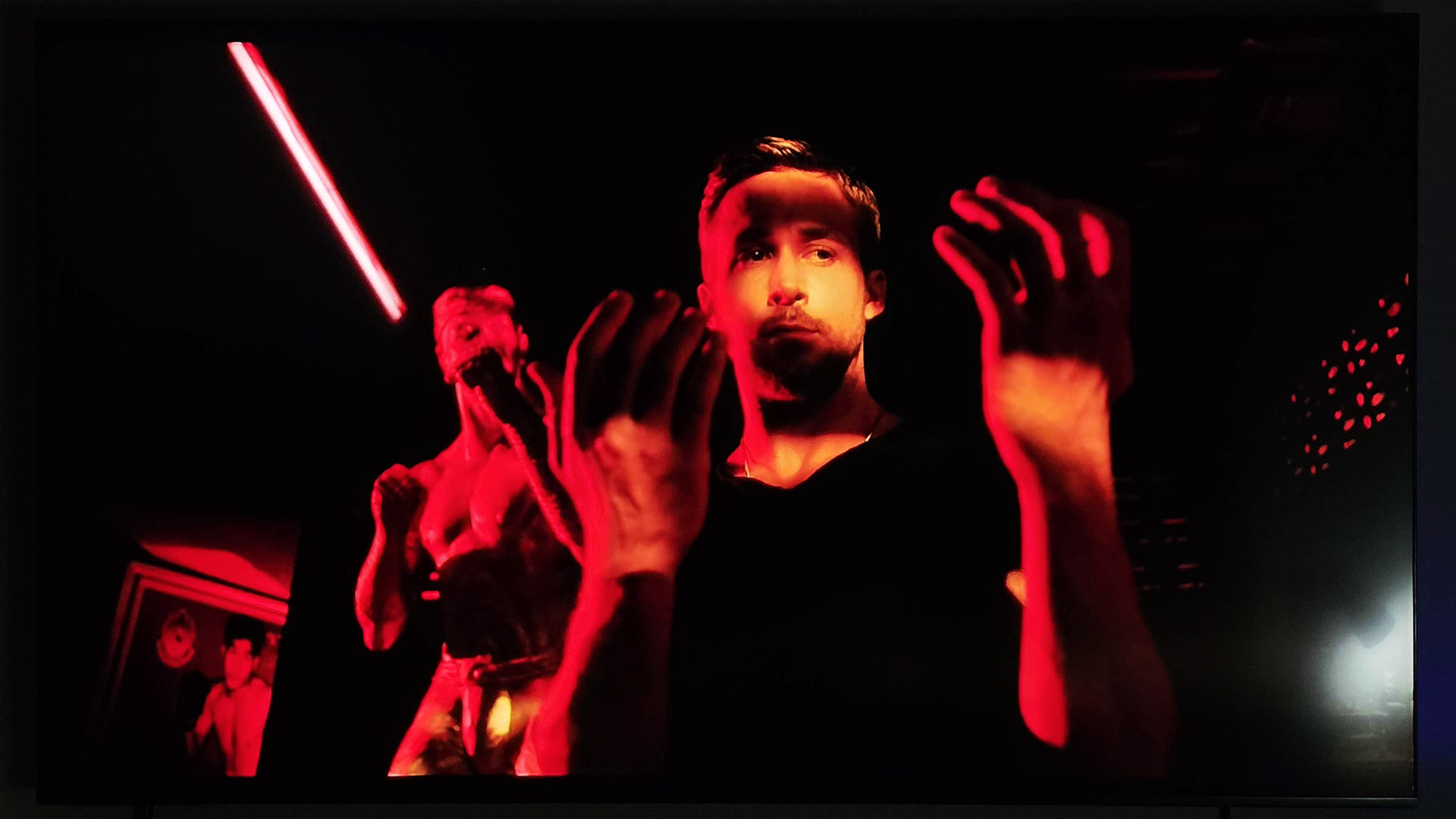
Next, I moved to a film that’s notoriously tough on both OLED and Mini‑LED displays: “Only God Forgives”, from director Nicolas Winding Refn. Its relentless swings between pitch‑black shadows and hyper‑saturated neon highlights often expose local‑dimming delays, where the backlight or pixels can’t react quickly enough, creating faint ghosting that pulls you out of the moment.
The film’s heavy use of harsh red lighting against deep darkness also pushes the red channel hard, sometimes leading to clipping that bleeds into surrounding objects and wipes out fine detail along edges and contours.
A big part of why these issues show up is simply how most TVs generate brightness in the first place. Mini‑LED sets rely on a white backlight, and WRGB OLEDs boost luminance with a white subpixel. When a scene suddenly demands intense, saturated colour — especially neon red — the TV often leans on that white source to hit the required brightness. In a film this stylised, that can wash out the purity of the colour, lift nearby blacks, and make edges look a little less clean than they should.
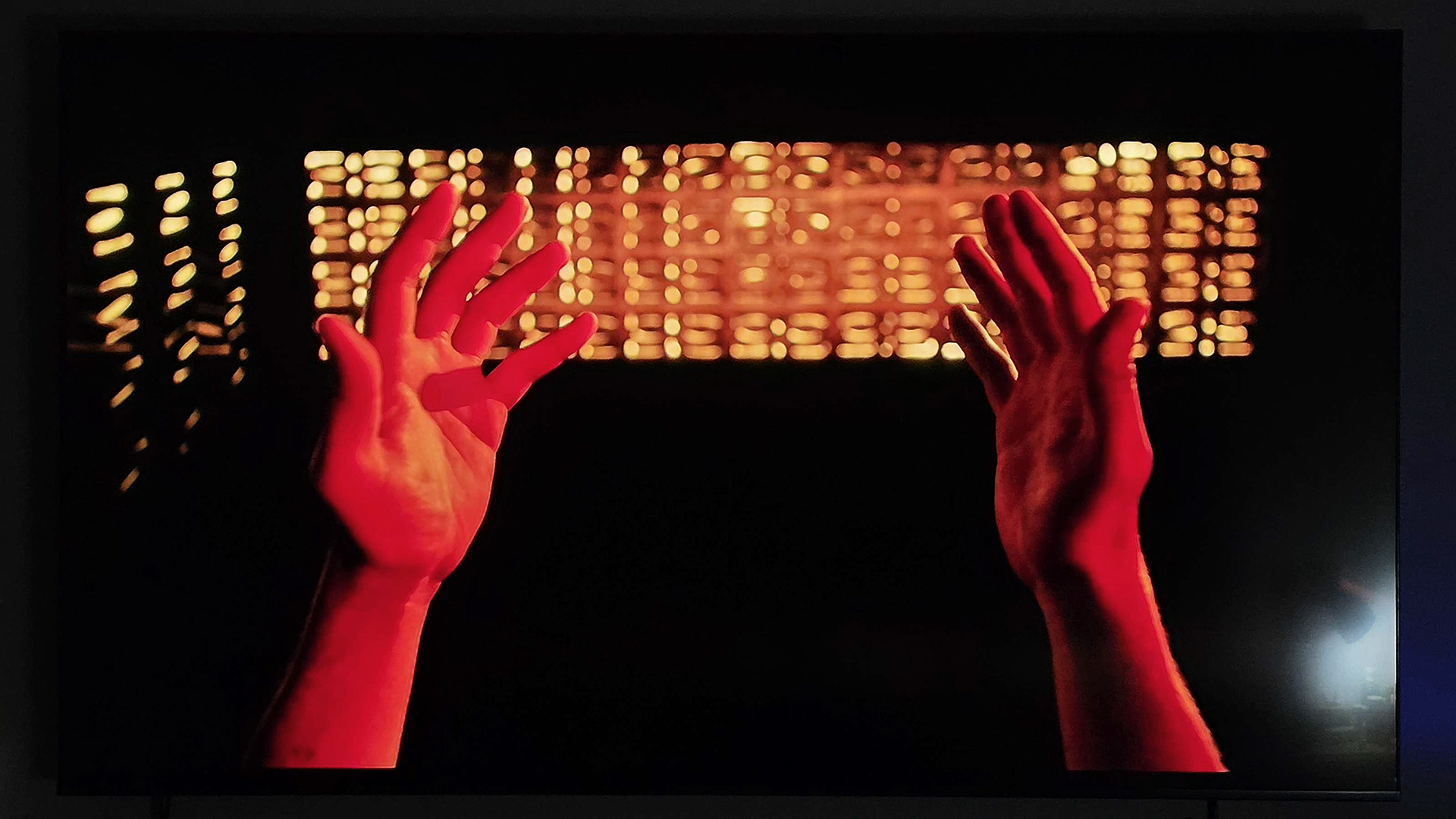
Unsurprisingly, the Bravia 7 II’s ability to drive pure red, green, and blue light straight to the screen — without relying on any white backlight boost — made “Only God Forgives” look exactly the way I imagine the director and his cinematographer intended. While it’s still very much a dark film, the red highlights looked vibrant and well‑defined, without any noticeable bleed into faces or surrounding objects when viewed in person (that nuance doesn’t always translate perfectly in photos — as I mentioned earlier, TVs this bright and saturated can be surprisingly tricky to capture accurately).
In the end, the Bravia 7 II handled the darkest, most demanding scenes even better than I expected. It kept deep contrast intact while still pulling out the small bits of shadow detail that usually disappear on other sets, all without brightening the image in a way that would undermine what the filmmakers were going for. And with its True RGB backlight system doing the heavy lifting, the Bravia 7 II comes across as a strong option for anyone who cares about accurate, well‑controlled dark‑scene performance — one that gets about as close to a reference‑monitor experience as the consumer TV space currently allows.