The Garmin Forerunner 170 just launched, and it has immediately established itself as one of the best running watches available thanks to its lightweight design, accurate tracking, and handy smart features.
It’s one of the more affordable Forerunner models in Garmin’s current line-up, offering some extra features compared with the entry-level Garmin Forerunner 70 and coming in substantially cheaper than the mid-range Garmin Forerunner 570.
However, perhaps the most potent intra-Garmin competition actually comes from older watches, like the Garmin Forerunner 265. While the Forerunner 265’s software isn’t as up to date as the Forerunner 170’s, it offers almost all the same features plus a few upgrades, and is often close to the Forerunner 170’s price in sales.
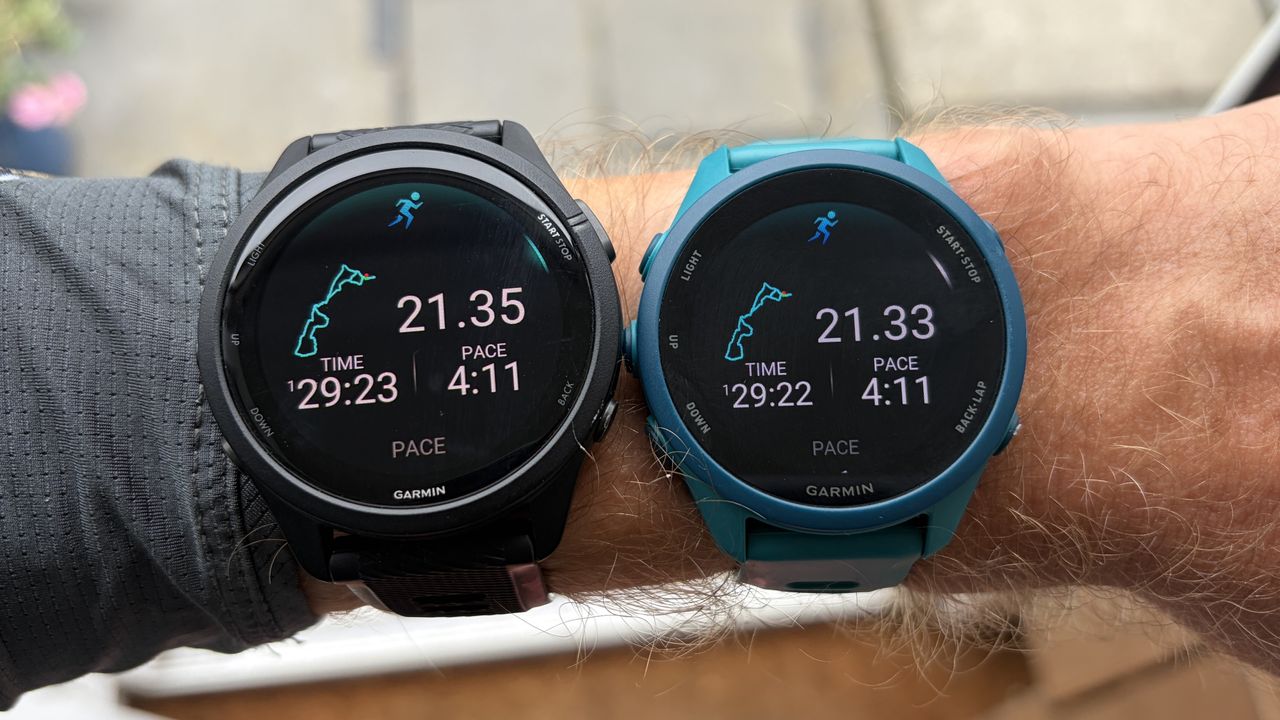
I’ve tested both watches extensively and compared them directly on a half-marathon run; here are the key differences you need to know about.
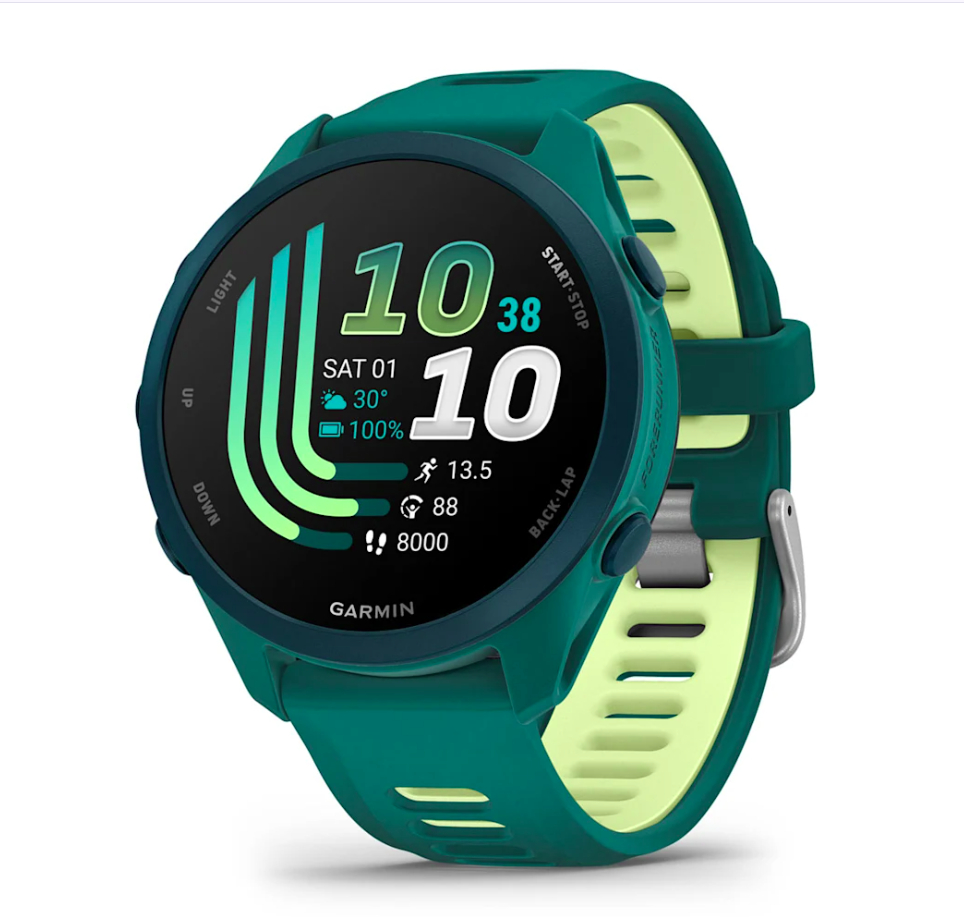
The new Garmin Forerunner 170 Music is a running-focused watch that packs in all of Garmin’s smart features, including music storage and NFC payments, alongside reliably accurate sports tracking and useful training analysis.
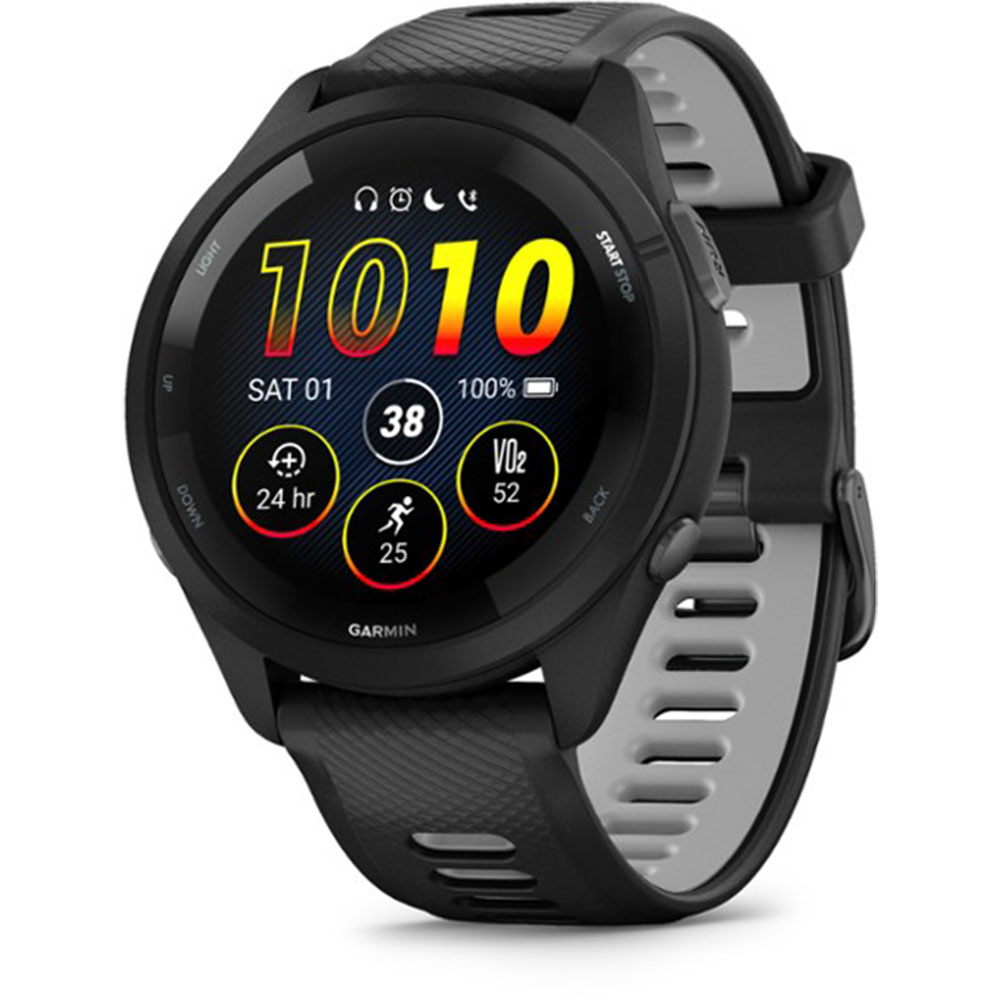
The Garmin Forerunner 265 is a full multi-sport watch that comes in two sizes. It’s an older model now, so it lacks the latest Garmin user interface, but it offers some upgrades on the Forerunner 170, like multi-band GPS, and is often reduced to around the price of the new watch in sales.
Garmin Forerunner 170 vs Garmin Forerunner 265: price
The Garmin Forerunner 170 comes in two models, one with music storage and one without. The standard Forerunner 170 costs $299/£259, while the music model is $349/£299. I’ll mostly be comparing the music model to the Forerunner 265 in this article, because the Forerunner 265 has music as standard.
While the Garmin Forerunner 265’s list price is much higher than the Forerunner 170’s at $449/£369, it’s almost always on sale somewhere, and tends to cost around $349-$379, though it has dropped to $299 in the past.
Garmin Forerunner 170 vs Garmin Forerunner 265: specs
Garmin Forerunner 170 |
Garmin Forerunner 265 |
|
Price |
$299.99/£259.99; $349.99/£299.99 (Music) |
$449/£369 |
Size |
42.6 x 11.9mm |
41.7 x 12.9mm (42mm); 46.1 x 12.9mm (46mm) |
Display |
1.2in 390 x 390 AMOLED |
1.2in 360 x 360 AMOLED (42mm); 1.3in 416 x 416 AMOLED (46mm) |
Bezel |
Plastic |
Plastic |
Screen |
Glass |
Glass |
Weight |
41g |
39g (42mm); 47g (46mm) |
Water resistance |
5ATM |
5ATM |
Battery life (watch mode) |
Up to 10 days |
Up to 15 days (42mm); Up to 13 days (46mm) |
Battery life (GPS) |
14 hours (all-systems, always-on) |
15 hours (42mm, multi-band, always-on); 14 hours (46mm, multi-band, always-on) |
Storage |
4GB |
8GB |
Garmin Forerunner 170 vs Garmin Forerunner 265: design and display
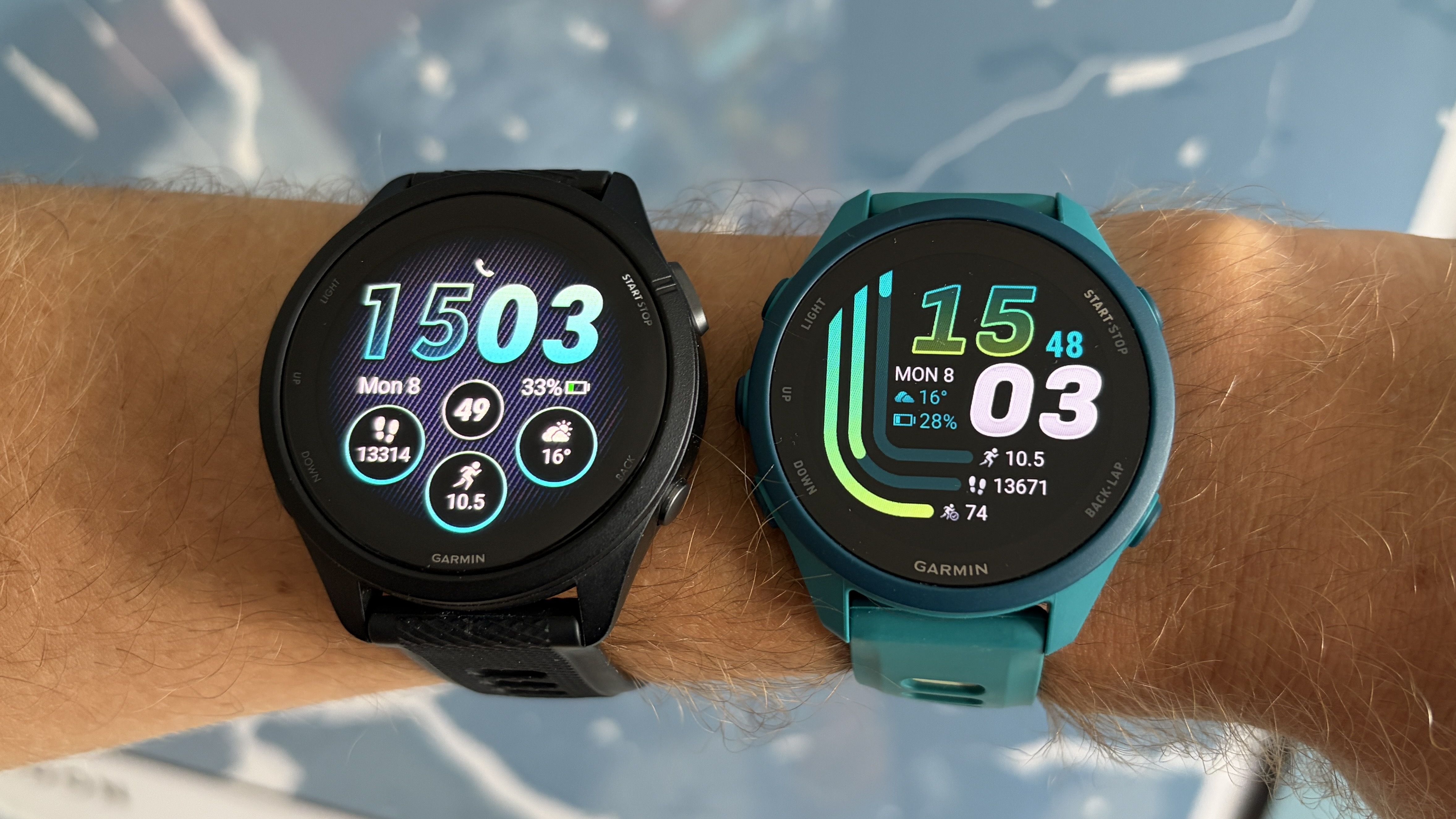
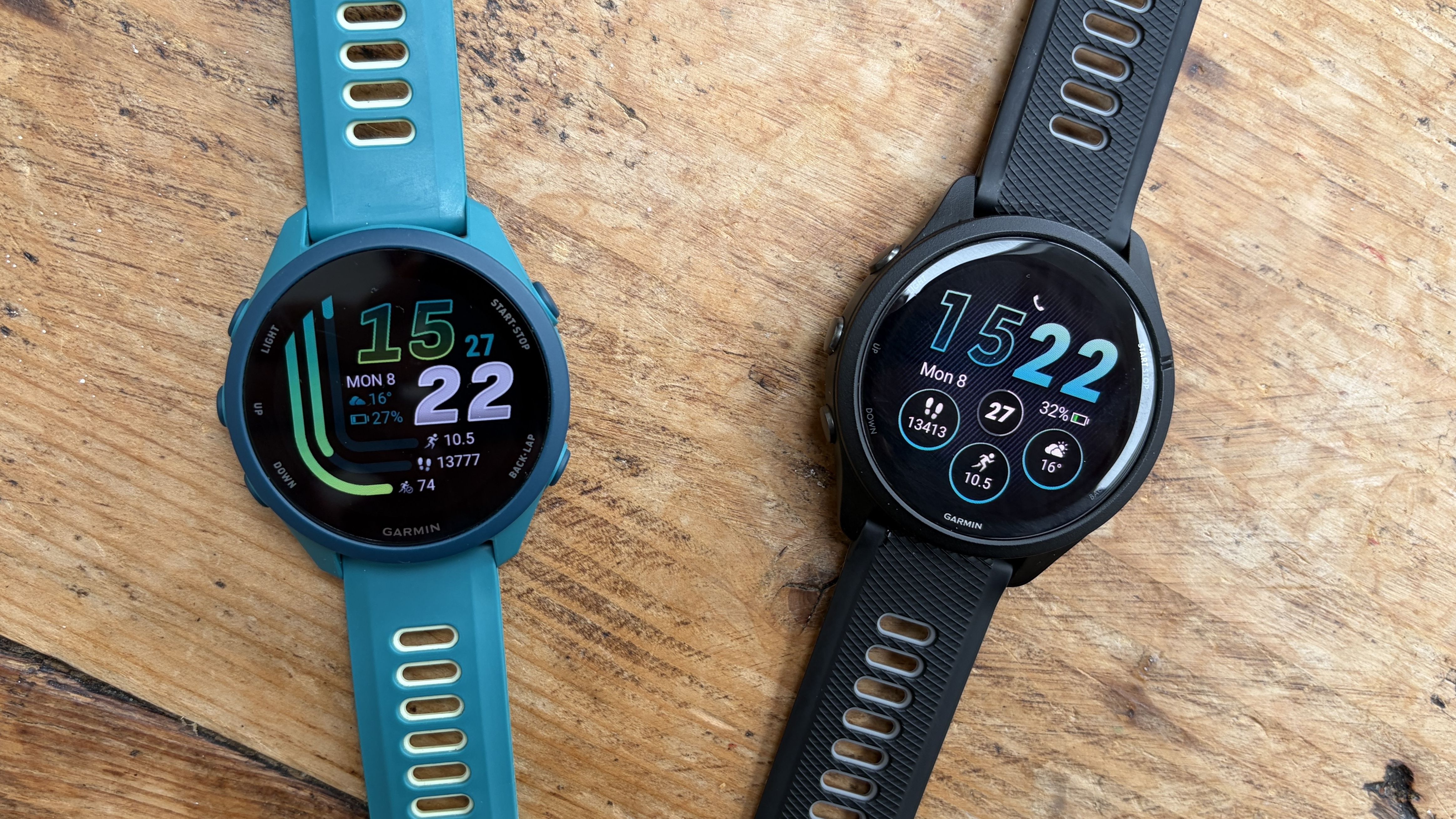
The Garmin Forerunner 170 Music comes in four colors and one size, with its 43mm case sitting between the two sizes of the Forerunner 265 available, which are 42mm and 46mm.
Both watches have bright AMOLED displays that I found easy to read in all conditions. You get a 1.2in display on the Forerunner 170, which is again in between the sizes on the Forerunner 265, which has a 1.1in display on the 42mm watch, and a 1.3in display on the 46mm.
You get the same Elevate Gen 4 heart rate monitor on both watches, which is not Garmin’s latest Elevate Gen 5, which is on models like the Forerunner 570 and Forerunner 970.
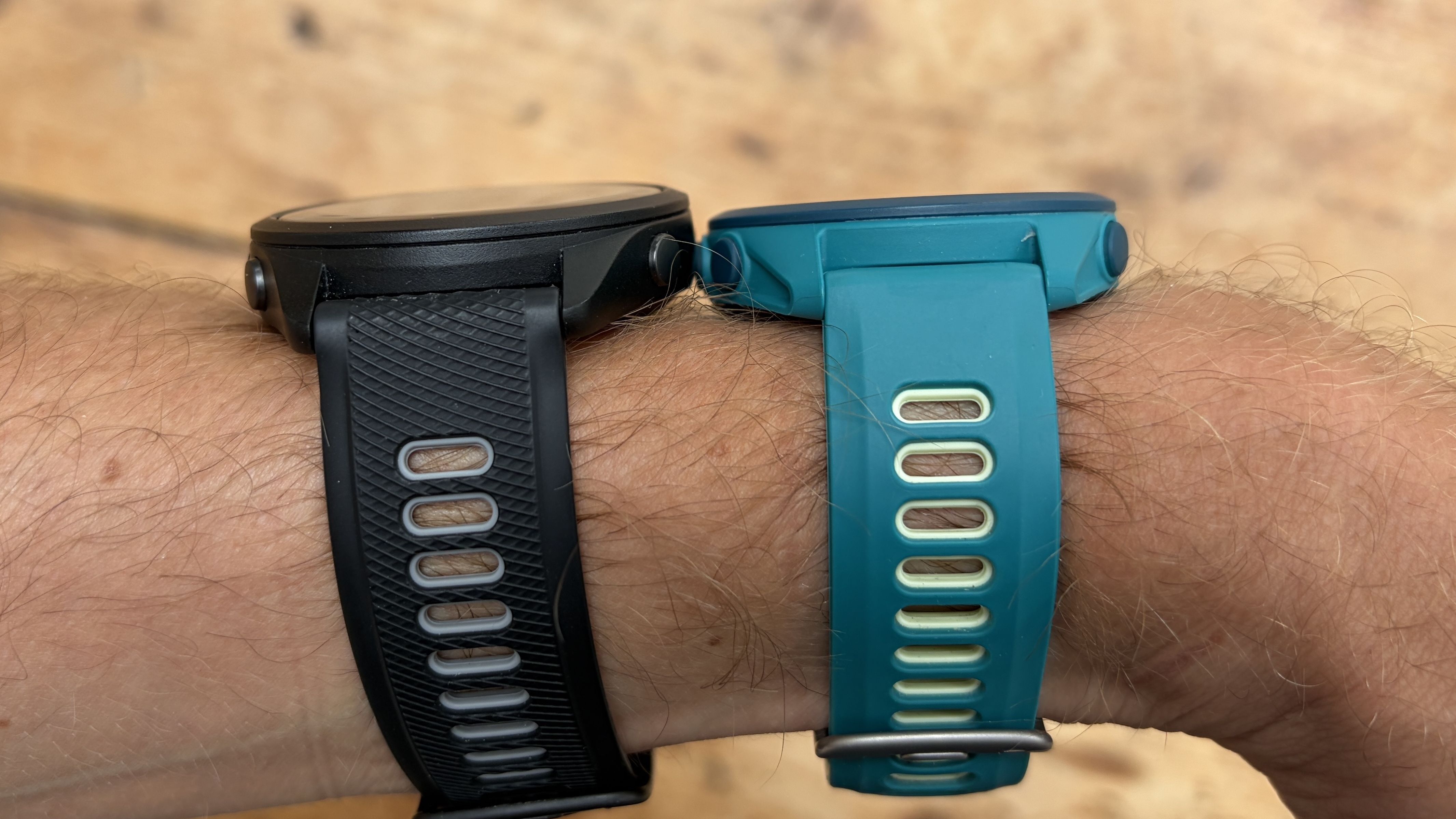
Both are lightweight watches with five buttons, and I found them both very comfortable to wear 24/7. I tested the larger Forerunner 265, which is noticeably bigger than the Forerunner 170, but with two size options in the 265 line-up, you can pick the one that suits you.
They mostly have the same sensors under the hood, with a barometric altimeter and compass, but the Forerunner 265 offers Garmin’s most accurate multi-band GPS mode, whereas the Forerunner 170 only offers all-systems GPS — this is still very accurate, but more on that later.
Both watches have the same 5 ATM water resistance rating and can pair with external sensors via both Bluetooth and ANT+, including cycling power meters.
The Forerunner 170 runs Garmin’s latest OS, which it shares with the Forerunner 570 and Forerunner 970. This isn’t just a visual upgrade on the Forerunner 265, but also means the Forerunner 170 gets access to new widgets like Garmin’s Sports Scores, Battery, and Stocks widgets.
Garmin Forerunner 170 vs Garmin Forerunner 265: sports tracking and training analysis
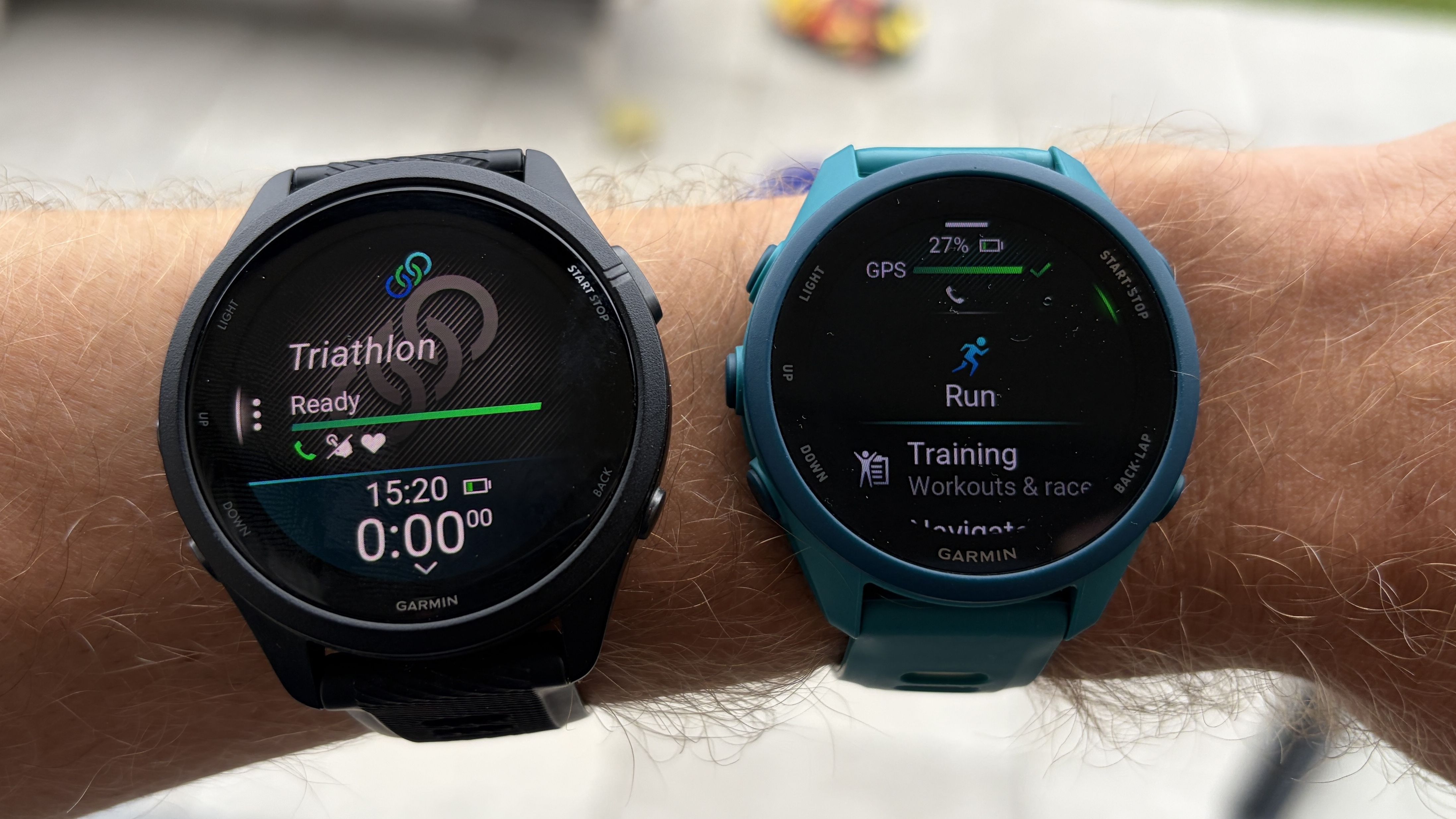
One of the main differences between the two watches is that the Forerunner 265 is a full multi-sport watch with a dedicated triathlon mode, something that the Forerunner 170 lacks.
You can still track all kinds of cycling and swimming workouts with the Forerunner 170; it just doesn’t have the triathlon mode, which allows for transitions within a single activity.
Both watches offer the same useful training analysis, including Garmin’s Training Readiness and Training Status features, but the Forerunner 170 has an extra in Garmin’s new Quick Workout feature.
You can use this to create a running workout in seconds, picking an intensity level and duration that suits then following the instructions from the watch during your sessions.
I gave the Quick Workout a try, and although it can set rather optimistic targets, it’s a good way to vary your training when not following a dedicated plan.
Garmin Forerunner 170 vs Garmin Forerunner 265: GPS & heart rate accuracy
Both watches have the same heart rate sensor on board, and during my extended testing comparing them to a chest strap, they have been similarly accurate.
That is to say, both are pretty reliable, especially in warm weather, and just sometimes lag behind the chest strap’s readings during intervals. Both were right in line with a chest strap during the half-marathon run I did, when I had the Garmin Forerunner 970 linked to the Garmin HRM 600.
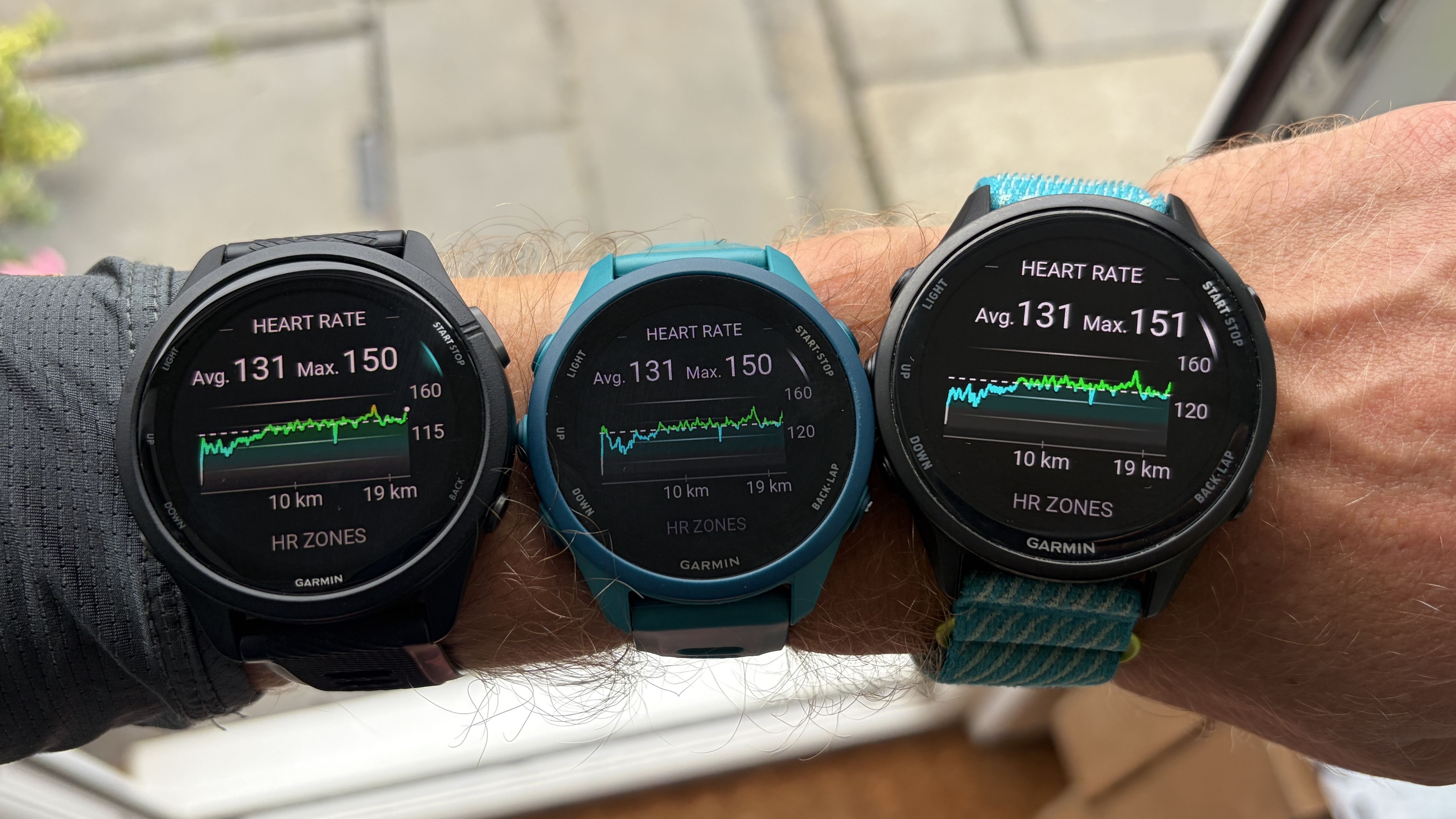
With regards to GPS accuracy, the Forerunner 265 offering multi-band GPS means that it should be more reliable overall, especially when tracking activities in city centers where tall buildings can scramble signals.
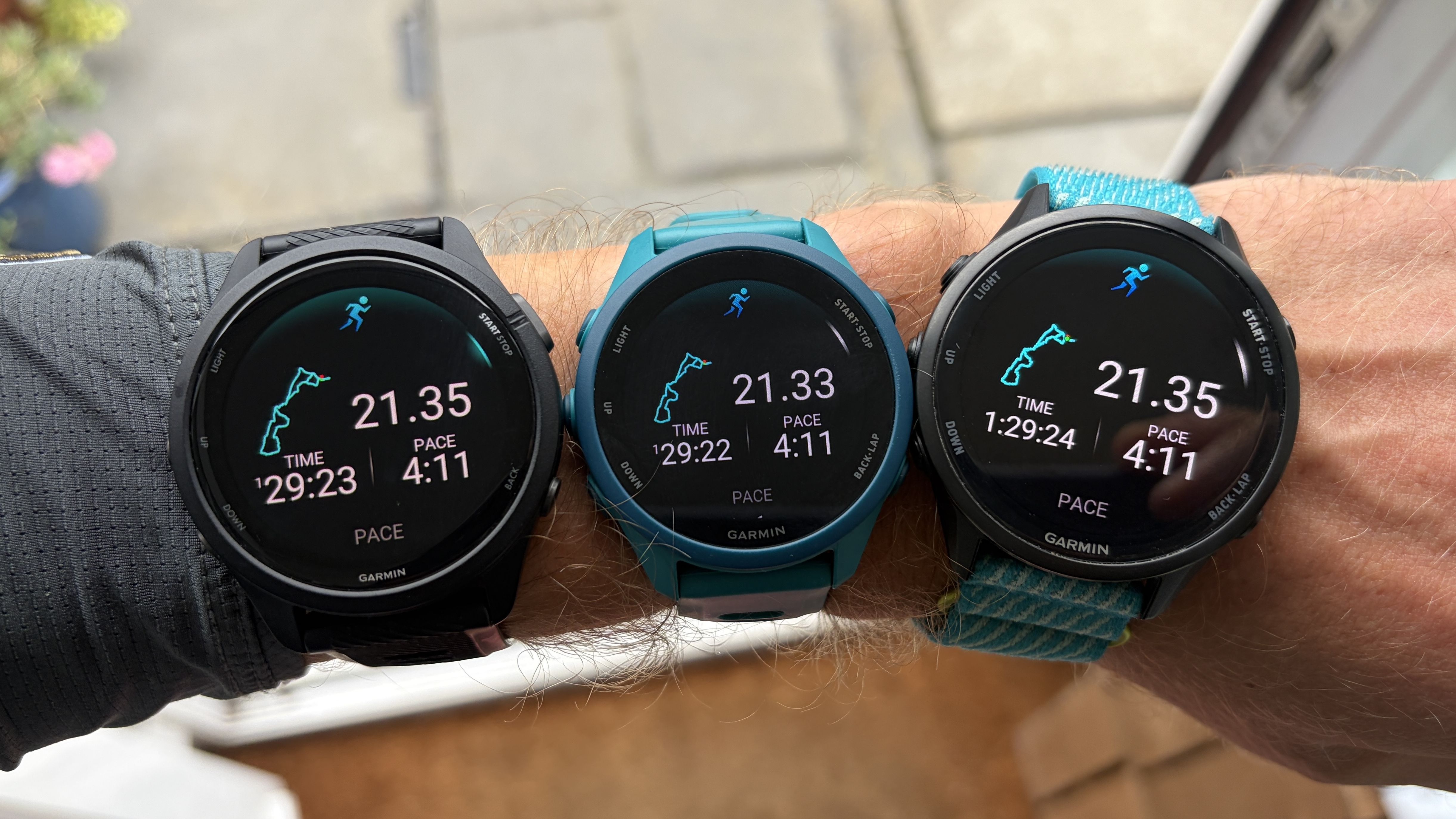
In practice, the Forerunner 170’s all-systems GPS tracking has been as accurate as a multi-band Garmin during all of my testing to date.
I’d prefer to have a multi-band watch for peace of mind, but both watches are very reliable, and it’s unlikely to make a practical difference unless you always run among skyscrapers.
On the half-marathon run, I compared both watches with the Forerunner 970 in its multi-band mode, and the GPS tracks and overall distance and pace stats were nigh-on identical.
Garmin Forerunner 170 vs Garmin Forerunner 265: battery life
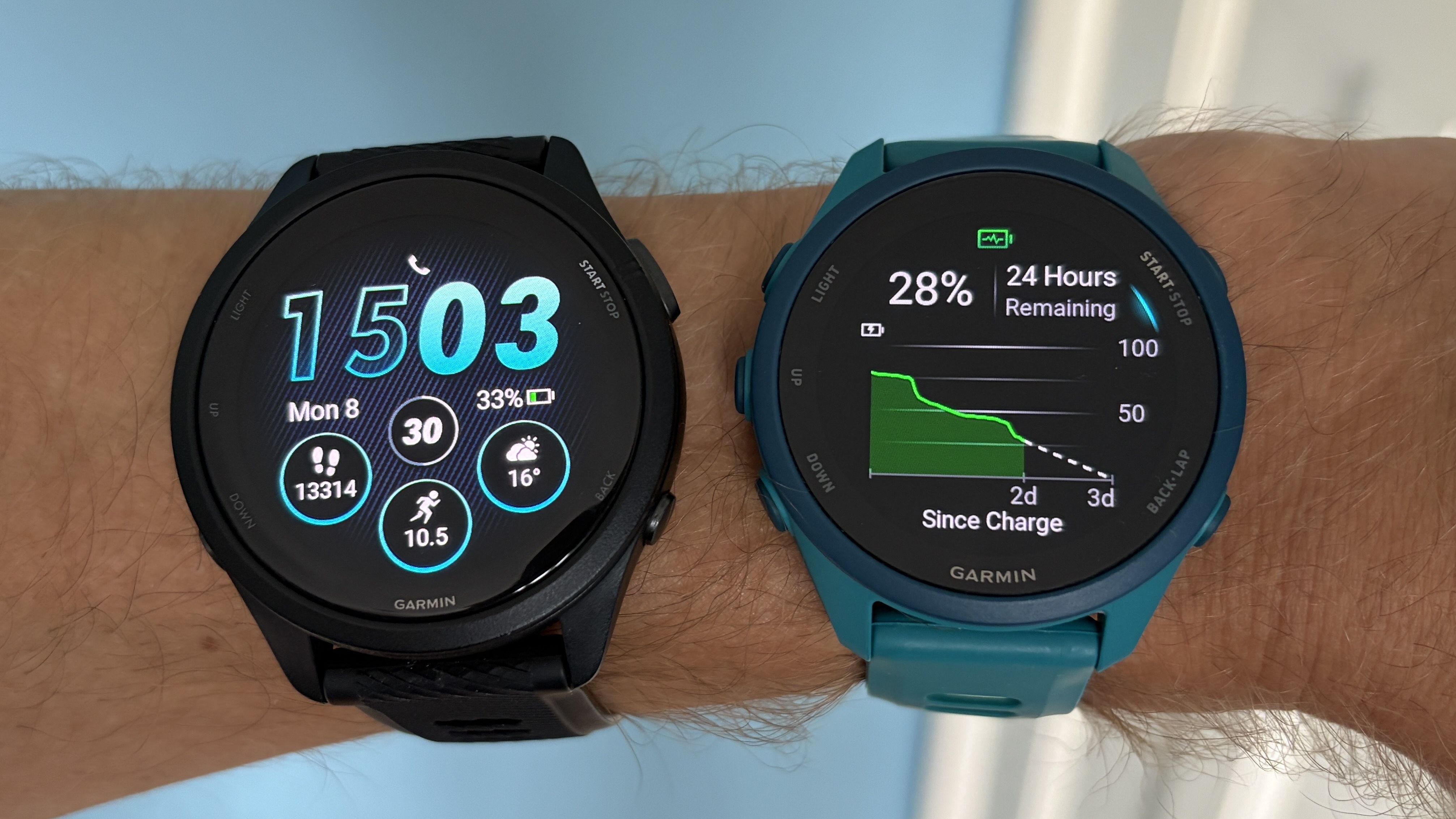
The Garmin Forerunner 265 wins on battery life. With the screen set to raise-to-wake, the 46mm model lasts up to 13 days in watch mode, while the smaller 42mm watch lasts 15 days. Both offer five days of battery in always-on mode.
In comparison, the Forerunner 170 offers 10 days in watch mode with the screen set to raise-to-wake, and just four days when always-on.
The Forerunner 170 offers 14 hours of GPS tracking in all-systems mode, while the Forerunner 265 46mm offers 14 hours of multi-band tracking, and the Forerunner 42mm offers 15 hours.
These are all the on-paper numbers, so how do the watches fare in the real world? With the screen always-on, running every day, I have to charge the Forerunner 170 every 3.5 days on average, while the larger Forerunner 265 lasts me 4.5 days on average.
Garmin Forerunner 170 vs Garmin Forerunner 265: smart features
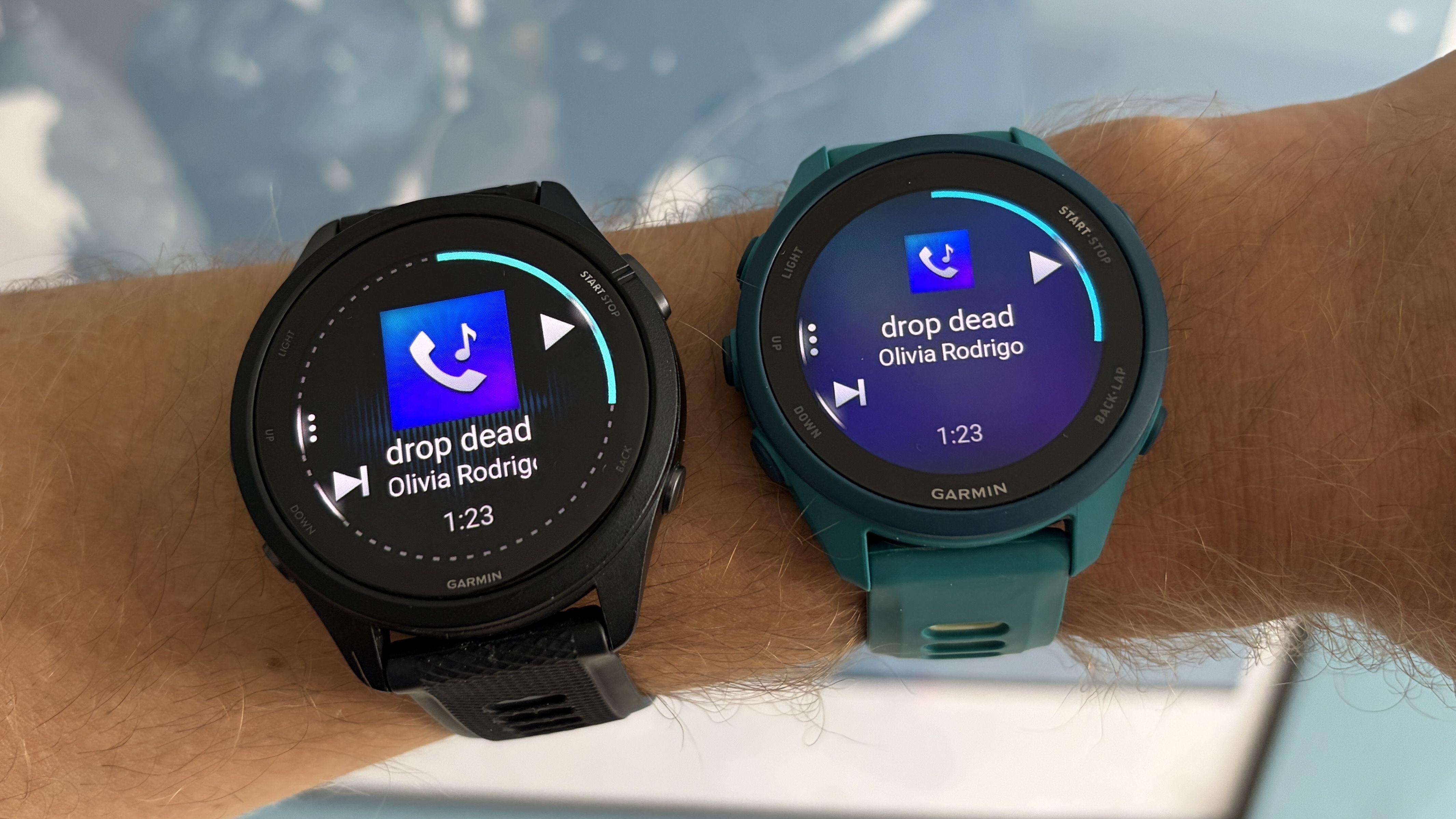
If you opt for the Forerunner 170 Music model, you get the same key smart features as on the Forerunner 265, such as Wifi connectivity, music storage, including being able to link the watch with streaming services, and NFC payments.
The standard Forerunner 170 doesn’t offer WiFi or music storage, but does have NFC payments, so if you always carry your phone with you, it could be a cheaper option.
There are some extra widgets on the Forerunner 170, like Sports Scores and Stocks, and as a new watch, it will also continue to get software updates for the foreseeable future, whereas the Forerunner 265 won’t be getting new features anymore.
Garmin Forerunner 170 vs Garmin Forerunner 265: verdict
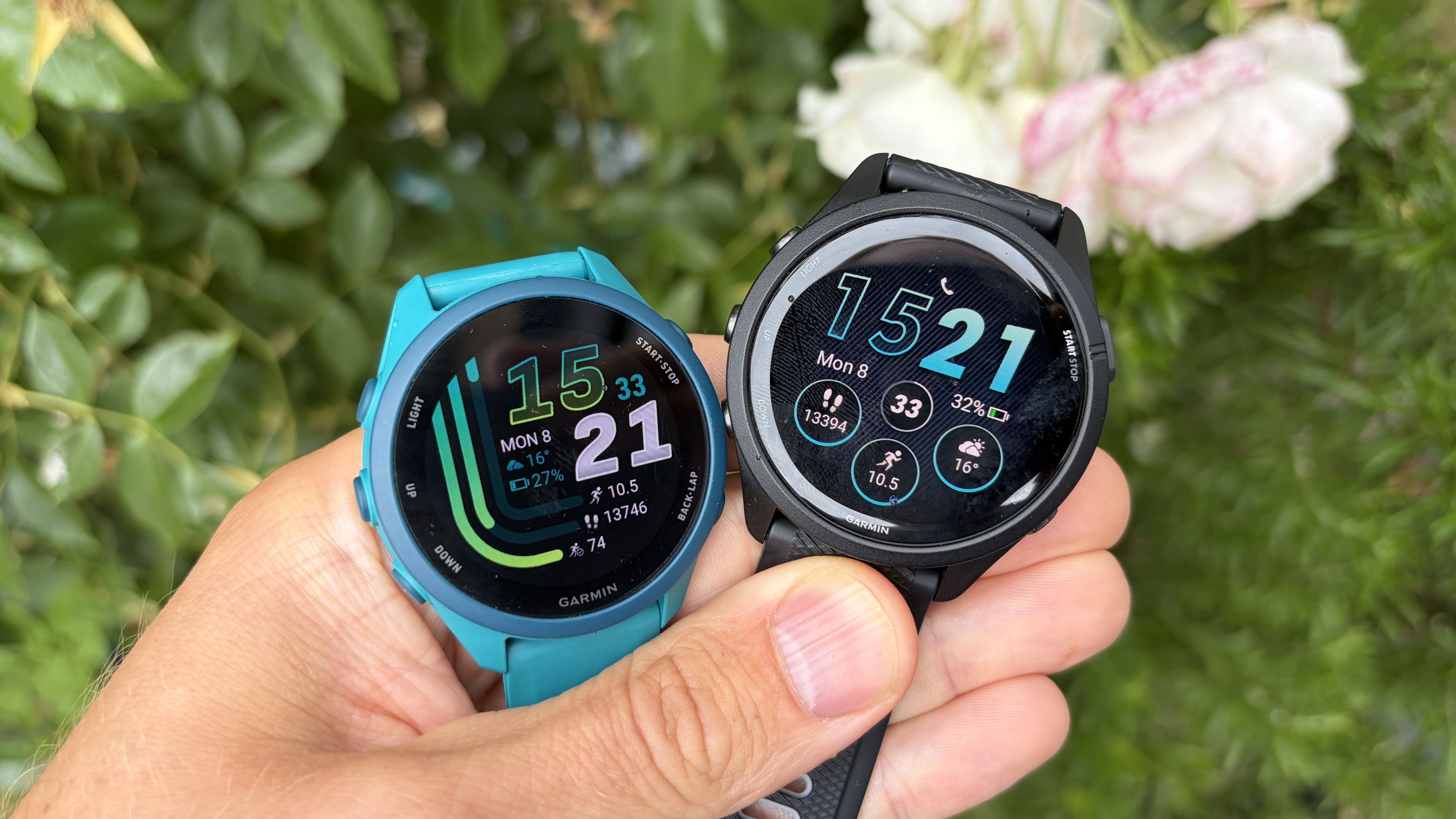
If you’re a triathlete, there’s a clear reason to upgrade to the Forerunner 265, especially if it’s close to the price of the Forerunner 170, and the two size options of the Forerunner 265, longer battery life, and multi-band GPS are all good reasons to look at the older watch as well.
The Garmin Forerunner 170 has proved to be an equally accurate and capable running watch in my testing, though, and having a new model does futureproof you for the next couple of years with regard to new software updates.
If you’re a runner, I wouldn’t pay extra for the Forerunner 265 unless you want the bigger screen of the 46mm model, and if you’re not bothered about music storage, the standard Forerunner 170 is the best value of all.