
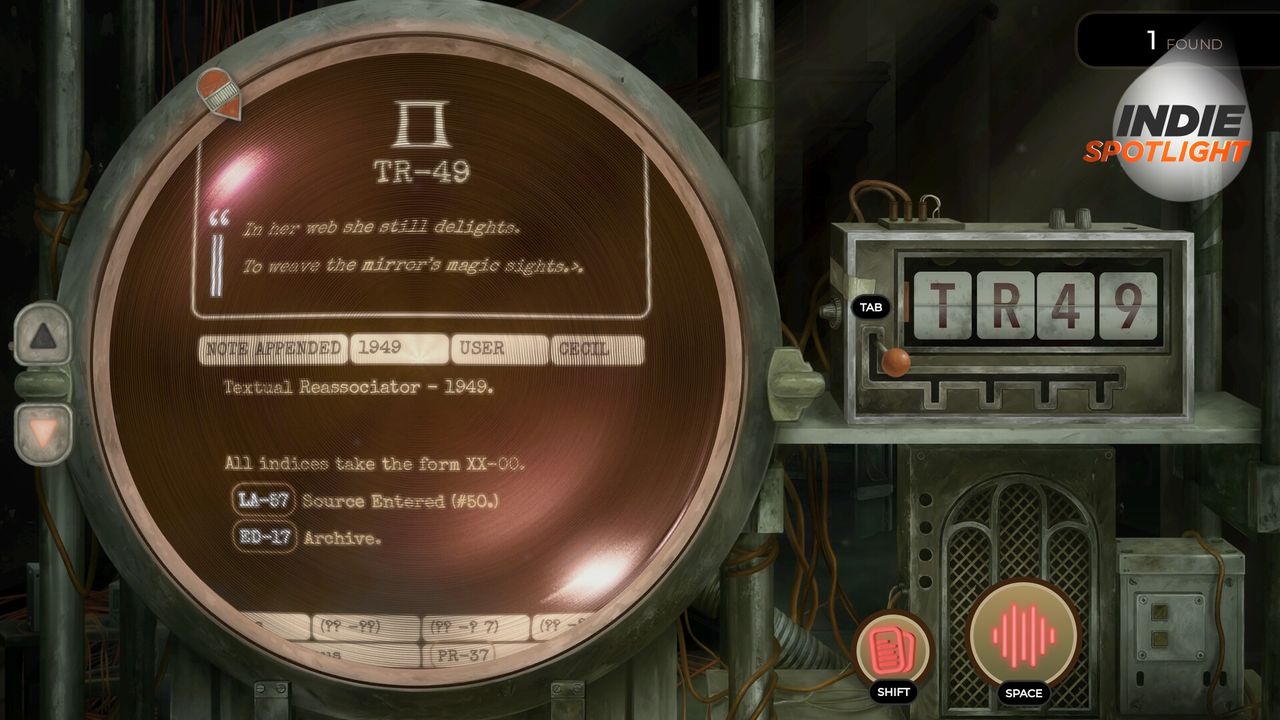
As a journalist, even an entertainment journalist, there is an ingrained nostalgia for something like newspaper microfiche. You know, that storage method you've probably seen in movies or TV shows where the plucky protagonists are scrolling through brightly lit images of old newspapers until they suddenly discover the article or photo that blows the case wide open. The puzzle game TR-49 from developer inkle isn't exactly that, but it absolutely scratches the same itch that crops up whenever I see those machines and think, "Boy, that sure would be satisfying."
And it is satisfying to do TR-49's version of the same. As Abbi, a young woman seemingly trapped in a basement with some strange machine largely consisting of dials and a CRT screen, I scroll and read and click and scroll some more. The four-digit dial – two letters, two numbers – allows me to bring up marked records of my choice to peruse and inspect.
A mysterious "Liam" on the radio instructs me to search for a very specific record, because there are bad people looking to stop us from finding it. And so the game goes: dialing, sorting, naming records, and generally playing a complicated bit of interactive fiction, hyperlinks included, with some shockingly stellar voice acting thrown in.
See previous record
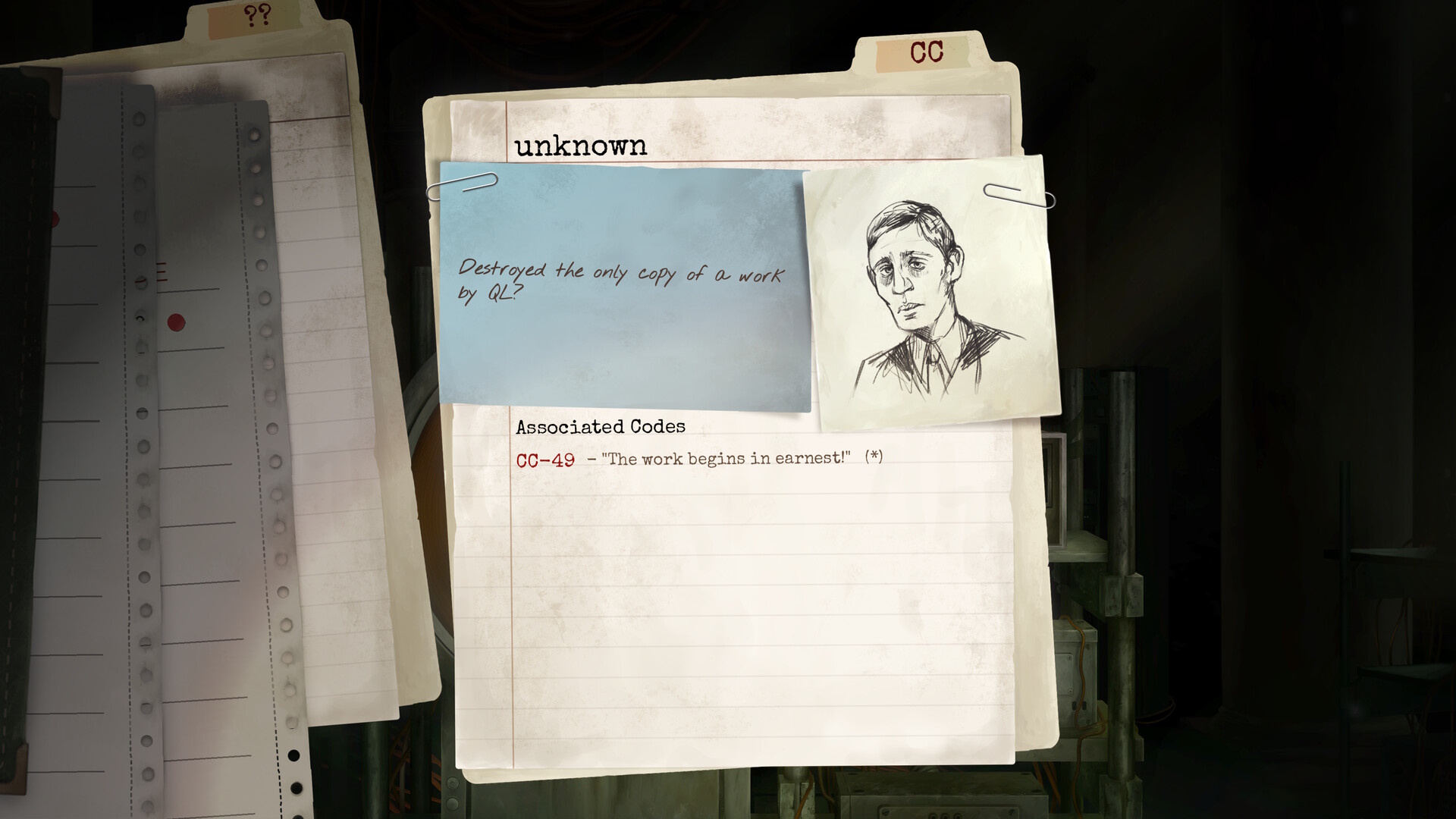
While there's ostensibly some sense of urgency here – Liam says our enemies are getting closer all the time – that narrative doesn't seem to actually be backed up mechanically. There's an overarching story that plays out while I dig through the archives and piece together the digital(ish?) lives of Cecil Caulderly, his family, and all of the material that's been ingested by the machine.
That's what it does, by the way. The contraption that makes up the entirety of TR-49's gameplay is functionally a machine that you input written material into and it collates and cobbles together inferences and understandings, and so on. If that immediately makes you think, "sounds like AI, or at least an LLM," you're basically repeating the thought I had time and time again, though TR-49 doesn't exactly say as much.
While technically fairly limited in scope, TR-49 quickly envelops itself in complexities. In the search of the important record in question, you must parse through other records, which means you must find them first. How do you find them? Well, you can piece together clues like "so-and-so was born on this date," or "a follow-up was published two years later by this particular author," which clue you into what sort of dial setting to seek out. Or you can just… put in a set of letters and numbers and hope for the best.
Narrative aspects notwithstanding, the frame of the game fascinated me from the jump. Rather than zooming in on the screen itself and having the player navigate there, the actual machine and room it's in are featured prominently. It's a design choice that really enhances the physicality of the space despite existing entirely digitally, and basically every other design decision complements it.
The dials are analog and chunky with the options for letters and numbers physically circling the screen – which flickers and warps with unstable power – while the archive figuratively picks up and moves from one cataloged source to another rather than simply switch like an internet tab might.
Puzzled reactions
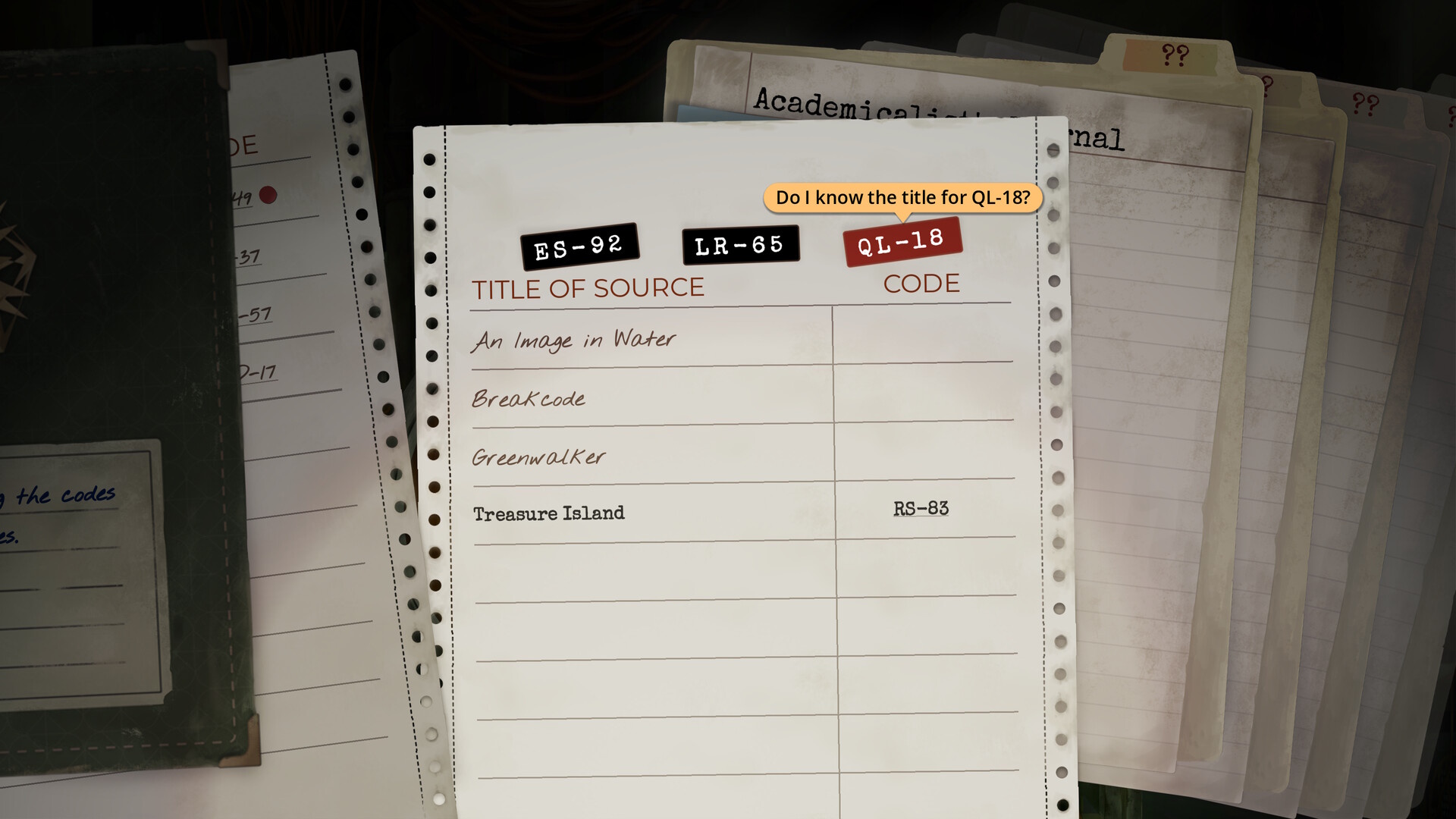
I never quite know how to talk about puzzle design and puzzle games in general. What makes a good puzzle? I managed to solve TR-49 in about seven hours without resorting to looking up solutions. The hint system feels fairly unobtrusive, though I've seen the complaints online that it's overbearing. I never quite felt like I was being led by the nose, though Abbi and Liam could be awful chatty at times. Instead, the design of the game lends itself to serendipitous discoveries like, for example, discovering material at say EK-11 because you were moving away from CC-11 and into the EK archive, and it automatically loads up whenever you accurately complete a dial combination – even if you're in the middle of putting it in.
What I do know for certain is that I initially booted up TR-49 knowing very little about it. I'd seen the initial trailers, thought "huh," and moved on. As I learned about my task and some initial information on the world, I found myself plucking in potential archival destinations in order to just brute force solution. There are only so many different combinations, after all.
As I read more of material presented and the comments made by previous users, I became more compelled to track specific data points and functions, going so far as to physically write down a short list of common ones to refer back to, as I collected the names – "My God, He Dances" and "Revisions" and "Astral Perplexities" – and locations of books and letters and notes and reference material before then attempting to associate them together. Each successful association accompanied by material suddenly and mysteriously becoming more legible and recognizable. Another data point among many, strung along in a path ultimately concluding with the record I'd been sent to find – and the mystery of why, how, and to what end up in all of that.
That, for me, is a good puzzle.
TR-49 is out now for PC via Steam and iOS. For more recommendations, head on over to our Indie Spotlight series.